DD
MM
YYYY

PAGES

DD
MM
YYYY

spot_img

PAGES

Home Blog Page 699

From Seamless Payments to 50x Potential, Cold Wallet Outshines XRP’s +8% Week and ETH’s Long-Term Projections

0

The crypto market is once again in the spotlight, with XRP’s momentum driving fresh optimism and Ethereum’s long-term outlook drawing attention from analysts. Both assets have their strengths, XRP with its growing adoption in payments and Ethereum with its dominant smart contract ecosystem and institutional forecasts. However, for many investors, market gains are only one part of the equation. The real edge comes from projects that offer sustainable rewards, innovative features, and strong community engagement.

Cold Wallet is positioning itself exactly in that space. With its vibrant user ecosystem, seamless business payment tools, and 50x ROI potential, it delivers far more than just speculative value. While XRP and Ethereum continue to attract headlines, Cold Wallet’s model offers the blend of utility and growth that long-term crypto investors are seeking.

XRP’s Weekly Rise Reinforces Bullish Sentiment

The latest price action has injected new life into XRP bullish sentiment. Over the past week, the token has gained more than 8%, adding to a remarkable 470% surge over the past year. This performance has been driven by a combination of regulatory clarity, increased institutional adoption, and growing interest in blockchain-powered payment systems.

Technical analysts are now eyeing a potential climb toward $12.60, a level seen as achievable if momentum holds and broader market conditions remain supportive. Partnerships with major financial institutions and integrations into payment networks are adding fundamental strength to the token, giving weight to this bullish projection.

However, even with XRP bullish sentiment running high, short-term price swings remain a reality. For many investors, this creates a balancing act between riding momentum and finding assets that offer more consistent value generation. That’s where Cold Wallet’s model of integrating rewards, payments, and community support could present a more predictable path to growth.
Ethereum’s Price Target Highlights Long-Term Potential

Ethereum’s role as the foundation of the decentralized application ecosystem continues to fuel investor confidence. Recently, Standard Chartered raised its Ethereum price target, underscoring the asset’s potential to grow significantly as blockchain adoption accelerates. The network’s ongoing scalability upgrades, along with the rapid rise of layer-2 solutions, are helping Ethereum handle more transactions at lower costs, broadening its utility.

This updated Ethereum price target reflects expectations that the network will continue to dominate in areas like decentralized finance, NFTs, and tokenization of real-world assets. Institutional interest is another factor, with major investment firms exploring ETH-based products and exposure.

Yet, while Ethereum’s fundamentals remain strong, competition from other smart contract platforms and the uncertainty of regulatory developments add an element of risk. For investors prioritizing both innovation and steady utility, complementing ETH holdings with a platform like Cold Wallet can help balance growth potential with ongoing, tangible benefits.

Cold Wallet Combines Community Power and Seamless Payments

Cold Wallet is more than a storage solution, it’s a complete crypto ecosystem designed to empower users both personally and professionally. At the heart of its success is a thriving community. Through active Telegram channels, social media AMAs, and interactive campaigns, Cold Wallet has cultivated a network where users share knowledge, celebrate milestones, and actively shape the platform’s direction. This collective energy transforms using Cold Wallet from an individual task into a collaborative experience.

For freelancers, creators, and businesses, Cold Wallet offers a built-in crypto invoicing tool that makes it easy to bill and receive payments in crypto or fiat. Invoices are generated directly within the app, and payments land straight in the user’s wallet without delays or third-party dependencies. This makes it an especially attractive choice for professionals looking to accept crypto payments securely and efficiently.

Cold Wallet’s market positioning is strengthened by its compelling presale performance. Currently priced at $0.00998, with over 716.99 million tokens sold, $6 million in total sales, and $6.1 million raised, the project is in Stage 17 of its 150-stage presale. With a projected ROI of up to 50x, the combination of growth potential and built-in utility sets it apart from most speculative plays.

The platform’s long-term strategy focuses on integrating new blockchains, enhancing user experience, and continuously expanding its feature set. From its robust community network to its business-friendly payment tools, Cold Wallet is structured to deliver lasting value well beyond market hype cycles.
Last Say

XRP bullish sentiment remains strong, supported by solid technicals and growing payment adoption, while Ethereum’s raised price target reinforces its status as a leader in blockchain innovation. Both offer compelling reasons for investors to stay engaged, but their value is still largely tied to market performance and external developments.

Cold Wallet, on the other hand, delivers immediate, user-driven benefits alongside strong growth potential. Its community-first approach, integrated invoicing for seamless payments, and 50x ROI projection create a powerful case for inclusion in any long-term crypto strategy. For investors seeking the best long term crypto opportunities in 2025, Cold Wallet stands out as a project that rewards participation, fosters collaboration, and offers the tools to thrive in a fast-evolving market.

Explore Cold Wallet Now:

 Presale: https://purchase.coldwallet.com/

Website: https://coldwallet.com/

X: https://x.com/coldwalletapp

Telegram: https://t.me/ColdWalletAppOfficial

Putin Praises Trump’s Efforts to End Ukraine War as Leaders Prepare for High-Stakes Alaska Summit

0

Russian President Vladimir Putin on Thursday publicly commended U.S. President Donald Trump for what he described as “energetic and sincere efforts” to bring an end to the war in Ukraine, more than three years after Moscow launched its invasion.

The rare note of praise from the Kremlin came just hours before the two leaders were set to meet in Anchorage, Alaska, for what is being billed as a pivotal U.S.–Russia summit.

Speaking after a high-level meeting with senior Russian government officials to prepare for the talks, Putin appeared in a short video released by the Kremlin saying that the Trump administration was working to “stop the hostilities” and “reach agreements that are of interest to all parties involved.”

He also went beyond the Ukraine conflict, hinting that the summit could pave the way for a broader thaw in U.S.–Russia relations, including “long-term conditions of peace between our countries, and in Europe, and in the world as a whole,” contingent on a potential nuclear arms control agreement.

In Washington, Trump struck a more cautious tone, telling reporters there was a “25 per cent chance” the summit could fail. Still, he floated the idea that if the talks go well, he could invite Ukrainian President Volodymyr Zelensky to Alaska for a follow-up three-way meeting with Putin.

“If we can get this done, we can change the course of history,” Trump said in a radio interview with Fox News, adding that he might extend his stay in Alaska “depending on what happens with Putin.”

The Alaska summit will be the highest-level face-to-face meeting between Washington and Moscow since Russia’s full-scale invasion of Ukraine in early 2022, an event that triggered the most severe East–West tensions since the Cold War. The conflict has left tens of thousands dead, displaced millions, and reshaped the geopolitical landscape of Europe. It also prompted sweeping U.S. and European sanctions against Russia, while Moscow deepened military and economic ties with China, Iran, and North Korea.

Trump’s willingness to personally meet Putin has drawn both praise and criticism. Supporters say direct dialogue is essential to ending the war, while critics warn it could reward Moscow without securing meaningful concessions. The former reality TV star turned president has long championed high-stakes personal diplomacy — from his meetings with North Korean leader Kim Jong Un to his repeated offers to mediate global conflicts — and appears to be approaching the Putin talks with the same style.

In Kyiv, Zelensky has maintained that no deal between the U.S. and Russia should come at Ukraine’s expense. Ukrainian officials, alongside other European leaders, have been working intensely in recent days to ensure their voices are heard in Anchorage. European diplomats are concerned that Washington and Moscow could strike a bargain, especially on arms control, that sidelines Ukraine’s territorial demands or weakens NATO’s united front.

The nuclear arms control element mentioned by Putin adds another layer of complexity to the summit. The last remaining U.S.–Russia arms reduction treaty, New START, is set to expire in 2026, and any talks to extend or replace it would need to be carefully balanced against ongoing hostilities in Ukraine. Geo-political analysts say that if Trump and Putin can use the Alaska meeting to link de-escalation in Ukraine with progress on nuclear arms limits, it would mark the most significant diplomatic breakthrough between the two powers in decades.

However, it is largely believed that both leaders are currently playing a calculated game of public messaging — Putin projecting optimism about U.S. sincerity, and Trump carefully managing expectations. Whether this meeting produces concrete results or ends in another chapter of diplomatic stalemate will likely be known within hours of the first handshake in Anchorage.

Former Intel CEO Urges Apple, Google, Nvidia & Other Customers to Contribute $40B Bailout to Save Chipmaker

0

Former Intel CEO and chairman Craig Barrett has warned that without urgent and massive funding, Intel could permanently lose its standing in the global semiconductor race, taking with it America’s hopes of producing state-of-the-art chips on home soil.

Writing in Fortune, Barrett argued that Intel remains the only U.S. company capable of matching Taiwan’s TSMC at the leading edge, but is starved of the capital needed to scale and modernize its fabs.

Barrett’s proposal is unconventional but blunt: Intel’s eight largest customers—including Apple, Google, and Nvidia—should each inject $5 billion in exchange for guaranteed domestic supply and pricing leverage against Asian rivals. He stressed that neither TSMC nor Samsung plans to bring their most advanced manufacturing processes to U.S. territory, leaving American tech giants dangerously dependent on imports.

“The only place the cash can come from is the customers,” he wrote, warning that leadership in chipmaking demands heavy investment years before the demand curve catches up.

A Decade of Decline

Intel’s current plight has been more than a decade in the making. Once the undisputed leader in cutting-edge semiconductor manufacturing, the company began slipping in the mid-2010s when delays in transitioning from its 14nm to 10nm process ceded the technological lead to TSMC. By 2020, Apple had abandoned Intel’s chips for its own ARM-based designs, while AMD surged ahead in CPU performance. Under then-CEO Bob Swan, Intel vowed a comeback but continued to miss manufacturing milestones.

In 2021, Pat Gelsinger took over with an ambitious “IDM 2.0” strategy, pledging to regain leadership by 2025 through aggressive fab expansion and a push into contract manufacturing. Billions were earmarked for new plants in Arizona, Ohio, and Europe, but cost overruns, yield issues, and the brutal economics of catching up to TSMC eroded confidence. The CHIPS and Science Act offered a $39 billion lifeline for the industry, but Barrett now warns the funding is too modest to close Intel’s gap with Asia.

The situation has not changed under Lip-Bu Tan, appointed CEO in March 2025, who inherited steep financial losses—$18.8 billion in 2024 alone—and yield problems with Intel’s 18A process node. These manufacturing setbacks delayed key products and forced an accelerated pivot to the still-unproven 14A node. Barrett has been scathing about the leadership’s caution, calling the reluctance to invest in 14A without pre-signed customer contracts “a joke” that risks leaving Intel permanently behind.

Tan’s tenure has also been marked by painful cost-cutting—tens of thousands of layoffs, cancelled projects, and restructuring plans that so far have failed to restore confidence. Intel’s foundry ambitions remain stalled, with global customers hesitant to commit orders to a roadmap still battling execution issues.

Barrett’s Two-Pillar Rescue Plan

Barrett’s blueprint rests on immediate investment in transformative technologies like High-NA EUV and backside power delivery, paired with possible U.S. tariffs on imported advanced chips to stimulate domestic demand. He dismissed suggestions to split Intel’s design and manufacturing arms, insisting the real problem is capital, not structure.

President Donald Trump has publicly called for Tan’s resignation over alleged ties to China and has met with him at the White House. While Barrett avoided commenting on the leadership feud, he framed his plan as essential for national security and the stability of the American tech supply chain.

“We cannot afford to let Intel’s manufacturing leadership slip away,” he warned.

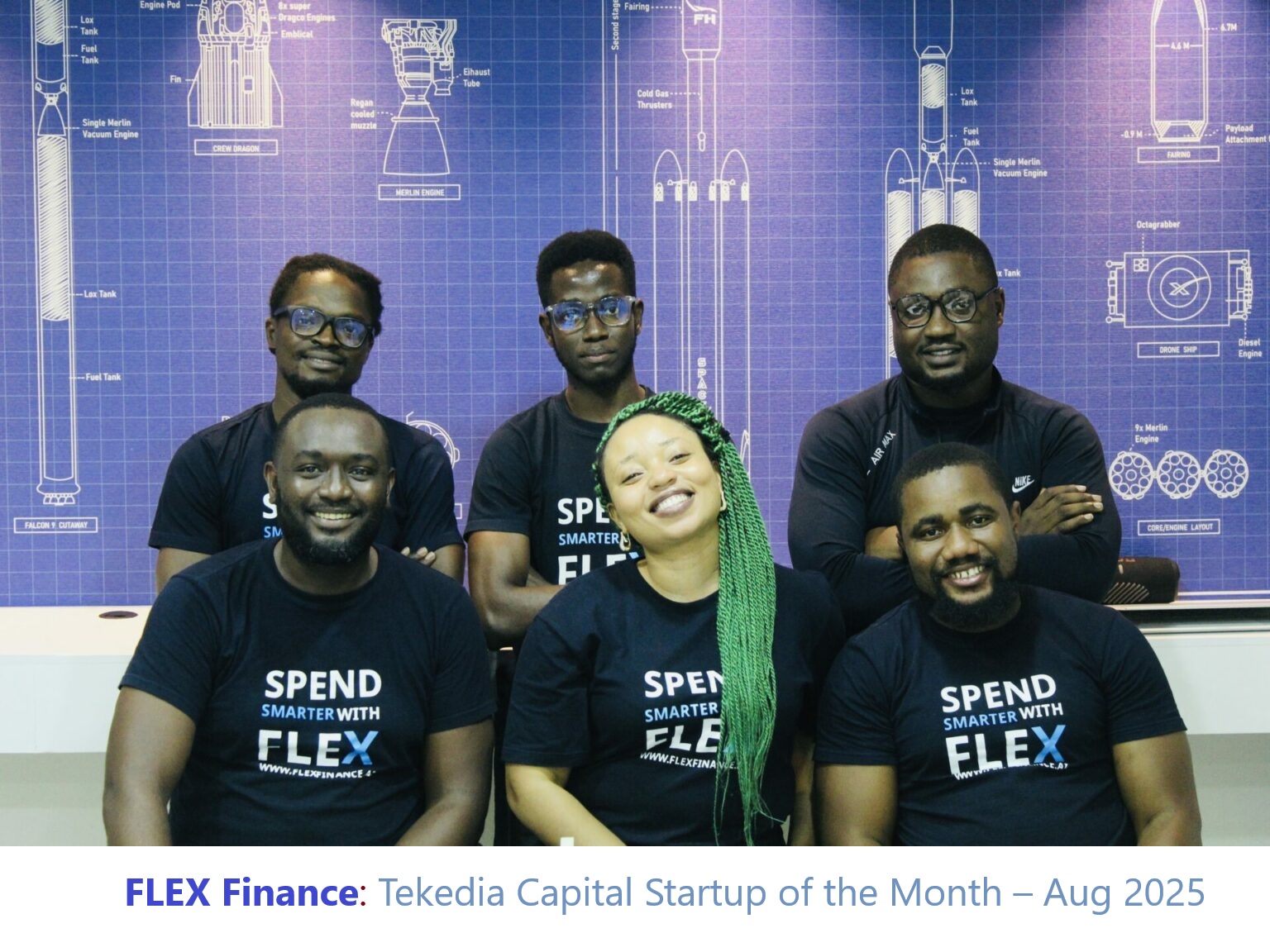
Flex Finance Is Tekedia Capital Startup of the Month, Aug 2025, for Revolutionizing Business Finances in Africa

0

Flex Finance is revolutionizing business finances in Africa, and has just raised a significant amount of capital, one of the largest in this business sector in Nigeria. Tekedia Capital congratulates the team led by Yemi Olulana. They will announce the fundraise later.

For their executional excellence which qualified them before foreign investors to raise this growth capital, Tekedia Capital recognizes Flex Finance as “Tekedia Capital Startup of the Month – Aug 2025” in our portfolio of companies. Well done Flex Team; win more markets as expansion begins.


In many emerging markets, particularly across Africa, the management of business finances remains a significant challenge. The reliance on manual, fragmented processes for tasks such as expense tracking, vendor payments, and budget control often leads to inefficiencies, errors, and a lack of real-time financial visibility.

Flex Finance, a Nigerian-based fintech startup, has emerged as a crucial player in addressing this issue. By providing a comprehensive, all-in-one spend management platform, the company is empowering businesses across the continent to digitize their financial operations, enhance control, and ultimately, drive growth.

Flex Finance’s core value proposition lies in its ability to centralize and automate a company’s non-payroll spending. The platform moves beyond the traditional, time-consuming methods of manual data entry and paper-based approvals. Through its suite of digital tools, Flex Finance enables businesses to create and manage expense accounts, track all transactions in real-time, and automate approval workflows.

This not only significantly reduces the time and resources spent on administrative tasks but also provides finance teams and business owners with instant, accurate insights into their cash flow. The ability to issue virtual and physical corporate cards with predetermined spending limits is a particularly valuable feature, as it allows for greater control and transparency over employee and departmental expenses.

The company’s mission is particularly relevant within the African context, where the business-to-business spending market is projected to reach trillions of dollars. As the African economy digitizes, companies need financial solutions that can keep pace with their growth. Flex Finance provides this by offering a platform that is not only secure—with bank-grade security and regulated partnerships—but also scalable.

By catering to formal SMEs, startups, and mid-level enterprises, Flex Finance positions itself as a partner in their digital transformation journey. The platform’s ability to help businesses uncover hidden costs and make informed decisions on budget allocation demonstrates its role as a strategic tool for profitability and sustainability.

In conclusion, Flex Finance is a compelling example of how targeted fintech solutions can address specific regional challenges. By digitizing and streamlining the complexities of spend management, the company is providing African businesses with the tools they need to operate more efficiently and effectively.

Flex Finance is more than just a financial tool; it’s a catalyst for business maturity, allowing entrepreneurs to shift their focus from the tedious and error-prone process of managing finances to the strategic work of scaling their operations and contributing to the continent’s economic development.

Flex Finance is a Tekedia Capital portfolio company.

CEO Alex Karp Slams Higher Education in Tech, Says At Palantir, “Degree Doesn’t Matter”

0

Palantir CEO Alex Karp may hold three degrees—including a doctorate—but he’s had enough of what he sees as the outdated prestige of higher education.

During the AI firm’s earnings call on Monday, the billionaire took a direct shot at elite universities like Harvard and Yale, saying a diploma no longer carries much weight once you’re through the doors at Palantir.

“This is by far the best credential in tech,” Karp declared. “If you come to Palantir, your career is set.”

The comments come at a time when many in Gen Z are grappling with mounting student debt, a tough job market, and the growing realization that the high cost of a degree doesn’t always translate into career success. A growing number of young people are openly questioning whether pursuing higher education was worth the sacrifice—and some corporate leaders are siding with them.

Michael Bush, CEO of Great Place to Work, previously told Fortune that top employers aren’t “even talking about degrees” anymore.

“They’re talking about skills,” Bush said—a sentiment Karp seems to share wholeheartedly.

“If you did not go to school, or you went to a school that’s not that great, or you went to Harvard or Princeton or Yale—once you come to Palantir, you’re a Palantirian. No one cares about the other stuff,” Karp told investors. He added that the company is building a new type of credential “separate from class or background.”

Palantir’s recent performance is giving weight to Karp’s confidence. The AI analytics company pulled in a record $1 billion in revenue last quarter—a 48% year-over-year surge. Its stock has skyrocketed nearly 600% over the past year, adding $12 billion to its market cap in a single day and pushing its overall valuation to roughly $430 billion.

The company’s success, Karp insists, is not due to poaching talent from the Ivy League, but by fostering a culture of high achievement without the obsession over academic pedigree. Chief technology officer Shyam Sankar, who recently became a billionaire thanks to Palantir’s soaring stock, echoed this view.

“We are able to attract and retain and motivate people who actually want to bend the arc of history here, work on the problems that drive outcomes,” Sankar said.

An alternative to traditional universities

Palantir’s stance against conventional higher education isn’t just rhetoric. Karp and cofounders Peter Thiel and Joe Lonsdale have publicly supported the University of Austin—a controversial, privately funded four-year school built around the principles of free speech and an “anti-woke” philosophy.

The company has also created its own pipeline for young talent. Earlier this year, Palantir launched the Meritocracy Fellowship—a four-month paid internship for high school graduates who may be reconsidering college. While applicants must demonstrate “merit and academic excellence,” the entry bar is extremely high: at least a 1460 SAT score or a 33 ACT, both above the 98th percentile.

The fellowship was explicitly designed as a rebuke to what Palantir calls “opaque admissions standards” at many U.S. universities, which it says have replaced meritocracy with “subjective and shallow criteria” and turned campuses into “breeding grounds for extremism and chaos.”

Successful fellows are interviewed for full-time roles, with the recruitment pitch reading: “Skip the debt. Skip the indoctrination. Get the Palantir Degree.”

The AI paradox: Hiring to replace?

But there’s a twist: Karp openly admits that the same young talent Palantir hires today could eventually build the AI systems that make them redundant. Speaking to CNBC this week, he revealed that the company plans to reduce its headcount by around 500 employees while continuing to grow revenue.

“We’re planning to grow our revenue … while decreasing our number of people,” Karp said. “This is a crazy, efficient revolution. The goal is to get 10x revenue and have 3,600 people. We have now 4,100.”

That raises the question of whether Palantir’s anti-university pitch is truly about giving more people a shot—or simply about finding bright, ambitious young workers to help accelerate the company’s AI-driven efficiency drive, even if it ultimately means fewer jobs.

Karp’s remarks feed into a broader corporate trend: the devaluation of academic credentials in favor of demonstrable skills, adaptability, and performance. Major companies from Google to IBM have scrapped degree requirements for many roles, reflecting a shift in hiring priorities that could redefine the career paths of future generations.

But critics note that while bypassing college might spare young workers crushing debt, it could also funnel them into industries where technological change—especially the rise of AI—makes job security uncertain. In Palantir’s case, the same innovation that has driven its meteoric rise could leave even the best “Palantirians” vulnerable to automation.