
DD
MM
YYYY

PAGES

DD
MM
YYYY

spot_img

PAGES

Home Blog Page 7

Polymarket Refers 100 Suspicious Wallets to Law Enforcement Amid Growing Scrutiny of Prediction Markets

0

Blockchain-based prediction market platform Polymarket has reportedly referred around 100 suspicious wallets to law enforcement agencies, marking one of the largest internal compliance actions taken by a decentralized betting platform.

The move highlights the increasing pressure on crypto-native platforms to combat market manipulation, illicit activities, and potential abuse of decentralized financial systems.

Polymarket has emerged as one of the most influential prediction market platforms in recent years, allowing users to place bets on real-world events ranging from elections and geopolitical developments to sports and economic outcomes.

By leveraging blockchain technology and stablecoin settlements, the platform has attracted millions of dollars in trading volume and has become a key source of crowd sentiment for traders, investors, and policymakers alike.

However, with rapid growth has come increased regulatory attention. Prediction markets, particularly those operating on blockchain infrastructure, face concerns surrounding money laundering, market manipulation, insider trading, and the use of anonymous wallets to distort market outcomes.

The referral of 100 wallets to law enforcement suggests that Polymarket is actively attempting to address these risks and strengthen its compliance framework. According to reports, the suspicious wallets were flagged due to unusual transaction patterns and behaviors that potentially violated platform rules or broader financial regulations.

Such activities may include coordinated trading schemes, attempts to manipulate odds, the use of multiple wallets to circumvent restrictions, or transactions linked to sanctioned entities and illicit sources of funds. This development reflects a broader trend across the cryptocurrency industry.

Regulators around the world are increasingly demanding that crypto platforms implement stronger Know Your Customer (KYC) procedures and Anti-Money Laundering (AML) controls. While decentralized platforms have traditionally emphasized privacy and permissionless participation, authorities are making it clear that digital asset platforms cannot operate outside existing financial laws.

For Polymarket, cooperating with law enforcement could serve multiple strategic purposes. First, it demonstrates a willingness to maintain market integrity and protect legitimate users from manipulation. Second, it may help the company navigate regulatory challenges and improve its standing with policymakers.

Finally, stronger compliance measures could encourage greater institutional participation in prediction markets, a sector that many believe has significant growth potential.

The timing of this action is particularly notable.

Prediction markets have gained renewed attention in 2026 as geopolitical tensions, elections, economic uncertainty, and major technological developments have driven increased demand for real-time forecasting tools. Platforms such as Polymarket have increasingly been viewed not only as betting venues but also as alternative information markets capable of aggregating collective intelligence.

Yet, the growing influence of these markets also raises important questions. If large players or coordinated groups can manipulate market prices through suspicious wallet activity, prediction markets could lose credibility as indicators of public expectations. Identifying and removing bad actors is becoming essential for the long-term sustainability of the sector.

The referral of suspicious wallets also signals a maturing cryptocurrency industry. Earlier generations of crypto platforms often resisted cooperation with authorities, but many modern companies now recognize that regulatory engagement may be necessary for broader adoption. By proactively reporting suspicious activity, Polymarket is positioning itself as a more compliant and institution-friendly platform.

The decision to refer approximately 100 wallets to law enforcement underscores the delicate balance between decentralization and regulatory accountability. As blockchain-based prediction markets continue to expand, maintaining transparency, preventing abuse, and ensuring fair participation will be critical.

The actions taken by Polymarket may serve as a precedent for other decentralized platforms seeking to build trust while operating within an increasingly regulated digital financial environment.

Tesla Expands Robotaxi Service To Orlando And Tampa Ahead Of Earnings As Investors Seek Evidence Of Autonomous Driving Progress

0

Tesla announced the expansion of its Robotaxi service to Orlando and Tampa on Wednesday, widening the geographic footprint of its autonomous ride-hailing network just hours before Chief Executive Elon Musk is expected to update investors on the company’s self-driving plan during its second-quarter earnings call.

The electric vehicle maker disclosed the expansion in a post on X, publishing maps showing the operational service areas in both Florida cities. Tesla did not reveal how many vehicles would initially operate in either market, when riders would be able to begin requesting trips, or whether the service would launch with supervised or fully driverless vehicles.

The timing of the announcement is notable, coming immediately before what is likely to be one of the most closely watched earnings calls in Tesla’s recent history. With electric vehicle sales facing increasing competitive pressure and margins under strain, investors have focused more on Robotaxi as the company’s primary long-term growth driver. Demonstrating geographic expansion allows Tesla to reinforce its narrative that commercial deployment of autonomous transportation is accelerating.

The announcement also follows months of heightened scrutiny over whether Tesla’s Robotaxi rollout is keeping pace with Musk’s ambitious projections.

Tesla’s current Robotaxi deployment remains substantially smaller than the vision Musk outlined last year.

In 2024, Musk said Robotaxi would be available to roughly half of the U.S. population by the end of 2025. He later predicted that Tesla would operate more than 500 autonomous vehicles in the Austin area alone before the end of the year.

Available data suggest the rollout remains far below those expectations.

Independent tracking data indicate Tesla’s Robotaxi fleet has fluctuated considerably over recent months. In May, trackers estimated the company had approximately 29 unsupervised Robotaxis in Austin, alongside six in Houston and five in Dallas. Current estimates suggest those numbers have since declined to around 17 unsupervised vehicles in Austin, four in Dallas, and none in Houston, highlighting the inconsistency of Tesla’s deployment strategy.

Unlike conventional fleet expansions, Tesla has not explained why the number of active Robotaxis has periodically increased and then contracted across different markets.

Tesla Trails Waymo in Commercial Deployment

The rollout also reveals the widening gap between Tesla and Alphabet-owned Waymo, which remains the clear leader in commercial autonomous ride-hailing. Waymo is estimated to operate more than 3,500 fully driverless vehicles across more than 10 U.S. metropolitan areas, providing hundreds of thousands of paid trips each week.

Tesla, by comparison, continues to expand cautiously while experimenting with different operating models.

Like Waymo, Tesla typically begins operations in new cities with a safety driver behind the wheel. In some cases, however, Tesla later moved the safety operator into the front passenger seat, where they retain access to an emergency stop or “kill switch” should intervention become necessary. The company has not established a consistent framework for transitioning between supervised and unsupervised operations, making it difficult for investors to assess the maturity of its autonomous driving system.

The expansion into Florida comes as Tesla continues to face operational questions about the readiness of its Robotaxi platform. Users and observers have reported that limited fleet sizes have resulted in lengthy passenger wait times in existing markets.

There have also been reports of vehicles arriving at incorrect pickup or drop-off locations, while some supposedly unsupervised Robotaxis have relied on remote human operators to assist with difficult driving situations.

Earlier this month, an unsupervised Tesla Robotaxi reportedly collided with a tree stump while being remotely operated, raising fresh questions about the system’s ability to safely handle edge-case scenarios without human intervention.

The incident adds to ongoing regulatory and public scrutiny surrounding Tesla’s Full Self-Driving technology, which differs fundamentally from Waymo’s approach. Tesla relies primarily on cameras and artificial intelligence, while Waymo combines cameras with lidar, radar, and high-definition mapping to create multiple layers of environmental sensing.

Robotaxi Central to Tesla’s Valuation

Despite the limited scale of the rollout, Robotaxi has become important to Tesla’s investment case. With growth in electric vehicle deliveries slowing and competition intensifying globally, many analysts believe Tesla’s premium valuation increasingly depends on its ability to commercialize autonomous transportation and AI-powered mobility services.

Musk has repeatedly said that autonomous ride-hailing could transform Tesla from an automobile manufacturer into an artificial intelligence and robotics company, generating substantially higher margins through software-driven transportation services. He has projected that Robotaxi operations will become profitable by 2027, although analysts remain divided over whether Tesla can achieve fully autonomous operation at commercial scale within that timeframe.

Wednesday’s expansion into Orlando and Tampa provides Tesla with another milestone to showcase ahead of earnings. However, investors are expected to focus less on the number of cities served and more on metrics such as fleet size, utilization rates, safety performance, regulatory approvals and the pace at which Tesla can transition from small pilot programs to a commercially viable autonomous ride-hailing network.

Those details are likely to feature prominently when Musk discusses Robotaxi during Tesla’s earnings conference call later in the day.

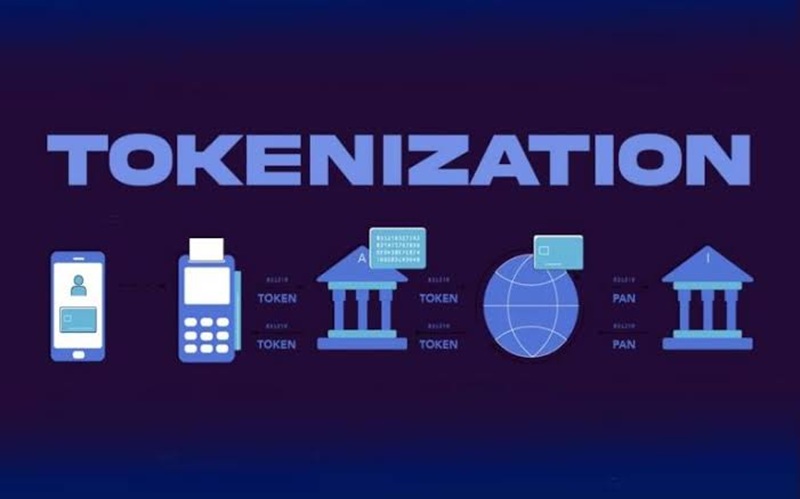
Exploring the Fivefold Growth of Tokenized Stock Markets

0

The tokenized stock market is rapidly emerging as one of the most transformative developments in modern finance.

What once seemed like a niche experiment within blockchain circles has now evolved into a multi-billion-dollar industry, signaling a profound shift in how investors access and trade traditional financial assets.

According to data from a16zcrypto, on-chain equities reached a market value of approximately $1.7 billion by the end of June 2026, a remarkable increase from just $329 million a year earlier.

This nearly fivefold expansion highlights not only growing interest in tokenized assets but also a broader movement toward the integration of traditional finance and decentralized technologies.

The majority of this growth was driven by fresh issuance rather than price appreciation. This distinction matters because it indicates genuine investor demand instead of speculative market repricing. Investors are actively allocating capital into tokenized equities, viewing them as a practical and attractive alternative to conventional stock ownership.

Tokenized stocks are digital representations of publicly traded equities issued and traded on blockchain networks. These assets mirror the value of underlying shares while enabling investors to benefit from blockchain features such as instant settlement, fractional ownership, and 24/7 market accessibility.

Unlike traditional stock markets, which operate during limited trading hours and often involve multiple intermediaries, tokenized markets can function continuously and with significantly reduced friction.

The rapid adoption of tokenized equities reflects a broader trend in financial innovation. Investors around the world increasingly seek borderless and more efficient investment opportunities.

Access to U.S. and global equities remains constrained by high fees, regulatory hurdles, and limited brokerage infrastructure. Tokenized stocks address these challenges by lowering entry barriers and enabling participation through digital wallets and decentralized platforms.

Institutional interest is also accelerating the growth of the sector. Financial firms, exchanges, and blockchain infrastructure providers are increasingly recognizing tokenization as a foundational technology for future capital markets.

The tokenization of stocks follows the earlier success of stablecoins and tokenized money market funds, both of which demonstrated that blockchain-based representations of traditional assets could achieve substantial scale.

Advancements in blockchain infrastructure have improved investor confidence. Networks such as Ethereum, Solana, and emerging financial blockchains now offer higher transaction speeds, lower costs, and enhanced security mechanisms.

Regulatory developments are another important factor supporting the industry’s expansion. Governments and financial regulators are gradually establishing clearer frameworks for digital assets, reducing uncertainty that previously discouraged institutional participation.

Jurisdictions in Asia, Europe, and parts of the Middle East are actively positioning themselves as hubs for tokenized finance, recognizing its potential to modernize capital markets and attract global investment.

Despite its impressive growth, the tokenized stock market still represents a relatively small portion of global equity markets, which are valued in the tens of trillions of dollars. The pace of expansion suggests that tokenization may be approaching an inflection point similar to the early growth stages of exchange-traded funds and cryptocurrencies.

The rise from $329 million to $1.7 billion within a single year demonstrates that tokenized equities are no longer merely an experimental concept. Instead, they are becoming a legitimate financial product with real-world demand and increasing institutional relevance.

As infrastructure matures, regulations become clearer, and investor awareness grows, tokenized stocks could fundamentally reshape how global capital markets operate.

The next phase of financial innovation may not involve replacing traditional markets entirely but rather rebuilding them on blockchain rails. If current growth trends continue, tokenized equities may become one of the defining investment narratives of the coming decade.

AI Boom Creates New Revenue Opportunities for Bitcoin Mining Companies

0

Bitcoin miners are increasingly redefining their business models as the convergence of artificial intelligence and high-performance computing creates new opportunities beyond traditional cryptocurrency mining.

Two major players, Hut 8 and Iren, have emerged at the forefront of this transition, pivoting significant portions of their infrastructure toward AI-related contracts and data center services.

For years, Bitcoin mining companies relied primarily on the profitability of mining rewards and transaction fees. However, the industry has become increasingly challenging due to Bitcoin’s periodic halving events, rising energy costs, and intensified competition among miners.

The latest halving significantly reduced block rewards, forcing mining firms to seek alternative revenue streams that can provide more stable and predictable cash flows.

Artificial intelligence has presented a timely solution. The rapid expansion of generative AI applications, large language models, and advanced computing workloads has created an unprecedented demand for data centers and computational infrastructure.

Companies developing AI technologies require enormous processing power, access to reliable electricity, and scalable facilities capable of hosting thousands of high-performance graphics processing units (GPUs). Interestingly, Bitcoin miners already possess many of these critical resources.

Hut 8, one of North America’s leading Bitcoin mining companies, has increasingly positioned itself as a provider of AI infrastructure and high-performance computing services. The company’s extensive energy assets, large-scale data centers, and expertise in managing power-intensive operations make it well suited to cater to AI clients.

By signing AI and cloud-computing contracts, Hut 8 aims to diversify its earnings and reduce its dependence on the highly volatile cryptocurrency market.

Similarly, Iren, formerly known as Iris Energy, has accelerated its strategic transition toward AI computing services.

The company has emphasized the value of its renewable energy-powered facilities and large electrical capacities, both of which are highly attractive to AI firms seeking sustainable and scalable computing environments. Iren’s management believes that the long-term demand for AI infrastructure could eventually rival or even surpass the opportunities available in Bitcoin mining.

The pivot toward AI reflects a broader trend across the digital infrastructure sector. Investors increasingly value predictable, long-duration contracts associated with AI hosting services over the cyclical revenues generated by cryptocurrency mining.

As a result, mining firms that successfully integrate AI services into their operations may enjoy higher valuations and greater financial stability. This transformation highlights the growing intersection between blockchain and artificial intelligence technologies.

While Bitcoin mining and AI computing serve different purposes, both industries require massive computational resources and energy consumption. Mining companies are therefore uniquely positioned to leverage their existing infrastructure for dual purposes, switching between mining and AI workloads depending on market conditions and profitability.

The transition is not without challenges. AI infrastructure requires significant capital expenditures, specialized hardware, and long-term partnerships with technology companies. Competition is also intensifying as traditional data center operators, cloud providers, and energy companies rush to capitalize on the AI boom.

Success will depend on the ability of firms like Hut 8 and Iren to secure lucrative contracts and continuously upgrade their facilities to meet evolving technological requirements.

The strategic shift by Hut 8 and Iren represents a pivotal moment for the Bitcoin mining industry. Miners are evolving into broader digital infrastructure providers. This diversification could help stabilize revenues, attract institutional investors, and position these companies at the center of two transformative technologies: blockchain and artificial intelligence.

As the global race for AI computing capacity accelerates, Bitcoin miners may find that their greatest opportunity no longer lies exclusively in producing digital currencies, but in powering the next generation of intelligent systems that will shape the future economy.

Hyperliquid Positions Itself at the Center of DeFi and Information Markets

0

Hyperliquid has taken another significant step toward expanding decentralized financial infrastructure by introducing support for HIP-4 prediction market creation for users staking at least 500,000 HYPE tokens.

The move signals the protocol’s ambition to become more than just a decentralized perpetual trading platform and positions it as an emerging hub for on-chain information markets.

Prediction markets have gained substantial attention in recent years due to their ability to aggregate collective intelligence and provide real-time insights into future events. From elections and macroeconomic developments to sports outcomes and cryptocurrency price movements.

These markets allow participants to trade on probabilities rather than simply speculate through traditional financial instruments. Hyperliquid’s HIP-4 proposal now enables highly committed ecosystem participants to create such markets directly on the network.

The requirement of staking 500,000 HYPE tokens establishes a high barrier to entry, ensuring that market creators possess significant economic exposure to the ecosystem. This mechanism is designed to discourage spam, malicious market creation, and low-quality listings while incentivizing responsible governance and platform stewardship.

By requiring creators to have substantial skin in the game, Hyperliquid aligns incentives between market operators and the broader community. The timing of this development is particularly noteworthy.

Prediction markets have become one of the fastest-growing sectors within decentralized finance. Platforms such as Polymarket have demonstrated the increasing demand for decentralized forecasting tools, especially during periods of political uncertainty, economic transitions, and major technological developments.

The growing popularity of these markets has highlighted the value of crowd-sourced intelligence, where market pricing often provides more dynamic and timely information than traditional polling methods.

Hyperliquid’s entry into this space could create a powerful synergy between derivatives trading and information markets.

The platform already commands significant liquidity and user engagement within decentralized perpetual futures trading. Integrating prediction markets allows existing traders to diversify their activities while attracting a new category of participants interested in event-based speculation and forecasting.

The introduction of HIP-4 could strengthen the utility of the HYPE token itself. Beyond serving as a governance asset, HYPE now becomes increasingly important as an access mechanism for premium ecosystem functions. Such utility expansion may enhance token demand and encourage long-term staking behavior, potentially reducing circulating supply and reinforcing ecosystem stability.

From a broader perspective, Hyperliquid’s move reflects an ongoing trend in blockchain innovation: the convergence of financial markets, governance mechanisms, and collective intelligence systems.

Prediction markets are increasingly viewed as a foundational component of decentralized societies because they can efficiently process information and create market-driven signals regarding future events. In the long run, these systems may extend beyond speculative activities into areas such as policy forecasting, scientific research outcomes, insurance modeling, and decentralized governance decisions.

Prediction markets continue to attract regulatory scrutiny in several jurisdictions due to concerns surrounding gambling classifications and financial oversight. Hyperliquid will likely need to carefully navigate the evolving legal landscape while maintaining its decentralized ethos.

Additionally, ensuring market integrity, reliable oracle mechanisms, and dispute resolution processes will be essential for long-term success.

HIP-4 represents an important milestone for Hyperliquid’s evolution. By enabling prediction market creation for major HYPE stakeholders, the platform is positioning itself at the intersection of decentralized finance and information economies.

If successful, this initiative could further solidify Hyperliquid’s reputation as one of the most innovative ecosystems in the blockchain industry and contribute to the broader adoption of decentralized prediction markets as a mainstream financial and analytical tool.