
DD
MM
YYYY

PAGES

DD
MM
YYYY

spot_img

PAGES

Home Blog Page 7

Dow Jones Reaches Record High as Crypto Token Buybacks Outpace Supply Growth

1

Investor confidence strengthened across both traditional finance and the cryptocurrency market as the Dow Jones Industrial Average closed at a new all-time high while blockchain analytics platform Tokenomist reported that eight crypto tokens are reducing their circulating supply through aggressive buyback programs.

These developments highlight a broader trend of capital returning to risk assets and companies adopting strategies designed to increase long-term value for investors. The Dow Jones’ record-breaking close reflects growing optimism about the U.S. economy despite ongoing concerns surrounding inflation, interest rates, and global geopolitical uncertainty.

A combination of resilient corporate earnings, improving economic indicators, and expectations that monetary policy could become more accommodative has encouraged investors to increase their exposure to equities. Blue-chip companies across sectors such as technology, healthcare, financial services, and industrials have continued to deliver strong financial performance, helping push the index to unprecedented levels.

A record high for the Dow Jones is more than a symbolic milestone. It signals that institutional and retail investors remain confident in the ability of major corporations to generate profits even amid economic challenges.

Strong stock market performance often spills over into other asset classes, including cryptocurrencies, as investors become more willing to embrace higher-risk opportunities in pursuit of greater returns. Tokenomist revealed that eight cryptocurrency projects have managed to outpace token supply growth through consistent buyback initiatives.

Buybacks occur when projects use treasury funds or protocol-generated revenue to repurchase tokens from the open market. In many cases, these purchased tokens are permanently burned or removed from circulation, effectively reducing supply and increasing scarcity.

This approach mirrors traditional corporate stock buyback programs, where companies repurchase their own shares to enhance shareholder value. In the crypto sector, buybacks can improve token economics by offsetting inflation from newly issued tokens, staking rewards, or ecosystem incentives.

When demand remains stable or increases while supply declines, market participants often view the token more favorably, potentially supporting higher valuations over time.

Tokenomist’s report suggests that these eight projects have successfully generated sufficient revenue to fund buybacks that exceed the pace of new token issuance. This represents an important milestone for the cryptocurrency industry, as many blockchain networks have historically struggled with excessive token inflation that diluted existing holders.

The increasing use of buyback mechanisms also reflects the growing maturity of digital asset ecosystems. Rather than relying solely on speculative demand, many projects are developing sustainable business models that generate recurring revenue through transaction fees, decentralized finance services, infrastructure products, or enterprise partnerships.

These revenues can then be reinvested into strengthening the token economy. The combination of record highs in the stock market and improving tokenomics across selected crypto projects points toward increasing confidence in financial markets.

Investors are placing greater emphasis on assets that demonstrate disciplined capital allocation, transparent financial management, and sustainable long-term growth rather than speculative hype alone. Both developments may encourage additional institutional participation.

Traditional investors continue to monitor equity markets for signs of economic resilience, while crypto investors increasingly evaluate projects based on measurable financial fundamentals such as revenue generation, token burns, and buyback efficiency.

As these trends continue, the gap between traditional finance and digital assets may narrow further, with both markets rewarding organizations that prioritize value creation, disciplined financial strategies, and long-term investor confidence.
Why Alibaba Restricted Claude Code in Its Development Environment

0

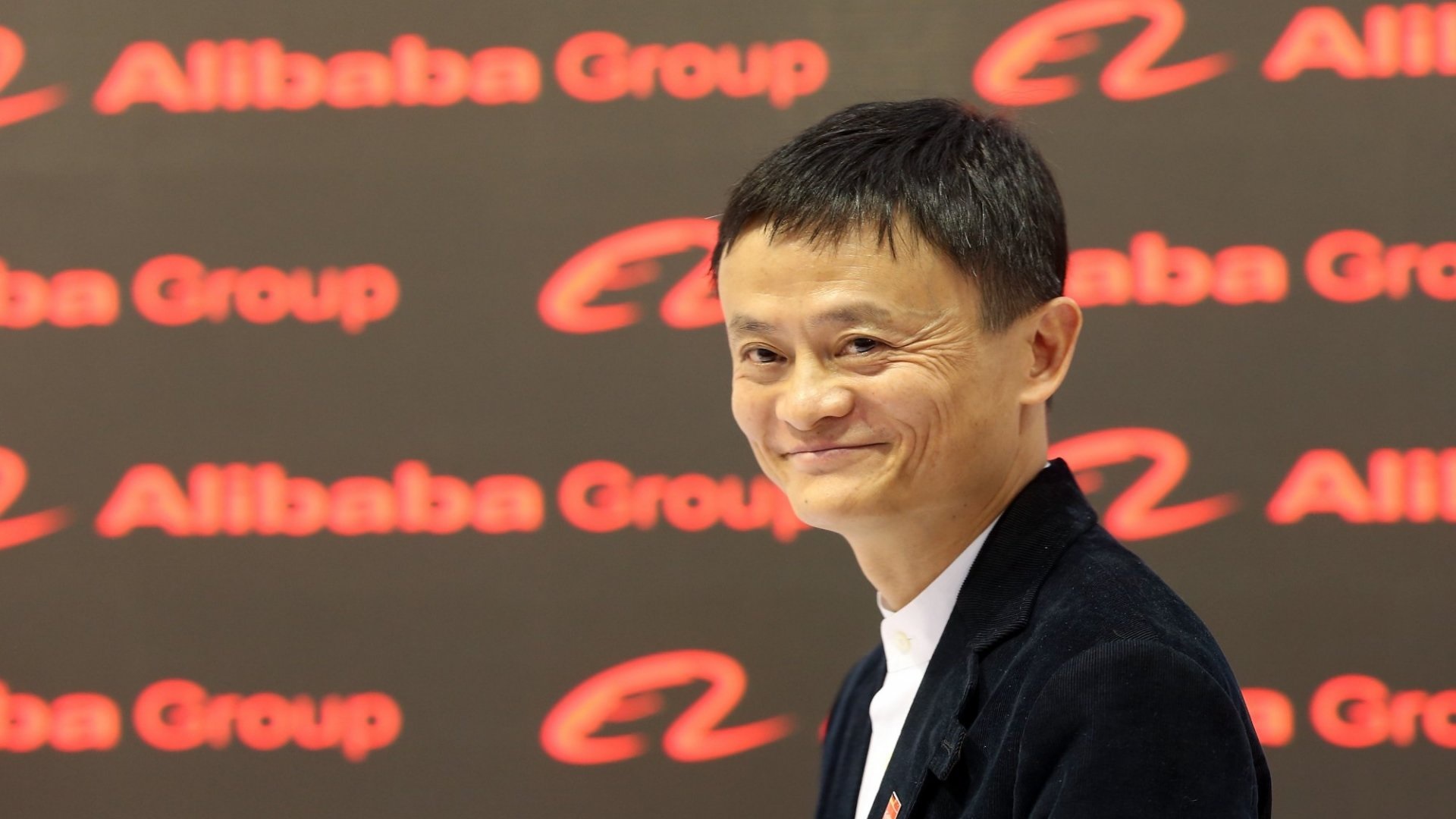
Alibaba has reportedly prohibited the use of Claude Code within parts of its organization due to concerns over potential backdoor security risks.

The decision underscores the growing tension between the rapid adoption of artificial intelligence coding assistants and the increasing need for organizations to safeguard sensitive systems, proprietary data, and critical infrastructure.

As AI-powered development tools become more capable, companies are paying closer attention to the security implications of integrating third-party software into their engineering workflows.

Claude Code, developed by Anthropic, is designed to assist developers by generating code, debugging applications, explaining complex programming concepts, and automating repetitive software engineering tasks.

The tool has gained popularity for its strong reasoning capabilities and ability to accelerate development. However, like other AI coding assistants, it requires varying levels of access to source code, development environments, and internal documentation to function effectively.

This level of access naturally raises questions about cybersecurity and data protection. Reports indicate that Alibaba’s concerns center on the possibility of hidden vulnerabilities or unauthorized access mechanisms—commonly referred to as backdoors.

While there is no public evidence confirming that Claude Code contains such backdoors, organizations responsible for protecting vast amounts of customer information and intellectual property often adopt a precautionary approach. Even a small perceived security risk can justify restricting software that interacts with sensitive development environments.

Alibaba’s move reflects a broader trend among technology companies and governments worldwide. AI tools have become indispensable for improving productivity, but they also introduce new attack surfaces.

Security teams must evaluate not only the AI models themselves but also how they process data, where information is stored, what permissions they require, and whether they comply with local cybersecurity regulations.

These considerations are especially significant for multinational corporations operating across jurisdictions with different data governance requirements. The decision also highlights the increasingly complex relationship between AI innovation and national security.

Many countries are strengthening regulations governing cross-border data transfers, cloud services, and AI deployment. Organizations are becoming more cautious about relying on external AI providers whose infrastructure or data handling practices may not fully align with internal compliance standards.

As a result, some enterprises are investing in self-hosted AI models or developing proprietary coding assistants that can operate entirely within private networks. For Anthropic, the reported ban illustrates the importance of transparency and trust.

AI developers are under growing pressure to demonstrate that their systems are secure, auditable, and resistant to unauthorized access. Independent security reviews, clear documentation, robust encryption practices, and enterprise-grade deployment options are becoming essential competitive advantages rather than optional features.

Customers increasingly expect AI vendors to provide assurances that their tools can meet stringent cybersecurity requirements. The broader AI industry is likely to face similar scrutiny as adoption accelerates. Companies deploying generative AI must balance productivity gains against potential security vulnerabilities, compliance obligations, and reputational risks.

Decisions like Alibaba’s may encourage more rigorous vendor assessments and stronger security standards across the AI ecosystem. The reported restriction of Claude Code serves as a reminder that enterprise AI adoption depends not only on technological performance but also on trust.

As AI becomes deeply embedded in software development, organizations will continue prioritizing security, transparency, and regulatory compliance. Vendors that can convincingly address these concerns are likely to gain a significant advantage in the increasingly competitive market for enterprise AI solutions.

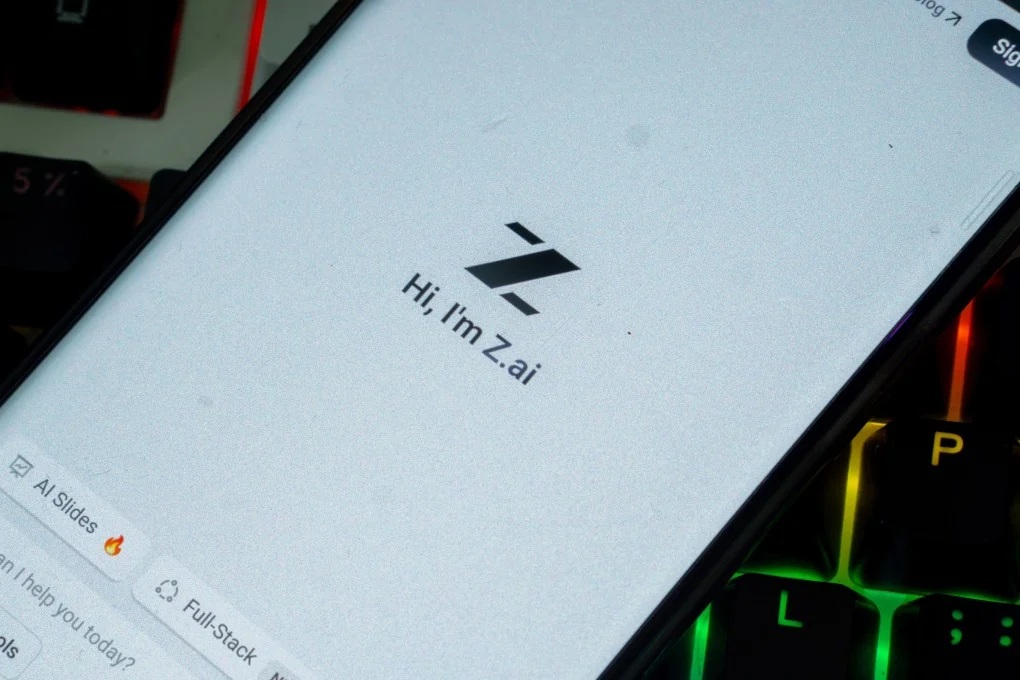
Chinese AI Startup Z.ai Ignites ‘Mini DeepSeek Moment’ as GLM-5.2 Challenges OpenAI and Anthropic at a Fraction of the Cost

0

China’s artificial intelligence race has entered a new phase, with Beijing-based startup Z.ai emerging as the latest company challenging the dominance of leading U.S. AI developers. Its recently launched GLM-5.2 model is winning praise from developers, technology executives and investors, bolstering the belief that China’s AI ecosystem is closing the performance gap with OpenAI and Anthropic while maintaining a significant cost advantage.

The model, launched last month, is generating growing interest across the global developer community because of its advanced coding and autonomous agent capabilities, allowing it to complete sophisticated software engineering and reasoning tasks with minimal human prompting.

According to a Reuters report, industry observers describe the enthusiasm surrounding GLM-5.2 as a “mini DeepSeek moment,” recalling the shockwaves created when DeepSeek unveiled a powerful low-cost reasoning model early last year that challenged assumptions about the enormous capital required to build frontier AI.

Unlike earlier generations of Chinese AI models, which were often viewed as cheaper but less capable alternatives to U.S. offerings, GLM-5.2 is increasingly being discussed as a genuine competitor to the latest systems from OpenAI and Anthropic.

Its rapid adoption is evident on OpenRouter, one of the world’s leading AI developer platforms, where GLM-5.2 has climbed above Anthropic’s models in usage rankings. The model has also received endorsements from influential technology leaders, including Snowflake CEO Sridhar Ramaswamy and venture capitalist Marc Andreessen, further boosting its credibility among software developers.

David Sacks, who previously served as U.S. President Donald Trump’s AI czar, said the emergence of GLM-5.2 demonstrates how rapidly China’s AI capabilities are advancing.

“We now have a Chinese open-weight model that is as good as the currently available models from OpenAI and Anthropic,” Sacks said last week, before Washington lifted restrictions on Anthropic’s Fable and Mythos models on Tuesday.

Speaking on the All-In podcast, Sacks added that GLM-5.2 is “just a tick below Opus 4.8 (from Anthropic) and right up there with GPT 5.5 (from OpenAI),” warning that “we cannot afford to do things that slow our companies down.”

Within parts of the U.S. technology industry, there is growing concern that regulatory uncertainty could weaken America’s lead in artificial intelligence just as Chinese companies are becoming more competitive.

Several analysts believe the timing has also favored Z.ai.

Washington’s temporary restrictions on Anthropic’s newest models and OpenAI’s delayed public rollout of GPT-5.6 have prompted many developers to experiment with alternative models, accelerating international interest in GLM-5.2.

Brian Tse, founder and CEO of Beijing-based AI consultancy Concordia AI, said developers are increasingly seeking alternatives to proprietary American models.

“The international developer community is increasingly aware that relying solely on proprietary, U.S.-based API models carries significant risk,” Tse said.

Cost has become another powerful advantage.

As businesses deploy increasingly sophisticated AI agents, token consumption—the units used to measure AI usage—has risen sharply, making proprietary AI services substantially more expensive.

Against that backdrop, GLM-5.2 has attracted attention by delivering performance approaching frontier models while costing roughly one-sixth as much as leading closed-source offerings from OpenAI and Anthropic. Although Z.ai has not disclosed how much it spent developing GLM-5.2, the pricing has made it particularly attractive to startups, software developers and enterprises looking to control AI infrastructure costs without sacrificing capability.

Independent benchmarks reinforce its growing reputation.

GLM-5.2 currently ranks fifth on Artificial Analysis’ large language model intelligence leaderboard, which measures overall reasoning, knowledge, and coding capabilities across numerous standardized tests. It also ranks second on Code Arena’s front-end coding leaderboard, which evaluates models’ ability to generate websites and user interfaces.

For many developers, however, the biggest attraction lies in usability rather than benchmark scores.

Tiezhen Wang, former Asia-Pacific lead at Hugging Face, said GLM-5.2 significantly lowers the technical barriers traditionally associated with deploying open-source AI.

“The shift GLM-5.2 brings is that the open-source model has become a plug-and-play, out-of-the-box product,” Wang said.

“You just deploy the model and without doing any complex fine-tuning systems, it is in a highly usable, ready-to-use state. This drastically lowers the barrier to entry for open-source adoption.”

Z.ai’s ambitions extend well beyond its current model.

In a response to Elon Musk on X last month, founder Tang Jie said the company aims to produce an AI model comparable to Anthropic’s Fable before the end of the first quarter next year, signaling its intention to compete directly with the world’s most advanced AI systems.

Even so, major challenges remain before GLM-5.2 can achieve widespread enterprise adoption outside China. Data security and geopolitical concerns continue to discourage many Western corporations, particularly banks, government agencies and cybersecurity firms, from incorporating Chinese AI models into critical systems.

Wei Sun, principal AI analyst at Counterpoint Research, said regulatory concerns remain a significant obstacle.

“I have seen some discussion among European companies about whether it could be used in enterprise settings,” Sun said.

“In the EU and U.S., some clients, partners and regulated industries may simply be unwilling to accept Chinese models in their AI stack, regardless of technical performance or price.”

Enterprise adoption also tends to move slowly because replacing AI infrastructure often requires months of testing, integration and regulatory review.

Nevertheless, some analysts argue that those concerns may be less significant than many assume. They note that companies can deploy open-weight Chinese models on their own servers or through U.S.-based cloud providers, limiting data exposure while benefiting from lower costs and greater flexibility.

Poe Zhao, founder of the Hello China Tech newsletter, said practical considerations often outweigh geopolitical ones among developers.

“Developers tend to care less about where a model comes from than whether it works, how much it costs and whether they can deploy or access it reliably,” Zhao said.

“The likely pattern is partial routing, not overnight replacement of OpenAI or Anthropic. So yes, it is a mini DeepSeek moment but in a narrower, developer-centric sense.”

Evidence suggests Chinese AI models have already been gaining international traction since DeepSeek disrupted the industry. A report published earlier this year by RAND found that Chinese large language models increased their global market share from 3% to 13% during the two months following DeepSeek’s R1 launch. The gains were particularly pronounced across developing economies and countries maintaining close economic and political ties with Beijing.

The release of DeepSeek’s low-cost reasoning model also triggered a global technology selloff by challenging the assumption that only companies spending hundreds of billions of dollars on AI infrastructure could compete at the frontier.

GLM-5.2 now appears to be extending that narrative. Rather than simply offering a low-cost alternative, Z.ai is demonstrating that Chinese AI developers are capable of producing models that approach the performance of leading American systems while remaining substantially cheaper to deploy. Although regulatory barriers and trust issues are likely to slow adoption among large Western enterprises, the model’s rapid acceptance among developers indicates that China’s AI ecosystem is becoming a more formidable competitor in the global race for artificial intelligence leadership.

Gold Buying Slows in India as Prices Rebound, While Chinese Demand Shows Signs of Recovery

0

Gold demand in India softened again on Friday after a brief recovery earlier in the week, as a rebound in prices from three-month lows prompted buyers to step back and return to a more cautious stance.

At the same time, buying interest in China improved modestly, with dealers reporting a slight pickup in inquiries after prices stabilized around the $4,000-per-ounce level.

In India, local gold prices rose to as high as 148,046 rupees ($1,553) per 10 grams after touching 140,450 rupees on Tuesday, their lowest level since March 27. The sharp recovery reduced the urgency among consumers who had taken advantage of the earlier decline.

“Many buyers were waiting for a price correction. Once prices corrected, they began making small purchases at the beginning of the week,” a Kolkata-based jeweler said.

Dealers quoted premiums of up to $5 an ounce and discounts of up to $7 over official domestic prices this week, including India’s 15% import duty and 3% sales tax. That compares with premiums of up to $6 last week.

“Jewelers were purchasing, but volatile prices made them cautious. The lean demand season has now started, as there are no major festivals soon,” said a Mumbai-based bullion dealer with a private bank.

The seasonal slowdown is significant for the Indian market, which is heavily influenced by wedding demand and religious festivals. With major festivals several months away, jewelers are expected to focus largely on inventory management rather than aggressive stocking.

Global Prices Regain Footing

International spot gold was on track for its first weekly gain in five weeks and traded above $4,100 an ounce. The recovery followed weaker-than-expected U.S. payrolls data, which eased expectations that the Federal Reserve would need to keep interest rates elevated for longer.

Higher interest rates typically weigh on gold because the metal offers no yield. Recent economic data have encouraged some investors to reassess the outlook for additional monetary tightening, helping bullion recover from its recent slide.

Gold had fallen sharply from a record high of $5,594.82 an ounce reached in late January, but the latest rebound suggests investors continue to view the metal as an important hedge against economic and geopolitical uncertainty.

China Shows Tentative Improvement

In China, gold traded at par to discounts of $2 an ounce relative to the international benchmark, an improvement from last week’s wider discounts of $3 to $7.

“$4,000 looks like a very good support at this moment, and I think the market will stay here for quite a while. However, there is still a lot of uncertainty, which is why people are hesitating to buy too much at this moment,” said Peter Fung, head of dealing at Wing Fung Precious Metals.

“If prices fall back below $4,000, we could see some further buying interest on the dip.”

Chinese demand has been influenced by a combination of domestic economic concerns, currency movements and investor caution after gold’s sharp rally earlier in the year. The narrowing discounts suggest physical demand is gradually recovering, although buyers remain price-sensitive.

Across the rest of Asia, physical demand remained relatively subdued.

In Hong Kong, gold traded between a discount of 50 cents and a premium of $1.70 an ounce over global benchmark prices, reflecting balanced local demand and supply conditions.

In Japan, bullion changed hands at a discount of about 50 cents an ounce, while in Singapore, dealers quoted prices ranging from a discount of $1 to a premium of $1.60 an ounce.

Regional market snapshot

Market Premium/Discount vs spot
India Premium up to $5; discount up to $7
China Par to $2 discount
Hong Kong $0.50 discount to $1.70 premium
Japan $0.50 discount
Singapore $1 discount to $1.60 premium

What The Market Is Watching

Traders are now focused on whether gold can hold above the psychologically important $4,000 level. A sustained hold could encourage additional physical buying in Asia, particularly in China and India, where consumers have shown strong interest whenever prices retreat sharply.

However, the price recovery may also limit immediate demand. Indian buyers are entering a seasonally weaker period, while Chinese investors remain cautious amid uncertainty over global growth, U.S. monetary policy and geopolitical developments in the Middle East.

For now, the market appears to be entering a consolidation phase, with physical demand improving modestly on dips but remaining sensitive to further price swings.

Meta’s Alexandr Wang Claims Major Stride in AI Race With New Model Closing Gap with OpenAI’s GPT-5.5

0

Meta Platforms is making significant progress in the artificial intelligence model race, its superintelligence chief, Alexandr Wang, told employees on Friday, marking what could be an important milestone in the company’s aggressive push to catch up with industry leaders.

In an internal town hall, Wang said that Meta’s upcoming AI model, codenamed Watermelon, has caught up with OpenAI’s flagship GPT-5.5 model, according to two sources cited by Reuters.

Wang cited the achievement based on closely followed AI model benchmarks, though it was not clear which specific benchmarks were referenced.

“Watermelon, our next model after Avocado, is currently in training,” Wang said in the town hall, according to a person familiar with the matter. “Watermelon uses an order of magnitude more compute than Avocado,” he added, referring to Meta’s internal codename for Muse Spark, the first in a family of models that the company released in April.

Wang alluded to that progress publicly as well. In a post on X on Thursday, he said an update to the current model, Muse Spark, is coming soon, with major gains in coding and agentic capabilities aimed at closing the gap with rival models. Asked by a user when Meta would have a coding model on par with Anthropic’s Claude Opus, Wang replied that it would be “pretty soon,” adding that users would like what the company has “cooking.”

Meta’s AI ambitions have long hinged on a simple goal: closing the gap with OpenAI, Google, and Anthropic. Despite massive investments in chips, data centers, and talent, the company has struggled to convince developers and customers that its models belong at the industry’s leading edge.

If Wang’s assessment is accurate, it would mark the clearest sign yet that Meta’s investment and CEO Mark Zuckerberg’s aggressive talent blitz are beginning to pay off, even as the race continues to move at a rapid pace. GPT-5.5 is a powerful AI model that OpenAI released in April of this year. OpenAI then debuted its most powerful model yet, GPT-5.6, late last month, but hasn’t released it generally yet, based on the U.S. government’s requests.

In April, Meta released the first in a series of models called Muse Spark, which performed well on benchmarks but did not match or exceed OpenAI or other labs such as Anthropic. Zuckerberg is ferociously pushing for Meta to get ahead in the AI race. He appointed Wang last year to head this effort, renaming the company’s AI division Meta Superintelligence Labs.

At Meta, Wang oversees a team of elite AI researchers known as TBD, along with other AI efforts, such as a recent hardware push. Meta has offered top AI talent hundreds of millions of dollars each to join, Business Insider previously reported.

That talent push comes as Meta ramps up spending on infrastructure. The company told investors this year that it expects to spend between $125 billion and $145 billion on chips, data centers, and other infrastructure, up from an earlier forecast of $115 billion to $135 billion, citing rising component costs and additional data center spending.

Meta plans to pour resources into attracting top talent and scaling compute power to close the capability gap with frontrunners. The internal codenames, Avocado for Muse Spark and Watermelon for the next iteration, suggest a methodical progression, with each generation leveraging significantly more computational resources.

Wang indicates that Meta is focusing heavily on practical improvements in areas like coding and agentic capabilities, where real-world utility can drive adoption. The emphasis on agentic AI, systems that can perform complex, multi-step tasks autonomously, aligns with broader industry trends as companies move beyond simple chat interfaces toward more sophisticated applications.

The company’s willingness to spend aggressively on both talent and infrastructure is interpreted as Zuckerberg’s commitment to not falling behind in what many see as the defining technology of the era. By renaming the division Meta Superintelligence Labs, the company has signaled its ambition to push the boundaries of what AI can achieve.

However, competition in the industry remains intense. OpenAI continues to set the pace with its GPT series, while Anthropic’s Claude models have gained strong traction in enterprise settings. Google’s Gemini family also represents formidable competition, particularly given its integration with Android and other Google services.

For Meta, success in AI is not just about matching benchmarks. Analysts have noted that the company needs to translate technical progress into products and experiences that drive user engagement across its family of apps, from Facebook and Instagram to WhatsApp. Improved coding capabilities are expected to enhance developer tools, while stronger agentic features could power more sophisticated virtual assistants and automation tools.