DD
MM
YYYY

PAGES

DD
MM
YYYY

spot_img

PAGES

Home Blog Page 7006

Nigeria’s 14% Central Bank Rate

0
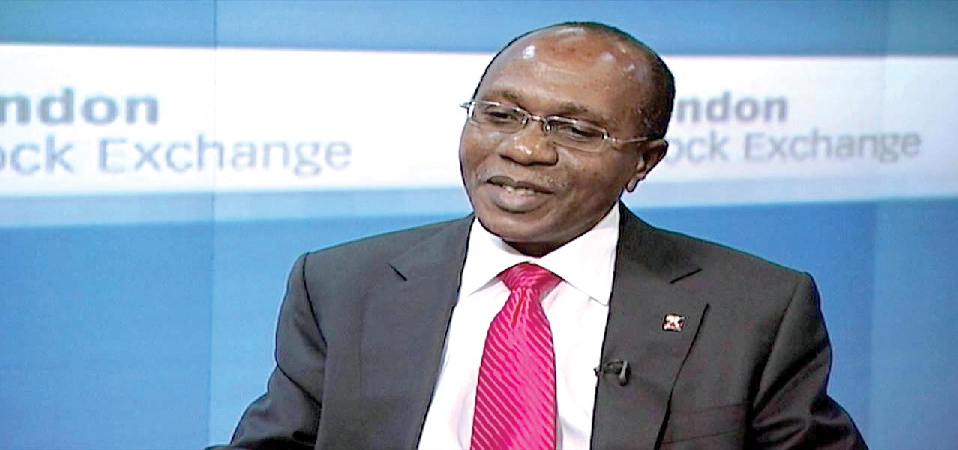
CBN Governor

How the U.S. interest rates have gone downwards could explain the impacts of policies. Just in less than four decades, U.S. Federal Reserve (central bank of the U.S.) has moved rates from high 20% to now sub-3%. Thinking deep into that, U.S. makes debtors smarter while savers frowners. But as those happen, asset values are inflated with cheap capital everywhere. But do not worry – they have systems to seem to manage those until there is a black swan. Irrespective, the people that call the economy, Wall Street, love it.

I began my career in the days when the fed funds rate hit 20%. In the late 1980s, it topped out just short of 10%. At the end of the 1990s, it peaked at 6.5%. Even many millennials can remember June of 2006, when the Fed’s rate hit 5.25. The suggestion that 2.5% will be this cycle’s top is staggering. (Fortune Newsletter)

In Nigeria (certainly we have different economic structures), the fight on inflation has not given Central Bank of Nigeria (CBN) tools to use cheap rates to inject liquidity and stimulate the economy. Yet, we need to find a way since markets have become globalized.

If you have a nation that gets capital from the (Fed) basis of 2.5% and another at 12%, there is no strong basis to compete against because another has asymmetric advantage.

See it this way: if a bank gets capital from CBN at 14% (the current rate) and has to keep 1% to meet required ratios from NDIC (the deposit insurance commission), by the time it takes care of operating expenses, it cannot practically lend below 17%. Then imagine if the bank has started with 2.5%, you will then experience lending interest rate of say 5% in Nigeria.

The Central Bank of Nigeria decided unanimously to keep the benchmark interest rate steady at 14 percent on January 22nd 2019, as widely expected. The last time policymakers changed rates was in July 2016, when they lifted the monetary rate by 200 bps. The Committee voiced concerns about inflationary pressures in the first half of the year, amid an increase in spending ahead of general elections and disruptions caused by recent flooding. In December, the annual inflation hit a 7-month high of 11.44% from 11.28% in November, well above the Bank’s target of 6.0%–9.0%. The Nigerian economy is projected to expand 2.28% this year, the CBN Governor Emefiele said. Interest Rate in Nigeria averaged 10.94 percent from 2007 until 2019, reaching an all time high of 14 percent in July of 2016 and a record low of 6 percent in July of 2009.

This is also the reason why when people accuse banks of high interest rates rip-off, I laugh because commercial banks are not to be blamed: the CBN sets the basis and banks cannot operate below the basis if they want to be in business. If CBN says rates begin at 14%, there is no sense for accusing banks of not giving cheap capital in Nigeria.

Fourteen percentage is a bad basis! Yet, CBN cannot be blamed as it has to fight inflation. The solution is redesigning the economy to improve productivity and move all from the spend-all-till-you-drop mentality in Nigeria.
Coca-Cola Acquires Nigeria’s Chi Ltd, Maker of Chivita and Hollandia; Plans To Scale Brands

0

Coca-Cola has acquired Nigeria’s Chi Ltd, the maker of Chivita juice and dairy brand Hollandia. Chivita is a category-king brand which actually knocked out Five-Alive brand in Nigeria. It has the best advertising model in the nation and continues to deepen its “freshness”.

Yet, in the short history of FMCG in Nigeria, when multinationals acquire our local brands, those brands rarely survive. I am hoping that Coca-Cola will deliver a different result with Chi. Chi Ltd has been in business since 1980 and has actually done well despite the challenging operating environments.

North and south, this is something to celebrate because it means from Atlanta USA, many still believe in Nigeria despite whatever CNN is breaking now as hard news on the nation.

The Coca-Cola Company today announced that it has completed its acquisition of Chi Ltd. in Nigeria. Coca-Cola first announced a minority investment in Chi three years ago and, as planned, has now acquired full ownership of the company.

Chi is recognized in West Africa as an innovative, fast-growing leader in expanding beverage categories, including juices, value-added dairy and iced tea. The company, founded in Lagos, Nigeria, in 1980, produces juice under the Chivita brand and value-added dairy under the Hollandia brand, among many other products. Coca-Cola acquired a 40 percent stake in Chi in 2016 from Tropical General Investments Group, the holding company for Chi Ltd. Juices and value-added dairy categories rank among the fastest-growing beverage segments in Nigeria and Africa.

This acquisition further signals Coca-Cola’s optimism about Africa’s consumer opportunity and a commitment to its long-term investment and growth plan on the continent, where it has been present for more than 90 years.

“Coca-Cola is continuing to evolve as a total beverage company, and Chi’s diverse range of beverages perfectly complements our existing portfolio, enabling us to accelerate expansion into new categories and grow our business in Africa,” said Peter Njonjo, president of the West Africa business unit of Coca-Cola. “We will support the Chi management team in building on the company’s remarkable heritage and achievements, while using the scale of the Coca-Cola system to replicate their success in more markets across Africa.”

Kobo360, Nigeria’s Digital Logistics Pioneer, Arrives Togo

0

Ndubuisi Ekekwe had since resigned from Kobo360 board.

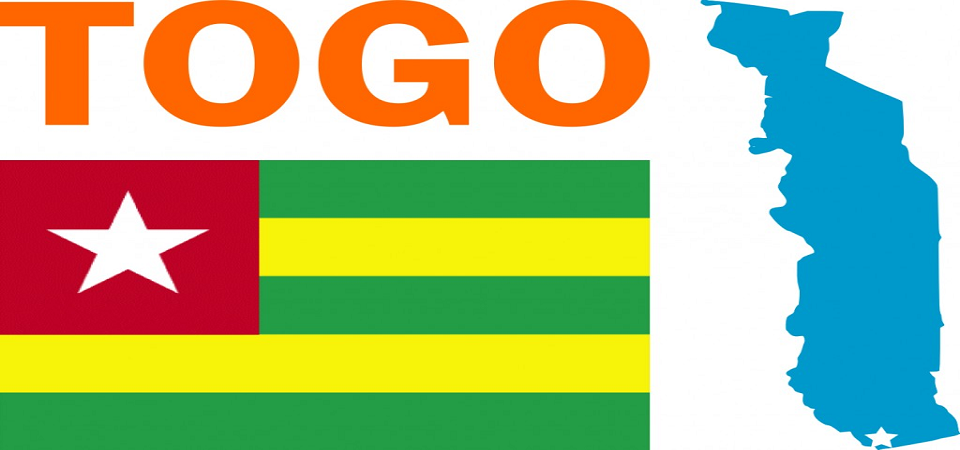
It is official – Kobo360, the African digital logistics pioneer, is now in Togo.  This is coming after raising $6 million from World Bank IFC last month.

Kobo360 is a tech-enabled digital logistics platform that aggregates end-to-end haulage operations to help cargo owners, truck owners and drivers, and cargo recipients to achieve an efficient supply chain framework. Through an all-in-one robust logistics ecosystem, Kobo uses big data and technology to reduce logistics frictions, empowering rural farmers to earn more by reducing farm wastages and helping manufacturers of all sizes to find new markets. Kobo enables unprecedented efficiency and cost reduction in the supply chain, providing 360-visibility while delivering products of all sizes safely, on time and in full. The Kobo mission is to build the Global Logistics Operating System that will power trade and commerce across Africa and Emerging Markets.

From the KoboSquard Commandant, Obi Ozor (Kobo CEO):“This is part of our expansion across Africa which has been in effect since 2018….Our mission is to build the global logistics operating system that will power trade and commerce across Africa and emerging markets. Togo is a key part of that drive.”

We are coming Ghana, Kenya, etc…

I seat on the Board of Kobo360 as an Independent Director.

iPhone Reaches 900 million Installed Base

0
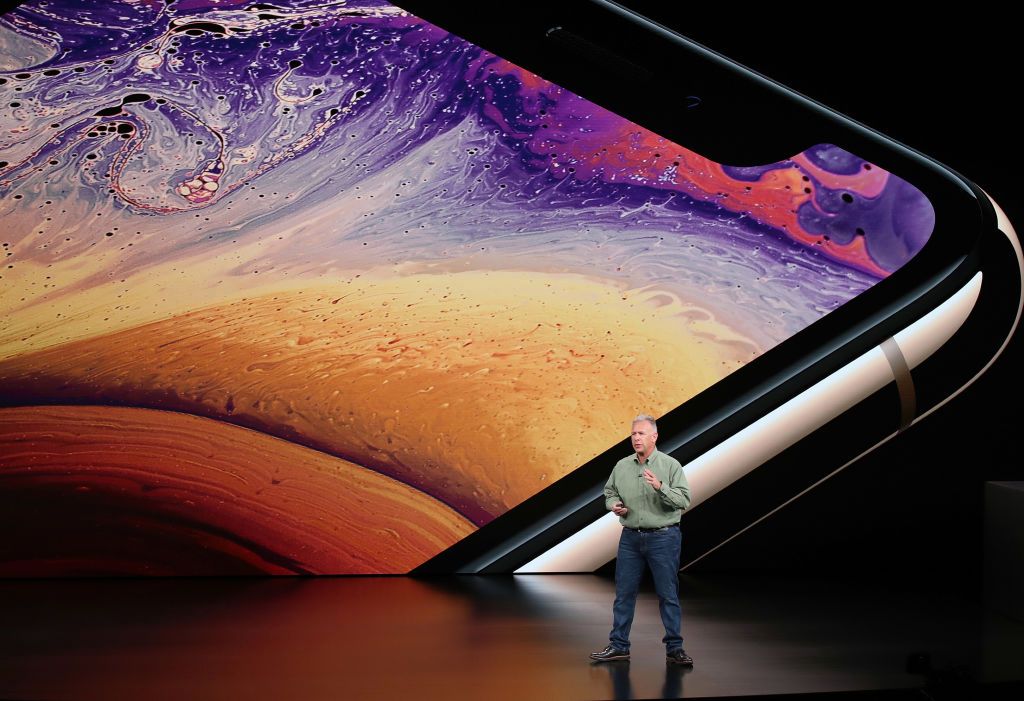
CUPERTINO, CALIFORNIA - SEPTEMBER 12: Phil Schiller, senior vice president of worldwide marketing at Apple Inc., speaks at an Apple event at the Steve Jobs Theater at Apple Park on September 12, 2018 in Cupertino, California. Apple is expected to announce new iPhones with larger screens as well as other product upgrades. (Photo by Justin Sullivan/Getty Images)

More than 900 million iPhone devices are actively installed around the world. For comparison, as at May 2017, there were more than 2 billion Android devices in the world that were active monthly. If you expand that to a year, you may have up to 2.2 billion Android devices active yearly. This disparity is the reason Apple needs to open its ecosystem to compete for services which is growing in the company.

It’s not surprising that Apple has a massive active install base of iPhones across the globe, but we now finally have an exact number to put behind it. During its Q1 earnings call, CFO Luca Maestri shared the install base for the first time.

“Our global active install base of iPhone continues to grow and has reached an all-time high at the end of December,” Maestri said. “We are disclosing that number now for the first time; it has surpassed 900 million devices.”

LinkedIn Comment on Feed

That’s a good number for Apple anyway, considering its exclusive and premium nature, and yet with almost a billion users worldwide. As Apple gains ground on its services division, it doesn’t really need to open up completely its ecosystem for all comers, because that could also hit its brand perception; a more slippery path to go.

It’s poised to lower the prices of iPhones, but it must be done strategically, in order to maintain its aura and class. iPhone/iOS is never Android, and there’s no need to become one. Just create another business model innovation at your own level, it doesn’t necessarily have to mass-produce in order to command big market share in its services division, just little adjustment here and there should be enough.

Tough Challenge for Tecno As Xiaomi Arrives Africa

0

Tecno, the leading smartphone brand in Africa, controlled by Transsion Holdings will face a real test as Xiaomi arrives Africa. Xiaomi has done well in China and India but needs further growth. That growth cannot come from North America and key parts of Europe since the brand is largely banned in those regions over IP related issues. So, when all the permutations are done, the core critical market to explore is Africa. Hence, the maker of Mi phone brands is arriving.

Xiaomi says it’s launching a department in Africa, which will be headed by its current vice president. While the company has been selling phones in the continent since 2015 through local partnerships, the new department marks its official venture into the area.

{…]

Xiaomi is famous for making cheap handsets even though, recently, it’s been trying to move to the higher-end segment and sell more expensive, fancier phones. That doesn’t mean it’s given up on cheap phones. The company spun off a separate brand named Redmi, which focuses on making lower-priced phones. The first Redmi phone launched in early January features a 48MP rear camera and a midrange Snapdragon 660 chipset for just US$145.

There is still a huge opportunity ahead as Africa remains a growth market and despite the strong competitive position Transsion occupies with its brands, anything can happen in the smartphone sector. We used to have Nokia controlling more than 90% of the feature phone market. Then, Blackberry ruled and dominated a nascent smartphone market. Samsung later took over, but then lost its top position to Tecno. Simply, Xiaomi should take its chances.

As these phone brands make Africa home, the immersive connectivity convergence will happen, as predicted, in 2022. Across board, Africa will win when there is competition. Yet, I am hoping that we can have local players in the continent as part of this rivalry.