DD
MM
YYYY

PAGES

DD
MM
YYYY

spot_img

PAGES

Home Blog Page 705

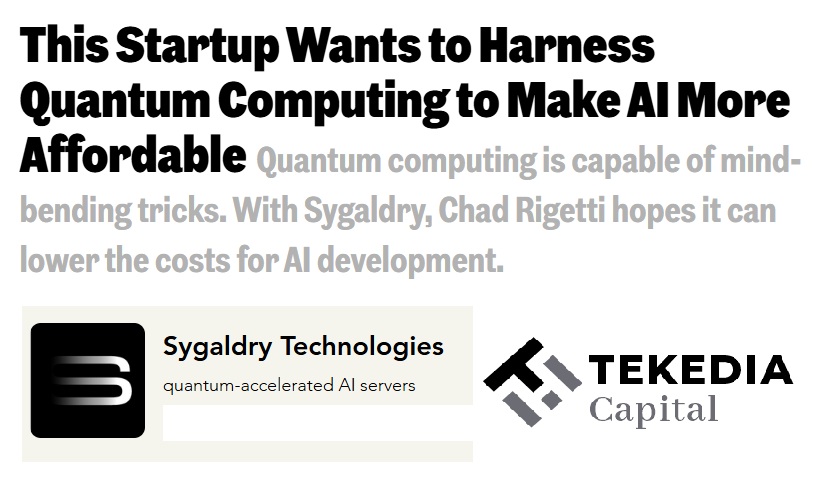
Sygaldry Offers Solution to AI Grand Challenge with Quantum Computing

0

The global AI challenge: “One of the major barriers to innovation in artificial intelligence is the sheer cost. Companies need millions of dollars in funding to buy the highest-end chips, or GPUs, that are required to develop, train, and deploy their models. Then they need millions more to power the data centers housing their AI servers. ”

Solution: “there is an obvious answer to the problem, at least according to quantum computer scientist and entrepreneur Chad Rigetti—it’s quantum computing. ” Chad explains here the mission of Sygaldry https://lnkd.in/dkfhFT7u

Tekedia Capital is excited to be an investing partner in the mission of Sygaldry Technologies which “is building AI servers that harness quantum systems to dramatically speed up model training and optimization. The idea is to combine different kinds of exotic quantum modalities in a single, fault-tolerant architecture that works seamlessly with classical computer hardware.”

Standard Chartered Raises Ether’s Year-End 2025 Value to $7,500

0

Standard Chartered has raised its year-end 2025 Ethereum (ETH) price target to $7,500, up from $4,000, citing increased institutional demand and favorable regulatory developments.

The bank highlights that Ether treasury firms and spot ETFs have accumulated 3.8% of ETH’s supply since June, nearly double Bitcoin’s accumulation rate. The GENIUS Act, signed into law in July, supports stablecoin adoption, with over half of stablecoins on Ethereum, driving transaction fee revenue.

The bank also notes Ethereum’s scalability improvements, projecting ETH to surpass its previous high of $4,866 by Q3 2025, with long-term targets of $12,000 by 2026, $18,000 by 2027, and $25,000 by 2028-2029.

The accumulation of 3.8% of ETH’s supply by Ether treasury firms and spot ETH ETFs since June reflects growing institutional confidence. This trend mirrors Bitcoin’s institutional uptake but at a faster pace, signaling Ethereum’s appeal as a store of value and a platform for decentralized applications (dApps).

A $7,500 target implies a roughly 2.5x increase from current levels (assuming ETH is around $3,000 in mid-2025). This could fuel bullish sentiment, drawing retail and speculative investors back into the market. Positive price momentum could create a feedback loop, where rising prices attract more capital, further driving ETH’s value.

Ethereum’s growth often sets the tone for the altcoin market. A significant price surge could lift other Layer-1 blockchains and Ethereum-based tokens, amplifying the crypto market’s overall capitalization. Ethereum’s rally could spur innovation and investment in DeFi, NFTs, and other Ethereum ecosystem projects, reinforcing its dominance.

Ethereum’s ongoing upgrades, including sharding and rollups (e.g., Optimism, Arbitrum), enhance transaction throughput and reduce costs. These improvements make Ethereum more competitive against other Layer-1 blockchains like Solana or Avalanche.

Lower fees and faster transactions increase dApp adoption, driving demand for ETH as gas fees and staking rewards grow. Standard Chartered notes Ethereum’s scalability as a key driver for its bullish outlook. With over half of stablecoins (e.g., USDT, USDC) running on Ethereum, the network captures significant transaction volume.

Stablecoins facilitate DeFi, cross-border payments, and institutional use cases, all of which increase ETH’s utility and demand. As stablecoin adoption grows (accelerated by the GENIUS Act), Ethereum’s network activity and fee revenue are expected to rise exponentially, supporting higher ETH prices.

Ethereum hosts the largest DeFi ecosystem, with protocols like Uniswap, Aave, and MakerDAO driving billions in total value locked (TVL). Continued innovation in DeFi, NFTs, and tokenized real-world assets (RWAs) strengthens Ethereum’s network effects.

Since Ethereum’s transition to Proof of Stake (PoS) with the Merge in 2022, ETH staking has locked up significant portions of the supply. As of mid-2025, over 25% of ETH is reportedly staked, reducing liquid supply. Reduced circulating supply, combined with growing demand, creates a supply-demand imbalance that could drive exponential price increases.

Standard Chartered’s forecast aligns with broader macro trends, such as potential U.S. interest rate cuts or inflationary pressures, which could drive capital into alternative assets like ETH. Ethereum’s narrative as “digital oil” (fueling decentralized applications) complements Bitcoin’s “digital gold” story.

From a hypothetical $3,000 in mid-2025 to $7,500 by year-end represents a ~150% increase in under six months. The long-term targets suggest a compound annual growth rate (CAGR) of approximately 50-60% from 2025 to 2029 ($3,000 to $25,000). This assumes steady adoption, technological success, and supportive market conditions.

ETH grew from ~$100 in 2016 to ~$4,800 in 2021 (48x in five years). While past performance isn’t a guarantee, Ethereum’s improving fundamentals suggest potential for similar, though likely less extreme, growth. Exponential growth is driven by scalability improvements, stablecoin dominance, staking dynamics, and favorable macro trends.

Flutterwave Grew Enterprise Payments by Nearly 20% in H1 2025

0

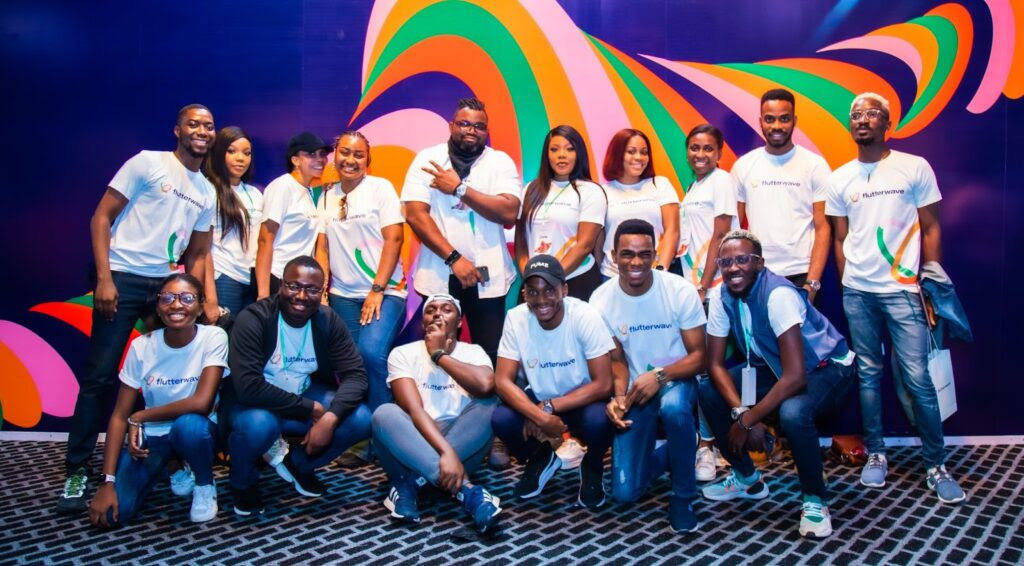
Flutterwave, one of Africa’s largest payments technology companies, kicked off 2025 with strong momentum. In the first half of the year, it recorded a nearly 20% surge in enterprise payment volumes and facilitated close to $1 billion in transactions from Africa to Asia.

This growth underscores the company’s expanding role in enabling cross-border commerce and deepening economic ties between the two fast-growing regions.

The fintech giant noted that the surge in transactions was fueled by strategic partnerships with major East Asian payment firms such as Norafirst and Skyee, as it continues to expand its global reach.

In Q1 2025, rather than chasing vanity metrics, the company focused on disciplined growth, long-term scalability. Commenting on this, Founder and CEO Olugbenga “GB” Agboola in his half-year review message said,

“We are not chasing vanity metrics. We are building a company that outlasts the hype, that scales with discipline, and that puts African innovation at the center of the global economic map”.

Flutterwave’s mid-year review reflected the execution of its long-term vision. The company secured 20 new Money Transmitter Licenses (MTLs) in the United States, bringing its total to 34 and enabling independent operations in key states. It also gained new regulatory approvals in Ghana, Cameroon, and Senegal, expanded its presence in Zambia, and reinforced compliance across the continent.

The company’s growing influence earned it a second consecutive spot on the TIME100 Most Influential Companies list, an acknowledgment Flutterwave views as a result of building with purpose and commitment to its mission of powering payments for Africa and connecting the continent to the world.

Understanding that Africa’s payment landscape differs from many global markets, Flutterwave tailored its solutions to meet local needs. In markets where mobile money and bank transfers dominate, the company’s Pay with Bank Transfer feature gained rapid traction.

In Ghana, it processed 26% more transactions than other alternative payment methods (APMs) within a quarter, contributing to a 47x increase in overall transaction value year-on-year in H1 2025. Across all markets, Pay with Bank Transfer achieved a 198.08% year-on-year jump in total processed value (TPV), reinforcing customer trust in the company’s secure infrastructure.

The company’s remittance platform Send App, has also expanded significantly, now operational in Ghana, Egypt, and new corridors across the U.S. and EU. This growth is making cross-border remittances faster, more reliable, and locally accessible from Berlin to Ibadan, and New York to Kumasi.

Beyond Africa, Flutterwave strengthened its presence in Turkey and Kuwait to support a major ride-hailing company. Transactions in Turkey rose significantly, while Kuwait recorded a 112.11% year-on-year increase in TPV.

The company also introduced its Next Gen APIs in beta, designed to help businesses scale faster with features like scheduled payouts, mobile money support, wallet transfers, enhanced documentation, and an independent developer sandbox. Commercial launch is expected in Q3 2025.

Strategic Partnerships

Flutterwave deepened collaborations to drive impact. In Nigeria, partnerships with FIRS, SMEDAN, and NITDA focused on formalizing payments, empowering MSMEs, and accelerating the digital economy. Across 11 African countries, collaboration with the Kenyan social commerce platform Chpter enabled sellers to collect payments directly through Instagram and WhatsApp.

In Europe, a partnership with Global Remit expanded Send App’s reach in Ireland, France, Germany, and Italy. Meanwhile, an early-stage partnership with Circle Payment Network aims to give enterprise merchants faster, more affordable, and reliable settlement solutions

Looking Ahead

Entering the second half of 2025, Flutterwave remains committed to building the strong financial infrastructure Africa needs.

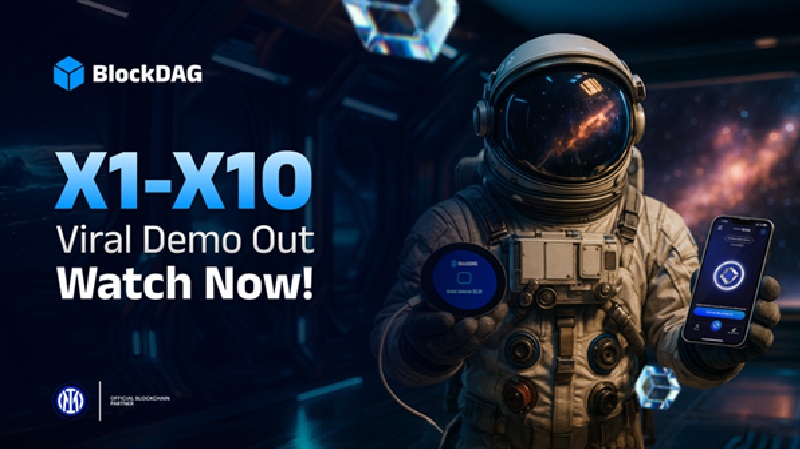
Daily Mining Boost: BlockDAG’s X1 and X10 Demo Reveals Path to 200 BDAG Rewards

0

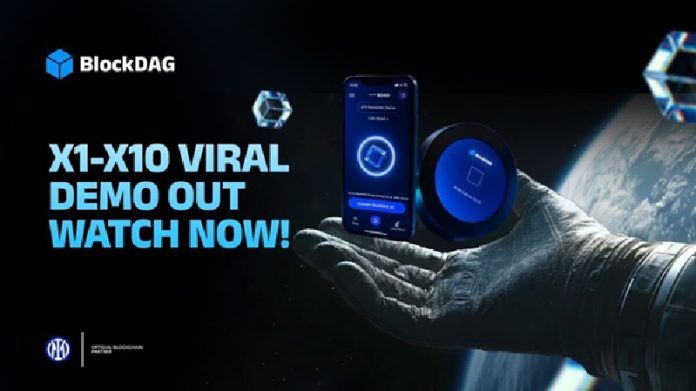
With more than $373 million raised in its presale, BlockDAG is showing it is more than just plans on paper. On July 23, the team shared the long-awaited X1 and X10 Live Demo, giving a real look at its mining setup in action. The session showed how the mobile-based X1 miner connects seamlessly with the powerful X10 hardware, giving viewers a clear idea of how the two work as a system.

The event also showed that BlockDAG (BDAG) can deliver working technology well before its official launch, something not often seen at this stage. Here is a closer look at what the live demo revealed, how it keeps mining simple, and why it supports the project’s image as ready for real-world use with strong earning potential.

A Closer Look at the X1 and X10 in Action

The X1 and X10 Live Demo walked through how the mining system works from setup to operation. The X10 hardware unit connects to the X1 mobile app through Bluetooth, Wi-Fi, or Ethernet, so people with different setups can join without problems. The app acts like a control panel, letting users check mining stats, change settings, and watch their BDAG production in real time.

In the demo, the X10 was shown producing up to 200 BDAG per day under the best conditions. This is far more than the 20 BDAG a day possible through the X1 app alone. That difference makes the X10 a strong choice for those looking to increase their daily output, especially once BDAG is trading on exchanges.

One of the biggest takeaways from the demo was how easy it was to get started. No advanced coding or special technical skills were needed. The hardware was ready within minutes, and the X1 app made managing mining tasks straightforward. This ease of use means both experienced miners and complete beginners can take part without difficulty.

By showing the hardware and app running together in real time, BlockDAG proved it can deliver on its plans. That kind of demonstration gives the crypto community a clear sign that the system will be ready for active mining once the network goes live.

Making Mining Easy and Flexible

A standout feature of the BlockDAG mining setup is how easy it is to join. The X1 app works on any smartphone, opening the door for people who might not have the money or know-how to run expensive mining rigs. Even without extra equipment, they can mine up to 20 BDAG a day, making sure the process is not limited to those with large budgets.

For those who want to grow their mining power, the X10 offers a quick plug-and-play upgrade. The network also supports larger models like the X30 and X100, which are built for higher daily output. This step-by-step system means people can begin small and gradually increase their setup, instead of committing to a big purchase all at once.

The live demo showed this growth model in action. By running both the X1 and X10 together, BlockDAG demonstrated how mobile-based Proof-of-Engagement mining can work alongside hardware-driven Proof-of-Work to boost results. This makes it possible to start with just the X1 app, add an X10 later, and build daily BDAG earnings while waiting for launch.

This approach widens the number of people who can join and also strengthens the network. The mix of consensus methods improves security, while a large base of mobile users supports decentralization. If adoption continues to rise, this blended mining setup could give BlockDAG a strong edge in the Layer 1 space.

Presale Gains Driving Network Readiness

The strong response to the X1 and X10 Live Demo comes at a time when the presale is breaking records. With more than $373 million raised in Batch 29 at $0.0276 per coin, BlockDAG has the resources it needs to complete its network setup, produce more miners, and prepare for its confirmed exchange listings.

This funding is essential for making sure the hardware and software shown in July can be delivered on a large scale at launch. It also shows that many people believe the project can follow through on its plans, a belief strengthened by the fact that they are already seeing working technology instead of only hearing about it.

Why the Demo Matters Going Forward

The X1 and X10 Live Demo have taken technical plans off the page and turned them into real, working tools. By blending a mobile mining app with easy-to-use hardware, BlockDAG is lowering barriers while offering clear ways to expand output.

Alongside a crypto presale that has already passed $373 million in Batch 29 at $0.0276, the demo adds weight to the idea that BlockDAG is more than a crypto launch. It is a growing network with a working system. As launch day draws closer, the mix of accessibility, scalability, and proven performance could help the mining model play a big role in the project’s long-term success.


Presale: https://purchase.blockdag.network

Website: https://blockdag.network

Telegram: https://t.me/blockDAGnetworkOfficial

Discord: https://discord.gg/Q7BxghMVyu

ALT5 Sigma Raises $1.5B Raise with Eric Trump Board Seat as AlphaBot launches Pulse

0

ALT5 Sigma Corporation (NASDAQ: ALTS) has announced a $1.5 billion capital raise through a registered direct offering and a concurrent private placement, both priced at $7.50 per share, totaling 200 million shares.

The proceeds will fund the acquisition of approximately 7.5% of the World Liberty Financial (WLFI) token supply to establish a cryptocurrency treasury, alongside settling litigation, repaying debt, and supporting general operations. The private placement is funded entirely by WLFI tokens from World Liberty Financial, with the registered offering involving institutional and crypto-focused investors.

The deal is expected to close on or about August 12, 2025, subject to customary conditions. Additionally, ALT5 Sigma is undergoing a leadership restructuring. Zach Witkoff, co-founder and CEO of World Liberty Financial, will become chairman of the board.

Eric Trump will join as a director, Zak Folkman, WLFI’s co-founder and COO, will serve as a board observer, and Matt Morgan will take on the role of chief investment officer. These changes align with ALT5’s strategic shift toward integrating blockchain-based assets into its treasury operations.

The announcement led to a volatile market response, with ALTS shares surging 9.66% on August 11, closing at $8.97, though some reports noted a subsequent 9.8% drop, reflecting investor caution over dilution risks and the volatile nature of cryptocurrency markets.

ALT5 Sigma’s acquisition of 7.5% of WLFI’s token supply positions it as a pioneer in holding non-Bitcoin cryptocurrencies as a core treasury asset. This mirrors a growing trend where companies like MicroStrategy (holding over 628,000 BTC worth $71 billion) and Metaplanet (Bitcoin holdings nearing $1.78 billion) diversify their balance sheets with digital assets.

By choosing WLFI, a token not yet publicly tradable, ALT5 is betting on its future value and adoption, potentially signaling confidence in DeFi (decentralized finance) projects. The move is risky due to WLFI’s untested market performance and the volatile nature of altcoins. Conversely, success could make ALT5 a model for other firms.

The $1.5 billion raise, split evenly between a registered direct offering and a private placement funded by WLFI tokens, allows ALT5 to settle litigation, repay debt, and fund operations while building a crypto treasury. This blended financing structure (fiat and tokens) reduces immediate cash outflows but ties ALT5’s financial health to WLFI’s performance.

The leadership changes and token acquisition deepen ties between ALT5 and WLFI, a Trump-backed DeFi project aiming to democratize finance through user-friendly tools. This partnership could enhance ALT5’s role in the DeFi ecosystem, leveraging WLFI’s USD1 stablecoin and governance token to expand its blockchain-based payment and trading platforms (ALT5 Pay and ALT5 Prime).

WLFI’s token, with $550 million raised in sales and a recent community vote (99.94% approval) to enable trading, gains legitimacy through ALT5’s investment. This could drive demand for WLFI tokens once publicly tradable, potentially boosting its ecosystem and user engagement. The involvement of Eric Trump and the Trump-backed WLFI project ties ALT5 to a politically charged narrative.

By structuring the private placement with WLFI tokens under exemptions from public registration, ALT5 navigates U.S. securities laws creatively. This could invite closer SEC scrutiny, particularly as WLFI tokens transition to tradability, potentially setting a test case for how DeFi tokens are treated under U.S. regulations.

The dual structure of ALT5’s $1.5 billion raise—combining a registered direct offering (cash-based) with a private placement (WLFI token-based)—sets a precedent for hybrid financing models. This approach allows companies to tap crypto markets while maintaining compliance with traditional securities laws.

The WLFI token’s transition to tradability, coupled with ALT5’s treasury strategy, sets a precedent for how DeFi tokens navigate regulatory frameworks. The community vote to unlock WLFI tokens (99.94% approval) and ALT5’s use of unregistered securities for the private placement could influence how regulators view token-based corporate treasuries.

Pulse’s Launch Underscores InfoFi’s Potential to Redefine How Information is Valued and Monetized

AlphaBot launched Pulse, an InfoFi protocol, in July 2025, aiming to set a new standard in the Web3 information finance space. Built by AlphaBot and powered by $BOOST, Pulse is designed to transform data, attention, and user behavior into tokenized assets.

The beta launch featured two projects with a 0.5% + $90K reward pool for participants, known as “Pulsooors.” Pulse operates as a platform on top of InfoFi, focusing on real-time insights and community-driven project discovery. It’s integrated with AlphaBot’s ecosystem, which boasts 2.4M monthly users and 180M+ raffle entries, emphasizing project efficiency and security.

Pulse’s model, built on AlphaBot’s ecosystem with 2.4M monthly users, emphasizes tokenizing attention through its $BOOST-powered reward system. This reinforces the InfoFi trend of converting user engagement into quantifiable, tradable assets, as seen in platforms like Kaito and Cookie.fun.

By rewarding “Pulsooors” for participation, Pulse validates the concept that attention is a valuable commodity, potentially setting a precedent for broader adoption across Web3. Pulse’s focus on real-time insights and community-driven project discovery aligns with InfoFi’s goal of decentralizing information access.

By leveraging AlphaBot’s infrastructure, Pulse enables users to contribute to and benefit from a transparent ecosystem, reducing reliance on centralized platforms. This could inspire other InfoFi projects to prioritize community governance and decentralized data aggregation. Pulse’s use of blockchain for transparency and AI for data processing mirrors the technological backbone of leading InfoFi platforms like Kaito and Bubblemaps.

This integration enhances the ability to analyze and monetize unstructured data, such as social sentiment and on-chain activity, further solidifying InfoFi’s role as a bridge between AI, blockchain, and financial incentives. Pulse’s launch highlights ongoing InfoFi challenges, such as skewed reward distribution and lack of long-term sustainability, as noted in X posts.

These issues could prompt the industry to refine incentive mechanisms to ensure equitable value distribution and prevent engagement farming, which risks diluting high-quality contributions. With AlphaBot’s established user base and Pulse’s $90K+ reward pool, the project amplifies InfoFi’s visibility in the Web3 space.

This could attract more retail and institutional participants, boosting the global blockchain analytics market, projected to reach $14.31 billion by 2030. Pulse’s beta launch with two projects and a novel reward system pushes InfoFi projects to innovate beyond traditional leaderboards.

As noted on X, competition among InfoFi campaigns requires new layers of rewards to attract influential voices, potentially leading to more sophisticated incentive models across the sector. By rewarding participants for contributing to project attention, Pulse aligns with InfoFi’s ethos of empowering creators and users.

This approach, similar to Kaito’s Yaps or Cookie.fun’s Snaps, democratizes value distribution, encouraging more users to engage in content creation and community building, thus expanding the InfoFi ecosystem. Pulse’s integration with AlphaBot’s ecosystem suggests potential synergies with DeFi and SocialFi, as InfoFi platforms increasingly intersect with other Web3 sectors.

For instance, reputation scoring systems like those in Ethos Network could complement Pulse’s attention-based rewards, creating new use cases for DeFi lending or community governance. Pulse’s launch underscores InfoFi’s potential to redefine how information is valued and monetized in Web3. However, its success depends on addressing scalability, liquidity, and product-market fit, as highlighted by industry analyses.

As Pulse and similar projects evolve, they could drive InfoFi toward becoming a cornerstone of the decentralized economy, fostering a more transparent, equitable, and data-driven financial landscape.