The Buhari government has honored MKO Abiola, the presumed winner of the June 12 1993 election, conferring him with the nation’s highest honour, the Grand Commander of the Federal Republic, GCFR. The honour is typically reserved for presidents and former presidents.
The government also honored Babagana Kingibe, Abiola’s running mate, with the second highest honour of the Grand Commander of the Niger, GCON.
But for me, the best thing the government did was honoring one of Nigeria’s finest leaders – the peerless pro-democracy and human rights activist, Gani Fawehinmi. He was conferred with GCON. Gani was ahead of his generation. He served his country and we should celebrate him.
Part of Buhari’s Letter.
“For the past 18 years, Nigerians have been celebrating May 29th, as Democracy Day. That was the date when for the second time in our history, an elected civilian administration took over from a military government. The first time this happened was on October 21st, 1979. But in the view of Nigerians, as shared by this Administration, June 12th, 1993, was far more symbolic of Democracy in the Nigerian context than May 29th or even the October 1st,” a statement by the presidency said Wednesday.
“June 12th, 1993 was the day when Nigerians in millions expressed their democratic will in what was undisputedly the freest, fairest and most peaceful elections since our Independence. The fact that the outcome of that election was not upheld by the then military Government does not distract from the democratic credentials of that process.
“Accordingly, after due consultations, the Federal government has decided that henceforth, June 12th will be celebrated as Democracy Day. Therefore, Government has decided to award posthumously the highest honour of the land, GCFR, to late Chief MKO Abiola, the presumed winner of the June 12th 1993 cancelled elections. His running mate as Vice President, Ambassador Baba Gana Kingibe, is also to be invested with a GCON. Furthermore, the tireless fighter for human rights and the actualization of the June 12th elections and indeed for Democracy in general, the late Chief Gani Fawehinmi SAN is to be awarded the GCON.
“The investiture will take place on Tuesday June 12th, 2018, a date which in future years will replace May 29th as a National Public Holiday in celebration of Nigeria Democracy Day.”
The worst certificate any graduate could hold in Nigeria is HND. It is an extremely confusing document in any way you look at it. It brings pains and agonies to most of the holders as soon as they graduate from our polytechnics. Across industrial sectors and civil service units, the holders are completely discriminated against, putting them below their bachelor’s degree counterparts. For years, government has worked on reforms, pushing companies to recognize HND on parity with bachelor’s degree. But that has not happened, and it would never happen in Nigeria. So, it was good news that the federal government has decided to kill HND in Nigeria. That is certainly a good thing. Without an option of HND, our young people would be saved the HND troubles in workplaces.
Nigerian Government has scrapped Award of HND Certificates by Polytechnics.
The decision was reached at the Federal Executive Council, FEC, on Wednesday where the approval of a comprehensive reform of Nigeria’s tertiary education system was made.
In effect, the award of HND will be limited to only the students currently admitted for the programmes.
Also, all the programmes currently being run by polytechnics, which are not technology-based, and which are about 70 per cent, will be scrapped.
Under the new rule, the polytechnics will now become campuses of the proximate universities with the Vice Chancellors of those universities appointing provosts for the polytechnics, subject to the ratification of the Universities Councils.
The polytechnics will now be limited to award of the National Diploma (ND) while those desirous of further education will be awarded the Bachelor of Technology (B. Tech) by the proximate university.
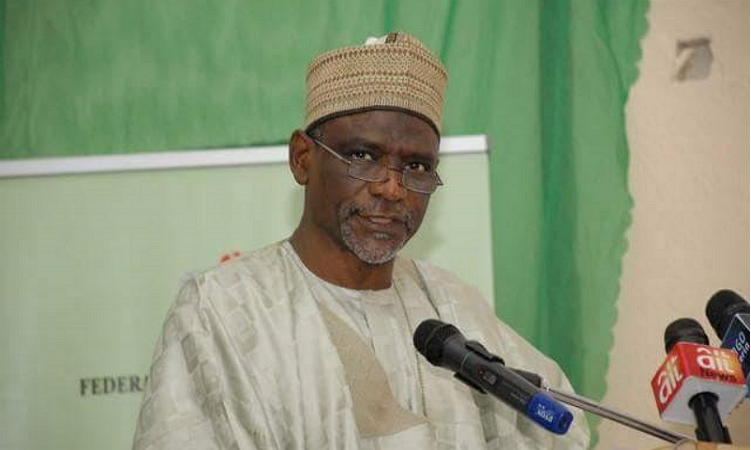
All state polytechnics should collapse into state universities with non-technical programs in state polytechnics scrapped for HND. There is no need of having this institution of discrimination. Our young people deserve better. I commend the Honourable Minister of Education, Adamu Adamu, for his vision on this unlike the one they suggested before.
He has put forward a solid roadmap by scraping HND certificates even when keeping OND certificates. Also, refocusing polytechnics to focus on technical areas is a welcome development. Possibly, with more funding and planning, our polytechnics would become vehicles to deepen our technical (vocational) capabilities which would be critical for building our industries.
The Nigerian Stock Exchange (NSE) should be worried: Ibeto Cement Company Ltd, a Nigerian cement producer, has executed a reverse merger, by acquiring a small U.S. petroleum company, Century Petroleum Corp. Simply, this company did not even bother listing on the NSE; it went for the big board and that is America. Watch out, other Nigerian companies will mimic Dr Cletus Ibeto, flooding U.S. with reverse mergers, if this works out. Who does not want U.S. dollars in the age of well-beaten Naira?
On May 25, 2018, Dr. Cletus M. Ibeto was appointed as our new Chairman of the board of directors.
Dr. Cletus M. Ibeto, Chairman of Century Petroleum Corp, stated thus:
“I am extremely excited to have acquired Century Petroleum Corp and, having taken over the reins as the new Chairman of the Board of Directors of the company with the greatest sense of responsibility, this will enable me to put together teams that will help grow the company and propel it, and also members
of the board that will help me breath life into what Century Petroleum will ultimately become.ed Century Petroleum Corp and, having taken over the reins as the new Chairman The appointment of the new CEO in the person of Erroll A. Booker, who will also function as a member of the Board of Directors, is well thought-out and I have no doubts that he will contribute to the accomplishment of the strategic objective which underlies the acquisition of Century Petroleum.
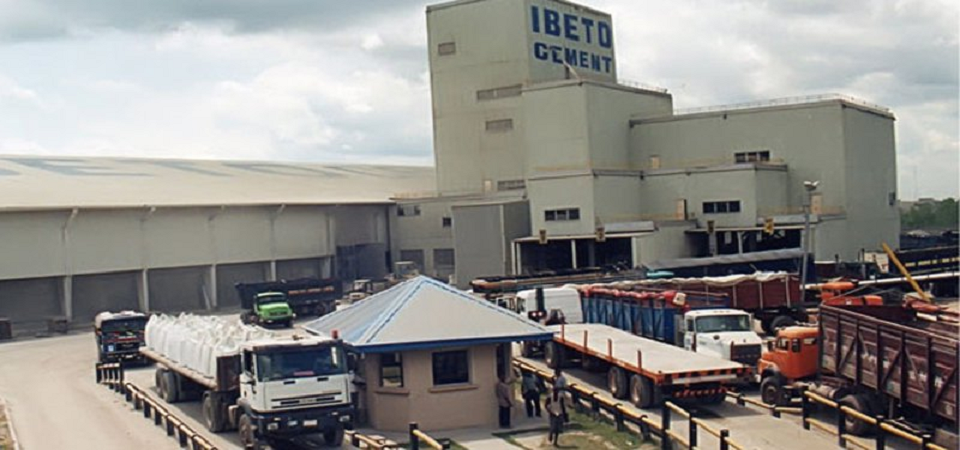
lbeto Cement Limited, located in Rivers State (Nigeria), began cement bagging operations at its bagging terminal in Port Harcourt in 2005. It acquired 70% of this U.S. company which is traded on OTC.
The company said it acquired 70 per cent of Century Petroleum, resulting in the reverse merger of the cement manufacturer’s assets with the U.S. firm’s.
A reverse takeover or reverse merger takeover is the acquisition of a public company by a private company so that the private company can bypass the lengthy and complex process of going public.
The transaction typically requires reorganisation of capitalisation of the acquiring company.
[…]
It added: “By this reverse merger which is expected to be sealed and publicly presented in 90 days, Ibeto Cement will achieve the historic milestone of being the first Nigerian firm to be listed in the United States Stock Exchange.
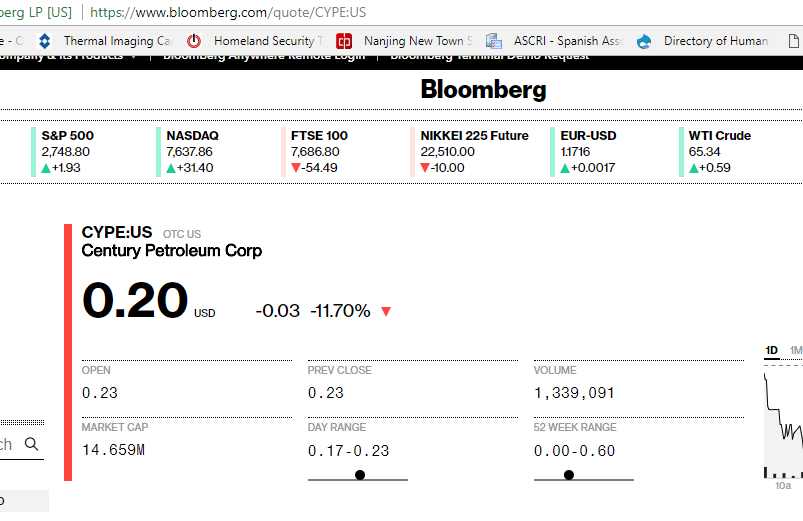
Using Bloomberg, Century Petroleum trades at 20 cents per share, giving the company a total market cap of about $15 million. If we assume Mr Ibeto paid a premium, you would be looking at him spending about $15 million for the 70% control he now enjoys. In other words, I am assuming the owners sold for say $20 million with $6 million the estimated premium. Typically, that should have reflected on the share price, but this is OTC, not the main board, and time does lag [if you check the Bloomberg link, on announcement day, around last week of May, price went up to 35 cents as some people took profits and exited. But it has normalized. The good news is that price remains above deal-day price, signifying positive outlook).
Century Petroleum Corp market cap (source: Bloomberg)
With this deal, Ibeto Cement has met one of the condition-precedents to raise $850 million from Milost Global, a New York private equity firm, as reported by Bloomberg.
Ibeto Cement Co. Ltd., a privately owned Nigerian producer of the building material, signed a deal to get $850 million in financing from Milost Global Inc, according to the New York- based private equity firm.
Milost will provide $500 million in equity and $350 million as debt to the Nigerian cement maker, Milost said in a statement on its website, citing a “binding” agreement by the two parties.
The announcement of a deal with Ibeto is coming weeks after Nigerian company Japaul Oil & Maritime Services Plc said it was pulling out of a $350 million funding deal with the U.S. firm, citing what it called “red flags.”
Milost in March ended talks to provide $1 billion to Nigeria’s Unity Bank Plc alleging threats by some suspected shareholders. The lender denied entering a binding agreement with the private equity firm, saying talks were only preliminary.
Now, Dangote Cement may need to cut cement prices as Ibeto Cement could be offering options in Nigeria. If this works out well, I expect Japaul Oil to exit NSE and relist in U.S. This could become a trend.
In the age of SMAC, if you are not leading on Social Media, Mobile, Analytics or Cloud, the best option is to acquire a company, especially when the incumbent leaders are tenuously supreme and category-kings. Microsoft has few other options if it wants to break into #1 position in any of those four areas. On Monday, it picked a developer ecosystem, GitHub, for $7.5 billion in an all-stock deal.
Microsoft Corp. on Monday announced it has reached an agreement to acquire GitHub, the world’s leading software development platform where more than 28 million developers learn, share and collaborate to create the future. Together, the two companies will empower developers to achieve more at every stage of the development lifecycle, accelerate enterprise use of GitHub, and bring Microsoft’s developer tools and services to new audiences.
[…]
Today, every company is becoming a software company and developers are at the center of digital transformation; they drive business processes and functions across organizations from customer service and HR to marketing and IT. And the choices these developers make will increasingly determine value creation and growth across every industry. GitHub is home for modern developers and the world’s most popular destination for open source projects and software innovation. The platform hosts a growing network of developers in nearly every country representing more than 1.5 million companies across healthcare, manufacturing, technology, financial services, retail and more.
This deal is significant and the basis is evident when you look at the players involved. Within the consumer framework, the top two leaders of each of the SMAC components are as follows:
Social Media: Facebook and Twitter
Mobile Ecosystems: iOS and Android
Analytics: Alexa (Amazon) and Assistant (Google)
Cloud: AWS (Amazon) and Microsoft (Azure).
I have biased this within the consumer framework even though the distinctions between consumer and enterprise systems are now blurred. Doing so removes the challenge of comparing Amazon Alexa and IBM Watson; the latter, in my opinion, remains largely enterprise-focused. Also, while IBM may have cloud offerings, for most consumer facing entrepreneurs, working with Amazon and Microsoft (followed by Google) remains the options before IBM. So, it is irrelevant what the positions of enterprise-focused firms like Oracle and IBM are in these four areas.
Simply, Microsoft does not have any solution as #1 in these new areas [certainly Microsoft Windows remains a platform king on desktop, but the global mobile shift is weakening the business]. For Microsoft, the closest is #2 on Cloud with Google coming behind ferociously. Cortana, its equivalent of Alexa, continues to lag: Alexa and Assistant are extending their leads across many metrics. So, generally, if Microsoft has to remain relevant in these areas, it has to do something radical. It cannot just rely on in-house capabilities to overcome these other companies. So, it has to acquire.
This acquisition of GitHub mirrors the purchase of Nokia, a Hail Mary to see if Microsoft could boost Windows Mobile, a mobile version of Windows, designed for smartphones and tablets.
Depending on how it integrates this business into its solutions, Microsoft could use GitHub to deepen its cloud offering, making it more appealing to developers since they are the people that make decisions on cloud solutions to build upon. Amazon’s primitives remain one of the key selling points for AWS; having these code sharing capabilities that GitHub brings could help Microsoft Azure battle ahead. Besides, Microsoft has Windows and could get developers to take harder look to build for Cortana in order to deepen the scale of Cortana as it takes on Alexa and Assistant.
Cloud computing was nascent. Companies weren’t yet thinking about digital transformation. But software was eating the world, and it was being built on GitHub.
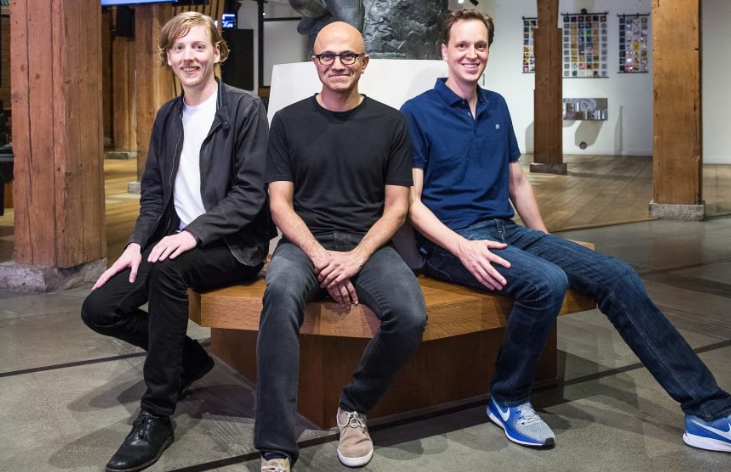
Today Microsoft announced they are acquiring GitHub for $7.5 billion. By combining the GitHub platform with Microsoft’s cloud offering, Satya Nadella and team aim to build the future of software development. GitHub brings the largest software code base in the world (over the past five years, user growth exploded to 28 million and GitHub has become the platform for all developers) to Microsoft’s Azure cloud platform while also staying open to all other clouds. The focus on the developer doesn’t change and there is a commitment to remaining an open platform.
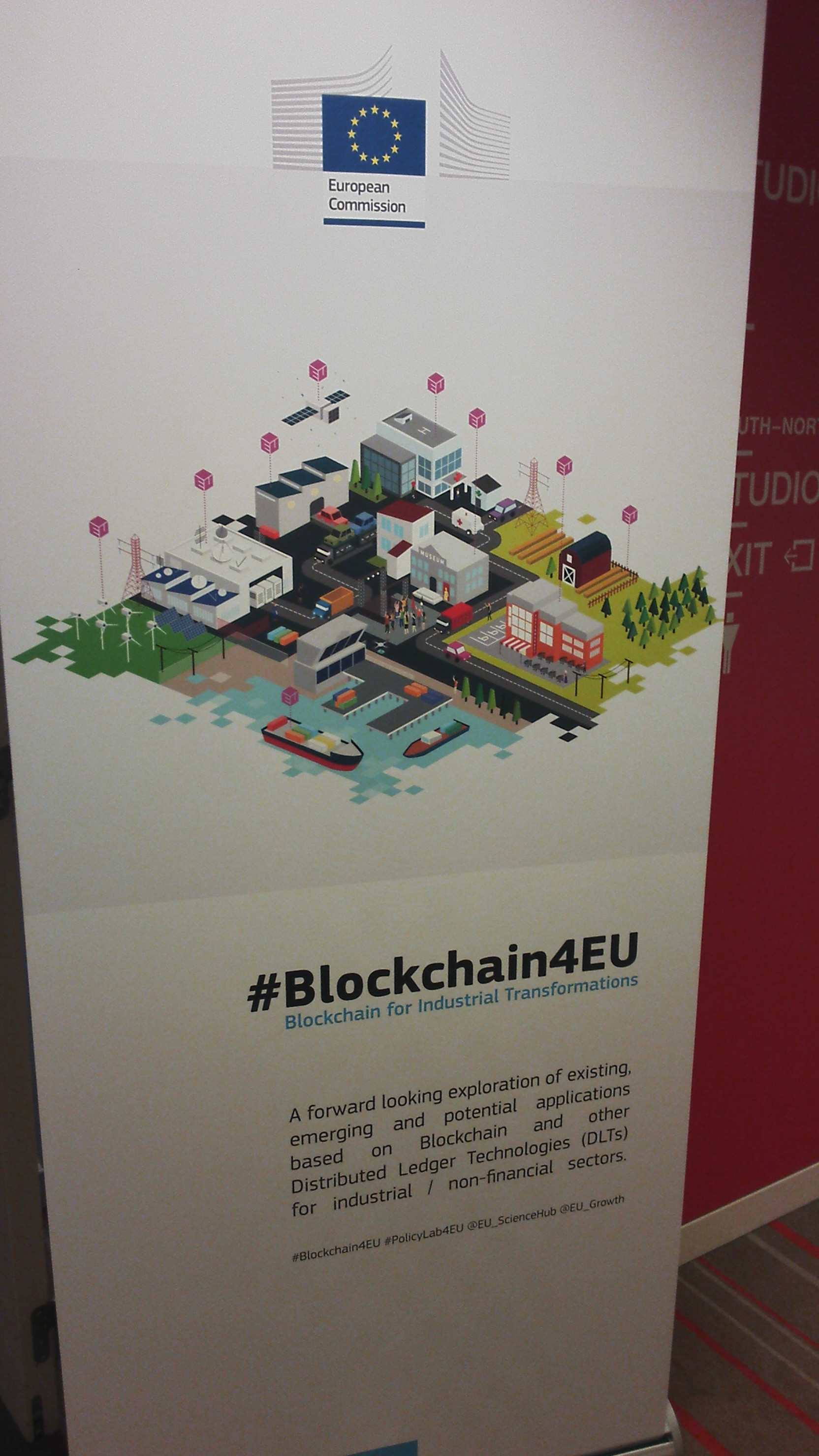
In Europe today, I received a guided tour: the blockchain unit of the European Commission took me through new technologies it is funding and creating. I was stunned because I did not know that EC has many technical PhDs warehoused in some labs, pushing and researching for the future of Europe. Yes, I know of the PhD Economics but blockchain and AI experts? Not really.
Blockchain has been heralded as one of the most exciting new technologies with capabilities to redesign industrial sectors over the next few years. It is “a digital ledger in which transactions made in bitcoin or another cryptocurrency are recorded chronologically and publicly.” Wikipedia explains it as “a continuously growing list of records, called blocks, which are linked and secured using cryptography”.
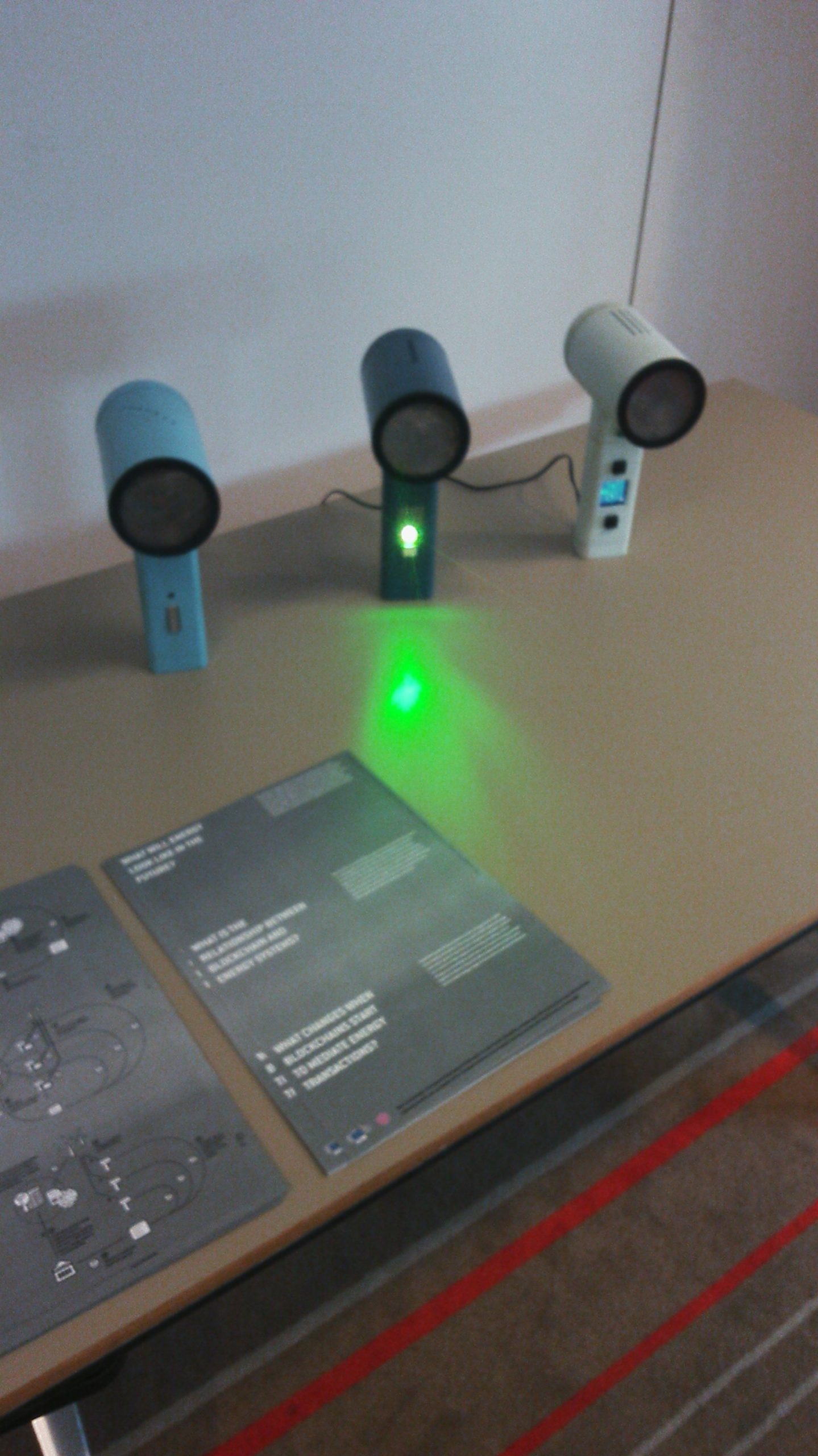
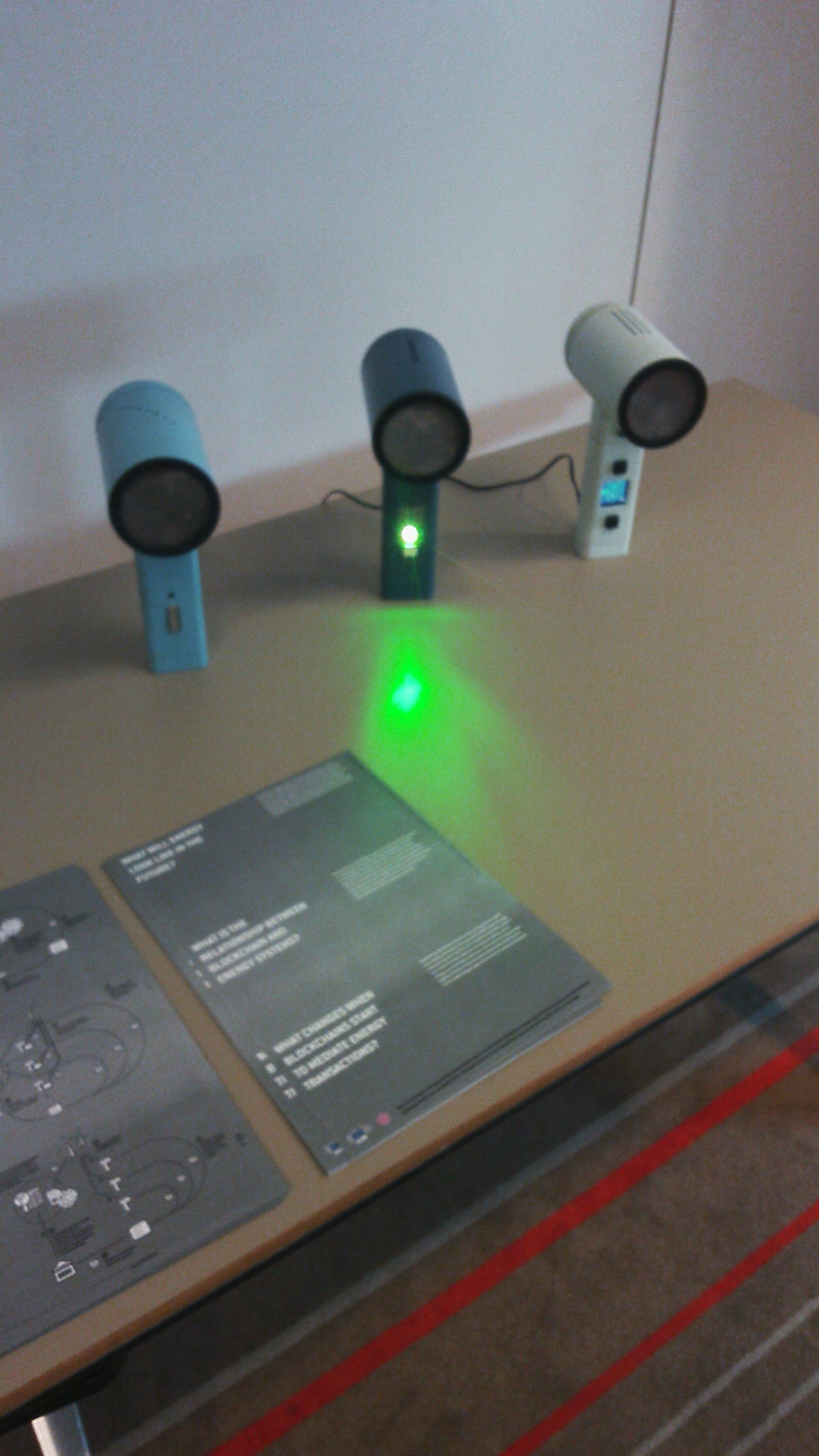
As we went through the tour, one of the items got my brain firing. They have built this hand hair dryer that could buy the cheapest electricity using blockchain. In the dryer is a blockchain node via Internet connection which links it into an ecosystem. As you use the dryer, it would be combing the world, looking for the cheapest electricity. Once it finds, an AI bargains, and closes the deal. You would not even know. Yes, you would continue to dry your hair while the agents of bits and bytes do their jobs!
Blockchain hand hair dryer (source: EC)
The thinking is this: in the near future, electricity would be truly unbundled with the amalgam of renewal & alternative energy (solar, wind, geothermal, etc) entrepreneurs participating in big ways. Out of nowhere would be energy aggregators who would become brokers of electric power. They would acquire distribution lines and then push energy producers to compete for access into homes and offices. Think of Google AdWord where advertisers bid for the opportunities for Google to show their adverts on AdSense-supported websites. The bidders play with amount they are ready to pay. If the price is very low, Google would not show the ads even though the person is running an ad campaign. Yes, it is possible if your bidding is low, you would be on a campaign and none of your ads would show.
So, for electricity, the energy producers have to set their prices. They have incentives to make them low to win the bids. The distributors would pay based on the amount consumed through their networks. The implication is that every energy producer would be forced to have very competitive price since without a good price, the users, through blockchain, would likely not use power from that firm,
For this hand dryer, the local Belgium utilities company has a base price but there are brokers who have bought power at scale to resale at small margins. Even though the local utilities company is physically piping the electricity to the dryer, the money matters are being handled by other companies (energy traders, futures and speculators). And there are many of such companies that before a woman finishes drying her hair, the dryer had bought electricity from three companies, autonomously, with no help from the user.
Nigerian Disco Scenario
The Nigerian Disco (distribution companies) issue is unique because our problem is that we have not gotten the electricity to homes. Also, there are issues with smart metering and payments. But looking at what they are doing in the EC, it seems the problems we are trying to solve are already stale! Simply, you do not need any meter because blockchain can do the metering [of course we do not have decent Internet access, but that would change]. The payment issue is handled automatically as the bidding, buying, payment, and settlement are done autonomously meaning that the issue of non-payment is not a possibility.
Of course, besides a reliable Internet access, we need to have a credible way to execute the payment. According to the EC, they are working on something. Because it was shared in confidence, I will not discuss it here as it could be misinterpreted.
Nigeria would need a digital currency tied to the Nigerian naira to enable efficient conversion on what is happening in the blockchain and the real world. This is imperative as blockchain has many applications for Africa as I noted in my book. We cannot just wait without dealing with that currency conversion paralysis with an indigenous solution.
Virtual Energy Operators
With blockchain, this is where we are going on electricity: Virtual Energy Operators. These entities would be similar to Mobile Virtual Network Operators. Simply, the technical company that provides the electric line to your house, is not necessarily going to be the company you would be paying.
A mobile virtual network operator (MVNO), virtual network operator (VNO), or mobile other licensed operator (MOLO), is a wireless communications services provider that does not own the wireless network infrastructure over which it provides services to its customers. An MVNO enters into a business agreement with a mobile network operator to obtain bulk access to network services at wholesale rates, then sets retail prices independently. An MVNO may use its own customer service, billing support systems, marketing, and sales personnel, or it could employ the services of a mobile virtual network enabler (MVNE).
This implies that if a distributor connects a line to your house or office, using blockchain, three or more energy producers may be competing and bidding for you to use energy from them. And depending on the prices, the blockchain AI in your device would take the best offer, and while you are still in the middle of the activity, it could still switch to another producer to take advantage of the current best offer.
Inhale and exhale, we are still far from this, in Nigeria. But this is the future Europe is planning for. They do believe that with renewal and alternative energies, it would not be long for this new redesign to become the norm.