DD
MM
YYYY

PAGES

DD
MM
YYYY

spot_img

PAGES

Home Blog Page 711

TradFi Is Moving Toward On-Chain Finance, As U.S. Crypto Policy Shapes Crypto Adoptions

0

Traditional Finance (TradFi) is increasingly engaging with on-chain finance, but its readiness is a mixed bag, shaped by opportunities, hurdles, and ongoing developments. On-chain finance, powered by blockchain, offers compelling advantages over traditional systems.

Near-instant settlement (e.g., T+0 vs. T+2) reduces capital tied up in limbo, potentially unlocking billions. For instance, the DTCC’s Project Ion processes over 100,000 daily equity transactions using distributed ledger technology (DLT), slashing reconciliation costs. Immutable ledgers ensure auditable, tamper-proof records, fostering trust.

fund on-chain via DLT Shares, using blockchain for real-time settlement and 24/7 access. This builds on their BUIDL fund, which hit $1.7 billion in assets on Ethereum and expanded to multiple chains like Solana.

JPMorgan’s JPM Coin processes $1 billion daily in settlements, while BNY Mellon, Citi, and Goldman Sachs are running pilots for tokenized bonds and custody solutions. Stablecoin transaction volumes hit $700 billion monthly in early 2025, with regulatory frameworks like the EU’s MiCA boosting confidence for banks to issue compliant stablecoins.

Firms like Morgan Stanley and UBS are exploring tokenization of real-world assets (RWAs), with projections estimating a $30 trillion RWA market by 2034. Improving regulations, such as the EU’s MiCA and the U.S. Stablecoin Bill, are providing frameworks for compliance, reducing risks for institutions. Posts on X also highlight a U.S. shift toward crypto-friendly policies, including potential “innovation exemptions” for startups.

Platforms like Chainlink, Securitize, and R3 Corda are building institutional-grade solutions, integrating compliance (e.g., KYC/AML) with blockchain’s benefits. Chainlink, for instance, is noted for meeting 70-90% of institutional requirements for on-chain transactions. Legal frameworks for DeFi and tokenized assets are still evolving. KYC/AML compliance is a major concern, as anonymous DeFi protocols don’t align with TradFi’s strict mandates.

Jurisdictional differences create fragmentation, slowing adoption. A Binance spokesperson noted that inconsistent policies across regions pose risks for institutions. Public DeFi protocols aren’t designed for plug-and-play with legacy banking infrastructure, requiring significant investment in new systems and smart contract expertise.

Traditional financial networks handle 65,000+ transactions per second (TPS), while most blockchains (even Layer 2 solutions like Polygon) struggle to match this throughput. Emerging Layer 1 solutions like DevvE are addressing this, but they’re not yet at scale. Vulnerabilities and user errors remain concerns, as TradFi expects robust protective infrastructure that’s still developing.

DeFi’s permissionless, experimental ethos clashes with TradFi’s risk-averse, hierarchical culture. Many executives lack a deep understanding of decentralization, leading to reputational and control concerns. Complex user interfaces, unpredictable gas fees, and concepts like impermanent loss are foreign to traditional portfolio managers, necessitating hybrid solutions like permissioned DeFi.

Blockchain’s promise hinges on robust security, but high-profile failures (e.g., the $165 million ASX blockchain upgrade flop in 2022) highlight risks. Smart contract flaws or private key breaches could freeze millions in assets. TradFi is adopting a “walk-before-run” strategy, maintaining legacy systems alongside pilots to mitigate risks.

Protocols like Aave and Compound offer overcollateralized lending and KYC-gated pools (e.g., Aave Arc), providing predictable yields. Singapore’s MAS Project Guardian used Aave Arc for institutional bond trades, signaling viability. Lower liquidity and network speed requirements make this appealing, with credit endorsements reducing counterparty risk. Less mature sectors like decentralized derivatives face higher regulatory scrutiny and leverage risks, delaying adoption.

TradFi is not yet fully ready for on-chain finance due to regulatory, technical, and cultural hurdles, but the shift is inevitable. The efficiency, transparency, and liquidity of blockchain are too compelling to ignore, with institutions like BlackRock, JPMorgan, and Goldman Sachs already laying the groundwork. Over the next 12-18 months, expect a quiet but monumental shift as tokenized RWAs, stablecoins, and compliant infrastructure bridge the gap.

Recent U.S. Crypto Policy Frameworks Has Help Shaped Crypto Adoptions Amongst Institutional Investors

Recent U.S. policy shifts have significantly paved the way for institutional cryptocurrency adoption, marking a departure from previous regulatory uncertainty.

On January 23, 2025, President Trump issued an executive order titled “Strengthening American Leadership in Digital Financial Technology,” which revoked prior restrictive policies and emphasized regulatory clarity, financial inclusivity, and protection of blockchain activities like self-custody and mining.

This order also proposed evaluating a national digital asset stockpile using seized cryptocurrencies and banned a U.S. central bank digital currency (CBDC) while supporting USD-backed stablecoins. GENIUS Act: Signed into law on July 18, 2025, the Guiding and Establishing National Innovation for U.S. Stablecoins (GENIUS) Act established a regulatory framework for stablecoins, treating issuers as financial institutions under the Bank Secrecy Act with requirements for KYC, AML, and sanctions compliance.

This has legitimized stablecoins, attracting institutional players like BlackRock and boosting market stability. In April 2025, the Federal Reserve, OCC, and FDIC relaxed restrictions, allowing banks to engage in crypto custody, stablecoin issuance, and blockchain infrastructure development with robust risk management. This shift from defensive to integrative regulation reflects market maturity and geopolitical considerations, enabling banks to offer crypto services.

The SEC scaled back its crypto enforcement unit and launched “Project Crypto” under Commissioner Paul Atkins to modernize securities rules for on-chain assets. A Crypto Task Force, led by Hester Peirce, is working on clearer regulations, addressing issues like asset classification and registration processes.

Trump’s March 7, 2025, executive order established a U.S. Bitcoin reserve and digital asset stockpile, using forfeited assets. This move legitimizes Bitcoin as a strategic asset, encouraging institutional investment and potentially influencing global financial policies. These changes have driven significant institutional engagement.

For instance, Binance secured a $2 billion investment from MGX in March 2025, and institutions now hold nearly 15% of Bitcoin’s supply, with $108 billion in Bitcoin ETFs. The crypto market cap reached $3.71 trillion by December 2024, reflecting a 98% year-over-year increase. However, risks like cybersecurity, AML compliance, and liquidity challenges remain, requiring robust oversight.

While these policies enhance liquidity and market maturity, some argue they favor institutional control, potentially undermining crypto’s decentralized ethos. Smaller Web3 startups may struggle to compete, and regulatory compliance could stifle innovation if overly stringent. Nonetheless, the U.S. is positioning itself as a leader in digital finance, with global implications as other nations consider similar reserves.

While the GENIUS Act aligns the U.S. with jurisdictions like the EU and Hong Kong, which have stablecoin regulations, critics argue it lacks global coordination. Foreign jurisdictions, including China and the EU, express concerns about dollar-denominated stablecoins increasing dollarization and threatening monetary sovereignty.

The absence of global standards could lead to fragmented regulations, complicating compliance for international crypto firms. Critics, including Rep. Maxine Waters and Rep. Rashida Tlaib, argue that the legislation may favor President Trump’s personal crypto ventures (e.g., $TRUMP token, World Liberty Financial), raising conflict-of-interest concerns.

The Anti-CBDC Act, which bans a U.S. central bank digital currency, may hinder innovation in cross-border payments and position the U.S. as an outlier, as countries like China and the EU advance CBDC pilots. This could cede global financial leadership to rivals.

While established crypto firms already comply with AML/KYC requirements, new entrants face significant costs to meet the GENIUS Act’s standards, including reserve backing, audits, and registration. This could favor larger players and stifle smaller startups.

Impact of AI on the Global Tech Talent Market [podcast]

0

This video podcast – Impact of AI on the Global Tech Talent Market – discusses the transformative impact of artificial intelligence (AI) on the global tech talent market, highlighting how AI is disrupting old business models and creating a new economic landscape.

Pre-AI Market Dynamics: The podcaster first describes the successful business model that existed before the rise of AI. This model was based on a global talent pipeline where companies in developed nations, such as the US and Western Europe, recruited and hired tech professionals from developing countries, including Africa and India. Companies like Andela and Infosys facilitated this process. The system was mutually beneficial: developed nations gained access to skilled labor at a lower cost, while professionals in developing countries earned higher wages with significant purchasing power.

Disruption by AI: The arrival of advanced AI tools, referred to as a “renaissance,” fundamentally changed this dynamic. The core argument is that AI has become an “entry-level engineer,” capable of performing many of the basic coding and development tasks that were previously outsourced to junior talent. This has led to a process of “disintermediation,” where the need for human intermediaries and remote entry-level workers has been significantly reduced.

Impact on Companies and Employment: The podcast provides specific examples of companies whose business models were shattered by AI. Companies like Andela and Infosys saw their primary value proposition—providing entry-level remote talent—diminished. The speaker also cites the struggles and bankruptcy of education companies like Chegg and 2U, whose services could be easily replicated by AI, which provides direct answers to student questions.

This disruption has led to “massive dislocation” in the job market, affecting not only remote workers in developing nations but also new computer science graduates in countries like the US, who are finding it harder to secure entry-level positions. The speaker notes that companies like Microsoft and Google are laying off thousands of people, with AI taking over roles once filled by humans.

Conclusion and Future Outlook: The presentation concludes that AI is rewriting the “ordinance of the market system.” In this new era, technical skills alone are not enough. The focus for businesses and individuals must shift to providing unique value that AI cannot. The speaker warns that this is just the beginning, predicting that in the coming years, even experienced engineers will face disruption as AI becomes increasingly sophisticated, reaching a level of “experience” that rivals their own. The message is a call for adaptation and a fundamental re-evaluation of what makes a person or a company relevant in an AI-driven world.


Podcast VideoSign-up at Blucera and check Tekedia Daily podcast category under Training module.

Roman Storm’s Unlicensed Money Transmitting Conviction Highlights a Critical Juncture For Cryptocurrency

0

Roman Storm, a Tornado Cash developer, was convicted on August 6, 2025, of conspiracy to operate an unlicensed money transmitting business, which carries a maximum sentence of five years. The jury could not reach a verdict on the other two charges: conspiracy to commit money laundering and conspiracy to violate U.S. sanctions.

Prosecutors claimed Tornado Cash enabled over $1 billion in illicit transactions, including by North Korea’s Lazarus Group. Storm’s defense argued he had no control over the decentralized protocol’s use by others. He is out on bail, awaiting sentencing, and plans to appeal.

Storm’s conviction sets a potential precedent for holding developers liable for the misuse of decentralized protocols, even when they lack direct control over how the technology is used. Tornado Cash, a decentralized mixer, was designed to enhance transaction privacy on Ethereum, but prosecutors argued it facilitated over $1 billion in illicit transactions, including by groups like North Korea’s Lazarus Group.

This ruling could chill innovation in decentralized finance (DeFi) as developers may fear legal repercussions for building open-source tools. The case underscores tensions between privacy rights and regulatory oversight. Tornado Cash was created to protect user anonymity, a core principle for many in the crypto community.

However, the conviction suggests that tools enabling anonymity may face intense scrutiny if used for illicit purposes, potentially limiting the development of privacy-preserving technologies. The U.S. Treasury’s 2022 sanctions on Tornado Cash already marked a novel move against a decentralized protocol.

Storm faces up to five years in prison for the single charge, with sentencing pending. His planned appeal could test the boundaries of developer liability in higher courts, potentially shaping future legal interpretations of decentralized systems. The hung jury on the money laundering and sanctions charges suggests some juror skepticism about the broader accusations.

Developers of open-source software, especially in blockchain, may hesitate to release tools that could be misused, fearing prosecution. This could stifle innovation in DeFi and other decentralized technologies, as developers weigh legal risks against their work’s potential benefits.

Many in the crypto space view Storm’s conviction as an overreach, arguing that holding developers accountable for third-party actions undermines the ethos of decentralization. They emphasize that Tornado Cash is a neutral tool, akin to a hammer, which can be used for both legitimate and illicit purposes. Supporters, including figures like Edward Snowden, have called the case a threat to free speech and innovation, with some labeling it a “witch hunt.”

The U.S. government, including the DOJ and Treasury, argues that tools like Tornado Cash enable serious crimes, such as money laundering and sanctions evasion. They assert that developers have a responsibility to prevent misuse, even in decentralized systems, and that unregistered money transmission violates U.S. law.

Many crypto users and developers see privacy as a fundamental right, especially in financial transactions. They argue that tools like Tornado Cash protect individuals from surveillance and censorship, particularly in authoritarian regimes. The conviction is seen as prioritizing state control over individual freedom.

Law enforcement and regulators prioritize preventing financial crimes, arguing that unchecked privacy tools enable terrorism, cybercrime, and sanctions evasion. The guilty verdict reflects their view that privacy cannot come at the expense of national security and legal accountability.

Prosecutors and critics contend that someone must be held accountable for enabling criminal activity, even in decentralized systems. They view developers as gatekeepers who should implement safeguards or face consequences. The case has polarized public opinion. Some see it as a necessary crackdown on crypto-enabled crime, while others view it as government overreach into a nascent industry.

The crypto industry has rallied around Storm, with organizations like Coin Center filing amicus briefs in related cases, arguing that sanctioning code violates free speech. The outcome of Storm’s appeal could clarify legal protections for developers. Other countries may follow the U.S.’s lead, tightening regulations on privacy tools. Conversely, some jurisdictions might see this as an opportunity to attract crypto innovation.

Philippines SEC Cracks down on Unregistered Offshore Crypto Exchanges

0

In August 2025, the Philippines—SEC issued a public advisory targeting ten major offshore crypto exchanges—OKX, Bybit, KuCoin, Kraken, MEXC, Bitget, Phemex, CoinEx, BitMart, and Poloniex—for operating without licenses under the new Crypto Asset Service Provider (CASP) rules, effective July 2025.

These rules, outlined in SEC Memorandum Circulars No. 4 and No. 5, require all crypto platforms to register with the SEC, maintain a minimum capital of 100 million pesos (approximately $1.7 million), establish a local office, and comply with anti-money laundering (AML) regulations.

The SEC’s actions include blocking access to these platforms through internet service providers like PLDT and Smart, issuing cease-and-desist orders, and pursuing criminal complaints. Fines for violations can reach up to 10 million pesos per offense, with additional daily penalties of 10,000 pesos. The regulator has also collaborated with tech giants like Google and Meta to restrict unauthorized marketing. This follows a 2024 precedent where Binance was geo-blocked for similar reasons.

The crackdown aims to protect investors from risks like fraud, fund loss, and lack of legal recourse, while addressing national security concerns such as money laundering and terrorist financing, which could lead to the Philippines being “gray-listed” by international bodies like the Financial Action Task Force (FATF).

The SEC has clarified that the list of flagged exchanges is not exhaustive, and other unregistered platforms could face similar actions. Filipino users are advised to verify a platform’s registration status with the SEC and avoid trading on unlicensed exchanges. This aligns with regional trends, as countries like Thailand and Indonesia have also tightened regulations on offshore crypto platforms.

The SEC’s actions aim to safeguard Filipino investors by enforcing licensing requirements, ensuring platforms meet capital, transparency, and AML standards. This reduces risks of fraud, hacks, or unrecoverable fund losses seen in cases like FTX or unregistered platforms. Blocking major exchanges like OKX, Bybit, and Binance restricts access to popular trading platforms, potentially pushing users to riskier, less regulated alternatives.

The CASP rules encourage the development of a regulated domestic crypto sector by requiring local offices and compliance. This could foster job creation and innovation but may deter smaller or foreign firms due to high costs (e.g., 100 million pesos capital requirement). The Philippines relies heavily on remittances (9.3% of GDP in 2024), and crypto has been a low-cost alternative for overseas Filipino workers (OFWs).

Restrictions may disrupt these flows, forcing users back to traditional, costlier channels like banks or remittance services. The crackdown aligns with international pressure to combat money laundering and terrorist financing, aiming to avoid FATF gray-listing, which could harm foreign investment and banking ties. However, overly strict measures might stifle the Philippines’ position as a crypto hub in Southeast Asia, where countries like Singapore balance regulation with innovation.

Blocking websites is not foolproof; users can bypass geo-restrictions via VPNs or decentralized platforms. This creates enforcement gaps, as seen in Binance’s continued use post-2024 ban. The SEC’s reliance on tech firms like Google and Meta for ad restrictions may also have limited impact on savvy users.

The SEC prioritizes consumer protection and national security, viewing unregistered exchanges as high-risk due to their lack of oversight. The focus is on formalizing the crypto market to align with global standards. Many Filipino crypto traders, especially retail investors and OFWs, value offshore exchanges for their low fees, high liquidity, and diverse offerings.

The ban creates friction, as compliant local platforms may offer fewer trading pairs or higher costs, pushing users toward unregulated alternatives or black-market trading. Licensed exchanges like Coins.ph and PDAX benefit from the ban, gaining a competitive edge. However, they may struggle to match the scale, liquidity, or advanced features (e.g., derivatives trading) of global giants like Binance or OKX.

Offshore exchanges face a tough choice: invest in costly compliance to enter the Philippine market or lose access to an estimated 11.8 million crypto users (10% of the population in 2025). Some may exit entirely, while others might explore loopholes. The strict rules signal a cautious approach to crypto, potentially stifling innovation in a country with high blockchain adoption (ranked 2nd globally in Chainalysis’ 2024 adoption index).

The Philippines’ actions reflect a global trend of tightening crypto regulations (e.g., India’s tax regime, Thailand’s offshore bans), but the divide between user needs and regulatory goals remains stark. Retail investors may face reduced options, while the government balances economic growth with risk mitigation. The long-term outcome depends on whether the SEC can foster a robust, compliant crypto ecosystem without alienating its tech-savvy population.

Retirement Plans’ Growing Interest in Tokenized Assets, Exemplified By Michigan’s AKRB Bitcoin ETF Exposure

0

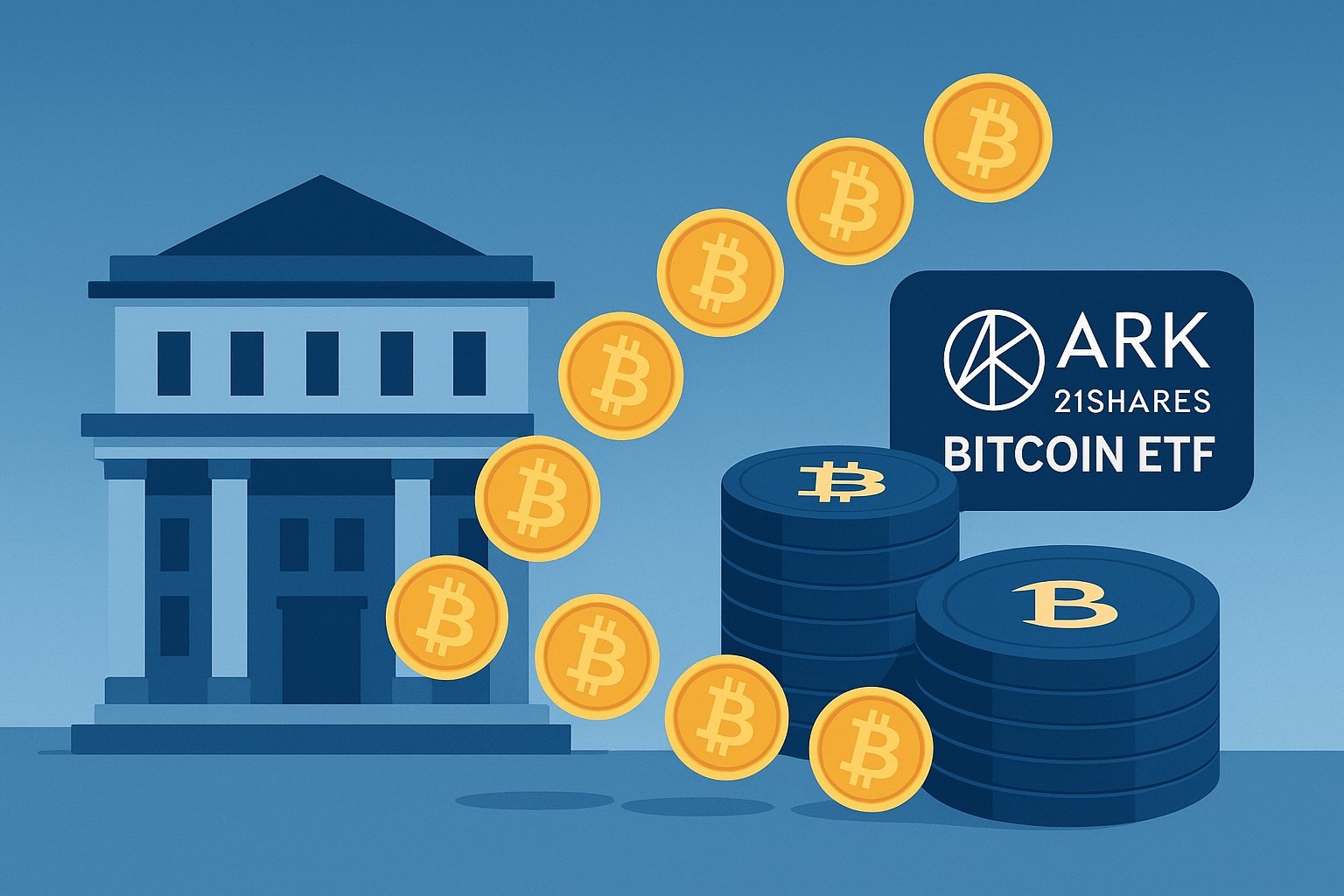
The State of Michigan Retirement System significantly increased its Bitcoin exposure in Q2 2025, tripling its holdings in the ARK 21Shares Bitcoin ETF (ARKB) from 100,000 to 300,000 shares, valued at approximately $11.4 million as of June 30, according to SEC filings. The fund also maintains 460,000 shares in the Grayscale Ethereum Trust (ETHE), worth about $9.6 million, unchanged since September 2024.

This move reflects growing institutional confidence in digital assets, despite recent Bitcoin ETF outflows totaling $1.4 billion over four days. Michigan’s strategy aligns with a broader trend, as seen with Wisconsin’s $387.3 million Bitcoin ETF position, signaling cautious but increasing adoption among state pension funds.

Tokenized assets, such as Bitcoin ETFs or tokenized real estate and private equity, allow fractional ownership, lowering barriers to entry for retail and institutional investors. This enables retirement plans to offer exposure to high-value or illiquid assets previously reserved for high-net-worth individuals or institutional investors, like private equity or real estate.

Traditionally illiquid assets, such as private equity or infrastructure, gain liquidity through tokenization. Retirement plans can rebalance portfolios more dynamically, meeting cash flow needs without sacrificing long-term returns. For instance, tokenized real estate allows pension funds to exit portions of investments rather than entire holdings, addressing liquidity constraints.

Blockchain-based tokenization reduces intermediaries through smart contracts, lowering transaction and administrative costs. For large pension funds like Michigan’s, this can translate into significant savings, potentially reducing fees passed on to retirees.

Blockchain’s immutable ledger provides a transparent, traceable record of transactions, reducing fraud risks and enhancing regulatory compliance. This is particularly appealing for pension funds, which prioritize fiduciary responsibility and accountability. The lack of consistent global frameworks creates fragmentation.

Cryptocurrencies like Bitcoin, even in ETF form, are volatile, posing risks to retirement funds that prioritize stability. The recent $1.4 billion in Bitcoin ETF outflows highlights market fluctuations. Many retirement plans lack the technological expertise or infrastructure to manage blockchain-based assets, requiring costly upgrades.

Tokenized assets are vulnerable to hacks or smart contract errors, necessitating robust security measures. The inclusion of high-risk assets like cryptocurrencies in retirement plans, as enabled by recent U.S. executive actions, raises fiduciary concerns. Plans must balance potential returns with the need to protect retirees from undue risk, especially given warnings about private equity and crypto being diverted into 401(k)s without clear investor consent.

However, limited market liquidity and immature secondary markets could hinder scalability. Following Michigan’s lead, retirement plans are increasingly allocating to Bitcoin and Ethereum ETFs. Wisconsin’s $387.3 million Bitcoin ETF position and Michigan’s $11.4 million ARK 21Shares Bitcoin ETF holdings reflect this trend.

Tokenized money market funds have surpassed $1 billion in assets under management in 2024, driven by high-interest-rate environments. Major players like BlackRock, WisdomTree, and Franklin Templeton offer these funds, which provide instant settlement and can be used for payments, enhancing capital efficiency. Retirement plans are exploring these for stable, on-chain returns.

Pension funds are testing tokenized real estate and private equity to diversify portfolios and access illiquid markets. For example, tokenized real estate allows fractional ownership of properties, enabling pension funds to invest globally without large capital commitments. Goldman Sachs is launching tokenization projects for U.S. fund complexes and European debt markets by late 2024, signaling institutional interest.

Retirement plans are eyeing tokenized bonds and equities for faster settlement and lower costs. Slovenia’s issuance of a digital bond in 2024 and Switzerland’s Helvetia III project for tokenized bond settlements using wholesale CBDCs are notable examples. These offer pension funds efficient, transparent investment options.

A U.S. executive order signed on August 7, 2025, directs the Department of Labor to review fiduciary guidance, paving the way for cryptocurrencies and private equity in 401(k) plans. BlackRock’s planned 401(k) target-date fund with 5-20% private investments and Empower’s collaboration with Apollo reflect this shift, though it introduces risks for retail investors.

The tokenized asset market is projected to grow significantly, with estimates ranging from $2 trillion by 2030 (McKinsey) to $16 trillion (Boston Consulting Group). PwC forecasts tokenized investment funds reaching $317 billion by 2028. Retirement plans are aligning with this trend, with 74% of institutional investors planning to invest in digital assets within five years, per a 2024 Fidelity survey.

Trends like tokenized money market funds, real estate, and digital bonds are gaining traction, supported by regulatory sandboxes and institutional pilots. As the market matures, retirement plans must balance innovation with fiduciary duty to ensure long-term stability for retirees.