DD
MM
YYYY

PAGES

DD
MM
YYYY

spot_img

PAGES

Home Blog Page 714

Trump-Putin Summit Could Be A Pivotal Moment For U.S.-Russia Relations

0

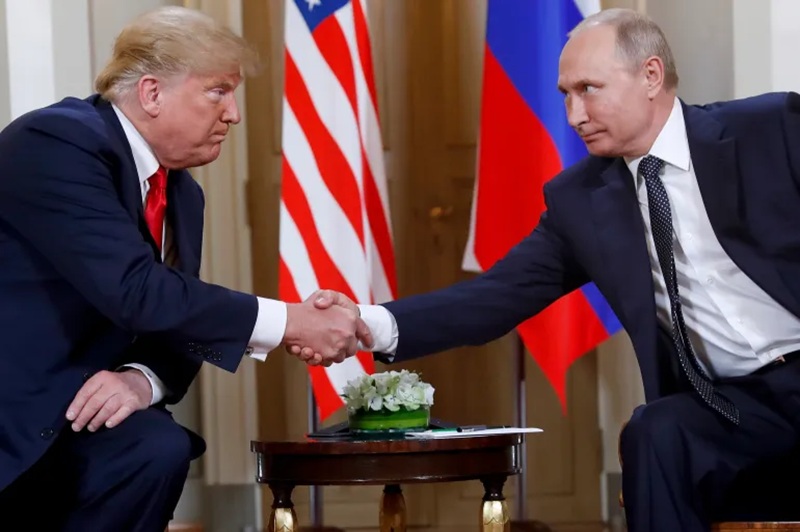
President Donald Trump is scheduled to meet with Russian President Vladimir Putin on Friday, August 15, 2025, in Alaska to discuss ending the Russia-Ukraine war. The announcement was made by Trump on his Truth Social platform, confirming the date and location after weeks of speculation.

The meeting aims to address a potential ceasefire, with Trump suggesting possible “swapping of territories” between Russia and Ukraine, though Ukrainian President Volodymyr Zelenskyy has firmly opposed ceding any land. This will be the first U.S.-Russia summit since 2021.

Implications for U.S.-Russia Relations

The summit marks the first high-level U.S.-Russia meeting since Russia’s invasion of Ukraine in February 2022, signaling a possible thaw in relations strained by sanctions, military tensions, and diplomatic expulsions. Trump’s transactional approach and history of engaging directly with Putin suggest an intent to restore some level of dialogue.

A successful meeting could lead to the normalization of diplomatic channels, such as restoring the functioning of embassies and consulates, which have been severely limited since 2022. For instance, recent talks in Saudi Arabia between U.S. and Russian officials focused on resuming normal diplomatic operations, indicating a mutual interest in stabilizing communication.

However, skepticism about Putin’s reliability as a negotiating partner persists, with experts noting his history of violating agreements. This could limit the depth of any diplomatic reset unless concrete, verifiable commitments are made. The primary agenda is ending the Russia-Ukraine war, with Trump pushing for a ceasefire and suggesting territorial “swapping” as part of a deal.

Russia has proposed a ceasefire that would cede significant Ukrainian territory, a plan opposed by Ukraine and criticized for excluding Kyiv from initial talks. If Trump and Putin reach an agreement, it could reduce tensions by de-escalating the Ukraine conflict, a major flashpoint in U.S.-Russia relations. Improved ties might open discussions on other issues like arms control or energy markets, potentially stabilizing global oil prices and reviving Russian gas supplies to Europe.

Excluding Ukraine and European allies from initial talks risks alienating key partners, echoing historical agreements like the 1945 Yalta Conference, which could undermine trust in U.S. leadership. Additionally, any deal perceived as favoring Russia could embolden Putin, potentially leading to future aggression, which would strain U.S.-Russia relations further.

Trump has threatened secondary sanctions on countries purchasing Russian oil if Putin does not agree to a ceasefire, while also doubling tariffs on India for its Russian oil imports. Meanwhile, Russian officials have floated economic incentives, such as Arctic exploration deals, to improve ties with the U.S.

A successful summit could lead to economic cooperation, benefiting U.S. companies through access to Russian resources or markets. For example, aligning with Russia could counterbalance China’s influence, as Trump may seek to distance Russia from its economic ties with Beijing.

Sanctions and tariffs remain a sticking point. If Trump follows through on his threats, Russia could face severe economic pressure, potentially collapsing its energy markets and forcing a deeper alignment with China, which would counter U.S. interests. Posts on X suggest that such sanctions could be a “global shock test,” disrupting free trade and energy markets worldwide.

Trump has escalated military rhetoric, including moving nuclear submarines in response to Russian provocations, while Putin has maintained a confident domestic stance despite international isolation. The U.S. continues to arm Ukraine, and NATO’s increased defense spending adds pressure on Russia.

A ceasefire could reduce immediate military tensions, allowing both nations to focus on strategic stability, such as arms control talks, as seen in the earlier Alaska Summit. However, Trump’s willingness to offer concessions, like reassurances on Ukraine’s NATO membership, could signal a softer U.S. stance, potentially encouraging Russian assertiveness.

Trump’s rhetoric, including calling Zelenskyy a “dictator” and praising Putin, has raised concerns about a pro-Russia tilt. However, his first term showed a hawkish stance, with sanctions and military support for Ukraine, suggesting a complex strategy rather than outright alignment with Russia.

A deal perceived as favorable to the U.S. could bolster Trump’s image as a dealmaker, strengthening domestic support and U.S. influence globally. Conversely, concessions to Russia could damage U.S. credibility among NATO allies and Ukraine, potentially fracturing Western unity. The exclusion of Ukraine and European allies from the summit has drawn criticism, with comparisons to historical great-power deals that ignored smaller nations.

This could weaken U.S. alliances, particularly if Zelenskyy’s constitutional requirement for a referendum on territorial changes is ignored. A ceasefire agreement could lead to a temporary warming of U.S.-Russia relations, with restored diplomatic channels and limited economic cooperation. This might include deals on energy or Arctic resources, aligning with Trump’s transactional approach.

Sustained dialogue could revive U.S.-Russia cooperation on issues like arms control, counterterrorism, or space, as seen historically. However, this requires mutual trust, which is currently low due to Putin’s track record. Without a durable peace in Ukraine, U.S.-Russia relations are likely to remain adversarial.

Russia’s use of proxy diplomats and informal channels, such as business figures like Kirill Dmitriev, suggests a shift away from traditional diplomacy, complicating long-term agreements. The summit’s outcome will influence the global balance of power. A U.S.-Russia rapprochement could weaken China’s position, but at the cost of alienating European allies and Ukraine.

Conversely, a hardline U.S. stance could solidify NATO’s unity but risk escalating tensions with Russia, potentially affecting global energy and security dynamics. A successful outcome depends on balancing incentives (e.g., economic deals) with pressures (e.g., sanctions, military aid to Ukraine) while ensuring Ukraine and European allies are included in subsequent talks.


Harvard’s $116M IBIT Investment Signals a Turning-Point For Institutional Crypto Adoption

0

Harvard Management Company, which oversees Harvard University’s $53.2 billion endowment, disclosed a $116 million investment in BlackRock’s iShares Bitcoin Trust (IBIT) as of June 30, 2025. This was reported in a filing with the U.S. Securities and Exchange Commission (SEC), indicating Harvard held approximately 1.9 million shares of the ETF.

This position ranks as the endowment’s fifth-largest holding, behind Microsoft, Amazon, Booking Holdings, and Meta, and signals growing institutional adoption of Bitcoin through regulated investment vehicles like ETFs. This move validates cryptocurrency as a legitimate portfolio diversifier, potentially reducing stigma and encouraging other conservative institutions (e.g., pension funds, endowments) to consider Bitcoin exposure.

The choice of a regulated ETF like IBIT, rather than direct Bitcoin ownership, underscores a preference for compliance and risk mitigation, aligning with institutional governance standards. Harvard’s entry could drive increased demand for Bitcoin ETFs, potentially boosting IBIT’s assets under management (AUM) and Bitcoin’s price.

As of August 2025, Bitcoin’s price has been sensitive to institutional flows, and this $116 million allocation (though modest relative to Harvard’s $53.2 billion endowment) may catalyze further inflows. It could spur competition among ETF providers (e.g., Grayscale, Fidelity) to attract institutional capital, potentially leading to lower fees or innovative crypto products.

Harvard’s move serves as a bellwether for other endowments, family offices, and hedge funds. Yale and other Ivy League endowments have previously invested in crypto funds, but Harvard’s public disclosure via an SEC filing amplifies visibility, potentially triggering a “herd effect” among risk-averse institutions.

Retail investors may interpret this as a bullish signal, increasing speculative trading or long-term Bitcoin adoption. Harvard’s allocation (roughly 0.22% of its endowment) suggests Bitcoin is viewed as a hedge against inflation, currency devaluation, or macroeconomic uncertainty, rather than a core holding. This reflects a cautious but strategic embrace of digital assets.

The investment may prompt other institutions to reassess their asset allocation models, particularly in a high-inflation or volatile fiat environment. Institutional adoption through ETFs could soften regulatory scrutiny, as it channels crypto investment into regulated vehicles, aligning with SEC oversight. Public perception of Bitcoin may shift further from a speculative asset to a mainstream investment, influencing broader adoption.

How This Shapes Decisions

Endowments, pension funds, and asset managers may accelerate due diligence on Bitcoin ETFs, prioritizing regulated products like IBIT for compliance and liquidity. They might allocate small, diversified portions (0.1-2%) of portfolios to crypto, balancing risk and upside. They’ll weigh Bitcoin’s volatility (historically 40-60% annualized) against its uncorrelated returns (correlation with S&P 500 ~0.2-0.4).

Individual investors may increase exposure to Bitcoin ETFs or direct crypto holdings, interpreting Harvard’s investment as a vote of confidence. Platforms like Coinbase or Robinhood could see higher trading volumes. Retail investors should assess risk tolerance, as Bitcoin’s price swings (e.g., 20% drops in a week) remain significant. They may favor ETFs for simplicity over managing private keys.

Advisors may face client pressure to include crypto in portfolios. They’ll likely recommend ETFs like IBIT for ease of access and lower custodial risk, integrating small allocations into diversified strategies. Advisors will need to educate clients on crypto’s high volatility and regulatory risks, while highlighting its potential as a long-term store of value.

Crypto funds and blockchain startups may see increased interest from institutional capital, driving innovation in DeFi, custody solutions, and layer-2 scaling. They’ll need to address institutional demands for transparency, security, and regulatory compliance to capture this capital. Regulators may expedite frameworks for crypto ETFs and custody, balancing investor protection with innovation.

Harvard’s investment aligns with a trend of institutional crypto adoption. For example, BlackRock’s IBIT has grown to over $20 billion in AUM since its January 2024 launch, reflecting strong demand. Other institutions, like Wisconsin’s pension fund ($156 million in IBIT) and Morgan Stanley’s ETF offerings, reinforce this momentum.

Altman Describes Silicon Valley’s Billion-Dollar AI Talent War As “The Most Intense Talent Market I Have Seen In My Career”

0

A high-stakes war for artificial intelligence talent is sweeping through Silicon Valley, as tech giants and well-funded startups compete for a small but highly sought-after group of elite researchers capable of pushing the boundaries of machine learning.

The industry’s most influential AI labs, including OpenAI, Meta, and Anthropic, are engaged in an aggressive bidding war for top researchers, offering eye-watering salaries, staggering bonuses, and multi-year compensation packages that rival the budgets of some start-ups.

The scale of the frenzy was laid bare by OpenAI CEO Sam Altman during an appearance on CNBC’s Squawk Box, where he described the current AI recruitment environment as “the most intense talent market I have seen in my career.” His remarks came just a day after OpenAI unveiled GPT-5, the latest generation of its groundbreaking AI system—an announcement that has only intensified the race.

Meta’s High-Stakes Play

Meta has emerged as one of the most aggressive suitors in this talent war, pursuing key researchers from OpenAI and other labs with offers worth hundreds of millions of dollars. Reports from insiders indicate that Meta has put forward at least ten compensation packages valued at up to $300 million over four years to lure OpenAI researchers away. These deals often include massive signing bonuses and equity grants, signaling the company’s willingness to spend heavily to secure intellectual capital that could give it an edge in developing artificial general intelligence (AGI).

The hiring push is being spearheaded by Meta’s newly formed Superintelligence Labs, an ambitious division tasked with creating AI systems that can operate beyond human cognitive limits. The unit is headed by Scale AI CEO Alexandr Wang and former GitHub CEO Nat Friedman, both figures with proven track records in scaling advanced technology ventures.

Anthropic and the New AI Gold Rush

Anthropic, a fast-growing AI research firm founded by former OpenAI employees, is also in the thick of the competition. Backed by billions in funding from tech giants such as Amazon and Google, the company has been aggressively expanding its research capabilities, offering mid-six-figure base salaries and lucrative performance incentives to attract world-class talent.

The industry-wide scramble has created a “gold rush” atmosphere reminiscent of the early days of the internet boom. But unlike the dot-com era, the number of people who can meaningfully contribute to the race for AGI and superintelligence is vanishingly small.

The Search for the Final Breakthroughs

Altman emphasized that while some firms are focusing on poaching high-profile “shiny names,” the real challenge lies in finding individuals capable of delivering the last few critical breakthroughs that could push AI systems into superintelligence.

“The hope is they know how to discover the remaining ideas… a medium-sized handful of people who can figure them out,” he said.

Despite the scarcity of top-tier AI minds, Altman rejected the notion that the talent pool is limited to a few dozen elite researchers.

“I think there’s like many thousands of people that we could find, and probably tens of thousands or hundreds of thousands of people in the world who are capable of doing this kind of work,” he said, suggesting that the race is as much about identifying hidden talent as it is about winning over established figures.

Why the Stakes Are Higher Than Ever

The intensity of this talent war is rooted in the industry’s belief that whoever achieves superintelligence first could gain transformative economic, political, and technological power. AGI—a system capable of matching or surpassing human intelligence across multiple disciplines—remains a theoretical goal, but the resources being committed suggest that tech leaders view its arrival not as a question of if, but when.

For companies like OpenAI, Meta, and Anthropic, the payoff for finding the right people could be monumental. The breakthroughs that these researchers might achieve could redefine industries, reshape economies, and even influence the global balance of power.

The Future of AI Recruitment

The current environment shows no signs of cooling. With billions in venture funding and corporate budgets allocated to AI development, the financial packages on offer are likely to continue climbing. What began as a competition over who had the largest clusters of GPUs has now evolved into a competition over who can assemble the most extraordinary team of human minds.

The brilliance and creativity of a small group of researchers may well decide who wins the race to superintelligence as the AI industry shifts from building bigger models to solving the hardest remaining problems.

Chainlink’s LINK Reserve is a Strategic Move to Ensure Long-Term Sustainability, Boost LINK’s Tokenomics

0

Chainlink announced the launch of the Chainlink Reserve, a strategic onchain reserve of LINK tokens aimed at supporting the long-term growth and sustainability of the Chainlink Network.

The reserve is funded by converting both onchain service fees and offchain revenue from enterprise clients into LINK tokens via Chainlink’s Payment Abstraction system, which allows payments in stablecoins or gas tokens to be programmatically converted to LINK. Over $1 million in LINK has already been accumulated in the reserve during its early phase, with no withdrawals planned for several years to ensure steady growth.

The initiative is supported by 50% of fees from Chainlink’s Smart Value Recapture (SVR) services, enhancing the token’s demand-side economics. The reserve is built on Ethereum with a multi-day timelock for transparency and security, and its growth can be tracked via an analytics dashboard at reserve.chain.link.

The announcement led to a positive market response, with LINK’s price surging 6.8–9.14% to around $17.66–$19.04 and trading volume increasing significantly. By locking funds with a multi-day timelock and no planned withdrawals for years, Chainlink signals confidence in its long-term vision, potentially increasing trust among node operators, developers, and users.

Allocating 50% of fees from Smart Value Recapture (SVR) services to buy LINK tokens increases demand for the token, potentially creating upward price pressure over time. The Payment Abstraction system, allowing stablecoin and gas token payments to be converted to LINK, further integrates the token into Chainlink’s operational model.

By locking up LINK tokens in the reserve, the circulating supply is effectively reduced, which could support price stability or appreciation, assuming demand remains constant or grows. The reserve could fund grants, node subsidies, or new oracle services, encouraging more developers and enterprises to integrate Chainlink’s services.

The reserve strengthens Chainlink’s position against competitors like Band Protocol or API3 by demonstrating a robust financial strategy, potentially attracting more institutional interest. While the announcement drove positive momentum, the crypto market’s volatility means price gains may not be sustained without continued positive developments or broader market support.

The reserve’s focus on accumulating LINK tokens benefits existing holders by potentially increasing token value through reduced circulating supply and increased demand. However, new investors or those unable to afford LINK at current prices (post-surge) may face barriers to entry, widening the gap between early adopters and latecomers.

Chainlink node operators, who earn fees in LINK, may benefit directly from the reserve’s growth if it funds network improvements or subsidies. General investors, however, may only see indirect benefits through price appreciation, creating a divide in how rewards are distributed.

The reserve’s funding partly comes from enterprise clients via offchain revenue, suggesting Chainlink is prioritizing institutional adoption. Retail users or smaller DeFi projects may feel sidelined if the reserve’s benefits (e.g., grants or new services) primarily cater to large-scale clients.

The Payment Abstraction system allows enterprises to pay in stablecoins or gas tokens, which are converted to LINK. This could make Chainlink’s services more accessible to enterprises but less relevant to retail users who primarily interact with LINK directly, potentially creating a perception of unequal focus.

The reserve’s management, even with a timelock and transparency dashboard, may raise concerns about centralized control over significant LINK holdings. If the Chainlink Foundation or core team exerts too much influence over the reserve’s use, it could alienate decentralization-focused community members, creating a philosophical divide.

By prioritizing transparency, community involvement, and inclusive growth strategies, Chainlink can mitigate these divides while capitalizing on the reserve’s benefits. The market’s initial positive response suggests strong potential, but ongoing execution and governance will be critical to maintaining trust and equity across the ecosystem.

EL Salvador To Roll-Out Bitcoin Banks in 2025 As A First Mover

0

El Salvador is set to launch the world’s first Bitcoin banks in 2025, a pioneering move to integrate Bitcoin fully into its financial system. Announced by the National Bitcoin Office, these banks aim to offer services like savings accounts, loans, and payments entirely in Bitcoin, building on the country’s 2021 adoption of Bitcoin as legal tender.

The initiative may tie into a proposed Bank for Private Investment (BPI), which would operate under lighter regulations, requiring $50 million in capital and at least two shareholders. The goal is to boost financial inclusion for the unbanked, attract foreign investment, and position El Salvador as a global crypto hub.

However, details on regulations and operations remain unclear, and challenges include Bitcoin’s volatility, limited everyday use, and skepticism from institutions like the IMF, which has raised concerns about financial risks. Max Keiser, a senior advisor to President Nayib Bukele, calls the strategy “unstoppable,” claiming it could disrupt traditional banking.

The project’s success hinges on regulatory clarity and public adoption. Over 70% of El Salvador’s population lacks access to traditional banking. Bitcoin banks, operating with lighter regulations, could provide low-cost accounts and services using Bitcoin, enabling the unbanked to participate in the financial system via mobile apps or simple crypto wallets.

By creating a crypto-friendly banking ecosystem, El Salvador could draw foreign crypto businesses and investors, boosting capital inflows and fostering a tech-driven economy. The initiative positions El Salvador as a global leader in crypto adoption, potentially spurring blockchain-based startups and financial innovation.

Remittances, which account for 23% of El Salvador’s GDP (about $8 billion annually), often incur high fees (5-10% via traditional services like Western Union). Bitcoin transactions, especially on networks like the Lightning Network, can reduce fees to under 1%, saving millions for families.

Bitcoin’s price volatility (e.g., 50% swings in 2022) could erode savings or loan values, posing risks for users unfamiliar with crypto. Unclear regulations for Bitcoin banks could deter investors or lead to compliance issues, especially with international bodies like the IMF, which has criticized El Salvador’s Bitcoin policies.

Crypto banks face cybersecurity threats, such as hacks or phishing, which could undermine trust if not addressed with robust safeguards.  As El Salvador uses the U.S. dollar, Bitcoin banks could diversify financial dependence, aligning with President Bukele’s vision of economic sovereignty. The IMF, which El Salvador has sought loans from, may push back, potentially affecting international credit access.

Bitcoin banks could enable instant, low-cost payments via Bitcoin’s Lightning Network, ideal for small transactions like groceries or utilities. This could increase merchant adoption, especially if banks offer user-friendly apps or point-of-sale integration. Bitcoin’s borderless nature allows for direct peer-to-peer payments without intermediaries, making it easier for Salvadorans abroad to pay local vendors or family instantly.

Bitcoin banks could streamline remittances by integrating with global crypto exchanges or wallets, cutting out costly intermediaries. For example, a $200 remittance costing $10-20 via traditional services could drop to $1-2. With mobile-based Bitcoin accounts, recipients in remote areas can receive funds without traveling to banks or money transfer outlets, critical in a country where rural access is limited.

Bitcoin banks could integrate with existing crypto wallets (e.g., Chivo) and global platforms like Strike or Bitso, creating a seamless payment and remittance ecosystem. By offering Bitcoin-denominated loans and savings accounts, banks could encourage users to hold and spend Bitcoin, increasing circulation and stabilizing its use as a currency.

El Salvador’s Bitcoin banks could revolutionize payments and remittances by slashing costs, speeding up transactions, and including the unbanked in the financial system. Success depends on clear regulations, robust cybersecurity, and widespread education to boost adoption. If executed well, this could save millions in remittance fees, empower local economies, and cement El Salvador as a crypto pioneer.