This daily series focuses on business ideas for those looking to launch new ventures in Nigeria (and Africa in general). The short ideas are archived here.
The Problem
Nigeria has electricity problem and that makes it very hard to preserve food items. The implication is that we produce fairly enough during harvest time and within weeks, we are on scarcity. Besides, due to poor road networks, inadequate food preservation/storage systems and pricing asymmetry, prices are uncorrelated with some foodstuffs in villages being far cheaper when compared to the prices in nearby cities.
Opportunity
Nigeria is experiencing heavy dose of rural urban migration. Yes, more people are moving from villages to cities. Those people in cities will need to be fed. Increasingly, they want fresh vegetables and other food items from rural communities. There is a clear business opportunity to provide them with these food items.
Action Roadmap
Rent a truck [Toyota Hilux]], visit a village market, buy food items like dried fish & like (in Cross River state), garri & like (in most South East states), etc and then come to the nearest major city and supply wholesale. Do not go retail as that will increase your risk [you would need storage, rent shops, etc]. Focus on the wholesale phase and distribute to market women at discounted rate. They would buy from you and then go and resale. You would need to know the exact market days in the rural areas so that you can have volume as more farmers come to sell on those market days.
People are doing this already in many towns in Nigeria. However, I believe we need to modernise the processes. The hygiene conditions most foodstuffs are conveyed in these trucks as dealers do it presently is unclean. But I believe we would get there soon! Because I see how supplies are delivered in the UK, I begin to question whether the ways I saw dealers handle food supplies in my own state was acceptable hygiene-wise.
I think it’s already in practice, at varying degrees in some localities. The clincher would be to solve the preservation/storage puzzle; so that all the bumper harvest don’t disappear within weeks. At the end of the day, people need money to buy food items; and the money doesn’t seem to be in many people’s hands at the moment. Billions of dollars need to be injected into this economy, without money; all the great ideas and innovations just look like child’s play.
Aggregation Construct is a very powerful business system. It can shape any industry. The best players are those that create the ecosystems upon which others use or build upon. U.S.-based Intuit has been known to build technologies and then allow even competitors to use them. But over time, they make those competitors irrelevant as their products become so dominant that no one cares for what the competitors offer (I explained that further in the Fish Bait Acquisition Construct).
One company that has done that very well is Intuit, an American company that is known for selling tax software. A key attribute of Intuit is giving most things free. You can accuse the firm that it hates revenue. You see competitors building products and solutions on its platforms. But there is a catch: after few years, the competitors become invisible. They become folded into Intuit business in the eyes of customers.
So, for decades Intuit continues to swallow competitors without buying them. I have called its model: Fish Bait Acquisition Construct. It is a model where you give things free to competitors. As they come to enjoy the freebies, you trap them, and over time, they become weak. The end game is that over time, they beg you to take over their assets.
One Kenyan company has raised $8.6 million to expand something fascinating: create and distribute mobile communication and payment APIs to developers. Yes, they make APIs (application programmable interfaces) which can help website developers to integrate energy, financial, health etc companies to receive payments digitally.
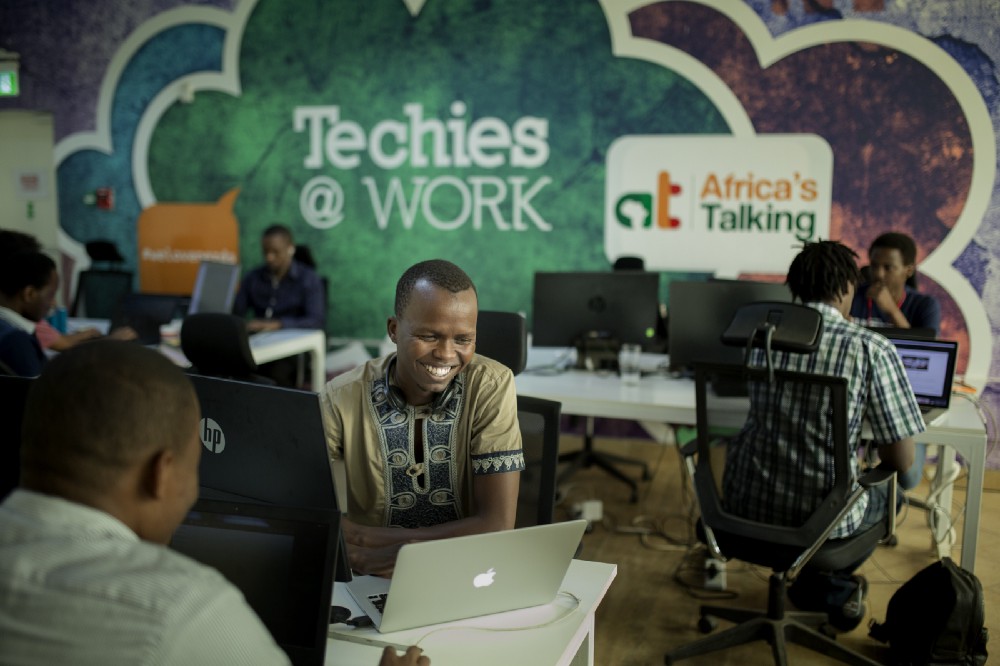
Orange Digital Ventures Africa, the Orange investment fund’s new initiative for Africa launched last June, is proud to announce its first investment, helping Africa’s Talking to raise $8.6 million alongside the IFC World Bank and Social Capital.
Based in Nairobi, Kenya, Africa’s Talking is currently the leading company providing access to telecom operators’ communication and payment APIs (programming interfaces) for developers. It is now the favourite solution of many Kenyan startups and over 15,000 developers, many of which rely on these APIs including SMS, voice and USSD to design services that are revolutionising financial, energy, health and insurance services among others.
The transaction is subject to the usual conditions precedent, including the approval of Kenya’s competent authorities.
Upon completion, Africa’s Talking plans to accelerate its internationalisation to support its clients’ expansion strategies. Beyond Kenya, the company has started working in Uganda, Rwanda, Tanzania, Malawi, Nigeria and Ethiopia.
Read critically, this is a fintech but packaged as a software company. Yes, it makes the APIs for payments and asks developers to use them. Developers pay for the APIs. I expect subscriptions where it would take a cut from all transactions in its platforms to evolve. For the very fact that it is focusing on making sure anyone can use its APIs without looking at end-customers, it will scale faster [not encroaching into customer businesses, so everyone will like it]. In other words, provided the developers are doing well, it will do well. The APIs are not engineered to consolidate power to its ecosystems. Rather, to help the developers do what they have to do without doing the hard work of making APIs. This is an operating system, at scale.
Africa’s Talking Ltd is a mobile technology company with its head quarters in Nairobi, Kenya. Our goal is to unlock the potential of mobile communication networks across Africa by simplifying the process and technologies required to exploit them.
The Africa’s Talking SMS/ USSD / Voice and Airtime APIs has more than 1000 active developers spanning corporates, tech start-ups, SMEs and even budding techies. Our deep involvement with developers ensures that we provide excellent service for any technical solution over mobile.
AIM
Africa’s Talking Ltd aims to build the best mobile technology systems that are scalable, robust, reliable, and cloud-based, enabling end users to interface directly with telecommunication service providers across the continent.
This is in line with the objective to provide high quality connections that are cost effective for both small and large enterprises
Simply, every major organization would like to provide the specs so that Africa’s Talking can make APIs which developers can integrate to create services on their platforms. No bank will see Africa’s Talking as a competitor because to many it is a software company that can help a company expand the tentacles to help developers adopt its platform. The platform supports the following: Bulk SMS, Short Codes, Sender ID’s, Airtime, Voice, USSD and Payments.
Africa’s Talking is building to become the aggregator of payment integration by becoming the clearing house where entities converge. It looks promising – to become the WordPress of Africa’s payment integration across industrial sectors by simplifying the works of developers. In the pinnacle of financial systems, the guy that makes APIs will have many fans and that means Africa’s Talking will have power. Someone in Nigeria should consider this framework over pursuing a pure play fintech business.
I began the day with a client in Rwanda. He asked a question: how can I be as successful as mini-Aliko Dangote? My answer to the Board was simple […], and using Indomie Noodle as a case study, I explained how Dufil Prima Foods (owner of Indomie Noodle) knocked out Dangote Noodle out of competition and finally acquired the vanquished DG subsidiary for nothing. We have developed a framework on that in my practice [from the way we see it].
Business is a living system. Just like you feed babies for them to grow, based on frameworks mothers, nurses etc have mastered over generations, companies have attributes. You can see patterns in markets and build on the consistencies and similarities.
Now, feel great, you can take up Dangote Group or you can defend your territory by doing what Dangote Group does. Read it here.
In this videocast, I explain how the makers of Indomie noodles used the same strategy Dangote Group had deployed across industrial sectors to defeat Dangote Noodles. The accumulation of capability which Dangote Group uses to crush competitors did not work because Dufil Prima Foods (makers of Indomie) did the same thing from electricity generation to production, for its noodles business. With their vertically integrated business, there was no left efficiency which Dangote could exploit to improve quality and reduce price. At the end, an established brand won and Dangote Noodles could not dislodge them. Dangote Group later sold its noodle business to Dufil Prima Foods. This shows a practical model anyone that wants to compete against Dangote Group can deploy. Beware: you need to be very solid!
Amazon is mesmerizing markets showing that it can keep growing. It is a solid contender in the race to the first $1 trillion company in the world. Alphabet, Microsoft, and Apple are other companies in that club. The online retail giant crushed analysts’ expectations, generating over $51 billion in revenue, compared with the $49.8 billion they had expected, according to CNBC and Reuters.
Amazon.com Inc more than doubled its profit on Thursday and predicted strong spring results as the world’s biggest online retailer raised the price for U.S. Prime subscribers, added U.S. football games and touted its cloud services for business.
[…]
Despite the surge in shopping, Olsavsky gave credit for Amazon’s $1.6 billion profit last quarter to two younger businesses: advertising and Amazon Web Services.
Revenue from third-party sellers paying to promote their products on Amazon.com was an unusually large bright spot during the quarter, with sales in the category, which includes some other items, growing 139 percent to $2.03 billion. This included $560 million from an accounting change.
“Advertising is an important and very profitable bucket of revenue for Amazon and is also growing at a fast rate,” said D.A. Davidson analyst Tom Forte. “They are just getting started here.”
Amazon said it expects operating profit this quarter between $1.1 billion and $1.9 billion, up from $628 million a year earlier. Analysts were expecting $1.01 billion, according to analytics firm FactSet.
And the number of Prime subscribers soared along with its sales from its cloud-computing services (Amazon Web Services). Also, the e-commerce giant also announced it would hike the price of Prime in the US by 20% to $119 per year, reflecting the service’s new features and growing popularity since it first launched.
Amazon Web Services remains the most profitable part of Amazon. It is the oasis in the One Oasis Strategy as I have explained. As it soars, the ecommerce advances and just like that, Amazon deploys multiple-threats to the market: Prime club membership free cash (about $10 billion annually), best ecommerce ecosystem, leading cloud offering and pioneering voice AI [Alexa]. Amazon now has more than 563,000 in its payroll .
Source : Quartz
Advertising Business
Amazon is becoming an advertising company purely for companies that pay to promote their products within Amazon ecosystem. It made $2 billion in that unit and that is significant for a quarter.
Revenue from third-party sellers paying to promote their products on Amazon.com was an unusually large bright spot during the quarter, with sales in the category, which includes some other items, growing 139 percent to $2.03 billion.
This has a major implication to Google. If advertisers know that all they need to do is to promote their products on Amazon, most would not bother to promote their websites on Google Search. The same can be said of Facebook. In other words, if promoting the product where people come to buy and spend delivers better results, there is no need to spend money on Google and Facebook. If you sell things on Amazon, it is a better strategy to position yourself before people who are actively buying over web surfers (Google) or those watching crying cats (Facebook). I expect Amazon advertising business to grow and practically challenge the duopoly of Facebook and Google on advertisement. I wrote about this Amazon advertising business few weeks ago.
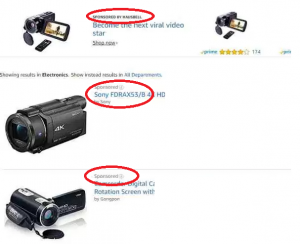
I was on Amazon today working on gifting items when I noticed something: Amazon now runs a serious advertising business. And there are many companies putting money in that ecosystem. If companies think that advertising on Amazon is a better deal than promoting their websites on Google, it simply means that Google has a major problem in its hands.
Facebook has walled off the partying and events communities, and if Amazon takes care of the merchandise, I do not know what will remain for Google. Yes, we put adverts for two major things: events and products. If Google becomes a second-platform for both, there is a problem for Larry Page and his lieutenants in Alphabet, the parent to Google.
This may explain why Google is not showing friendly handshake to Amazon these days. Amazon is not just attacking Google, it is going to the heart of its business which is advertisement. As Sun Tzu put it in The Art of War: you must defend your flanks to win. Indeed, Google has a war to fight.
Adverts on Amazon.com
All Together
Amazon is a peerless brand which developed a solid strategy which I have called the One Oasis Strategy. That one oasis has helped it to build a pace-setting digital conglomerate. The oasis makes big money today even as it continues to nurture the well-being of its inhabitants.
This daily series focuses on business ideas for those looking to launch new ventures in Nigeria (and Africa in general). The short ideas are archived here.
The Problem
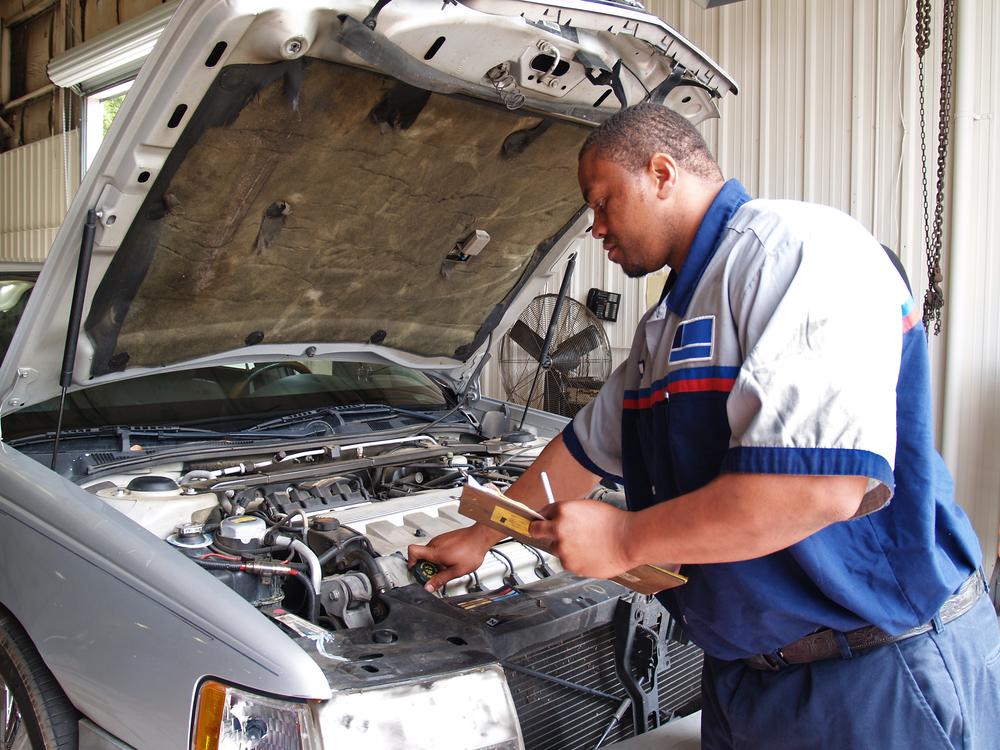
Cars break. Homes need improvement. Finding funding to do some of these things is hard in Africa. Largely, you either have the cash or you will be forced to abandon the project. It does not have to be that way.
The Opportunity
There is a clear need to provide lending in some of these areas. The plan will be to make it possible for a fintech to provide on-the-spot financing for repairing cars, home improvements, etc by using a network of the contractors that do the job for end-borrowers. By using these contractors to lend to borrowers, the fintech can reduce default rate since the contractors know the customers better. There is a possibility to deliver great service to customers, and yet profiting at two levels (i.e. both sides) of the deal with no risk of default.
Action Roadmap
A bank will be the lender while the fintech will be the underwriter. If fintech has funding, it can handle the lending itself. It will work with contractors like mechanics and home renovators to deliver services to customers who need loans to fix their cars and homes.
There is aggregation construct here: the fintech is the aggregator with the contractors working for it. For the fintech, the business delivers double-side profits at near-zero default rates. The fintech has to focus on recruiting the contractors while the contractors look for the borrowers. Typically, these are customers that call these contractors for services. The contractors will present the financing options to help the borrowers finance their needs. The contractor will be the executor of the service. I present the full process flow here.