DD
MM
YYYY

PAGES

DD
MM
YYYY

spot_img

PAGES

Home Blog Page 717

Next 100x Crypto: Little Pepe (LILPEPE) Gains Momentum With Huge Investments from Ethereum and XRP Holders

0

It’s not every day you see Ethereum and XRP holders pour capital into a meme coin like it’s a blue-chip alt. But that’s what’s happening with Little Pepe ($LILPEPE), a bold Layer 2 project that’s got the right mix of community hype and real-world tech chops. Something’s brewing here, and it’s not just another flash-in-the-pan token run.

The investors, as well as some analysts, speculate that this could be the next big thing. The kind of project people look back on six months from now and say, “Damn, how did I miss that one?” That said, this isn’t a meme coin built on empty vibes. The numbers, the plan, and the backing all point to something worth a closer look.

Meme Utility Meets Smart Infrastructure

What sets the Little Pepe crypto project apart? For starters, it isn’t just playing dress-up with frog emojis. It’s bringing actual functionality to the meme space. This is a zero-tax, EVM-compatible Layer 2 chain, purpose-built for meme tokens, staking, and real-time community governance.

The devs behind this aren’t anonymous randos tossing together a whitepaper overnight. They’ve laid out a roadmap that includes a meme-focused launchpad, staking rewards, NFT integration, and DAO voting. Big promises, yeah, but they’re backed by a presale that’s raised over $16.73 million in funding.

Presale Numbers Don’t Lie

LILPEPE is currently in phase ten of its presale. The price? $0.0019. Over 11.38 billion tokens have been sold already, and counting. That kind of momentum doesn’t happen in silence. It means wallets are opening. Trust is building. The kind of trust that makes people in the Ethereum and XRP camps cross lanes and say, “Alright, this might be worth a bet.” And let’s be honest, crypto moves fast. Sometimes the projects that feel “too early” are exactly the ones you should be watching. If there’s ever a time to keep your radar up, it’s now.

Community Spirit With a Massive Giveaway

Little Pepe isn’t just about clever branding and solid code. It’s about rewarding the people who’ve shown up early. The Little Pepe reward system is also great, as it has introduced a $777k giveaway, in which the top ten lucky winners will receive $77k worth of LILPEPE tokens each. But the biggest twist is, it is not a spammy airdrop. You’ve got to participate in the presale with a minimum purchase value of $100. The system rewards actual engagement, not just retweets and wishful thinking. This giveaway isn’t just about free tokens. It’s a clear signal of intent that the team values loyalty, not just noise. It’s rare to see such a well-funded community initiative with this level of clarity.

Layer 2 With a Meme Soul—But Built to Last

Little Pepe might wear a meme mask, but under the hood, it’s got real teeth. With a focus on supporting developers and token creators through Layer 2 enhancements, it’s setting the stage for long-term sustainability, something a lot of meme projects sorely lack.

Post-presale, $LILPEPE is set to hit both centralized and decentralized exchanges. That’s when the real test begins: wider adoption, real liquidity, and eyes from beyond the early adopters. The token’s phased pricing also shows there’s a strategy in place, not just a YOLO listing followed by silence.

Bottom Line

$LILPEPE feels like one of those rare blends: meme energy meets smart planning. With deep-pocketed Ethereum and XRP investors already on board, a committed dev team, and a roadmap that doesn’t feel like copy-paste fluff, it’s clear this project has legs. Is it the next 100x? No one can say for sure. But Little Pepe’s got more going for it than most meme coins out there. With a Layer 2 chain, zero tax, real staking rewards, and a massive $777K giveaway—this frog isn’t just hopping, it’s launching. Add it to your watchlist, or better yet, dive in and see if this is the leap you’ve been waiting for.’’


For More Details About Little PEPE, Visit The Below Link:

Website: https://littlepepe.com 

Product Minimum Viable Quality (PMVQ): Lessons from Etisalat to 9Mobile to T2

0

The video podcast introduces and defines the principle of Product Minimum Viable Quality (PMVQ). The central thesis is that a product’s success is not determined by its absolute quality, but rather by its ability to offer a baseline level of quality that is appropriate for its price and its target market. The podcaster, Ndubuisi Ekekwe, uses several compelling examples to illustrate this point.

The first case study contrasts a German toy company with a Chinese one. The German company’s high-quality, high-priced product is deemed a business failure for a low-income consumer, while the Chinese company’s low-quality, low-priced product is a success because it meets the customer’s budget. This highlights the futility of offering high quality when the target market cannot afford it.

The second example, comparing a cheap home light bulb to an expensive aviation one, shows that quality is context-dependent. The third case study, involving gyroscopes, demonstrates that the same core technology can be adapted to vastly different quality levels and price points for diverse applications, from life-saving medical devices to inexpensive children’s toys.

Finally, the lecture provides a powerful real-world case study of the telecommunications company Etisalat in Nigeria. Despite having the best broadband service, Etisalat’s high prices made it unaffordable for the majority of the market. This allowed competitors with lower but more affordable quality, such as Glo, to gain market share. As these competitors improved their baseline quality over time, Etisalat’s business model collapsed, proving that a myopic focus on quality without considering price and market realities is a recipe for failure.


Podcast VideoSign-up at Blucera and check Tekedia Daily podcast category under Training module.

Dogwifhat Hat $799k Sale Exemplifies How NFTs Democratize Access By Enabling Creators to Monetize Viral Content

0

The original pink knitted hat worn by Achi, the Shiba Inu behind the Dogwifhat meme, sold for approximately $799,000 (6.8 BTC) at an auction on the Bitcoin Ordinals platform Ordcity. The buyer, Finn, founder of the meme coin launchpad Bags, aimed to “return the hat to the community.”

The hat’s authenticity was verified via Bitcoin Ordinals, with a photo of Achi and his owners inscribed on the blockchain. This sale follows the $4.3 million NFT auction of the Dogwifhat meme photo in March 2024, highlighting the cultural and financial value of meme-related artifacts in crypto communities.

The sale demonstrates how internet memes, often ephemeral and community-driven, can be transformed into high-value digital and physical assets. The Dogwifhat hat, a simple knitted item, gained immense value due to its meme-driven cultural significance, showing how niche internet phenomena can translate into financial opportunities.

The buyer, Finn, aimed to “return the hat to the community,” suggesting a cultural ethos in crypto and meme communities where assets are seen as collective symbols rather than just personal possessions. This reinforces the idea that value in NFTs often stems from community engagement and shared narratives.

The use of Bitcoin Ordinals for authentication further ties this to decentralized, community-verified systems, bypassing traditional gatekeepers like auction houses. The inscription of the hat’s photo and authenticity on the Bitcoin blockchain ensures a permanent, tamper-proof record of its cultural significance. This creates a digital archive for meme culture, elevating it to a form of digital art or historical artifact.

Such preservation amplifies the cultural footprint of memes, making them accessible to future generations as part of a decentralized cultural ledger. The high sale price reflects speculative enthusiasm in the crypto and NFT markets, where scarcity drives value. However, this also raises concerns about bubbles, as prices may not always align with intrinsic value.

How NFTs Are Democratizing Access

NFTs enable anyone—pet owners, artists, or meme creators—to tokenize and sell digital or physical assets without needing traditional intermediaries like galleries or auction houses. Achi’s owners, for instance, leveraged the meme’s popularity to access a global market via Ordcity.

Platforms like OpenSea, Rarible, or Ordcity provide open marketplaces where creators from diverse backgrounds can participate, leveling the playing field compared to elite-driven art markets. NFTs allow fractional ownership or bidding on assets from anywhere in the world, as seen with the Dogwifhat auction on Ordcity.

This global reach democratizes participation, letting collectors, fans, or investors from varied economic backgrounds engage in high-value transactions. Blockchain transparency ensures trust, as buyers can verify authenticity and provenance, reducing reliance on centralized authorities.

NFT projects often involve community governance or shared ownership models (e.g., DAOs). In the Dogwifhat case, the buyer’s intent to “return the hat to the community” suggests a communal approach to cultural assets, fostering collective stewardship. Communities can rally around memes or cultural symbols, using NFTs to fund projects or reward contributors, as seen with meme coins like $WIF, which often distribute value back to holders.

NFTs amplify the cultural significance of internet subcultures, like meme communities, by giving them tangible representation on blockchains. Dogwifhat, a Solana-based meme coin mascot, became a cultural icon, with its hat and image immortalized as collectibles. This creates a lasting digital legacy for ephemeral trends, bridging niche online communities with mainstream recognition.

NFTs challenge traditional notions of value by equating a dog’s knitted hat or a viral image with high art. This democratizes what is considered culturally significant, allowing grassroots creations to compete with established art forms. The $4.3M Dogwifhat NFT photo sale in March 2024 underscores how memes can rival fine art in perceived value, reshaping cultural hierarchies.

Owning an NFT like the Dogwifhat photo or hat signals membership in a cultural movement (e.g., the crypto or meme coin community). This strengthens digital identities and fosters a sense of belonging, as fans and collectors align with shared symbols. The cultural footprint extends through social media platforms like X, where NFT sales spark discussions.

While NFTs lower some barriers, high-profile sales like Dogwifhat’s $799K hat highlight how speculative pricing can exclude smaller players. Gas fees on blockchains like Ethereum or high entry costs for popular NFTs can limit access for average users. Democratization is uneven, favoring those with crypto wealth or early access to trends.

NFTs empower communities to define value and amplify subcultures, creating a broader cultural footprint for internet phenomena. However, challenges like high costs, speculative bubbles, and environmental concerns highlight the need for more inclusive and sustainable NFT ecosystems.

Corgi is the world’s first AI-insurance company

0

At Tekedia Capital, we’re investing in some of the world’s category-shaping companies. Corgi is the world’s first AI-insurance company with full stacks of AI, insurance and reinsurance licenses, and is arguably the fastest growing insurer in the world today.

Learn about Corgi here corgi.insure and how to become part of Tekedia Capital community here capital.tekedia.com . We fund the players which will drive the future of entrepreneurial capitalism.

Trump’s Executive Order on Crypto Debanking Creates a Favorable Environment for Blockchain Technology By Promoting Regulatory Clarity

0

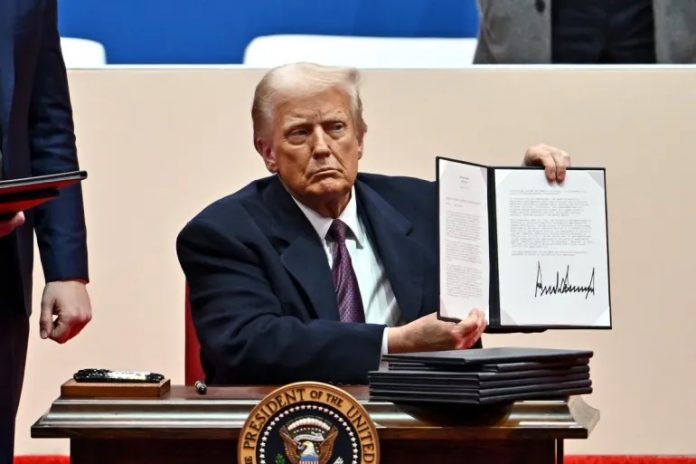
President Donald Trump signed an executive order aimed at preventing banks from discriminating against the cryptocurrency industry and other groups, addressing what his administration described as “debanking” practices.

The order prohibits federal regulators from using “reputational risk” as a justification for influencing banks to deny services to legal businesses, particularly targeting perceived bias against crypto firms and conservative-affiliated clients. It mandates investigations into whether banks have violated laws like the Equal Credit Opportunity Act, antitrust laws, or consumer protection statutes, with potential penalties including fines or consent decrees for violators.

The directive also addresses claims of “Operation Chokepoint 2.0,” an alleged coordinated effort under the Biden administration to pressure banks to sever ties with digital asset firms. This action builds on Trump’s earlier pro-crypto policies, such as a January 2025 executive order promoting digital asset innovation and banning Central Bank Digital Currencies (CBDCs) in the U.S.

Implications for Blockchain Technology

The August 7 order, combined with the January 23 order, emphasizes regulatory clarity for digital assets and blockchain technology. By establishing a President’s Working Group on Digital Asset Markets to propose a federal regulatory framework within 180 days, the administration aims to provide a stable environment for blockchain innovation.

The orders explicitly protect fundamental blockchain activities such as self-custody, mining, and permissionless transactions. This fosters an environment where developers and companies can innovate without fear of regulatory overreach, potentially accelerating advancements in decentralized finance (DeFi), tokenized assets, and Web3 projects.

The policy aims to position the U.S. as a hub for blockchain innovation, countering restrictive regulations in places like China. This could attract global investment and talent to the U.S., enhancing blockchain research and development. The creation of a Strategic Bitcoin Reserve and a U.S. Digital Asset Stockpile, as outlined in a subsequent March 7, 2025, executive order, signals government recognition of cryptocurrencies like Bitcoin as strategic assets.

This move, capitalized with seized cryptocurrencies, could legitimize blockchain-based assets and encourage broader adoption of blockchain technology for secure, decentralized record-keeping. By treating Bitcoin as “digital gold” due to its scarcity and security, the government’s strategy may spur blockchain use in financial systems, reinforcing its role in global transactions.

The prohibition of CBDCs, citing risks to financial stability and individual privacy, prioritizes decentralized blockchain networks over centralized digital currencies. This could drive investment toward permissionless blockchains, as the policy encourages private-sector-led innovation over government-controlled alternatives.

While the orders promote innovation, experts caution that blockchain’s privacy benefits are not absolute, and misuse for illicit activities remains a concern. The administration’s focus on anti-money laundering (AML) measures and blockchain analytics tools may impose compliance requirements that could complicate development for smaller blockchain projects.

How Banks Are Likely to View Cryptocurrencies

Bank of America CEO Brian Moynihan’s statement, “If the rules come in and make it a real thing that you can actually do business with, you’ll find that the banking system will come in hard on the transactional side of it,” suggests banks are ready to engage with crypto as a legitimate payment form if regulatory clarity is provided. This indicates a shift toward viewing cryptocurrencies as viable financial instruments.

The rescission of the SEC’s Staff Accounting Bulletin 121 (SAB 121) on January 23, 2025, removes accounting burdens that deterred banks from offering crypto custody services. Previously, SAB 121 required banks to record customer-held crypto as liabilities, inflating balance sheets and complicating financial reporting. Its withdrawal signals banks can now more easily custody digital assets, potentially leading to broader crypto integration in banking services.

Banks are likely to explore crypto-related services like custody, trading, and payment processing, especially as stablecoin regulations solidify with the GENIUS Act (signed July 18, 2025), which mandates 100% USD or Treasury backing for stablecoins. This could normalize cryptocurrencies in traditional banking operations.

Large banks like JPMorgan Chase and Bank of America, which previously cited AML and financial risk concerns for debanking, may adopt a more open stance but will likely prioritize compliance to avoid penalties. The creation of a national digital asset stockpile and Strategic Bitcoin Reserve lends credibility to cryptocurrencies, potentially attracting institutional investors, including banks.

For banks, the order removes barriers to engaging with crypto, encouraging participation in custody, trading, and payment services, though compliance with AML regulations remains critical. While the policy shift is broadly positive for blockchain and crypto adoption.