DD
MM
YYYY

PAGES

DD
MM
YYYY

spot_img

PAGES

Home Blog Page 717

OpenAI’s Sam Altman Questions Relevance of ‘AGI’ as Rapid AI Progress Blurs Boundaries

0

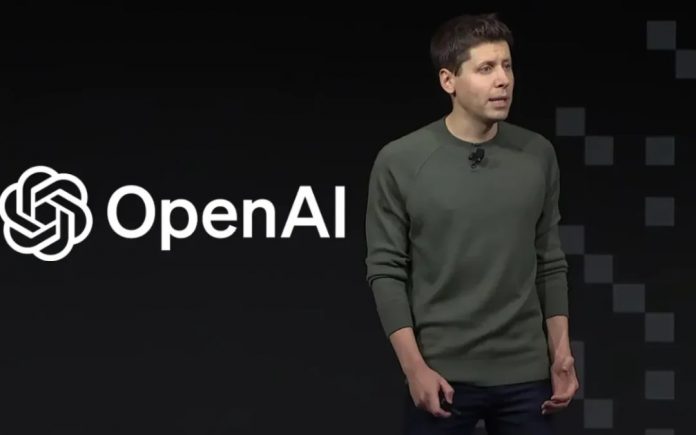
OpenAI CEO Sam Altman says the term artificial general intelligence — long viewed as the holy grail of artificial intelligence research — is losing relevance as breakthroughs in the field make it increasingly difficult to define what AGI actually means.

Speaking to CNBC’s Squawk Box last week following the release of OpenAI’s latest large language model, GPT-5, Altman argued that the label “AGI” has become too vague to serve as a meaningful milestone.

“I think it’s not a super useful term,” Altman said when asked whether GPT-5 marks a step closer to human-level AI. He noted that the concept has been defined in multiple ways over the years, from the broad notion of AI that can perform any intellectual task a human can, to narrower interpretations such as AI that can handle “a significant amount of the work in the world.” The challenge, he pointed out, is that the very definition of “work” evolves over time.

“I think the point of all of this is it doesn’t really matter and it’s just this continuing exponential of model capability that we’ll rely on for more and more things,” Altman said.

A shifting North Star

For much of the past decade, AGI has served as both a technical goal and a fundraising rallying cry for AI startups. The concept has drawn billions in investment, including the tens of billions of dollars that have propelled OpenAI’s valuation to $300 billion, with reports suggesting a planned secondary share sale could push that figure to $500 billion.

Nick Patience, vice president and AI practice lead at The Futurum Group, told CNBC that while AGI works well as an “inspirational North Star,” the term’s lack of precision can distort the conversation.

“It drives funding and captures the public imagination, but its vague, sci-fi definition often creates a fog of hype that obscures the real, tangible progress we’re making in more specialized AI,” Patience said.

GPT-5 and the incremental debate

OpenAI last week released GPT-5, describing it as “smarter, faster, and a lot more useful,” particularly for writing, coding, and health care support. The system is available to all ChatGPT users, including those on the free tier.

However, the launch drew mixed reactions. Some online critics described GPT-5 as an incremental upgrade from GPT-4o rather than a revolution.

“By all accounts it’s incremental, not revolutionary,” said Wendy Hall, professor of computer science at the University of Southampton. She added that AI companies “should be forced to declare how they measure up to globally agreed metrics” to prevent overblown marketing claims, warning that “it’s the Wild West for snake oil salesmen at the moment.”

Altman himself conceded that GPT-5 does not meet his personal definition of AGI, as the system cannot yet continuously learn without human retraining. While OpenAI still positions AGI as its ultimate goal, Altman said the company now prefers to discuss “different levels” of intelligence rather than using the binary question of whether is it AGI or not? framing, which he believes has become “too coarse as we get closer.”

The distraction argument

The debate over AGI’s meaning comes as AI firms face growing scrutiny over how they present their technological progress. Some experts believe that chasing the AGI label has become more of a fundraising strategy than a practical benchmark.

Patience told CNBC that while AGI remains a compelling vision, it may now be more of a distraction than a useful guidepost.

“There’s so much exciting real-world stuff happening, I feel AGI is a bit of a distraction, promoted by those that need to keep raising astonishing amounts of funding,” he said. “It’s more useful to talk about specific capabilities than this nebulous concept of ‘general’ intelligence.”

Altman, for his part, predicts that AI will deliver breakthrough achievements — such as solving complex mathematical theorems and driving scientific discovery — within the next two years. Whether or not such milestones meet any one definition of AGI, he suggested, the more important measure will be how AI systems continue to integrate into daily life and reshape industries.


Want to Make 6 Figures in Crypto? Cold Wallet’s Presale Is the Way to Go! PENGU & DOGE Price Forecasts Lean Bullish

0

DOGE and PENGU are both flashing green. The Dogecoin price forecast shows tightening just below $0.211, with a symmetrical triangle hinting at a breakout toward $0.225. The Pudgy Penguins price has rebounded 5.6% to $0.035, fueled by its Robinhood Legend listing and growing on-chain buzz. Analysts are eyeing $0.040 as the next major test.

Both offer short-term gains, but Cold Wallet (CWT) is where long-term potential gets redefined. With $5.9 million raised, 703 million tokens sold, and entry still at $0.00998, the $0.3517 launch price implies a 3,424% ROI. Long-term projections now stretch toward $5—or even $10—putting early allocations on track for six or seven-figure returns.

DOGE Price Forecast: Compression Points to Breakout Setup

Dogecoin (DOGE) is tightening just below resistance at $0.211, trading at $0.205 after a 2.3% daily climb. A symmetrical triangle pattern has formed, and many traders see it as a classic setup. According to the latest Dogecoin price forecast, a breakout above $0.211 could open the door to $0.225.

Support holds at $0.2019, while RSI at 56 shows momentum is leaning bullish but not exhausted. A second Dogecoin price forecast from TradingView analysts points to $0.2259 if the move is confirmed.

Pudgy Penguins (PENGU) Price Rebounds, Eyes 13% Climb

The Pudgy Penguins (PENGU) price just bounced off its $0.032 support, now trading at $0.035 after a 5.6% daily jump. The move follows Robinhood Legend’s listing of PENGU, giving the Solana-based token new exposure among active traders. Analysts are watching the $0.040 level as the next major test.

Momentum is building, with the Pudgy Penguins price staying above its 200-EMA on lower timeframes. On-chain buzz is growing, too, after Canary Capital’s PENGU ETF proposal reached the SEC’s desk, signaling potential institutional interest. Traders now await confirmation of a breakout or signs of hesitation at resistance.

Cold Wallet Price Forecasts Point to $5 & $10 in the Long Term

Most wallets just hold crypto. Cold Wallet does more. It rewards users every time they use it. Whether it’s a gas fee, a token swap, or even moving money between fiat and crypto, Cold Wallet gives a percentage back in CWT, its native utility token.

That simple shift is creating a new loop of value that’s drawing in serious traders, big capital, and fast-moving presale demand. At the time of writing, Cold Wallet has raised $5.9 million, with over 703 million tokens sold, and the price now sits at $0.00998 in Stage 17. Just hours ago, it was $0.007, a 42% climb that’s happened in real time.

Even so, the launch price remains fixed at $0.3517, giving current buyers access to a projected 3,424% ROI. That’s before the token even hits exchanges. But the real speculation is happening post-launch. Early investor groups and private forums are already circulating potential valuations of $5 to even $10 per token, based on adoption scale and real-world utility. When that happens, a $1,000 allocation today could stretch past half a million dollars, or even seven figures in the more bullish scenarios.

Cold Wallet’s profit math is public, the product is live, and presale stages are disappearing fast. As the model gains more traction, CWT may be one of the few tokens that turns utility into serious upside.

Quick Recap: Top Crypto Coins in 2025

The Dogecoin (DOGE) price forecast points to a breakout setup, with DOGE trading at $0.205 and eyeing $0.225 if it can clear the $0.211 resistance. Over in Solana’s memecoin scene, the Pudgy Penguins (PENGU) price just jumped 5.6% following a key listing, with $0.040 marked as the next technical target.

But while short-term moves dominate sentiment, the real upside may belong to early adopters elsewhere. Cold Wallet has raised $5.9 million, sold over 703 million tokens, and is still offering a projected 3,424% ROI at launch. With long-term targets as high as $5–$10, it’s becoming one of the top crypto coins in 2025 for those locking in positions before the price moves out of reach.

Explore Cold Wallet Now:

Presale: https://purchase.coldwallet.com/

Website: https://coldwallet.com/

X: https://x.com/coldwalletapp

Telegram: https://t.me/ColdWalletAppOfficial

Top-Performing Cryptos Today: Why BlockDAG, Stellar, Sei, & Cardano Could Dominate in 2025

0

The 2025 crypto market is shaping into one of the most opportunity-rich periods in recent years, with select projects showing strong technical setups, rapid ecosystem development, and robust investor backing.

For those analyzing the top-performing cryptos today, a few standouts combine market momentum, practical use cases, and identifiable growth drivers. From strategic presale opportunities to bullish chart patterns, the pace of change is fast, and the advantage belongs to those who act on reliable signals.

This review highlights four strong candidates: BlockDAG, running a record-breaking presale with real utility; Stellar, breaking out of a bullish technical formation; Sei, scaling rapidly in DeFi; and Cardano, sustaining a significant rally. Each presents distinct reasons to watch closely, whether for near-term performance or long-term positioning.

1. BlockDAG: Record-Breaking Presale with Product Rollouts

BlockDAG has secured a top spot among the top-performing cryptos today, offering a structured early-stage entry point. With its presale batch priced at $0.00276 and a confirmed $0.05 listing later in the year, the potential return approaches 30x for those positioned early.

This presale isn’t just about capital raise; it’s backed by measurable progress. BlockDAG has already secured $370 million in funding, moved 25 billion coins, and built a base of over 200,000 holders. Its 2.5 million X1 mobile app users and 19,100 ASIC miner sales indicate strong network activity well before the mainnet.

Adding to its strategic edge, BlockDAG has introduced a Demo Trading Dashboard, allowing participants to refine strategies ahead of public launch.

2. Stellar: Bull-Flag Breakout Suggests Continued Gains

Stellar continues to validate its place among the top-performing cryptos today, breaking out of a bull-flag formation, a pattern often preceding sustained upward movement. Current technicals point toward an eventual target of $0.67, with liquidity levels clustered at $0.42 acting as a near-term checkpoint.

Over the last 24 hours, Stellar has gained 12.3%, topping the CoinDesk 20 index and strengthening investor confidence. With the RSI at 62.4, market conditions remain balanced, leaving room for further upside. The upcoming Protocol 23 governance vote could provide the next spark for continuation, making Stellar a candidate for both tactical trades and strategic holds.

3. Sei: Expanding in DeFi with MetaMask Integration

Sei has firmly established itself as one of the top-performing cryptos today, especially with the recent MetaMask integration expanding access to dApps, tokens, and NFTs on its network. With $4.68 billion in daily stablecoin volume, Sei is surpassing many DeFi competitors in raw transaction activity.

Market projections point toward potential moves toward $4, driven by consistent protocol improvements and a visible rise in both institutional and retail engagement. For investors looking for immediate market traction paired with scalable infrastructure, Sei’s momentum makes it a high-priority watch.

4. Cardano: Sustained Rally with Strong Support Levels

Cardano’s recent performance solidifies its position among the top-performing cryptos today, with ADA rising over 30% in the last month. Bulls have defended the $0.80 level, while resistance at $0.74–$0.76 remains the key short-term hurdle. Breaking above could set the stage for an 85% rally.

Open interest and on-chain participation are trending upward, reflecting active involvement from both traders and long-term holders. Combined with strong community support and a resilient technical structure, Cardano has the capacity to maintain momentum if market conditions stay favorable.

Four Projects, One Theme, Strategic Growth

The standout performers in the top-performing cryptos today share a common thread: measurable progress backed by clear technical or ecosystem-driven catalysts. BlockDAG offers early-stage pricing at $0.00276 alongside tangible product developments and large-scale network activity. Stellar is technically aligned for further gains, Sei is achieving standout performance in DeFi adoption, and Cardano is proving its resilience with steady growth.

For buyers, the message is straightforward: in a market full of distractions, these assets provide both data-supported potential and actionable opportunities.

Nvidia Rebuts Chinese State-Media Claims Over H20 Security; Analysts Warn of Risks to China Market and U.S.–China Talks

0

Nvidia on Sunday forcefully denied new accusations from Chinese state media that its H20 artificial-intelligence chips pose national-security risks for China, calling the claims false and reiterating that its products contain no “backdoors” or remote-shutdown functions.

The criticism came from Yuyuan Tantian, a WeChat account affiliated with state broadcaster CCTV, which published a post saying the H20 chips were “neither technologically advanced nor environmentally friendly” and alleging they could perform functions such as “remote shutdown” through a hardware backdoor.

The article concluded with a consumer warning: “When a type of chip is neither environmentally friendly, nor advanced, nor safe, as consumers, we certainly have the option not to buy it.”

A Nvidia spokesperson told CNBC in response that cybersecurity is a core priority and that “NVIDIA does not have ‘backdoors’ in our chips that would give anyone a remote way to access or control them.” The company earlier rejected similar accusations, including suggestions that the chips contain a so-called “kill switch,” and reiterated those denials again in comments over the weekend.

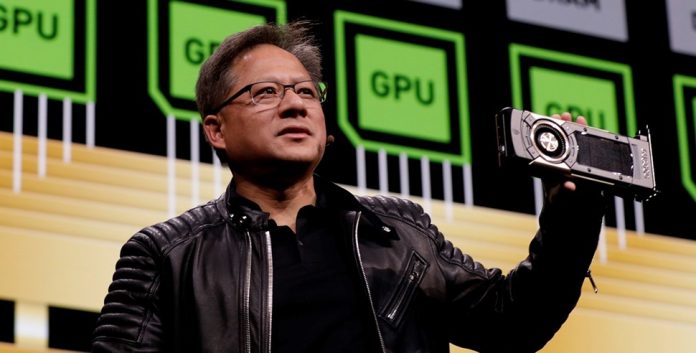
The H20 chip was developed as a China-compliant product after U.S. export restrictions in late 2023 barred the sale of Nvidia’s most powerful accelerators. The chip is a less advanced alternative to Nvidia’s flagship models, such as the H100 and B100; it was designed so the company could legally serve the Chinese market while complying with U.S. rules. In April, the Trump administration briefly banned H20 exports to China, but the ban was reversed in July after intensive lobbying and high-level discussion, including interventions by Nvidia CEO Jensen Huang. After the reversal, licenses to ship the H20 resumed, although the episode left lingering political and regulatory sensitivities on both sides.

Nvidia has faced real financial pain from the disruption: the company took a $4.5 billion writedown on unsold H20 inventory in May and has said its top-line guidance for the July quarter would have been about $8 billion higher without the export restrictions. Despite the backdrop, Nvidia’s shares have held up: they closed at $182.70 on Friday, up around 1% for the day and roughly 36% year-to-date.

Chinese authorities have also taken a formal interest. Beijing’s cyberspace regulator summoned Nvidia for questioning amid concerns over alleged backdoors and has publicly pressed the company to provide convincing security assurances. State outlets such as People’s Daily have echoed the demand that Nvidia demonstrate the chips are safe if it hopes to rebuild trust with Chinese buyers.

Accusations Pose Risk to Nvidia’s China Market Strategy and Broader U.S.–China Tech Diplomacy

Analysts believe the escalating dispute over Nvidia’s H20 AI chips has the potential to reverberate far beyond a single product line, threatening the company’s competitive position in one of its most important markets while adding new complexity to the ongoing U.S.–China technology standoff.

Chinese state media’s framing of the H20 as “neither environmentally friendly, nor advanced, nor safe” is not only a public relations blow but could also influence procurement decisions in both the public and private sectors in China. Given the country’s growing emphasis on indigenous chip development and technology self-reliance, the allegations — including the claim of a potential “remote shutdown” hardware backdoor — feed into a broader narrative that foreign-made chips pose security vulnerabilities. Even if Nvidia has firmly denied these accusations, the perception alone could impact buyer confidence, especially in strategic industries like defense, telecommunications, and AI research, where trust in the supply chain is paramount.

For Nvidia, which has hoped to resume H20 shipments to China after the Trump administration lifted a prior ban, this is a delicate balancing act. CEO Jensen Huang has backed Trump’s broader tech policies while lobbying for export licenses that would allow Nvidia to sell more advanced chips to the Chinese market. His argument that U.S.-made chips becoming the global AI standard strengthens American influence is now challenged by Beijing’s messaging, which portrays the H20 as a compromised, second-tier product compared to Nvidia’s flagship H100 and B100 chips.

The timing of these accusations is particularly significant as Chinese officials push for the U.S. to ease export restrictions on high-bandwidth memory chips ahead of a possible Trump–Xi summit. Nvidia’s position in China and the political optics of U.S. tech dominance could become part of the negotiating equation. If Chinese buyers scale back purchases, either in response to political pressure or over perceived security risks, Nvidia risks losing market share to domestic competitors such as Huawei’s Ascend series or other state-backed chipmakers.

Economically, Nvidia has a lot to lose. China is one of Nvidia’s largest markets, and the company has already taken a $4.5 billion writedown on unsold H20 inventory this year, warning that July-quarter revenue would have been $8 billion higher without export restrictions. Any further contraction in Chinese sales could weigh heavily on its growth trajectory, particularly if the slowdown coincides with intensified domestic competition in the U.S. and Europe.

Bullish Setups Spotted Across HYPE & SEI Price Charts, But Demand Hits Hardest at Cold Wallet: 2M Users Onboarded Overnight!

0

Bullish setups are surfacing across the board. The SEI price chart just triggered a Supertrend flip, an indicator that previously marked major rallies, putting a potential move toward $0.54 in sight.

The latest Hyperliquid news is even louder: 35% of all blockchain revenue in July, $2.66 billion in Phantom Wallet trading volume, and 21,000 new users onboarded in a single month.

But while both charts hint at green, one opportunity isn’t just forming, it’s vanishing. Cold Wallet’s (CWT) $270 million acquisition of Plus Wallet has instantly added two million active users, and demand hasn’t stopped climbing. Over $5.9 million has already poured into its presale. At $0.00998, Stage 17 still offers a 3,424% projected ROI, but every new entry shrinks that number, and stages are closing fast!

SEI Price Chart Hints at Bullish Reversal Signal

The SEI price chart may be flashing a key turning point. Analyst Ali (@ali_charts) noted that the Supertrend indicator has flipped green right at the base of SEI’s channel, a technical cue that previously signaled strong rallies. If SEI follows its historical pattern, a move toward $0.54 could be on the table.

Other weekly indicators confirm this outlook. The RSI sits at a neutral 51.3, leaving room for upside. Altogether, the SEI price chart suggests a breakout scenario might be taking shape, with bulls gaining traction.

Hyperliquid News: Platform Dominates July Blockchain Revenue

Hyperliquid news is heating up as the platform raked in 35% of all blockchain revenue in July, outpacing even Solana in on-chain trading activity. The Phantom Wallet integration alone generated $2.66 billion in volume and brought in 21,000 new users, marking one of the biggest monthly expansions in DeFi this year.

Meanwhile, the HYPE token rebounded from $37 to $40, forming a clean V-shaped recovery pattern. With the HIP-3 upgrade on the horizon, Hyperliquid news suggests it’s not just a trading venue anymore; it’s positioning to be a full-blown Web3 powerhouse.

Cold Wallet Absorbs 2M New Users, Presale Approaches $6M Fast!

Cold Wallet’s recent $270 million acquisition of Plus Wallet is a clear signal of its potential dominance in the self-custody space.

The acquisition brings in over two million users, all of whom joined Plus Wallet in just seven months. These are users already onboarded, already active, and now being folded into an ecosystem that rewards every action through CWT, Cold Wallet’s native token.

What does this mean for the presale? A lot. With Stage 17 already live and 703 million tokens sold, buying pressure is building fast. Over $5.9 million has been raised, and each presale stage pushes the entry price higher. Traders joining now at $0.00998 are still staring at a projected 3,424.85% ROI based on the $0.3517 launch estimate, but every stage closed tightens that number.

This hasn’t gone unnoticed. Whale activity is increasing, with larger allocations flowing into Cold Wallet as big players move in ahead of the integration. The logic is simple: two million more users equals more wallet usage, and more usage means higher demand for the token that powers the rewards behind it.

Cold Wallet isn’t selling promises. It’s acquiring users, rewarding activity, and already proving demand at the presale level. As whales continue to take the early seats, retail participants could find themselves buying in at a much steeper price, with far less room for upside.

Which Is the Top Crypto to Buy Now?

The SEI price chart just triggered a Supertrend reversal near support, hinting at a potential move toward $0.54. Hyperliquid, meanwhile, pulled in 35% of all blockchain revenue in July, with $2.66B in Phantom Wallet volume and 21,000 new users joining in a single month.

But traders are increasingly considering Cold Wallet to be the top crypto to buy now for several reasons. A $270M acquisition just added 2 million active users to its ecosystem, and its model rewards every action, including gas, swaps, and fiat ramps, with CWT token incentives. Now in Stage 17 at $0.00998, the presale has raised $5.9M, with a projected 3,424% ROI still live for those who move before the next stage shuts the gap further.

Explore Cold Wallet Now:

Presale: https://purchase.coldwallet.com/

Website: https://coldwallet.com/

X: https://x.com/coldwalletapp

Telegram: https://t.me/ColdWalletAppOfficial