DD
MM
YYYY

PAGES

DD
MM
YYYY

spot_img

PAGES

Home Blog Page 7172

The End of Scale, Building The Capability of the Future

0

MIT Sloan Management Review has a very fascinating piece which looks at the (approaching) end of the economies of scale and how technology is reducing its impact on market competitiveness. Many decades ago, companies needed massive scale to drive cost efficiencies. Sure, scale still matters but now we are looking at the scale that comes through Inversibility Construct – a construct that looks at using digital platforms and network effects to inverse physical-level customer experiences.

With mobile, cloud computing and AI, we are seeing how small and agile companies are challenging incumbents, using knowledge as a key factor of production. Interestingly, being big with traditional assets could weaken a firm’s capacities to thrive in this era.  The unconstrained and unbounded internet has made it possible to reduce marginal cost without massive capital investments on distribution and transaction systems.

Economies of unscale are enabled by two complementary market forces: the emergence of platforms and technologies that can be rented as needed. These developments have eroded the powerful inverse relationship between fixed costs and output that defined economies of scale. Now, small, unscaled companies can pursue niche markets and successfully challenge large companies that are weighed down by decades of investment in scale — in mass production, distribution, and marketing.

Investments in scale used to make a lot of sense. Around the beginning of the 20th century, the world was treated to a technological surge unlike any in history. That was when inventors and entrepreneurs developed cars, airplanes, radio, and television, and built out the electric grid and telephone system.

{…}

Today, we’re experiencing a new tech surge. This one started around 2007, when mobile, social, and cloud computing took off with the introduction of the iPhone, Facebook, and Amazon Web Services (AWS), respectively. Now, we’re adding AI to the mix. AI is this century’s electricity — the technology that will power everything.

AI has a particular property that supplants mass production and mass marketing as a basis of competitive advantage. It can learn about individuals and automatically tailor products for them at scale.


Diagram of economies of scale [source: economics help]Indeed, Netflix without prior distribution infrastructures is positioned to challenge Disney because the distribution internet network is unbounded. Amazon has since become the most pre-eminent retailer without following the outdated paths of opening physical stores.

Economies of scale is not going anywhere as a business concept. But the absolute impact based on the traditional factors of production will erode. The scale that matters is Capability of the Future which is largely knowledge. This knowledge will anchor new business models which will emerge as new technologies like blockchain reshape the structure of global economies.


Discovering the Tangential Business Opportunities in Nigeria

0

I explained in a video today that Nigeria has three core investment opportunities for entrepreneurs [there are many others but I focused on the small pocket manageable areas].  I have gotten some emails with people asking me to offer more use cases. Sure, I try to keep the videos short as many in Nigeria spend money when they watch. That means you cannot really say a lot if you want people to watch.

Specifically on the financial services one, besides the race to partner with banks, I see massive opportunities with airlines in Nigeria. And that means Air Peace and Arik and soon JetWest (which will be the best airline in Nigeria when my big kinsman takes it live).

If you help these entities to improve their airline mileage royalty programs, you can mine the most lucrative customer segment in Nigeria and offer services like insurance, real estate, etc to those customers. Indeed, you can build a solid financial product using data from the airline royalty programs. It is not only banks that have customer data. The airlines have the best customers and you can deepen your business in partnership with them.

But to do that, you must have a vision on what to do with data. Fintech, insuretech, etc must not be seen from the lens of banking and insurance partnerships alone. There are many tangential sectors which are there. Working with them to clean up their data and improve data collection could unlock more value.

Our airline sector remains at infancy. While leasing aircraft would be hard, working with them to deliver services to their customers is promising for entrepreneurs. If you pay money to most airlines in Nigeria to manage their royalty programs and monetize the associated data, you could build a solid business. Think of Jason Njoku going to Nollywood to buy the rights of videos for iROKOtv. The videos for airlines are those customer data which they collect but have largely not seen any value besides moving customers from one airport to another. Under the right customer privacy policy, those customers would be happy to be served besides just buying tickets and flying.

I do not work on financial services because it is the largest sector in my practice: you cannot compete with people that put eba and amala on the table. But entrepreneurs there, discover the latent opportunities – the sector is huge. There are new frontiers with latent but promising opportunities across industrial sectors in Nigeria. Go for them.

Like Samuel Taylor Coleridge famously shouted “water, water everywhere, but not a drop to drink“, we have at the moment ‘data, data, everywhere but no one is using it”. We need to change that in Nigeria.

Arsene Wenger to Leave Arsenal: The Five-Year Principle

2

Arsene Wenger is leaving Arsenal, the English football club, at the end of the season. It should not be news. If you check most sports in Europe and United States, a manager typically wins the right medals within the first five years of joining a club. Where you cannot win the medal within five years [with largely same three key players], your chance drops significantly. And if you coach and have three consecutive bad seasons, your chance of recovering drops to less than 10%. Largely, there is a paralysis that follows non-winning managers after five years.

Wenger, who has come under increasing pressure as a result of Arsenal’s poor Premier League record in recent seasons, announced that he would be leaving the club in an emotional statement on the club’s official website:

” After careful consideration and following discussions with the club, I feel it is the right time for me to step down at the end of the season. I am grateful for having had the privilege to serve the club for so many memorable years.”

“I managed the club with full commitment and integrity,” the statement continued. “I want to thank the staff, the players, the Directors and the fans who make this club so special.

“I urge our fans to stand behind the team to finish on a high. To all the Arsenal lovers take care of the values of the club. My love and support for ever.”

Arsene Wenger is a successful manager in the English football league. But he is yet to experience a European glory. On that front, he failed. It is not evident that keeping him longer would change that outcome. His best chance of winning Champions League was within the first five years he joined Arsenal.

Wenger was appointed as Arsenal manager in 1996 and has won three Premier League titles and a record seven FA Cups during his time in charge of the club. A European trophy has always eluded him but Arsenal are in the semi-finals of the Europa League, where they face Atletico Madrid

In American football, if a coach joins and cannot win anything within five years, FIRE him. He would likely not win anything for extra ten years. In the real football (the American soccer), that also follows [sure, there are exceptions but they are statistically insignificant]. When Wenger could not win Champions League a decade ago, it was clear that was gone for him, in Arsenal.  They could have removed him long ago.

Why is this trajectory? Football is a process. It is a game of strategy. There is a normalized factor that a coach’s strategy becomes evident with a team within five years. So, within five years ago, if that is not working through medals, it will lose potency. And when you add that opponents will possibly master it after five years, the chance of success drops further. So, after five years, a poor coach will not win anything with the same club, using largely the same set of three key players.

We wish Wenger good luck. I expect him to land in La Liga as a coach. He will likely do well there. He will get his three key players and if he does not win Champions League within five years, the team should also know that he would not likely do it in future, in that club.

Nothing much; it is just a mere observation [nothing besides it]. The greatest teams like Barcelona, Real Madrid, and Bayern  Munich follow a similar rule (typically 3-4 years where if you cannot win Champions League, they fire you as a coach).

The Music of Business is CUSTOMER

0

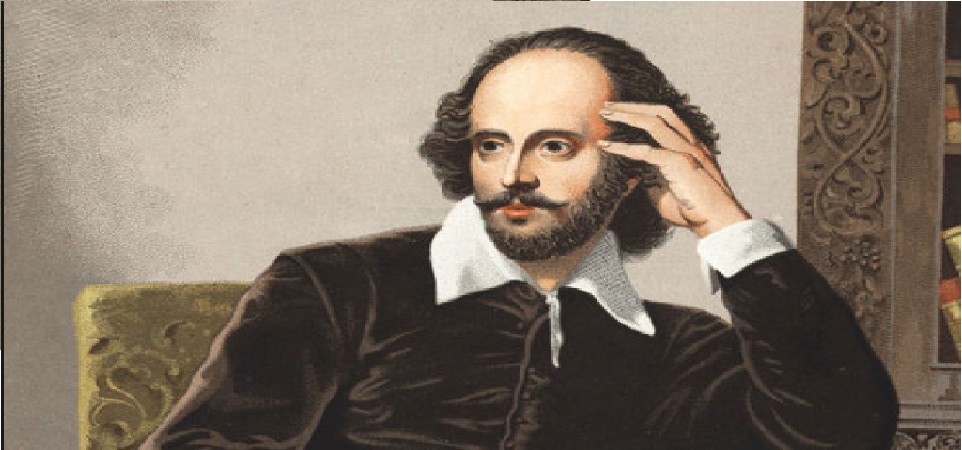
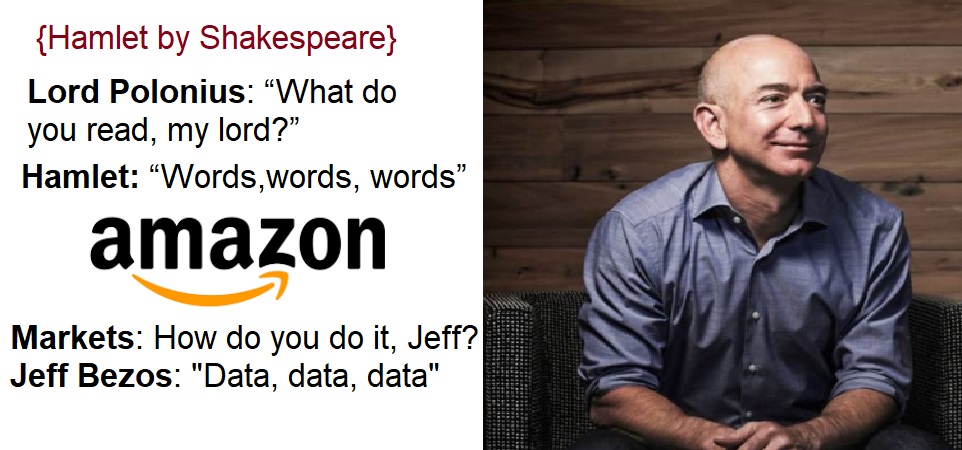
In Shakespeare’s Twelfth Night, Duke Orsino delivered one of the most memorable lines in the book when he said “If music be the food of love, play on”. Shakespeare did not stop there: in a scene in Hamlet, when Lord Polonius asked Hamlet “What do you read, my lord?”; Hamlet responded “Words, words, words”.

As I read Amazon Jeff Bezos’ annual letter to Amazon shareholders, those great works of Shakespeare came back. I had read Twelfth Night and Hamlet in secondary school. With due respect to Warren Buffet, Jeff Bezos is now the zen-master and the oracle of business excellence and value creation. Yes, in business today, entrepreneurs and business leaders fiercely wait for Amazon’s shareholder letters.

In these letters, you can read the mind of Jeff. For him, the music of business is CUSTOMER. To serve that customer with the fanatical commitment he has demonstrated in Amazon, he reads one thing: Data, Data, Data. As he plans to link Whole Foods, a grocery chain Amazon recently acquired, with Amazon Prime benefits, he is using customer data to make them better. Contrast that with aggregators like Facebook that sell customer data as part of their business models. I have written on the One Oasis Amazon strategy.

The Amazon part is Not a real play

The fact is this: people want to share data and Amazon Prime members are sharing a lot to Amazon. Because Amazon is using the data to make their lives better [over selling them to 3rd parties as Facebook does] no one is complaining. Fortune makes a similar point on how Netflix uses customer data to improve their experiences.

The beauty of this, as Aaron reported yesterday and Breakingviews analyzed, is how Netflix uses customer data. It collects a lot of it, for sure. But it doesn’t turn around and share any of it, as the formerly uninformed now understand Facebook does. Instead Netflix crunches the consumer data it holds to aid its recommendation engines and to decide what additional programs to commission. Netflix doesn’t want to share that data with anyone else. It sells no advertising and releases no ratings. It cares about finding an audience for its show, though. Not for nothing, Netflix is a lavish marketer, spending heavily on advertising across digital, print, and broadcast media.

Sure, Netflix charges customers. Amazon does the same. But Facebook does not ask people to pay. Largely, without monetizing customer data, it has no business. That is at the heart of the aggregation construct. Yet, there is a big lesson: customers do not revolt for using their data. They revolt when you use the data to make money and they do not materially connect how that benefits them [we easily forget that Facebook is free because of the data].

But irrespective, you need to read the data to have a great music in business; customers enable masterpiece.