DD
MM
YYYY

PAGES

DD
MM
YYYY

spot_img

PAGES

Home Blog Page 7174

Lagos-based ATB Techsoft Needs Software Engineers

0

One of my clients, ATB Techsofoft, is looking for software engineers. These opportunities are immediate. Please apply or share with people in your network.

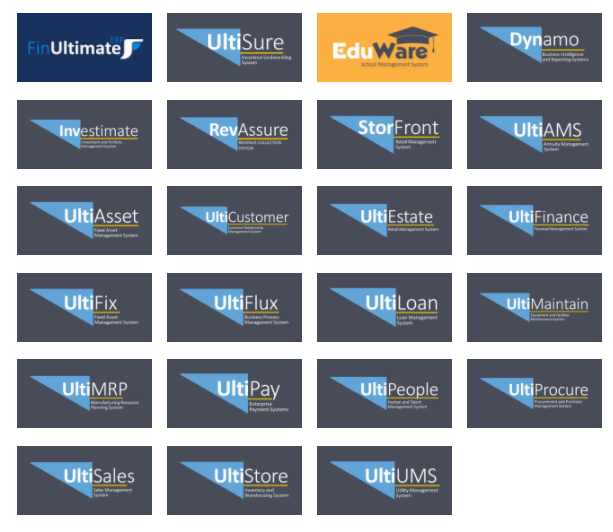
ATB Techsoft grand vision is to deliver a one-stop software solution across market sizes and industrial sectors in West Africa. All the solutions are packaged and promoted under its oasis, the FinUltimateFinultimate offers the most comprehensive portfolio of applications software designed to help companies improve operational effectiveness, profitability, product innovation, distribution / delivery channel growth, customer relationships and enterprise information management.

Skills Required

SQL, Phyton, SQL Server Integration Services, SQL Server Analysis Services (SSAS), Business Intelligence & Machine Learning.

About ATB Techsoft

You can read about ATB Techsoft here.

Apply to brains@atbtechsoft.com

ATB Techsoft Products

Moving That 1% On Mobile Money

0
Mobile Money

It is not easy to use debit cards in Nigeria online. You need a PIN besides the card number, cardholder name, and expiration date. You need the 3 digits at the back. You need in some cases a password. And at the end, the transaction is bounced. Why? You have not registered the card for online payment with the bank issuer. Yes, there is a different registration for the same card to be used on ATM (and physical stores) and online.

The fact is this: we have a trust issue. That is why Facebook will struggle if it puts a subscription of say N1 on its services in Nigeria. The problem is not the affordability of the subscription. Rather, the issue is the concern that paying that N1 could enable a bad actor to steal the whole bank account. The default is to simply abandon the service. It is very hard to sell things online in Nigeria.

Interestingly, many digital payment merchants like Paga are already hybrid, providing services online and offline. They understand that the money is offline, at least at the moment.

According to Fortune, “online commerce still makes up less than $1 out of every $10 in the United States”. Yet, online commerce is the future; it would keep growing and that is certain. In Nigeria, we have put that as “online commerce makes up less than N0.01 out of every N10 in Nigeria”. In other words, for every N1000 spent in Nigeria, only N1 is spent online. Again, I expect that number to keep moving north. (Please note I said “online”, not “electronic or digital”. The distinction is very huge as you work on your strategy. POS, ATM and such are electronic but not online.)

That brings the issue of mobile money which works very well in Kenya and Ghana with 40% and 60% penetrations respectively. In Nigeria, we are at 1%. The argument has been that in Nigeria, the program is bank-led, while in places mobile money has worked, it is typically telco-led.

After about five years of operation in Nigeria, mobile money has only been able to attract just one per cent penetration.

Unlike in Ghana and Kenya where penetrations have reached 40 per cent and 60 per cent respectively, only about two million of Nigeria’s estimated 198 million populations.

The implication of this is that despite the innovation that comes with it, Nigerians are yet to tap from the huge benefit it carries.

Market watchers have argued that the model operated in Nigeria, which is bank-led, has not been able to impact the initiative in the country adequately.

Largely, the telcos operate at better cost model than banks since banks have to warehouse capital to meet financial ratios required by regulators. Also, banks are always seen to be premium making it harder for them to hustle on sales [while MTN can use agents on streets to sell recharge cards, banks cannot do such without thinking of the implications on their brands]. So, it is always going to be more expensive if banks do it because they cannot open anything as an outlet. With telcos driving the mobile money, it is possible we can see faster penetration. Yes, their marginal cost will be lower than whatever banks can have there. Telcos have deep networks and experiences on selling recharge cards which will work well for mobile money.

But wait, if you allow telcos to do this, what would banks do? All the transaction fees and stamp duties on electronic transactions will go. Yet, if we believe on innovation and the power of market forces, government should ideally not care who runs this show. It should care that it is done to grow the Nigerian economy with value delivered to the citizens. There is no need of protecting anyone to a large extent. Until we do that, the penetration rate will not advance in Nigeria for mobile money.

Why the New Konga is Different

0
New Konga
A warehouse

commenter on a Konga update wrote: “So based in your previous article about the ‘impossibility’ of ecommerce to thrive beyond Lagos due to absence of proper logistics from Nipost in and outside Lagos, what has now changed, what have they got right? BTW, I smell tongue in cheek”.

You look very refreshed and energized. I just noticed that your style has changed. Wow – nice color. You look really better. And you have got friends with shops across Nigeria. Boy, you are ready to rock. You know what? I like all those pickups. You are now simplifying my life.

You got a great cousin but he said both of you would go with your name. Yudala is really a nice dude. He knew you are more popular in colleges and across major cities in Nigeria. But I also like that you are wearing his clothes even as both share a name. Konga is zen-like. I like it.

Let me apologize if my article came poorly. I am a teacher. We just talk. But I am very happy that you listened when I said you had no more stamina to stand by yourself. Happy you moved in to stay with a cousin. And boy, you look nice.

On that piece, nothing personal sha. I have invested in things that turned out bad. I do not really know a lot but I know how to defend what I know. Let us forget the past. I want to wish you a really good luck as you take the streets of Lagos. People, welcome the new Konga of Lagos

Response:  The New Konga has co-CEOs. One is for the offline (physical) business. The other is for the online business. Simply, the new Konga is now a pure-play hybrid commerce. It has seen that it needs offline component to have a CEO dedicated to physical stores. With Yudala outlets and Zinox branches across Nigeria, the new Konga is your typical supermarket with a top-grade online presence. Meanwhile, this is the referred piece where I suggested that Konga should sell.

Because of Jumia’s ambition, Konga could be attractive. Konga has been severely wounded for any further fight to make sense. I do think the best for Konga is to sell itself now that it can generate higher value. To win in this market, it needs not just revenue but manpower since it is running a logistics business, despite the pivot to subscription classified model. By constantly cutting down manpower, it means it is not taking the fight to the traditional stores like Shoprite and supermarkets. That is weakness that will further erode its capacity to generate more value to shareholders. It can save itself from these challenges by selling to Jumia.

This hybrid model has been at the heart of my point on ecommerce in Nigeria. Without a postal system, the only option is to have physical stores [your partner or you build them]. The new Konga has it. This means it can compete very well with supermarkets even when expanding its business online. This strategy will reduce the marginal cost making it easier to serve more customers. When you do that, your unit economics improves.

The path to profitability will pass through physical commerce. Why compete for 1% when 99% is out there? Amazon and Alibaba know that in 5 years as physical stores move online, their advantages will be neutralized. So, they are playing offense. If the world runs in the physical space. especially in grocery, you better go there to get the deals.

Simply, we need a hybrid commerce strategy in Africa if we want to be on the path to profitability. Marginal cost of ecommerce is dominated by atoms and not (direct) bits. (Sure, information is physical, but let us avoid that complexity here.) Hybrid commerce will require returning to offline partners, and we need to make that work for Africa. It may not be complex if our companies are open to work together and where possible merge.

Technology, Industrialization and Economic Development in Emerging Economies

0

In this paper, I write on technology, industrialization and economic development in emerging economies.

Abstract: The birth of industrial revolution that occurred in Britain was the transition to new manufacturing processes in the period from about 1760 to 1840. The transition included the migration of the era of the use hand to the use machines, new chemical manufacturing and iron production processes, the increasing use of steam power, the development of machine tools and the rise of factory system with the textile industry being the first to use modern production methods [wiki]. Following the revolution, by the mid-18th century, Britain controlled a global trading empire with colonies in North America and political influence over the Indian subcontinent by the East India.

Download the full paper here (PDF, 8 pages).

Chuks Ejechi

Why Video Streaming Business is better than Music Streaming

4
music streaming

LinkedIn summary – Running a business that streams video will always be a better business than one that streams music. The reason is simple: marginal cost. As I explain here, when you pay for video rights, it is uncorrelated to volume watched. But for music, your cost changes depending on the number of listeners. So, more listeners more royalties even though you may enjoy discount which improves unit economics.  If a Zen master comes to you and offers these: take one of these startups – one streams video, the other music. Go with video. You have a better chance of scaling faster and making money. You see, you may need to take accounting class as your success can be bounded by unit economics even before you begin.


Marginal Cost is “the cost added by producing one additional unit of a product or service”. It is one of the most important cost elements in any digital business. While the production of the product seems like a done deal, the marginal cost which captures the distribution and transaction costs drive the scalable advantage. In sectors like ecommerce, the marginal cost of distribution is the main reason why operators bound the geography where they operate. In other words, they cannot be in Yola since it would be expensive to ship an item from Lagos to Yola even though a user in Yola can open a web account in the digital store [the marginal cost is offline making pure ecommerce business a non-web business on operations].

That same marginal cost is the reason why music streaming is a challenged business when compared with video streaming. It has to do with the structure of most music contracts: as the numbers of listeners increase, the acquisition costs also increase even though the unit economics may look better on bulk purchase. In other words, you pay more on royalties to music creators for more music listeners. For video, the cost is the same irrespective of the number watching. That explains why Netflix (video streaming service) will always be a better business than Spotify (music streaming service). Spotify has a marginal cost problem while Netflix enjoys an increasingly near-zero marginal cost on scale.

However much Spotify resembles Netflix in spirit and business approach, the services diverge in a way that makes Spotify’s path to profit significantly trickier. The video streaming company’s programming expenses don’t rise as it lures more subscribers. But as Spotify gets bigger, its streaming music costs increase; it can’t grow its way to profitability. Spotify’s product—35 million songs—costs the company more as more people sign up. Its contracts with music companies are confidential, but generally the business pays the owners of song rights a fee for each paying user or a percentage of company revenue.

In some cases, the royalties it pays decline as it signs up more subscribers or reaches other milestones, according to company disclosures

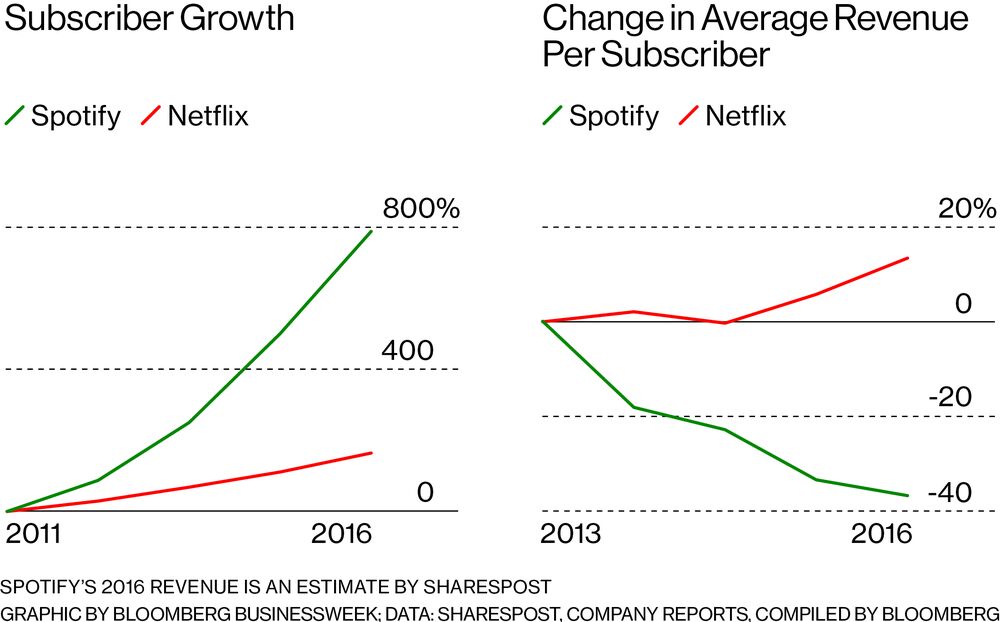
From the plot above, as the music service grows, the change in average revenue per user drops. In other words, the company is not maximizing the economics of scale. Yes, it is paying more on royalties as the user base goes up even though it may get a discount for volume.

Simply, it is better to start a company that streams video than music. Music contracts are structured in ways that your problem can start when you start growing as that would mean more money to musicians, reducing expected scale benefits.  That explains why in digital business, you need to pay attention to marginal cost.

Yet, it is important to note that music streaming gives you chance to start small while video may be harder since you need to have an optimal price to pay for video rights without knowing if people will or not watch. For music, you can start small and as scale picks up, it dynamically calibrates.