DD
MM
YYYY

PAGES

DD
MM
YYYY

spot_img

PAGES

Home Blog Page 7176

No Person or Government Can Effectively Regulate Facebook

0

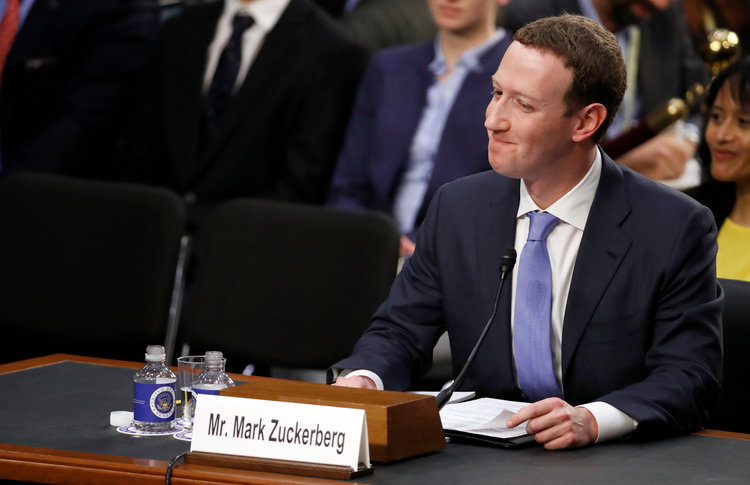
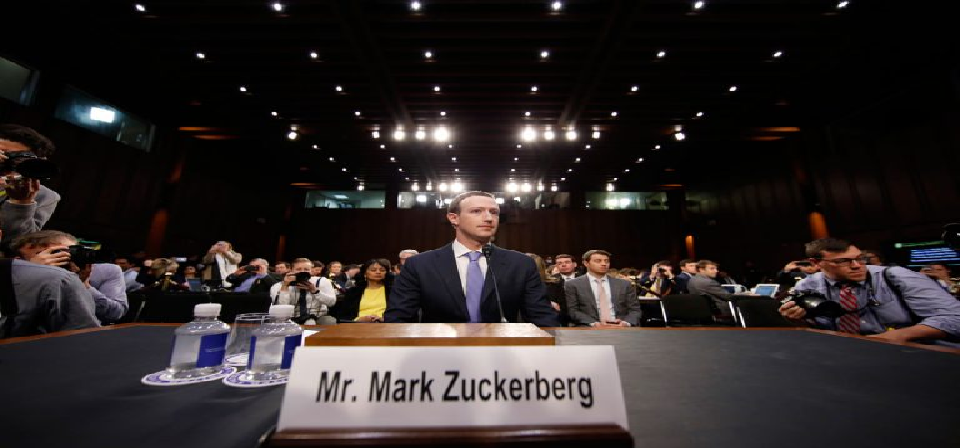
During his hearing on Capitol Hill, Facebook CEO, Mark Zuckerberg, largely asked the senators to regulate his company. Yes, he was open to it. But do not be deceived. Facebook and Mark are aware that no one can do that, effectively.

While it was possible to regulate or break Standard Oil (hello ExxonMobil, Chevron, etc) to make way for competition in the U.S. energy industry, the business structure of the web makes regulation harder. Yes, you can easily regulate a bank. You can do so on medical companies and hospitals. But to think you can accomplish same on web business is an illusion. There is no sector in the history of markets where marginal cost largely disappears when user base runs into millions.

At its peak in late 1970s and early 1980s, General Motors (GM) employed hundreds of thousands of people but yet could not serve the world because it was expensive doing so. In the web age, WhatsApp was serving the world with less than 20 people before it was acquired for roughly $19 billion. Simply, if you regulate or break WhatsApp, very soon another WhatsApp will emerge because making that happen is marginally not as tedious in terms of cost. You have no luck to tame aggregators without simply asking another aggregator to germinate and take over the void.

In a perfect market, the marginal cost of a digital product is zero. This means that the price of a digital product tends to zero: welcome freemium and ad-supported business. However, only firms with network effects dominate and benefit. The core reason is that if in a perfect market, and the marginal cost of producing digital product is zero, the price will inevitably go to zero.

This is the heart of the freemium model where you get many things free, which is possible because of the aggregation construct, where companies provide those digital products and then create an ecosystem to sell adverts. The firms benefit more than the suppliers by providing the platforms [Facebook makes money for photos supplied by families. Sure you like the Likes]. As shown in the Figure, great companies deliver the near-zero marginal price for high quality product, making it challenging for anyone that carries a non-zero marginal price to compete, exacerbated if the product is even not top-grade. This is one of the biggest challenges digital entrepreneurs face.

As I have noted that Facebook would be bigger and better if there is regulation because regulation will make it nearly impossible to have another Facebook. There is no regulation Facebook cannot absorb, and future web companies will be nipped as they may not have the resources to even begin.

Be careful what you wish. The world of Internet would change because of the GDPR(General Data Protection Regulation). Companies like Facebook and Google would be affected. In short, these companies are smiling at the bureaucrats in Brussels. U.S. Congress may have a regulation as more revelations emerge on how Facebook data was compromised by Cambridge Analytica.

If you decide to break Facebook apart, one part will grow and dominate others. This is possible because of the positive continuum of network effect where the biggest keeps getting bigger and also better. I explained that in a recent piece in the Harvard Business Review. You can regulate Facebook but another company will come to take over its position because in this sector, it is winner-takes-all. Yes, the best wins.  Why? The scalable advantage improves with lower marginal cost.

And that is the problem. With their high scalable advantages running on aggregation construct, digital empires like Facebook and Google can take up offline empires, and may still not be within the crosshairs of the regulators. No one can effectively regulate Facebook, for example, unless you want another company (not named Facebook) to take its position. The operating structure of the business is mutative, and that means that it can grow through network effects which reward the best: a better service brings more users, and the more the users, the better the service, setting up a positive continuum. So, if you break Facebook, one part could grow and over time could dominate other parts, provided that part is the surviving best. Or another company with stronger advantage, post-Facebook breakup, would take over the new market and become the new category-king.

So, if U.S. breaks Facebook, one of those pieces can emerge to fill that void. Or another product from say China or India can emerge and become the world’s leader. It is a web business running on the aggregation construct. They are not structured to have 20 banks in Lagos. You expect to have one popular social media in Lagos for a specific sector. That one leader is what matters. If you break, the one that is best will grow (and win) because network effect will make it easier to attract users to it.

This is my take: U.S. will not regulate Facebook or its web companies at the level many are expecting [I expect nothing to change except cosmetics reporting of violations] because it knows that Chinese competitors which are also well-funded will go after Facebook users across the globe. And even if U.S. regulates Facebook by breaking it, the best surviving part will grow to dominate over time because of network effect where the best gets better and bigger. We just have to agree that Facebook is an ICT utilities and I was very happy when my editors in Harvard allowed me to use that against the company. You negotiate with your utilities [ electricity, water] because you have no alternatives. That is where we are with Facebook.
Tesla vs SpaceX: Which is a Harder Business to Run?

0

Between Tesla (a car company) and SpaceX  (a rocket company) which one is harder to run?


It turns out that SpaceX seems easier by looking at what Elon Musk has done recently. As I wrote many years ago in the Harvard Business Review, when your industry players herd, one business model can knock all of them out at the same time. In the space industry, we have by all means a single business model controlled by United Launch Alliance (a joint venture of Lockheed Martin Space Systems and Boeing Defense, Space & Security ). The ULA was the go-to-place available for operators that wanted to send satellites to space. All that SpaceX had to do was to attack the ULA business model to cause disruption. It did and created a new basis of competition via pricing. Just like that SpaceX changed the industry.

This carries a major risk: an entire complacent industry can be attacked from the outside. It’s not easy, but when it happens, it often reshapes an industry, with major consequences to the old players. In his classic “The Five Competitive Forces That Shape Strategy“, Michael E. Porter showed how you don’t see much innovation when “degree of rivalry” is very low in an industry. Why? Because the entrenched players are depending largely on a communal strategy. Industries where the players are not innovating are easily disrupted by new entrants.

But when you come to car business, the game changes. Besides dealing with scale which is critical for mass market business, the competition is amorphous – you have many competitors with their unique business models. Yes, Toyota, GM, Ford, BMW, etc are all operating with different strategies. That becomes a problem as you cannot suddenly attack these companies with one strategy.

So, Tesla cannot have a break. It has to innovate on battery, production systems, meeting user experience, manage price, etc. It is doing many things at the same time to sustain its first-mover advantage as the pioneer in the all-electric vehicle sub-sector. But the competitors are coming, not just from one competing model, but from all angles.

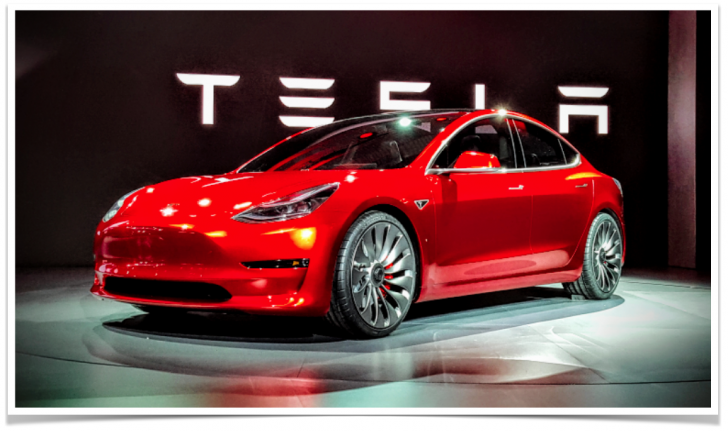
Tesla car (source: Green Optimistic}

So, if you ask Mr. Musk which company is causing it more sleepless nights, he would probably mention that Tesla is giving it more issues. Tesla has experienced many delays in rolling out products in the markets. But SpaceX has been operating with excellence. Yes, building a rocket company may be an easier business to run than a car company [at least for Elon Musk].

I like SpaceX business because customers prepay ahead, in months. In the car business, that is not the case [the deposits are typically less than 3% of the car price which make them insignificant when compared with the SpaceX where customers prepay ahead in months].

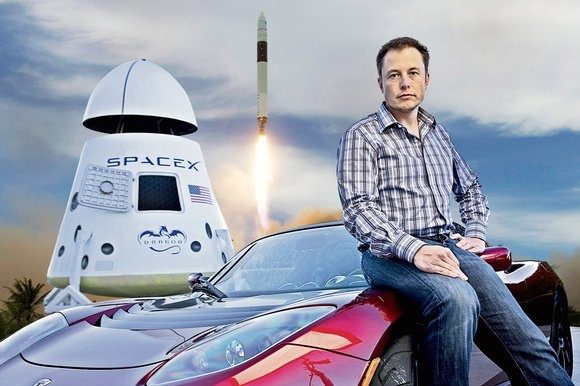
Spacex rocket (source: QZ)

The Lesson

The lesson here is that creating a company requires a thorough synthesis analysis. You need to scan the markets and understand the value chains. It would be naive to think that a car business would have been easier compared to a rocket business [ignore the technical challenges for a second]. SpaceX is a more technically-tasking business since making rockets is tougher than making cars. However, running a car business is tougher due to the maturity level of the sector with many players and moving targets of the needs of the customers.

Yet, there is something here – typically, when you solve a tougher technical challenge, you would have a better market positioning. Yes, SpaceX will see itself in a space where it generates better value than Tesla since it is solving a tougher problem which many people cannot do. That technical capability translates to better business operations. When that happens, you will see how Accumulation of Capabilities Construct makes companies better in markets.


Nanodegree Programs

0

Quick reminder: A unit in my business – First Atlantic Cybersecurity Institute (Facyber.com) – has partnership with Igbinedion University Okada, Nigeria. Together, we award Nanodegree on Cybersecurity & Digital Forensics with specialization on Policy, Technology and Management.

This is the program brochure here.

To reach my team, email tekedia@fasmicro.com.


We are still accepting non-academic partners (details here).

Mark Zuckerberg: “Senator, mostly in America”

2

During the Facebook hearing on Capitol Hill, US Senator Dan Sullivan (R-Alaska) threw a question to Mark Zuckerberg: “Mr. Zuckerberg, quite a story, right? Dorm room to the global behemoth that you guys are,” he began. “Only in America, would you guys agree with that?”

Mark Zuckerberg’s response: “Senator, mostly in America.” The senator pushed further, “You couldn’t do this is China, right?”

Zuckerberg’s response. “Well, uh….well, senator, there are some very strong Chinese Internet companies.”

China is innovating as I have noted in this blog. It is a very great competitor to U.S. Mark knew that and the American mantra of “Only in America” fell that time. That is awareness.

They keep popping everywhere you go: China is eating the world. Some big numbers courtesy of Fortune Newsletter:

  • China now accounts for a whooping 42% of global commerce – more than France, Japan, the U.K. and the U.S. combined.

  • Mobile payments are now used by 68% of China’s Internet users and totaled $790 billion last year — 11 times more than in the U.S.

  • China’s venture capital industry has exploded from $12 billion, or 6 percent of the global total, in 2011–13, to $77 billion, or 19 percent of the worldwide total, in 2014–16. China leads the U.S. in fintech venture investment.

  • The BAT companies – Baidu, Alibaba, Tencent – provide 42 percent of the venture funding in China, compared to the 5 percent provided in the U.S. by the FANG companies – Facebook, Amazon, Netflix, Google.

We need people like Mark who can redeem Nigeria even when our leaders cannot figure things out. That is the message. The senator was off by miles. But the American tech is aware that it is no more “only in America”, but “mostly in America”. They do hope that “mostly” stays longer and that way.

The World’s Greatest Venture-Capital Investment Ever, is Africa’s

0
Naspers

It is not news that one company in South Africa has market valuation that is bigger than the whole stock markets in sub-Saharan Africa excluding South Africa (you expect that). The company’s market cap is at least 4x the size of the Nigerian Stock Exchange (I write this with pains). That company is Naspers – Africa’s largest entity by market capitalization.

Few weeks ago, it sold 2% of its stake in Chinese tech giant Tencent for $9.8 billion. It has invested $32 million in 2001. That $32 million was worth $175 billion (yes with B) before the 2% exit.

South African internet and entertainment group Naspers on Friday raised $9.8 billion (7.8 billion euros) selling two percent of its hugely-profitable stake in Chinese technology giant Tencent.

Naspers’ investment in Tencent has been “one of the greatest venture-capital investments ever”, according to Bloomberg News.

It said the stake in Tencent that Naspers bought for $32 million in 2001 was valued at $175 billion on Thursday.

Naspers, Tencent’s biggest investor, vowed to not sell any more shares for three years.

“These funds will be utilized to reinforce Naspers’ balance sheet and invested over time in Naspers’ development businesses,” the Cape Town-based company said in a statement.

Shenzhen-based Tencent has risen rapidly as China embraced the internet, with the company’s fortunes boosted by its WeChat social media platform.

WeChat crossed the one-billion users mark after the Chinese New Year in February.

In these two pieces (here and here), I have made a case why Nigeria needs to fix our venture capital ecosystem.

To create such enablers in Nigeria, I propose the following specifically for the VC sector:

  • Government should offer new VC (venture capital) firms in Nigeria a ten year tax incentive on profits if they have asset base of at least $50 million and will deploy the capital in Nigerian startups within 10 years.
  • Offer new VC firms in Nigeria the opportunity to repatriate 100% of profit within ten years. That will help the country to attract foreign investors to make Nigeria home.

If we have this type of incentive, we will see many VC funds making Nigeria home to explore opportunities in Nigeria and continental Africa. That influx of capital will have many multiples of benefits to our economy, our people, and the Nigerian technology space. Most especially our tech firms will stay home.

As Naspers shifts its massive profit home to South Africa, there is no way the South African treasury will not get at least $30 billion if you have around 20% tax rate. That is a national budget for Nigeria if this had happened in our country. We need to pay more attention to venture funding to stimulate our economy.