DD
MM
YYYY

PAGES

DD
MM
YYYY

spot_img

PAGES

Home Blog Page 7177

Nanodegree Programs

0

Quick reminder: A unit in my business – First Atlantic Cybersecurity Institute (Facyber.com) – has partnership with Igbinedion University Okada, Nigeria. Together, we award Nanodegree on Cybersecurity & Digital Forensics with specialization on Policy, Technology and Management.

This is the program brochure here.

To reach my team, email tekedia@fasmicro.com.


We are still accepting non-academic partners (details here).

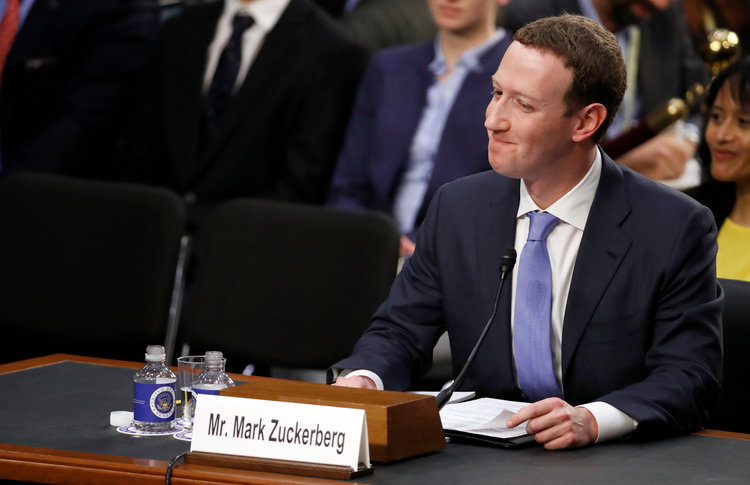
Mark Zuckerberg: “Senator, mostly in America”

2

During the Facebook hearing on Capitol Hill, US Senator Dan Sullivan (R-Alaska) threw a question to Mark Zuckerberg: “Mr. Zuckerberg, quite a story, right? Dorm room to the global behemoth that you guys are,” he began. “Only in America, would you guys agree with that?”

Mark Zuckerberg’s response: “Senator, mostly in America.” The senator pushed further, “You couldn’t do this is China, right?”

Zuckerberg’s response. “Well, uh….well, senator, there are some very strong Chinese Internet companies.”

China is innovating as I have noted in this blog. It is a very great competitor to U.S. Mark knew that and the American mantra of “Only in America” fell that time. That is awareness.

They keep popping everywhere you go: China is eating the world. Some big numbers courtesy of Fortune Newsletter:

  • China now accounts for a whooping 42% of global commerce – more than France, Japan, the U.K. and the U.S. combined.

  • Mobile payments are now used by 68% of China’s Internet users and totaled $790 billion last year — 11 times more than in the U.S.

  • China’s venture capital industry has exploded from $12 billion, or 6 percent of the global total, in 2011–13, to $77 billion, or 19 percent of the worldwide total, in 2014–16. China leads the U.S. in fintech venture investment.

  • The BAT companies – Baidu, Alibaba, Tencent – provide 42 percent of the venture funding in China, compared to the 5 percent provided in the U.S. by the FANG companies – Facebook, Amazon, Netflix, Google.

We need people like Mark who can redeem Nigeria even when our leaders cannot figure things out. That is the message. The senator was off by miles. But the American tech is aware that it is no more “only in America”, but “mostly in America”. They do hope that “mostly” stays longer and that way.

The World’s Greatest Venture-Capital Investment Ever, is Africa’s

0
Naspers

It is not news that one company in South Africa has market valuation that is bigger than the whole stock markets in sub-Saharan Africa excluding South Africa (you expect that). The company’s market cap is at least 4x the size of the Nigerian Stock Exchange (I write this with pains). That company is Naspers – Africa’s largest entity by market capitalization.

Few weeks ago, it sold 2% of its stake in Chinese tech giant Tencent for $9.8 billion. It has invested $32 million in 2001. That $32 million was worth $175 billion (yes with B) before the 2% exit.

South African internet and entertainment group Naspers on Friday raised $9.8 billion (7.8 billion euros) selling two percent of its hugely-profitable stake in Chinese technology giant Tencent.

Naspers’ investment in Tencent has been “one of the greatest venture-capital investments ever”, according to Bloomberg News.

It said the stake in Tencent that Naspers bought for $32 million in 2001 was valued at $175 billion on Thursday.

Naspers, Tencent’s biggest investor, vowed to not sell any more shares for three years.

“These funds will be utilized to reinforce Naspers’ balance sheet and invested over time in Naspers’ development businesses,” the Cape Town-based company said in a statement.

Shenzhen-based Tencent has risen rapidly as China embraced the internet, with the company’s fortunes boosted by its WeChat social media platform.

WeChat crossed the one-billion users mark after the Chinese New Year in February.

In these two pieces (here and here), I have made a case why Nigeria needs to fix our venture capital ecosystem.

To create such enablers in Nigeria, I propose the following specifically for the VC sector:

  • Government should offer new VC (venture capital) firms in Nigeria a ten year tax incentive on profits if they have asset base of at least $50 million and will deploy the capital in Nigerian startups within 10 years.
  • Offer new VC firms in Nigeria the opportunity to repatriate 100% of profit within ten years. That will help the country to attract foreign investors to make Nigeria home.

If we have this type of incentive, we will see many VC funds making Nigeria home to explore opportunities in Nigeria and continental Africa. That influx of capital will have many multiples of benefits to our economy, our people, and the Nigerian technology space. Most especially our tech firms will stay home.

As Naspers shifts its massive profit home to South Africa, there is no way the South African treasury will not get at least $30 billion if you have around 20% tax rate. That is a national budget for Nigeria if this had happened in our country. We need to pay more attention to venture funding to stimulate our economy.

Why That Contract Disappeared

0

Today, I am predicting that before May 13th 2020, LinkedIn will have a feature that makes it possible for some Updates/Posts here to self-destruct. We are entering a new age on online privacy since Facebook tested UNSENT which makes it possible to retrieve (and delete) past messages in recipients’ accounts. Yahoo and Gmail will surely give us emails that self-destruct after say hours, days, weeks, months, and years.

As we move into this new territory, the implications will be massive for business contracts. Yes, you have agreed via email only for the emails to permanently disappear after say two months. And you cannot recover them. Simply, now is the time to think how to secure your business digital assets and plan ahead the kind of contracts you execute via electronic systems.

Personally, I am a tech guy but I am very suspicious of digital systems to preserve anything. I have this habit of printing things I want to preserve and secure. In 2009, I had written a book and the publisher sent me a PDF file to proof-read before publication. I did. When I woke up, the file had disappeared in my laptop. I was stunned on that possibility largely because the file I received was a simple PDF document [nothing esoteric]. Imagine if that was an important contract and your partner had withdrawn all elements to destroy it, magically.

Before you think this is science fiction, Techcrunch reports that Gmail is testing that feature already. Yes, it is coming to Gmail possibly in weeks.

Based on those screenshots, expiring emails work pretty much like expiring emails in ProtonMail. After some time, the email becomes unreadable.

In the compose screen, there’s a tiny lock icon called “confidential mode”. It says that the recipient won’t be able to forward email content, copy and paste, download or print the email.

You can configure the expiration date so that your email disappears after 1 week, 1 month, multiple years, etc. You can also ask your recipient to confirm their identity with a passcode sent via text message. This sounds like a great way to associate email addresses with phone numbers and improve Google’s ads.

As I have noted, we will break the web because we want super-privacy. When you cannot trust that the email you have archived would be available when you need it [the other person wants the ability to control distribution] it means no one would use email for anything serious. I am happy we have trees in Nigeria. So, we would go back to papers. Yes, everyone will just ask for paper contracts as I am going to be suspicious agreeing on anything on emails when the emails have the possibilities to disappear.

Mark Zuckerberg poisoned the web when people woke up and saw that all messages he had sent them had disappeared. Essentially, he had proven why we should not take his platforms as credible ecosystems for something serious. You cannot make these things up – they are playing in real scenes all in the name of user privacy.

To recap, now six sources confirm that Facebook messages they had received from Mark Zuckerberg had disappeared from their inboxes. When we told Facebook we had an email receipt proving the retractions


Building Firms That TRANSFORM

0

Competition is one of the vehicles markets renew and refresh themselves. We have all come to learn about the need to innovate as without innovation, it would be hard to compete. Innovation improves productivity even when (usually) reducing the cost of the products and services. That happens because innovation engineers a new level of competition which means a new trajectory to achieve the purpose of reducing market frictions – the very essence why companies exist. When you innovate, you transform your business and your market.

There are fundamental constructs which define companies that run and then TRANSFORM their sectors. The reality is that succeeding as a business requires reinvention as customers needs evolve with time. Companies that transform are good at staying ahead of customer needs and perceptions: no matter what comes, they tend to be ready.

But transformation can also come via many ways and many firms have invented ways to transform. I have liked how Intuit has become a category-king company in its sector. For decades, the U.S. company continues to swallow competitors without buying them. I have called its model: Fish Bait Acquisition Construct. It is a model where you give things free to competitors. As they come to enjoy the freebies, you trap them, and over time, they become weak. The end game is that over time, they beg you to take over their assets.

You want to build companies that can transform sectors. Enjoy the video.