DD
MM
YYYY

PAGES

DD
MM
YYYY

spot_img

PAGES

Home Blog Page 719

U.S. SEC and Ripple Labs Jointly File to Dismiss Their Respective Appeals in the Second Circuit Court

0

U.S. Securities and Exchange Commission (SEC) and Ripple Labs jointly filed to dismiss their respective appeals in the Second Circuit Court, effectively ending a nearly five-year legal battle over the classification of XRP.

The lawsuit, initiated by the SEC in December 2020, alleged that Ripple conducted an unregistered securities offering through XRP sales. A key ruling in July 2023 by Judge Analisa Torres determined that XRP sales on public exchanges did not constitute securities, though institutional sales violated securities laws, resulting in a $125 million fine for Ripple and a permanent injunction on future institutional sales.

The joint dismissal, filed under Federal Rule of Appellate Procedure 42(b)(1), followed an agreement-in-principle reached in May 2025, with each party bearing its own legal costs. Ripple’s Chief Legal Officer, Stuart Alderoty, confirmed the resolution, stating the case was over and Ripple could refocus on business.

The dismissal leaves Torres’ 2023 ruling as the final judgment, providing clarity on XRP’s regulatory status and potentially influencing future crypto regulation. XRP’s price surged to $3.34, reflecting a 12.34% daily gain, driven by market optimism over the resolution.

Implications of the SEC-Ripple Settlement

This clarity is likely to encourage exchanges like Coinbase and Binance to relist or maintain XRP trading, boosting its liquidity and market adoption. The ruling may serve as a benchmark for other cryptocurrencies, potentially shielding them from being classified as securities in secondary markets, fostering innovation and reducing regulatory uncertainty.

The resolution signals a retreat from the SEC’s prior “regulation by enforcement” approach under former Chair Gary Gensler, which was criticized for stifling innovation. The settlement allows Ripple to focus on expanding its blockchain-based payment solutions, such as cross-border transactions using XRP, without ongoing legal overhang.

The precedent may embolden other crypto firms to challenge SEC enforcement actions, encouraging a more proactive industry stance against overregulation. The settlement could spur increased institutional adoption of XRP, as seen with moves like Purpose Investments’ launch of a spot XRP ETF in North America, signaling growing confidence in XRP’s regulatory status.

The reduced fine of $50 million (from $125 million) and the lifting of the injunction on institutional sales allow Ripple to redirect resources toward business development, potentially strengthening its role in global payments. The settlement may mitigate the risk of regulatory arbitrage, where firms relocate to crypto-friendly jurisdictions due to U.S. regulatory uncertainty, thus retaining innovation and capital within the U.S.

The case highlights the limitations of applying the 1946 Howey Test to modern digital assets, prompting calls for tailored regulatory frameworks. The distinction between institutional and programmatic sales could influence how other tokens are classified, potentially leading to a more nuanced regulatory approach. The resolution may pressure the SEC to provide clearer guidelines on which digital assets are securities, reducing the risk of future enforcement actions based on ambiguous criteria.

How New SEC Legislation and Policy Changes Paved the Way

The appointment of Paul Atkins as SEC Chair in January 2025, following Gary Gensler’s departure, marked a significant shift toward a pro-crypto regulatory stance. Atkins, known for criticizing regulatory uncertainty in crypto markets, prioritized accommodating digital assets within capital markets.

Atkins’ leadership introduced “Project Crypto,” an initiative to modernize securities rules, provide clear guidelines on when tokens are securities, and offer exemptions for crypto issuers and intermediaries. This policy shift likely encouraged the SEC to negotiate a settlement rather than pursue a potentially unfavorable appeal outcome.

The establishment of the SEC’s Crypto Task Force, led by Commissioner Hester M. Peirce, aimed to clarify the application of securities laws to crypto assets and recommend policies fostering innovation while protecting investors. The task force’s focus on distinguishing securities from non-securities aligned with the Ripple ruling’s emphasis on programmatic sales, likely influencing the SEC’s decision to drop its appeal.

The Trump administration’s pro-crypto stance, including President Trump’s pledge to be a “crypto president” and the White House’s call for the SEC and CFTC to enable digital asset trading, pressured the SEC to resolve high-profile cases like Ripple’s. The Financial Innovation and Technology for the 21st Century Act (FIT21), passed by the House in May 2024, proposed clearer jurisdictional boundaries between the SEC and CFTC.

Although not yet law, FIT21’s bipartisan support signaled a legislative push for regulatory clarity, likely influencing the SEC’s willingness to settle rather than risk a precedent-setting appellate loss. Political pressure from lawmakers and industry groups, who criticized the SEC’s aggressive enforcement as stifling innovation, further encouraged a resolution.

The SEC-Ripple settlement marks a pivotal moment for U.S. crypto regulation, providing clarity that XRP’s programmatic sales are not securities and setting a precedent for other digital assets. This outcome supports innovation, boosts market confidence, and may encourage broader adoption of cryptocurrencies. The resolution was facilitated by a pro-crypto shift under SEC Chair Paul Atkins, the Crypto Task Force’s focus on clear regulations.


OpenAI’s GPT-5 Release Raises The Stakes in the Artificial Intelligence Race

0

OpenAI released GPT-5, marking it as their most advanced model yet, with significant improvements in reasoning, coding, and multimodal capabilities. It’s available to all ChatGPT users, including free tier, with varying usage limits based on subscription—Pro users get unlimited access, while free users have restricted message limits.

GPT-5 integrates a unified system with a smart router that switches between standard and reasoning modes (“GPT-5 Thinking”) for complex tasks, reducing the need for manual model selection. It outperforms previous models like GPT-4o and o3, scoring 74.9% on SWE-bench Verified for coding and 94.6% on AIME 2025 for math, with a 256,000-token context window for better memory retention.

OpenAI claims reduced hallucinations and improved safety through 5,000 hours of testing and “safe completions” for sensitive queries.  The model is also accessible via the API in three variants: gpt-5, gpt-5-mini, and gpt-5-nano, tailored for different performance and cost needs.

However, some early testers noted the leap from GPT-4 to GPT-5 is less dramatic than from GPT-3 to GPT-4, and competitors like Google’s Gemini and Anthropic’s Claude remain close in performance. Available to all ChatGPT users, including free-tier with limits, democratizes access but raises concerns about misuse and empower developers, accelerating integration into industries like healthcare, finance, and education.

OpenAI’s 5,000 hours of testing and “safe completions” aim to reduce hallucinations and harmful outputs, but skepticism persists about whether these measures fully address biases or potential for malicious use (e.g., automated propaganda).

GPT-5’s coding and reasoning prowess could automate complex tasks, potentially displacing jobs in software engineering, data analysis, and creative industries, while creating demand for AI oversight roles. Businesses leveraging GPT-5 via API could outpace competitors, reshaping sectors like customer service (advanced chatbots), content creation, and personalized education.

The U.S., with OpenAI’s lead, strengthens its position in AI dominance, but China’s investments (e.g., Baidu’s Ernie models) and Europe’s regulatory push (e.g., EU AI Act) intensify competition. Nations may prioritize AI sovereignty, leading to fragmented ecosystems.

Advanced AI in the hands of a few corporations (OpenAI, Microsoft-backed) raises concerns about monopolistic control, data privacy, and dependency on U.S.-based tech. GPT-5’s capabilities could transform education (e.g., personalized tutoring) but widen skill gaps, as workers need to adapt to AI-driven workflows.

The Race for AI Supremacy

GPT-5’s release solidifies OpenAI’s lead, leveraging Microsoft’s infrastructure and funding. Its universal access model (free tier to API) broadens its ecosystem but invites scrutiny over safety and pricing (undisclosed for subscriptions). Gemini models compete closely, with strengths in search integration and hardware (TPUs).

Google’s focus on efficiency and multimodal AI challenges GPT-5, though it lags in public perception of innovation. Claude, backed by ex-OpenAI researchers, emphasizes safety and interpretability. While competitive, it lacks GPT-5’s scale and multimodal edge but appeals to ethics-conscious users.

Baidu’s Ernie and Alibaba’s Qwen aim to dominate Asia, backed by state support. They trail in global reach but excel in localized applications and censorship-compliant AI. GPT-5’s incremental improvements over GPT-4o (vs. the GPT-3 to GPT-4 leap) suggest diminishing returns, giving competitors room to catch up.

Benchmarks like AIME 2025 (94.6%) show GPT-5’s edge, but rivals are closing gaps in reasoning and coding. Training GPT-5 required massive compute (rumored thousands of GPUs), raising barriers to entry. Only well-funded players (OpenAI, Google, Meta) can compete at this scale, sidelining smaller startups.

The EU’s AI Act and U.S. export controls on AI tech could limit OpenAI’s global reach, while China’s regulatory environment favors local players. Safety concerns may force OpenAI to balance innovation with compliance. Meta’s Llama and other open-source models lag behind GPT-5 but empower decentralized innovation, challenging proprietary ecosystems.

By offering GPT-5 to free users and via API, OpenAI aims to lock in developers and users, creating a de facto standard. Its “thinking” mode and multimodal focus target enterprise and creative use cases. Google may double down on Gemini’s integration with Android and Search, while Anthropic could lean on safety-first branding.

xAI’s focus on truth and real-time X data could carve a niche for skeptical users. Nations may subsidize local AI firms or restrict foreign models, fragmenting the market. China’s push for self-reliance could accelerate its domestic models.

OpenAI leads, but competitors like Google, Anthropic, and xAI, alongside China’s players, keep the race tight. The supremacy battle hinges on balancing performance, safety, and accessibility while navigating regulatory and societal pressures. As AI becomes ubiquitous, the winner may not just be the most advanced but the one that earns trust and integrates seamlessly into global systems.

Binance’s Mastercard Withdrawal Feature for EEA and UK Enhances Remittances and Cross-Border Payments

0

Binance has launched a feature allowing European users in the European Economic Area (EEA) and the UK to convert cryptocurrencies into fiat and withdraw funds directly to eligible Mastercard debit or credit cards in near real-time.

Powered by Mastercard Move, the “Buy & Sell” service offers two options: “Sell to Card,” which converts crypto (e.g., Bitcoin, Ethereum) into euros and transfers them to a linked Mastercard, and “Withdraw to Card,” which moves existing euro balances from Binance to a Mastercard without conversion.

The process is accessible via Binance’s website or app, requiring users to select the desired option, input the amount, link a Mastercard, and complete security verifications. The service, currently limited to euro transactions, significantly reduces withdrawal times compared to traditional bank transfers, with average credit times under 5 minutes in most cases.

Binance and Mastercard emphasize user convenience, security, and compliance with European regulations, including KYC and anti-money laundering checks. Support for additional fiat currencies is planned, subject to regulatory approval.

Traditional cross-border remittances and payments often take days due to intermediary banks and clearing processes. Binance’s near real-time withdrawals (averaging under 5 minutes) to Mastercard cards bypass these delays, making funds available almost instantly. This is a game-changer for time-sensitive remittances, such as supporting family members abroad or urgent business transactions.

Conventional remittance services like Western Union or bank wire transfers often charge high fees (5-10% or more, depending on the corridor). By leveraging crypto-to-fiat conversion and direct card transfers, Binance may offer lower fees, as cryptocurrencies typically have lower transaction costs compared to traditional financial systems.

The service allows European users to convert crypto directly to euros on widely accepted Mastercard debit or credit cards. This eliminates the need for traditional bank accounts, which can be a barrier for unbanked or underbanked individuals, particularly migrants sending remittances. Users only need a Binance account and a Mastercard, broadening access to cross-border financial services.

By enabling crypto-based remittances, this service empowers users in regions with limited banking infrastructure to participate in global financial systems. Migrants in Europe can convert crypto earnings or savings into fiat and send funds to cardholders in their home countries (if Mastercard expands support), fostering inclusion for underserved populations.

The partnership with Mastercard ensures adherence to European KYC and anti-money laundering regulations, increasing user trust. This compliance makes the service a viable alternative to informal remittance channels (e.g., hawala), which often lack transparency and legal oversight.

Improvements to Remittances and Cross-Border Payments

The near-instant transfer of funds to Mastercard cards revolutionizes remittances, where delays can cause significant hardship. For example, a migrant worker in Germany can sell Bitcoin on Binance and have euros credited to a family member’s Mastercard in minutes, compared to days with traditional bank transfers.

Lower transaction fees for crypto conversions and card withdrawals could save users significant amounts compared to traditional remittance services. For instance, a $200 remittance via Western Union might incur $10-20 in fees, whereas Binance’s crypto-based service could potentially halve that cost, leaving more money for recipients.

The service streamlines remittances by integrating crypto conversion and fiat withdrawal into one platform. Users can manage the entire process—selling crypto, converting to euros, and transferring to a card—within Binance’s app or website, reducing the need for multiple intermediaries or platforms.

For users already holding cryptocurrencies, this service provides a direct bridge to fiat without requiring a bank account. This is crucial for cross-border payments in regions with volatile currencies or limited banking access, as crypto can serve as a stable store of value before conversion.

For remittances to countries with unstable currencies, users can hold value in cryptocurrencies (e.g., stablecoins like USDT or Bitcoin) and convert to euros only at the point of withdrawal. This protects against exchange rate fluctuations, a common issue in traditional cross-border payments.

SoftBank Posts Strong Q1 2025 Profit as Shares Hit Record High on AI Investment Surge

0

SoftBank, a Japanese multinational investment holding company has delivered a striking comeback in Q1 2025, posting a robust profit that far exceeded market expectations, sending its shares soaring to an all-time high.

The tech giant saw its share price surge more than 13% on Friday to a record intraday high, after a sharp first quarter (Q1) report.

SoftBank posted a ¥421.8 billion ($2.87 billion) net profit for Q1 2025, its second straight profitable quarter and a full reversal from the ¥174 billion loss recorded in the same period a year earlier. This rebound was fueled largely by a $4.8 billion increase in Vision Fund asset value as SoftBank deepened its AI investments across sectors and continents.

When excluding one-time factors, operating income was 290.7 billion JPY and net income was 145.3 billion JPY, representing 6% and 1% YoY increases, respectively. The company’s President & CEO, Junichi Miyakawa, noted that with these figures, good progress is being made toward the FY2025 full-year forecast, with 25% of revenue, 29% of operating income, and 27% of net income achieved in Q1 so far.

All business segments recorded YoY increases in revenue, and the Enterprise, Distribution, and Financial Business segments also recorded YoY increases in operating income. “Each segment is making steady progress toward achieving its full-year forecast,” Miyakawa commented.

In the Financial Business segment, Q1 FY2024 revenue was up by 23% YoY at 91.3 billion JPY, and operating income reached 18.1 billion JPY, more than double the amount of 7.6 billion JPY in operating income registered in the previous fiscal year. The increase was driven by a 87% YoY increase in PayPay’s consolidated EBITDA.

Notably, SoftBank’s turnaround is being fueled by its aggressive investments in artificial intelligence, a strategy that is reigniting investor confidence and positioning the company at the forefront of the rapidly evolving AI race.

The tech giant has been aggressively investing in AI and has built a web of partnerships and capital stakes in companies developing the technology. The company has raised its stake in Nvidia to about $3bn and has also invested in the world’s biggest chipmaker, TSMC, and database giant Oracle. Nvidia’s share price has risen almost 30 per cent since the beginning of the year.

Also, SoftBank partnered with OpenAI to develop “Cristal Intelligence,” an advanced enterprise AI, with a $3 billion annual commitment to deploy OpenAI’s solutions across its group. They also established SB OpenAI Japan to tailor AI for Japanese enterprises. Additionally, SoftBank led a $40 billion funding round for OpenAI at a $300 billion valuation to advance AI research and infrastructure.

The tech giant is targeting AI investments through its Vision Funds, investment vehicles that recorded gains on investments of ¥726.8bn, helped in particular by the rise in valuation of South Korean e-commerce company Coupang. The Vision Funds had a “late-stage portfolio valued at $45bn”, including payments subsidiary PayPay, which the company said was preparing for an initial public offering.

In a recent development, SoftBank is taking ownership of Foxconn Technology Group’s electric vehicle plant in Ohio, a move aimed at kick-starting the Japanese company’s $500 billion Stargate data center project with OpenAI and Oracle Corp.

SoftBank’s aggressive AI and tech investments, led by Masayoshi Son’s vision for “artificial superintelligence,” position it as a major player in shaping the future of technology.

Experts Weigh in on Why SpacePay Could Become 2025’s Leading Crypto Opportunity

0

Cryptocurrency payments have been stuck in neutral for years. Most businesses won’t touch them because they’re complicated and risky. But SpacePay, a startup from London, thinks they’ve cracked the code.

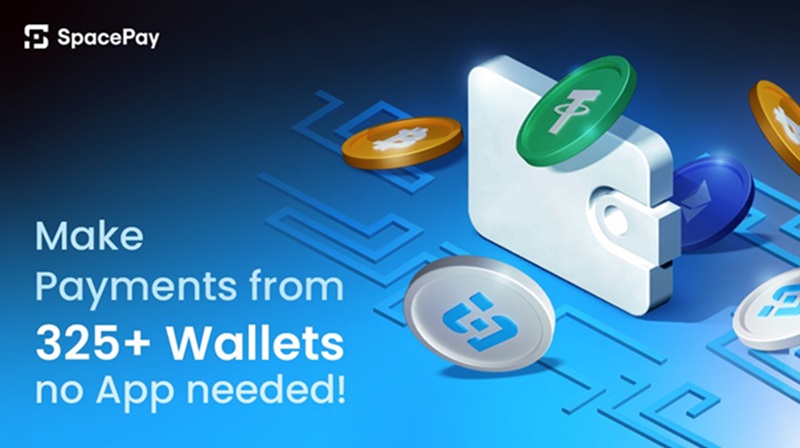
Their system lets any merchant accept crypto through their existing card machines without buying new equipment. They handle over 325 different wallets, convert everything to regular money instantly, and only charge 0.5% fees. Their token presale has already brought in more than $1.2 million.

SpacePay Solves What Others Haven’t

Here’s the thing about crypto payments – they sound great until you try to set them up. Most solutions require special terminals that cost thousands of dollars. Then there’s the volatility problem. Accept Bitcoin on Monday, and by Friday your payment might be worth half as much.

SpacePay figured out how to work around both issues. They built software that runs on the Android payment terminals most shops already have. No new hardware needed. Just download their app and start accepting crypto payments the same day.

The volatility fix is equally clever. When someone pays with Bitcoin or Ethereum, SpacePay immediately converts it to dollars, euros, or whatever currency the merchant wants. The business owner never has to worry about price swings. They get exactly what they expected, every time.

Small businesses especially love the 0.5% fee structure. Credit card companies typically charge 2-3% per transaction. Over a year, that difference adds up to real money.

Crypto Finally Gets Practical

Walk into most coffee shops or restaurants and try to pay with cryptocurrency. You’ll get blank stares. It’s not that people don’t want to use their digital coins – there’s just nowhere to spend them.

That’s starting to change, but slowly. The problem isn’t demand. Over 400 million people worldwide own cryptocurrency now. Many would love to buy their morning coffee with Bitcoin instead of fishing around for cash or cards.

SpacePay makes this possible without forcing merchants to become crypto experts. The payment process looks identical to a regular card transaction from the customer’s perspective. They tap their phone, the payment goes through, and both sides stay happy.

Security was another major concern the team had to address. Nobody wants to deal with payment systems that might get hacked. SpacePay uses the same encryption standards as major banks, plus they monitor every transaction in real-time for suspicious activity.

Visit SpacePay Presale

Experts Think the Timing Is Right

Financial analysts who’ve looked at SpacePay seem genuinely excited about what they’re building. Unlike most crypto projects that promise the moon, this one already works. You can download their app and start processing payments today.

Most crypto projects are all talk and no action. They raise millions, then spend years trying to build what they promised. SpacePay did the opposite – they built something that works first, then started talking to investors. It’s refreshing to see a team that prioritizes substance over hype.

Meanwhile, governments aren’t treating crypto like the boogeyman anymore. There’s still red tape, but at least now there’s actual guidance instead of uncertainty. Business owners can finally get straight answers about what’s legal, which removes a huge barrier.

Revenue sharing is another aspect that caught analysts’ attention. Token holders get a cut of the money SpacePay makes from processing fees. It’s like owning a tiny piece of the business that actually generates income.

The $SPY Token Offers Real Benefits

SpacePay’s token isn’t just another speculative cryptocurrency. It actually does things within their system. Token holders get voting rights on new features and company decisions. They also receive monthly rewards and early access to new tools before everyone else.

Four times a year, SpacePay’s leadership jumps on video calls with token holders. People can ask whatever they want – tough questions included. This kind of direct access is unusual in crypto, and it shows they’re not afraid to be held accountable.

Token distribution looks reasonable too. Out of 34 billion total tokens, 20% go to public buyers during the presale. The rest gets divided between development, marketing, partnerships, and user rewards. No single group controls too much of the supply.

Right now, presale participants can get $SPY tokens for $0.003181 each.

The Perfect Time for Payment Solutions

Big payment processors know crypto is coming, but they’re dragging their feet on actually doing something about it. Most of their solutions are expensive and complicated. SpacePay’s simpler approach could capture significant market share before the big players catch up.

Corporate adoption is accelerating, too. When major companies like Tesla and MicroStrategy buy Bitcoin, it legitimizes cryptocurrency for smaller businesses. They start wondering if they should accept it from customers, too.

The infrastructure is finally mature enough to support real-world use. Internet speeds are faster, transaction costs are lower, and the technology is more reliable than it was five years ago.

Anyone wanting to participate in the $SPY presale can visit SpacePay’s website and connect their crypto wallet. They accept payment in ETH, BNB, MATIC, AVAX, USDT, USDC, and regular credit cards for people new to cryptocurrency.


JOIN THE SPACEPAY ($SPY) PRESALE NOW

 Website    |    (X) Twitter    |  Telegram