I wrote this week in the Harvard Business Review that African startups may struggle to compete with ICT utilities like Google and Facebook. Interestingly, the new landscape goes beyond startups: everyone is going to be affected.
Google has a peer-to-peer payment in India called Tez. It has been doing well. Facebook has a messaging app called WhatsApp which we all use in Nigeria. Until recently, Google was doing its payment while WhatsApp was anchoring chat. Then the war began.
Google has added chat in Tez. It did that because WhatsApp has also included in-payment capability. With excess of 200 million users and practically anyone with smartphone in India, WhatsApp has a solid positioning. Google had to add that chat to at least keep its customers.
The biggest loser and increasingly vulnerable is the local payment company, Paytm. Paytm had added a chat option also but it is losing steam. Everyone is doing the same thing for that final moment of glory, even coming from opposite trajectories.
:no_upscale()/cdn.vox-cdn.com/uploads/chorus_image/image/58934079/tez_pay.0.gif)
Both Google and WhatsApp have built their services atop the Indian government’s Unified Payments Interface (UPI) system for transferring money by tapping into bank accounts directly rather than maintaining a virtual wallet. However, it’s clear that they’re going about the design from opposite directions — one company is adding payments to a chat app, and now the other is adding chat to a payments app.
Look carefully in these solutions, you would see one feature: platform. Yes, everyone wants to drive that consolidation where its platform is the place everyone comes. In coming weeks, I expect them in Nigeria. They are experimenting in India but Nigeria is not far. GTBank would be waiting because as the CEO noted, it wants to be a platform also:
To “create a platform and partner anybody who has a service to offer. So that if as a customer, one comes into our ecosystem, you can do just anything. You could do your banking business, buy your tickets, insurance, travel; if you wanted a 10-day pay day loan, you can do it. So, really we want you to come into our ecosystem, maybe five times a day to do different things other than banking.”
If you are a fintech, there is an asymmetric warfare looming. If payment becomes a chat conversation, I am not sure the value of even opening another app to make payment.
Yet, there is no reason to lose hope as Transsion (makers of Tecno) plans to go public. The phone maker defeated Apple and Samsung in Africa. Yes, our fintech can repeat same against the likes of Google and Facebook as they converge.
Led by founder Zhu Zhaojiang, Transsion shipped nearly
12 million[see comment below on this number] smartphones to Africa in the first three quarters of last year, helping it leapfrog Samsung Electronics Co.and Apple Inc. to become the largest player on the continent, according to researcher Canalys. The Chinese company has become the biggest seller in countries from Kenya and Nigeria to Senegal.
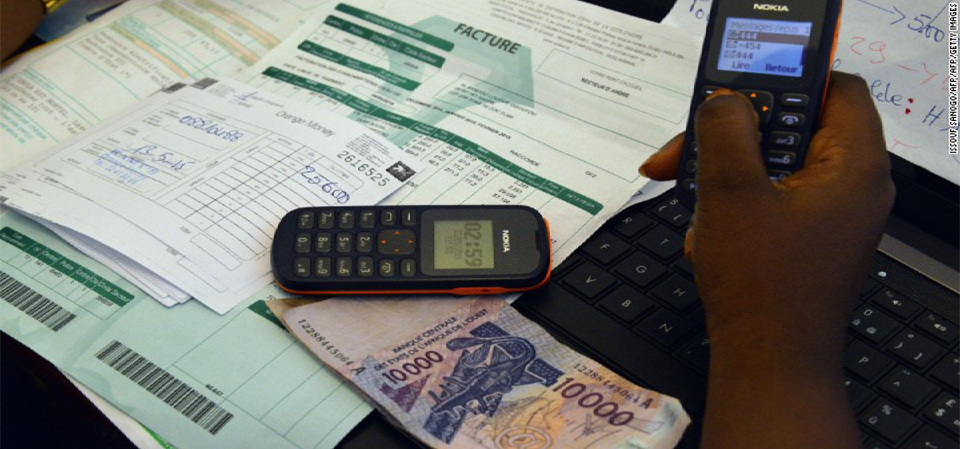
But fintechs should remember the untapped opportunity: intra-African remittance.
Ahmed sees this as an important opportunity for his company to fix a multi-billion dollar money transfer problem between neighboring African countries. This wouldn’t just have a significant impact on the hundreds of thousands of Africans moving between countries in search of a decent living, but also even those traveling on short business trips. Not only does technology add a convenience to the process but in Africa it brings a layer of transparency to things like exchange rates which should have significant impact and encourage more economically beneficial movement between countries
We cannot forget that. Yes, someone has to fix the problem of moving money across Africa.