Many months ago, we started working with many African clients on the One Oasis Strategy (read it here). That was before I made it public on my blog. Later this month, you would read in the Harvard Business Review how this strategy has helped two of the companies – ATB Techsoft and Amaecom. Specifically in Nigeria, during the time of market turbulence driven by forex, oil prices, political systems and security, how you invest matters.
Just as Amazon cloud (AWS) was built to grow the Amazon ecommerce business before it became a product itself, there are many ways you can structure your capital to make it work better. Yes, you need to invest in the oasis because that is the best place to invest in a desert. ATB Techsoft is an indigenous software company while Amaecom is an asset financing company. With one oasis strategy, these institutions improved significantly in the creation of value and the utilization of assets. They are now better positioned to win more markets in the respective markets.
ATB Techsoft is not just innovating on technology but also on business model; the FinUltimate software suite is winning market share. Amaecom has moved into private sector asset financing with its public-sector leading buy now pay later.
Meanwhile, I have a piece coming out this week in the Harvard Business Review. It is on African entrepreneurs. I will share here once it is live.
Simply, if you build your investment around that main product, you will find success, because those Investments will have a clear internal “customer”, and that reduces market risks. In other words, if your new business investments are geared to support the best product, and the best product is doing well, it implies the risks on the new investments will be easily managed. Provided the best product continues to do well, demand on the new investment is assured (i.e. the customer exists, irrespective of the external market). That is the One Oasis Strategy.
In the One Oasis Strategy, the key element is to align business innovation to favour the best product in the company on utility, value and cost which over time would help the firm compete better externally. It is firstly an inward looking management system, and offers a firm an opportunity to test strategies, models, business systems and production processes, perfecting them before they are launched for outside customers. Yes, with one oasis, a firm refines its process, technology and product, positioning it for success.
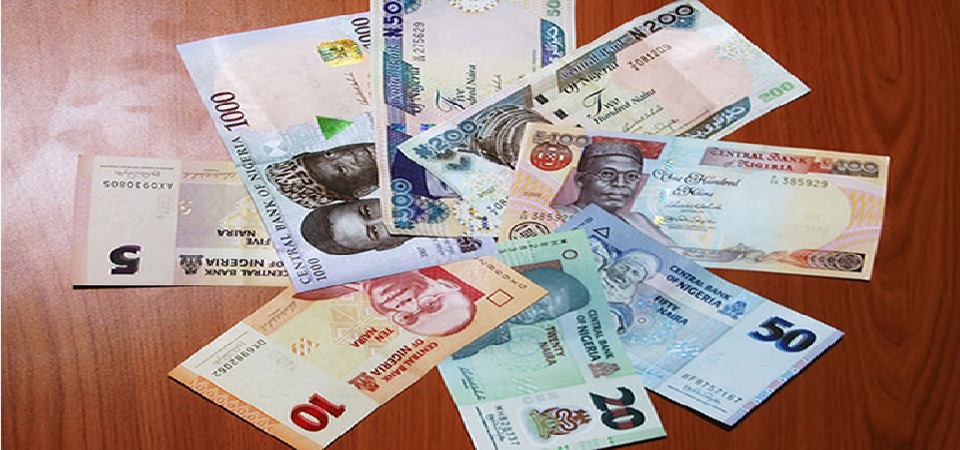
“I have N20m which I have in Union Bank for treasury bill. The money was payoff from previous job. But unlike in the past where TB instructions could be in perpetual, now the bank does not reinvest automatically. I can’t be doing same monthly. I want to move the money and invest in something else. Any suggestions on good options in Nigeria. I look for max of 3 years with highest safe returns. Prof help.” Kinsdon.
My answer
Dear Kinsdon,
I will break this into components to provide the basis upon which I will offer an opinion, at your own risk. Here are pillars:
Duration: You want duration of maximum of 3 years. This essentially cuts out many investment options in Nigeria
Hedge: I will be looking at how to break the N20m. So, instead of investing in one specific area/project, it can be distributed
Country: The country is Nigeria with our political economy, growth prospects, market trajectories, etc. I will take into consideration that the investment will be in Nigeria
Indicators: I know that inflation is a huge factor and we have to look at value of money and not just the face value. In other words, N20m today at $1=N350 may be ‘bigger” (think of value for money due to inflation) than N22m in three years if $1 becomes N620 (we hope not of course, but this is for scenario mapping)
Others: You are sector agnostic as you did not notice any sector you think you want to put this money
Your Investment Thesis
By reading your question, I can infer the following:
Planner: You like planning. That is why you have put a time frame on this investment. Possibly, you have something you want to do with the money after 3 years
Risk Appetite: Though I do not know how long this money was in treasury bill, I can infer that you seem happy with its returns. After all, if not that the bank has offered you a poor service, you may still be there. It was working. Simply, you seem to be happy with TB-level returns
Options
The following are the options, based on my synthesis of the scenario. This is happening as I am typing. The thought-process is how long it took me to type this, which is live.
Fixed deposit: You fix the money for three years in a good bank in Nigeria. That will do better than TB
Treasury bills: This can be substituted with the fixed deposit for higher returns
Stock market: You look for some good stocks especially in banking and invest. The risk is there but most are so beaten that they have no room to fall further.
Agribusiness: You explore agro-investing through aggregation with those doing so. Read my works on Aggregation Construct by searching tekedia.com. There are companies doing so. I listed some in my new book
Trade financing: You contribute to finance trade in some Igbo men going to China. But you need to have the right people. They mop money and use that money to bring container. This is a thriving business in Aba and Onitsha as most have shunned banks owing to the fees. And with the good returns, some people are taking risks. They offer good contracts and in some cases provide collateral as they own shops. Make it formal.
Startup/Angel investing: This is off for you as the 3 years will be too short for any meaningful support to the startup. You need to have a window of about 6 years to invest here
Recommendation
At your own risk, here are my recommendations:
Put 50% in fixed deposit for three years. Most banks will give you more than the yield on TB. Since you are already happy with TB, I can say that FD will be good for you. The only issue here is that you cannot have access to the money until three years. Yet, fixed deposit rate is affected by amount. Some banks can beat the TD for three years.
Put 25% in stock market. Notice that some of the beaten banks are coming up. Over the last two years, UBA had moved from N2.80 to about N9 (updated to N12). I am not saying that you should buy UBA but I am saying that there are values in the market. Stay with banking as that is the most liquid sector in Nigeria now
Put 25% in either trade financing or agribusiness. On the agribusiness, you may need to do some works. There are many young entrepreneurs who are helping people invest in farming. That seems lucrative from their reports. I do not know where you live. In Aba and Onitsha, some people put money to finance trade. Some men mop cash and travel to China to bring containers. The return if you pool money with them is around 20-30% in four months. It is a solid business outside the banking sector run by some Igbo men. Say someone needs to import something of N120 million, they pool money and once the items come in, they sell wholesale and balance the people that funded them.
I like how you emphasize “at your own risk.” Clearly, each of the prescribed alternatives possess unique risk and return characteristics, and these should be critically considered. I am no expert but assuming that the benchmark return is domestic treasuries with zero (or negligible) risk, then how much additional return should the investor be looking at per unit of incremental risk assumed in non-treasury options.
Other areas that I think the investor should also consider include:
1. Taxes should be considered and the after-tax return should be used for analysis. I assume the alternatives have different kinds of taxes to consider (withholding, capital gains, and income tax).
2. Other issues that may be unique to the investor
3. Liquidity: Although you mentioned liquidity in the piece, I will like to quickly state that the investor can gain exposure to real estate without necessarily purchasing a piece of real estate by investing in REITs or purchasing the shares of Real Estate Operating Companies.
Given all of the considerations (Risk, Return, Time, Taxes, Liquidity, etc), I personally lean towards financial assets (Treasuries, Bonds, Shares including mutual funds).
Africa’s leading cybersecurity training firm, First Atlantic Cybersecurity Institute (Facyber), will have its partner meeting in Lagos this May. Venue and dates would be communicated to our partners privately. Our educational partner, Igbinedion University Okada, which awards Nanodegree on Cybersecurity based on Facyber curriculum, would keynote the event.
Our cybersecurity education services cover policy, technology and management with relevance in key industrial sectors and markets. The training program has three classes: certificate, diploma and nanodegree.
We continue to recruit partners in major cities across Nigeria and Africa. Get in touch if you have some structures in your city. You would work with our team to reach local businesses, schools, governments etc on cybersecurity education and training.
Our Partner meeting is an avenue to co-share with partners as we continue to grow the business in Africa.
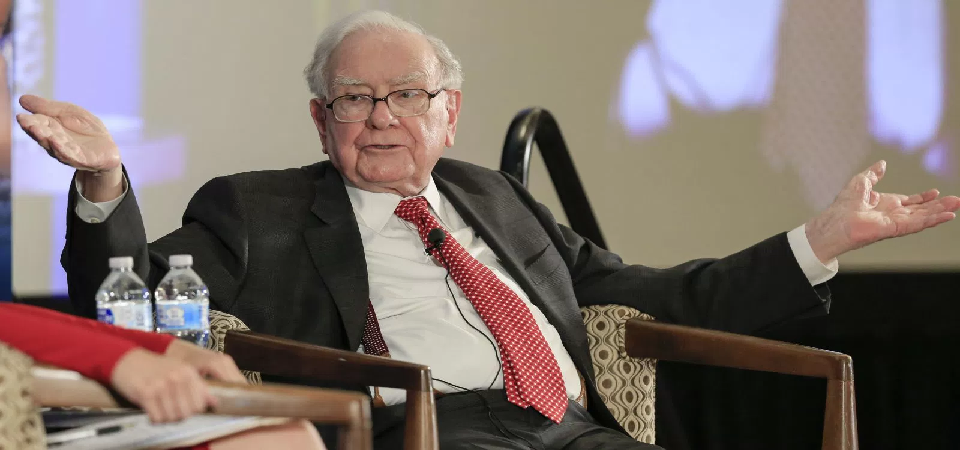
The Oracle of Omaha, Warren Buffett, is not used to technology stocks. But he is big on Apple, making the mobile device giant his second largest stock holding. He likes Apple for the same reason he likes Coca Cola: both deliver services which customers are psychologically attached to. For Mr. Buffett, the deal is not just in the sophistication of the camera system, the AI or voice recognition capabilities. He values Apple as a consumer brand which has changed the lives of many, and then supporting those lives. That brand elemental construct has become the moat that made Apple customers to remain fans. Mr. Buffett is banking on that.
“Apple has an extraordinary consumer franchise,” he told CNBC. “I see how strong that ecosystem is, to an extraordinary degree. … You are very, very, very locked in, at least psychologically and mentally, to the product you are using. [The iPhone] is a very sticky product.”
That attachment isn’t showing signs of loosening: A survey from Morgan Stanley published in May pegged the iPhone’s retention rate at 92%, compared to 77% for Samsung phones, and up from 86% the previous year.
Simply, more and more people are migrating to iPhone. It has a very good net positive in keeping its customers.
Winning the Markets
The position of Apple today did not come by wishful thinking. Apple innovated and became a category-king firm. What happened about ten years ago in the smartphone sector is happening in the fast emerging autonomous vehicle sector. In California at the moment, there are about 50 companies which are testing driverless cars. Not all these companies would thrive. What would happen would mirror what happened in the early days of car manufacturing where despite many players, only Ford and Chrysler emerged victorious. Others strategically banded together to become General Motors.
Driverless car [source: WSJ]
California has given 50 companies a license to test self-driving vehicles in the state. The new rules also require companies to be able to operate the vehicle remotely — a bit like a flying military drone — and communicate with law enforcement and other drivers when something goes wrong.
So, in coming years, we would see these firms competing as they explore market opportunities. It may turn out to be about 3-5 companies that would survive. Others would go. Cash would be extremely critical in this competition. Japan’s Masayoshi Son’s SoftBank has invested $37 billion dollars in about 40 companies in 2017 indicating the scale required to build that separation. Yes, besides the technical vision, winning markets would require unlocking capital to win.
Warren Buffett understands that iPhone’s present position builds a moat for itself. No company can just come and dislodge it as it has a top-grade proprietary hardware powered by exclusive software. The competitive advantage is massive both from the technology angle and the brand equity. Apple out-competed once-leaders like Nokia and Blackberry to become the king and got itself into the lives of customers. Buffett uses that mindset to access his investing strategy.
The key to investing is not assessing how much an industry is going to affect society, or how much it will grow, but rather determining the competitive advantage of any given company and, above all, the durability of that advantage. The products or services that have wide, sustainable moats around them are the ones that deliver rewards to investors.
It is expected that despite the apparent small decline in iPhone sales on iPhone X, the next upgrade would experience huge numbers. Analysts believe that many iPhone users would be ready to upgrade in new updates.
Fresh off a year-over-year decline in iPhone shipments last quarter, hundreds of millions of iPhone owners could update to new models in the next 18 months, according to GBH Insights analyst Daniel Ives. In a note to investors, Ives predicts that approximately 350 million iPhones “are in the window of opportunity to upgrade.” And Ives believes customers are simply deciding now which iPhone they want to buy.
[…]
But Ives went one step further. He said that the predicted iPhone success, coupled with the continued growth in Apple’s Services business, which includes App Store and Apple Music, should help to propel the company’s share price to “the $200 range” in the next three to six months. He also believes Apple will hit $1 trillion in market cap in relatively short order.
Avoiding the Flashes
From the investment thesis of Mr. Buffett, we could see one thing: buy stocks of tech companies where the users are psychologically attached to their products. Apparently, he did not follow that model for IBM where he got in and largely getting out. IBM remains a great company but does not hold any special moat in any of its categories. While Watson has won games, it is possible that such models may not be relevant in the age of Apple Siri and Amazon Alexa where AI systems can be trained with data to take up more challenges. Certainly, Buffett would not be investing in Fitbit which continues to struggles despite early flashes.
Fitbit’s share price plumbed a new all-time low on Tuesday, after the one-time king of wearable devices announced another disappointing quarter of sliding sales.
The company’s stock, which debuted in 2015 at $20 a share, hit an all-time low of $4.67 in morning trading. It closed at $4.86, down 12% on the day.
Smartwatches (source: Wearable)
The fact is this: Fitbit despite ist leg-up has been unable to build a psychological attachment with its customers. What happened to Pebble, the smartwatch industry pioneer, may happen to Fitbit. Apple smartwatch business is the very reason why Fitbit is struggling. TomTom is leaving the category.
All Together
Our phones are our parleys in many ways. A great phone can simplify lives. The phone is not just a device for communication; it is a lifestyle system. Across cities around the world, phones are powering services which are changing how communities function. One area is ride-hailing where its popularity seems to be pulling users out of using mass transit: “One promise of ride-hailing companies like Uber and Lyft was fewer cars clogging city streets. But studies suggest the opposite: that ride-hailing companies are pulling riders off buses, subways, bicycles and their own feet and putting them in cars instead. And in what could be a new wrinkle, a service by Uber called Express Pool now is seen as directly competing with mass transit.”
Simply, Uber is realigning market structures in transportation. When launching app is far easier than holding car keys, you would know that the service is great. And when you go deeper, one key product is making that possible: the iPhone [there is Android but more iPhone users use Uber]. That is why Warren Buffett is investing in Apple. With iPhone and the services it enables and powers, directly and indirectly, around the world, Apple would remain great because the customers are fans, psychologically attached to it.
By Monday, we would begin a new phase in Fasmicro Group – supporting growing African businesses with P/E funding. It is exciting as I have worked with my Chinese business partners in JPL Financial to support public sector projects. Coming to help thriving businesses is exciting.
As we execute the process, it is important to understand that investor’s capital is not the jewel you need as a business-owner. The best investors are your customers. Yes, customers are the blood which makes the operating system of free enterprise function. No investor can replace the customer money. You must demonstrate capacity that despite any funding that comes your way, you can compete for the customers’ money. If you cannot do that, you have no business. Investors like us are not your customers and our deals are transitional. But those customers are constant sources of funding throughout the lifespan of the firm. The money from customers is the living capital.
Investors expect you to create value. Customers expect you to fix frictions in their lives. You must find ways to balance those elements. Your absolute commitment, dedication and vision must showcase for both horizons: customers are becoming fans even as value is created for investors who supplied the ingredients for the growth.
As the business grows, do not have long memory. By that I mean, celebrate success but move on to the next challenge. You need to be paranoid (fearful) in this to have relevance. You need that because we live in a world of creative destruction: the risk could be few updates or cycles away.