DD
MM
YYYY

PAGES

DD
MM
YYYY

spot_img

PAGES

Home Blog Page 7200

Amazon Kindle and Paperback Links to buy book “Africa’s Sankofa Innovation”

0

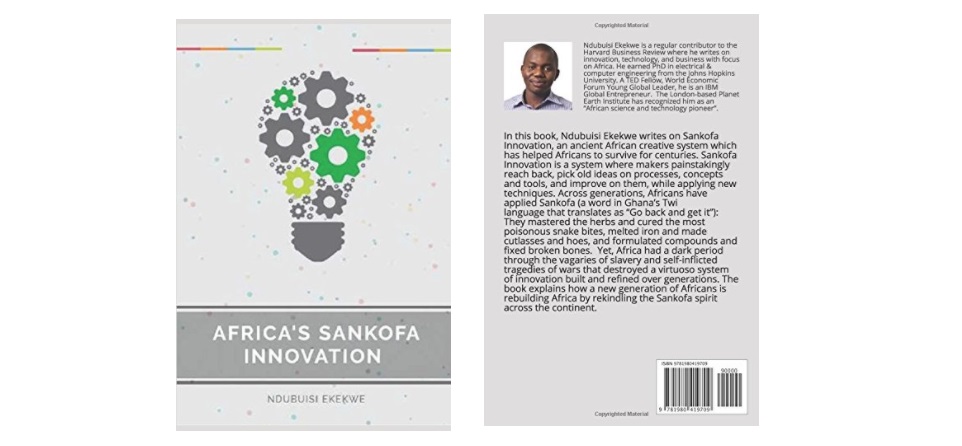
Here are the links to buy my book “Africa’s Sankofa Innovation” on Amazon

For Kindle:  Buy here.

For paperback: Buy here.

Book Description

In this book, Ndubuisi Ekekwe, a regular Harvard Business Review contributor, writes on Sankofa Innovation, an ancient African creative system which has helped Africans to survive for centuries. Sankofa Innovation is a system where makers painstakingly reach back, pick old ideas on processes, concepts and tools, and improve on them, while applying new techniques. Across generations, Africans have applied Sankofa (a word in Ghana’s Twi language that translates as “Go back and get it”): They mastered the herbs and cured the most poisonous snake bites, melted iron and made cutlasses and hoes, and formulated compounds and fixed broken bones. The Egyptians pioneered the field of geometry, out of the need to re-partition plots of land near River Nile, whenever it overflowed its banks. The Ethiopians invented an indigenous way of writing, and documented some of the earliest components of African history. The ancient trade routes from Accra through Kano to Khartoum were anchored on the ingenuity of Africans who dyed clothes, transformed hides into leather, and improved agricultural yields through self-taught farming mechanisms like fallow and erosion control. Yet, Africa had a dark period through the vagaries of slavery and self-inflicted tragedies of wars that destroyed a virtuoso system of innovation built and refined over generations. In this book, Ndubuisi explains how a new generation of Africans is rebuilding Africa by rekindling the Sankofa spirit across the continent.


Rakuten Pilots Blockchain-Enabled Products Evolutions to Platforms

0

Few weeks ago, I wrote on how 9Mobile could grow its user base by adopting the use of cryptocurrency in its loyalty program which would possibly attract young people with the excitement of getting coins/tokens:

Here is one: create a blockchain/cryptocurrency-based loyalty program where any customer could accrue a cryptocurrency by recharging airtime. I would call that cryptocurrency Nyja. People, if companies can wake up and issue Initial Coin Offering [“an unregulated means by which funds are raised for a new cryptocurrency venture”], which means they are making themselves central banks, I am very confident that any company can create a cryptocurrency-based loyalty program.

Interestingly, Rakuten, a Japan-based ecommerce company, is doing just that. The firm has added cryptocurrency as parts of the elements of its loyalty program. Essentially, the cryptocurrency would seat on top of the company’s loyalty point system thereby giving Rakuten all the powers to run it the way it wants.

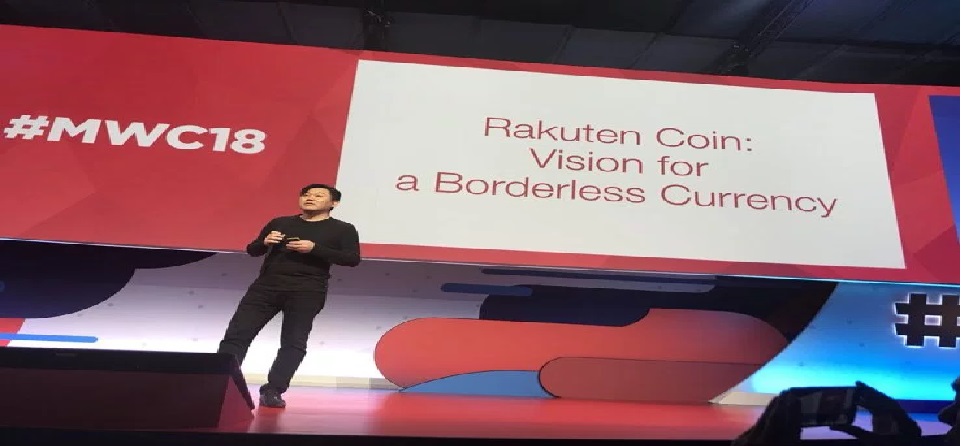
Back in 2016, Amazon’s Japanese rival Rakuten acquired Bitnet, a bitcoin wallet startup that it had previously invested in, to help it work on blockchain technology and applications. Today, one of the first fruits of that deal has come to light. The company is planning a new cryptocurrency called Rakuten Coin — built on blockchain technology and the company’s existing loyalty program, Rakuten Super Points — which it plans to use to encourage loyalty services globally and to help customers to buy goods across different Rakuten services and markets.

[…]

Even before Rakuten has launched Rakuten Coin, it’s notable and interesting to see a major e-commerce company — which has billions of users globally and reported $8.8 billion in revenues in 2017 — coming out with a move into how it might use cryptocurrency on its platform

By tying this Coin to its point system, the company can easily devalue the “currency”, removing any risk which could come if it had pegged it to Bitcoin or Ether. This is certainly a better way of implementing cryptocurrency-anchored loyalty program: you want everything to happen internally with all exogenous risks removed.

The goal in this game is to build a platform, and not just a product. A well-managed loyalty program makes platforms possible. Any web business needs a platform to thrive. A loyalty program which can be distributively managed with blockchain would be a great trajectory to get that duality of products and platforms quicker and faster. This is what Africa really needs as we work to reduce frictions in markets while building businesses with platform-capabilities. You build moats when you have those at scale. And we need them [application of blockchain] over the trading of cryptocurrency which I expect to have only marginal lasting value.

Product applications are wired with predefined logic which means they do only what you want them to do and nothing more. Myspace built a social connection app and nothing more. But in platforms, you do not have “hard-wired” logic states making it easier to reconfigure the ecosystems for different uses. Here, Facebook engineered a platform which makes it possible that it can do whatever comes in future. Once that happens, you see amazing scalability driven by network effects: a virtuoso circle where as more people use a digital product, the product gets more data which is used to improve the customer experience, and that improved quality attracts more users.

Any digital product that does not have the duality element will struggle especially in consumer market: you need the product and the platform as one to make progress these days. You need to build platforms because they have the elasticity to evolve with your business logic. Products are static and fade quickly as markets change. Platforms can grow without bounds, anchoring new opportunities on top. The business logic of integration, process and decision making are best handled on platforms over products in the internet space. With platforms, you have CUSTOMERS; products deliver consumers.


My book “Africa’s Sankofa Innovation” now available on Amazon Kindle

0

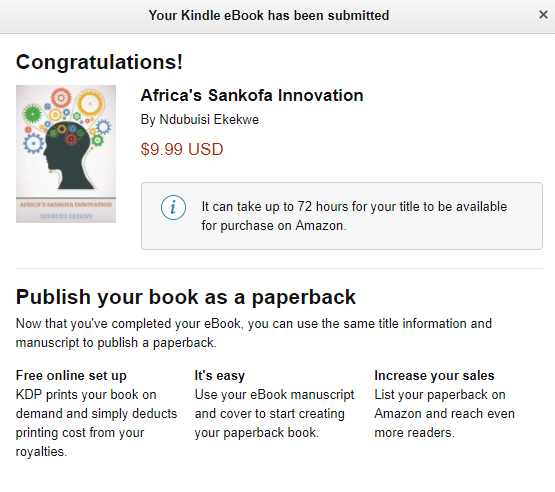
Good people, we listened and Africa’s Sankofa Innovation is now available on Amazon Kindle. Now, you have no reason to say you cannot read it. Here is the Kindle link to buy. [We’ll post the paperback link once it is approved in hours by Amazon.]

ISBN: 9781980419709

This is the book description: In this book, Ndubuisi Ekekwe, a regular Harvard Business Review contributor, writes on Sankofa Innovation, an ancient African creative system which has helped Africans to survive for centuries. Sankofa Innovation is a system where makers painstakingly reach back, pick old ideas on processes, concepts and tools, and improve on them, while applying new techniques. Across generations, Africans have applied Sankofa (a word in Ghana’s Twi language that translates as “Go back and get it”): They mastered the herbs and cured the most poisonous snake bites, melted iron and made cutlasses and hoes, and formulated compounds and fixed broken bones.  The Egyptians pioneered the field of geometry, out of the need to re-partition plots of land near River Nile, whenever it overflowed its banks. The Ethiopians invented an indigenous way of writing, and documented some of the earliest components of African history.  The ancient trade routes from Accra through Kano to Khartoum were anchored on the ingenuity of Africans who dyed clothes, transformed hides into leather, and improved agricultural yields through self-taught farming mechanisms like fallow and erosion control. Yet, Africa had a dark period through the vagaries of slavery and self-inflicted tragedies of wars that destroyed a virtuoso system of innovation built and refined over generations. In this book, Ndubuisi explains how a new generation of Africans is rebuilding Africa by rekindling the Sankofa spirit across the continent.

We are expecting the approval for the link to go live.


Contact Lenses for Africa’s Tech Myopia!

0

This is a contributing post from Chimdi Joseph. He had posted in the Forum. We are sharing in the mainboard.


Technology is the crucial capital that has distinguished Nations from each other; marking a clear distinction of the first world Nations and the third world. Africa’s transition from the third world to the first world is made possible as we deepen our capabilities in the technological layers that support a thriving Society! The Africa’s Rise Vision, as it pertains to technology, is one that currently suffers from a myopic condition where excessive focus is on ICT. This one technology layer has been confused as the Sum. Prof. Ndubuisi Ekekwe paints an accurate picture of the situation:

ICT is a consumptive technology that requires other, more traditional technologies to function and flourish. For example, it cannot progress without advances in microelectronics, which supply microprocessor pipelines that help improve the performance of computing devices.

ICT is unique in being an enabler or enhancer, improving the speed and efficiency of operations. It does this so well that it overshadows the operations it is expected to facilitate — mobile apps or SMS systems that power eHealth in African villages, for example, taking attention away from medical practice. Besides, ICT is the platform for promoting its own benefits.

Some African countries have created federal ministries solely for ICT. Kenya and Nigeria, for example, now have ICT-focused ministries as well as commissions and agencies. The lens of technology is now seen from ICT

And from Kenya to Ghana, the governments of many African nations have redesigned school curricula to position ICT as the gateway to a tech career — a trend not likely to change any time soon.

There is nothing wrong with teaching ICT. The problem is that no other emerging technology — alternative energy, biotechnology, or nanotechnology — has received the same attention. This risks introducing school children to a ‘narrow’ view of technology at the expense of the technological diversity nations need for economic growth.

As more and more Software solution proliferate our technological space, we ask the big question: Why haven’t we replicated the enthusiasm and innovative streak of our young people in this layer (ICT) to other layers of technology?

THE WHY

Two things:

Technology speaks a common language, Numbers. In Africa, Numero-phobia is very real among the populace – a consequence of failure in the teaching of mathematics; we are taught the many constructs of X and Y variables with very little real life application. For millennials, that are more interested in results, ICT holds better appeal; it’s simpler to put in some lines of code and develop a product that “solves” a problem.

The theory of the “Adjacent Possible” (a term coined by the Biologist, Stuart Kauffman and expanded to touch on human creativity and innovation by the Author, Steven Johnson) argues that innovation is very much a systematic process than a flash-in-the-pan moment of ingenuity. In this process, those whose capabilities are at the cutting edge of their craft are most likely to step into the next adjacent of possible knowledge which results to innovations that changes the basis of competition. This submission defines the challenge that our Intellectuals (those who mastered the numbers) face as the transition from the theory of abstracts to the cutting edge of practice where innovation happens. Practice (not theories of Abstracts) they say makes perfect! It is the quest for perfection (making things better) that births innovations.

WHAT WORKS?

The impact that reality TV shows like Shark Tank, The Profit (Entrepreneurship) and American Treasures (Archeology) has made, especially, in educating the populace on Entrepreneurship and Archeology is a very practical concept that shouldn’t be overlooked. The media, as chief fabricators of the ‘In-thing’ for the rest of the society, has a huge role to play. I think it would be a huge boost and a very educating experience for a young aspiring Civil Engineer to see a reality series on how Julius Berger strategizes and executes on different projects and how the constructs of X and Y variables that is being taught in school comes into play.

Making the leap from the theory of Abstracts to the cutting edge of Practice where innovation happens, require a shift from the culture of Certificate to that of “Sabificate” (where one is judged by their capabilities in doing rather than just passing exams). To do this will require funding for Research, and other bureaucratic process that takes more time. My proposition will be to utilize a more customized EIR (Entrepreneur in Residence) concept to tackle this challenge. Enough said, Prof, here is my Proposition to You; can we design a portal where higher institutions across Africa can indicate their interest for an Entrepreneur/ Scholar with a specialized domain expertise and Entrepreneurs/ Scholars with such expertise can accept the offer from anywhere in the World? My thinking is that this would be a very practical way for the Diaspora community to contribute to Africa’s development. Prof, I believe you are well placed to make this happen. This can unlock new vistas of opportunities for our knowledge community in Africa!

Altogether, this piece may not have pointed out all that is wrong with our Technology evolution in Africa, but it represents my two pence on what I believe is the way forward. I want to truly appreciate my Mentor, Prof. Ndubuisi Ekekwe, writing this has made me realize the commitment of Research and deep thinking you put into every piece I have read freely, am truly grateful; thank you Sir. I hope to take after you and write more in the future, cheers!

13.3 – IT Policy

0

For any business, modern technologies can be terrific assets. The internet allows effective research and information management, allows rapid email for internal and external communications, and social media platforms can be used as engaging tools for existing and potential consumers. These firms impose threats to businesses. As a result, some firms have imposed complete restrictions […]

This post is only available to members.