


Today, there is no question that Internet security is a vital aspect of ensuring that a business is secured against malicious attacks. Once a system goes online, it becomes vulnerable to attacks. The solutions to most attacks are modest enough that they are easily ignored. Indeed, a solution could be installing security software such as […]
ICT is neither Synonymous nor Substitute for Technology
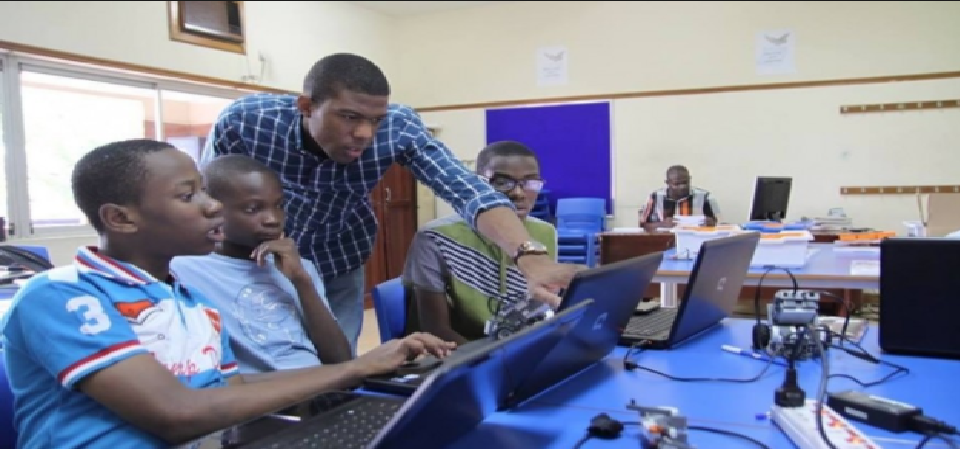
For centuries, when technology penetrates into societies, the outcomes have been predictable: From the steam engine to information and communication technology (ICT), technological advances have increased productivity, changed commerce, and improved living standards. But across human history, none has crossed geographical boundaries as effectively as ICT.
ICT has created unprecedented linkages between public and private institutions, governments, citizens and corporations. It has changed nearly all aspects of modern society, and seen a redesign of traditional structures, leading to developments such as eGovernment and digital education.
But ICT cannot exist in isolation. It is not synonymous with technology, and African governments that consider their ICT policy a technology policy should think again. While ICT is vital for development, it is not a substitute for technology advancement in a broader sense.
Problems like the lack of clean water or lighting cannot be solved by ICT. For all the farm mobile apps, Africa still needs seeds for agriculture. Policymakers are wrong to focus almost exclusively on ICT and neglect long-standing development needs.
ICT is a Consumptive Technology
ICT is a consumptive technology that requires other, more traditional technologies to function and flourish. For example, it cannot progress without advances in microelectronics, which supply microprocessor pipelines that help improve the performance of computing devices.
ICT is unique in being an enabler or enhancer, improving the speed and efficiency of operations. It does this so well that it overshadows the operations it is expected to facilitate — mobile apps or SMS systems that power eHealth in African villages, for example, taking attention away from medical practice. Besides, ICT is the platform for promoting its own benefits.
Some African countries have created federal ministries solely for ICT. Kenya and Nigeria, for example, now have ICT-focused ministries as well as commissions and agencies. The lens of technology is now seen from ICT
And from Kenya to Ghana, the governments of many African nations have redesigned school curricula to position ICT as the gateway to a tech career — a trend not likely to change any time soon.
There is nothing wrong with teaching ICT. The problem is that no other emerging technology — alternative energy, biotechnology, or nanotechnology — has received the same attention. This risks introducing school children to a ‘narrow’ view of technology at the expense of the technological diversity nations need for economic growth.
For a continent with inadequate electricity and clean water, where transportation networks are often poor and agricultural productivity faces many challenges, governments need to nurture talent in more areas than ICT.
Unlocking the Value
Africa’s progress for sustainable development depends on countries’ capacity to benefit from scientific advancements through policies that set out a broadly based technology roadmap.
The continent needs to modernise its technical education to encourage highly competent, independent thinkers. This will help not just in making ICT a creative industry (African countries are mainly distributors of existing technologies), but also in providing the skills necessary to develop other technology sectors.
To jumpstart other sectors, funding for startup companies will be crucial. ICT has penetrated the market because the seed funds needed to start ICT firms are relatively smaller than those required in other sectors like energy, water and electronics.
An investment exit strategy, such as vibrant stock markets, will also be important: without a path that shows how investors will recoup investments, capital-intensive areas like biotechnology, nanotechnology and alternative energy will have poor chances of taking off.
The continent also needs to modernise its legal system so that intellectual property rights (IPRs) are better enforced. In any knowledge economy, the competitive weapon is the idea — and when that cannot be protected, advancement stalls. Africa’s pharmaceutical and biotechnology sectors will not develop without a strong IPRs system.
Africa has untapped potential in its global diasporas, which could help introduce new ideas. Diaspora communities should be encouraged to establish firms back in their homelands to support enterprises across industrial sectors.
Basic infrastructure and services such as electricity and water will be vital to the success of these efforts. Without a working refrigerator, a biotechnology specimen will be lost; and power failure during microfabrication will damage silicon wafers.
If Africa provides the right environment with the right policies, more opportunities will open up in areas other than ICT, helping to diversify the technology ecosystem.
We need to have a strategy that makes it clear that ICT is neither synonymous nor substitute for technology. In the scheme of technology, ICT is vital, but it can only work if other technologies are supporting it.
The Loop Management System for Innovative Firms

More than 2,500 years ago, Heraclitus, the Greek philosopher, postulated the timeless words: “Change is the only constant in life”. In business, change is what we deal with daily. We experience change and live change. Change brings disruption, dislocation and glory.
I know of only one insurance policy against the irrelevance change can bring in markets. The policy is Innovation. With innovation, you overcome commoditization and possibly outgrow your industry. Innovation unlocks new elements in firms, delivering better processes which drive productivity gains, at both public and private institutions.
Innovation hates bureaucratic institutions with their conformance working management systems. Lacking organic renewal, those institutions with their systemic failures die, over time.
How do you build a firm?
Think of what happens in bureaucratic institutions. In those firms, one person makes most of the decisions. Ideas emerge from different quarters but they have to be ratified by one person who is the judge, the jury and the executioner. If he does not like the idea, nothing happens. Then contrast with how it happens in places like London, Silicon Valley and Paris. There, the idea could have many routes to funding and then products emerge. In that case, many people –thousands- would be making decisions on the ideas.
Management is nothing but “managing” things. The foundation of management is designed to give order in the industrial age economies where the management systems advanced. Bosses manage – they bring order, discipline, focus, efficiency, alignment and control. Interestingly, most management systems were not designed to help people to create, adapt and innovate.
Your challenge in leadership is to find a way to take out “management” (yes, the bureaucracy) which exists in your firm while retaining the great benefits of management which include coordination, order and control. I want you to unbundle the thinking where only you can be the jury, the judge and the executioner.
That was what killed Kodak which invented digital photography but failed to adapt. The management did what was supposed to be done [controlled resources to create digital photography], but it needed another layer to make the leap. That layer is unlocking the mindset out of products and services in order to critically understand the elements of the markets. Those elements are the frictions which the firm exists to fix.
The liturgy of management may put you into the loop of products and services but that layer would give you the higher call. Kodak thought the business was making film photography. Unfortunately, Facebook helped it to understand that the business was really about sharing moments and memories.
Build a business where your staff members are like the Silicon Valley entrepreneurs who have different paths to make ideas become products. They become innovators within the firm, helping you make great things. I call it the Loop Management System where everything revolves around all talents, irrespective of the levels of the positions. It is like a loop where every part matters. In that ecosystem, the jury, the judge and the executioner are now structured to be the team, and not just the boss.
All Hail the Category-Kings

Two cases:
Snapchat’s latest big redesign is really, really unpopular. Remarkably, a million people have signed a petition calling on the company to roll back the change, which separates branded content—including that from celebrities and “influencers”—from regular people’s updates. Snapchat says the change was important in order to combat fake news, but users say the new app is difficult to use (Fortune/BBC)
Facebook said it would prioritize local news. In yet another announcement about its News Feed, the company said users will see more posts from local sources “so that you can see topics that have a direct impact on you and your community and discover what’s happening in your local area,” as part of its ongoing efforts to “prioritize high-quality news.” (Quartz/Fortune)
Discussions
Starting with Facebook, I am not really sure it is its decision to make when it comes to contents for users: local vs. nationwide vs international. There is no correlation, in my opinion, between local news and high quality contents. Also, there is no reason why everyone should care for local news. In America, it is more significant unlike Nigeria where we do not have local news. Guardian is not local news; local news would have been a newspaper from your village or local government.
Now SnapChat has got one million people asking it to revert to old design. Yet, the company is saying it has made up its mind on what it wants to do. It is like, there is nothing you can do about it: get used to our new design.
This is the fact: the web business is unique because of network effect which makes it harder for competitors to break in. Social media giants can experiment with users because there is a huge switching cost since most times, there are no alternatives or substitutes. It is either you are in Facebook, for what it offers, or you are not interested in that particular category of service. You have no alternative for Twitter. So, it goes. Even though, it costs nothing to open another service, the reality is that you have none as a substitute.
In economics, we talk of substitutes [good for the old industrial age business]. The web offers us so much in terms of unconstrained distribution, and the category-kings have built products which deliver value that finding substitutes means giving up on the specific categories. Yes, you do not really have substitutes at category levels. That explains why SnapChat could boldly ignore a petition signed by one million of its users. An industrial age business would have come out with an apology, but in the world of web, it is not necessary. If you are a teen and you do not want to use SnapChat, it means you are leaving the category since Facebook is not SnapChat.
These firms have found success and they know they are positioned to do whatever they want. A U.S. telecom company, T-Mobile, employs 300 people purely for its social media management, notes Fortune: “The company’s social media team has 300 people committed to marketing and responding to customer concerns”. You do not commit such resources when you do not see value in that ecosystem.
So SnapChat and Facebook can readily impose their understanding of the world, because they have used Inversibility Construct, and they got everyone hooked. When that happens, you have category-kings in the land. When subjects revolt, not all kings change hearts.
Forget WhatsApp, Telcos have a New Basis Competitor

When does disruption happen? It happens when a competitor offers a new basis of competition. In other words, you elevate the game orthogonally to what the incumbents are doing. It goes beyond parallel competition where everyone is following the same trajectory. In the disruptive scenario, you chart a new path, different from others.
WhatsApp is a great substitute to some telephony/broadband-enabled services but WhatsApp would need telcos to be in business. Without telcos, there would not be any WhatsApp or WeChat in Nigeria. Home Wifi is not still common here. Yes, even though WhatsApp could destroy value, the telcos would always have remnants to pursue.
But hold on: something new is coming in town. SpaceX has the blessing to run satellite-based broadband services around the world. This one is not a substitute, this is creating a new basis of competition, and it is potentially disruptive. Simply, you do not need a telco to have access to SpaceX services. SpaceX broadband would displace services offered by telcos. That is a challenge which telcos must deal with.
A US regulator backed SpaceX’s plan for satellite internet service. Federal Communications Commission chairman Ajit Pai urged the approval of an application by Elon Musk’s rocket company to offer broadband access in the United States and around the world. (Quartz)
I noted this last June when I wrote:
The biggest threat will come from satellite companies like ConnectAfrica which will reach communities at cost model that can keep the terrestrial players looking for cover. Elon Musk, not Glo or Airtel or Etisalat, may be the biggest competitor to all telecom operators in Africa in 5-10 years, with satellite broadband. He can crash broadband cost by 90% and suddenly GSM will be recorded only in museums. But that will happen if MTN Nigeria and others do not take action today.
And this continues to converge to my prediction that by 2022, we would attain equilibrium in most enablers for online services in Nigeria. That is the year I am telling clients to wait before they launch most ecommerce and online operations in Nigeria. Data does not lie, and using my internal model, and how it happened in China, Brazil, US and selected EU countries, I concluded that 2022 would be it: a year of immersive connectivity.