DD
MM
YYYY

PAGES

DD
MM
YYYY

spot_img

PAGES

Home Blog Page 7207

The Buhari Paradox – My Social Experiment with Nigerians

0

Over the last two days, I did an experiment. It was nothing scientific; so do not start questioning me on my controls. I was just trying to understand the state of the nation. I provided two options to some of my friends, people in my network, cab drivers, etc, and asked them to make a selection.

Option A: You are given a house, with no money, but with top-grade security from army, navy, SSS, police, etc to protect the castle.

Option B: You are given an equivalent of the same house in Option A, but no security, but with truckloads of money in different currencies.

I asked them to make a choice: 100% selected Option B.

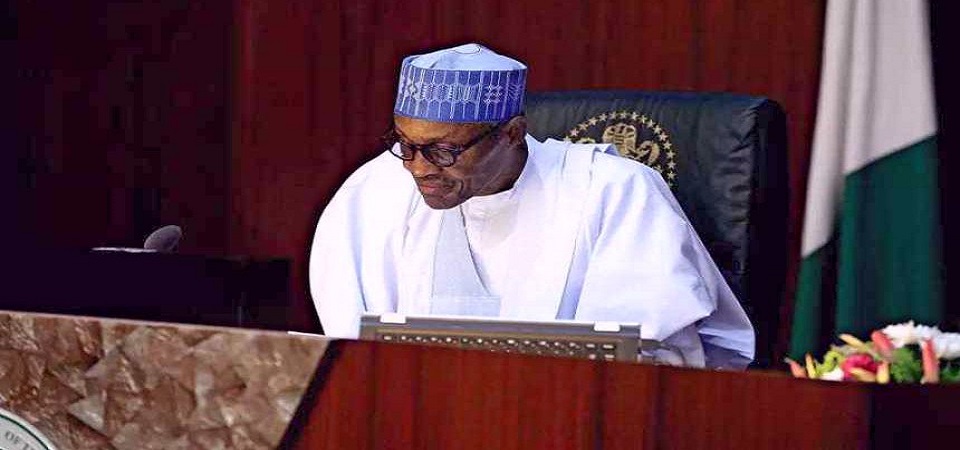
Now, I told them that President Buhari might have chosen Option A. He has more than 80% of his security appointees from the North and 80% of the economic appointees from the South. Yes, in Mr. President’s appointments, he might be (ironically) boosting the South than the North since security cannot buy economic power but economic power is security.

People, do not make too much out of this. But I would have wished that President Buhari balanced the appointments. Northern Nigeria needs more economic power than gun-power. I do travel there a lot. According to UNESCO, World Bank and other respected institutions, a child born in Umuahia (South) has a higher chance in life than one born in Kano (North). And Emir Sanusi did note, while a CBN governor, that Onitsha had more microfinance banks than the whole of Kano.

In Nigeria, our press must improve the game. Instead of talking about marginalization on security appointments, there is an opportunity to shape the conversation for Mr. President to think deeper on some of these appointments.  It requires looking at alternative elements in policy formulation. The North has no major newspaper and the implication is that we get more perspectives from the South. The top five newspapers – Guardian, Sun, Thisday, Punch and Vanguard – are largely southern. When that happens, the press could fail in providing balance on nationwide conversations. Why? Everyone writes based on his/her experiences, and if the southerners run the press, they would largely shape the contents from their views.

Again, nothing here is scientific.


This is the Summary from Francis’ LinkedIn Comment

@Kazeem, I guess you got the spirit of the piece wrong. It’s not even about the President’s performance, ofcourse some of us aren’t interested in discussing such here. We are talking about a disequilibrium or misalignment, whereby the northern part aren’t equipped for economic emancipation; but the media narrative centres on security appointments. Forgetting that the current setup isn’t a sound decision and it’s unfavourable to the North, but you have to look deeper to understand the implications of these things.

The way it is right now, the North is in bigger mess, but on the surface, it’s easy to believe that they are in charge. I think this is what the piece is about, it’s not so simple grasp the underlying and important message therein.


Why Jevinik is Cooking for Middle Class Nigerians

0

If you live in Abuja, Lagos and few other cities in Nigeria, it is very possible that you might have visited Jevinik. Jevinik is unlike any other eatery, restaurant or fast food joint in Nigeria: it is a place you want to be. Walk into the restaurant, and you would not smell anything food. They have taken care of that which usually makes eating Nigerian food a challenge for most. But the brilliance of Jevinik goes deeper: Jevinik created a new category in the restaurant industry. Yes, it pioneered what I would call “mid-luxury restaurant”.

Typically, fast food joints serve food really fast. If you go to Mr. Bigg’s for food, you expect to get it within 10 minutes. The same happens in Tantalizers. These entities have the food prepared and once you pay, they dish out the portions. But note that you have to line up, to get the food. This is Case #1

Also, if you go to the more affluent restaurant, you would take a seat, and someone would come and pick the orders. Later, the food is brought. Typically, the time is upwards of 15 minutes. This is case #2.

But in Jevinik, it provides the speed of fast food even when allowing you to take a seat. And at the same time, you are not going to break a bank account to pay. Yes, the waiters come to take order, and when the bill is written, it is not over the roof. The quality of the food is optimal, and the pricing is fair. You eat the food, pay the money and you feel generally good about yourself. Largely, Jevinik business process has merged the two cases of #1 and #2, taking the best of both.

The capability to offer optimal quality food, at high speed service, under a packaged “premium experience” is why Jevinik is cooking for middle class Nigerians in some of our big cities. The fact that you take a seat, and still get the food within 5 minutes at fair price, is a key differentiator in that entity. No eatery place in Nigeria comes close. Jevinik has created a new category in the industry. And Nigerians are responding along with foreigners who also come to eat therein.  The hygiene is great, and no customer comes with a mat.

I wrote a small case on Jevinik last month as part of our advisory services, using it to educate our clients on how someone can find value by coming up with better processes within a largely saturated sector [people with money, looking for what to invest on]. You do not need to build a rocketship to find alpha in Nigeria. With most sectors at stasis, novel thinking is what you need in Nigeria.

People, Jevinik is cooking; we are eating. I hope it continues to perfect this enviable process of excellence in the broad restaurant sector of our nation.

The Uber’s $4.5 billion

2

Two numbers from the 2017 Uber leaked results: $7.5 billion and $4.5 billion. The former is the revenue while the latter is the loss. Yes, Uber lost about 13% of the total value of the Nigerian Stock Exchange. Yet, someone (SoftBank) saw those numbers and still pumped hundreds of millions of dollars into Uber as investments. Largely, the reasoning might have been: you need huge loses to build massive customer base, in order to trigger the positive continuum of network effect, and then afterwards, you could define the ride-sharing business category as a king. The loss amount is huge; closing that would take Uber years.

But in America, it is nothing but a number. After all, one man, the pioneer of the shale gas phenomenon, spent nearly four decades to perfect the process. To do great things, losses, most times, abound. NASA knows that to leave the solid bounds of earth, and touch the face of heaven, it would experience losses as it builds its space program. That is the culture: Number 1 or no trophy.

Uber’s just-released year-end results make the wildest of companies tough to ignore. Let’s start with two numbers: $7.5 billion and $4.5 billion. The former is Uber’s 2017 sales, according to multiple reports Tuesday, when Uber shared results with investors. It’s a giant number. Were Uber a public company, which it has said it wants to be, such results would rank it No. 367 or so on the Fortune 500 list of the biggest companies in the U.S.

Here’s the thing about the Fortune 500, a list designed to show the industrial and financial might of the American economy: Most of the companies on it make money. Not Uber. It lost the latter number, a staggering amount. “There are few historical precedents for the scale of its loss,” writes Bloomberg’s Eric Newcomer.

This is the clear difference between how American firms build companies and how we in Africa do. The massive level of resources they have access to makes it nearly impossible to have any fair level of competition. Anyone working in ride-sharing startup in Nigeria must have a big heart. Sure, all visions are commendable including building ride-sharing app business; it is free enterprise.

But be warned: Uber could decide to lose $100 million in Nigeria just to take over the market. That is the dilemma which many investors deal with as they decide to invest in African startups. The thinking is thus: what would happen if Google, Facebook or Uber shows interests? Can this startup have the capacity to raise new capital to hold its grounds? Answering those questions would not be easy. Essentially, your best prayer is for these ICT utilities not to show interest in your sector. Yeah, you can still battle, but you would need to be open to lose tons of money. Even Naspers, Africa’s largest corporation by market value, has shown that it cannot do that: it got out of Konga and OLX few days ago. It could have sustained losses since it is evident one day, the flip would happen, and ecommerce would blossom.

The Question

I get this question many times from people: why can’t our entrepreneurs build companies like Apple, and Facebook to fix Nigerian challenges? Of course, if Nigeria has Apple, our forex problem would disappear because “Nigerian apple” could work with the Central Bank of Nigeria and sell it dollars. In other words, if the “Nigerian apple” has dollars outside Nigeria through sales, it could do trade by barter with CBN, exchanging Naira locally for dollars externally. That external fund can be used by CBN to settle foreign obligations despite whatever money sales of crude oil may be providing.

Possibly, one day it may happen. I do have confidence that there are brilliant people in Nigeria with capabilities to build great firms. Yet, for that to happen, many things would be condition-precedent. Those conditions do not just happen; they have to be nurtured. Nigeria needs to begin to make them happen.

All Together

Yes, getting to the numbers where a company can lose billions of dollars in a year, perhaps to cover write-downs, compensation expenses tied to stocks, legal costs and depreciation, would require a redesign. The numbers from Uber show the brilliance of America. You do not lose $4.5 billion irrespective of your revenue and open shop the next day, easily. But in America, it has been normalized as a way of pursing world domination. They do it, and we need to learn to adopt same techniques at lower scale. But good luck for finding such investors in Africa. Typically, most of our investors expect profits after few months. That has to change; yet, you need to respect the investors for asking their terms for the capital they control. That is what makes this a free enterprise: do it in such a way that positions you for success.

The Power of Profits

0

Around the world, people expect governments to lead in changing their destinies [that is right]. And some despise corporations because they see them as being in the business of making money. Unfortunately, the power of making money and the desire to accumulate profit are some of the strongest elements of building modern societies. Profits make communities and anchor nations. When countries cannot have entities that accumulate profits, they fail in their social visions.

I respect non-profits. I like foundations. But I honor immensely for-profit entities because they have the organic elasticity through profitability to even do more to societies that non-profits and foundations. That does not mean that we do not need the non-profits and foundations. We need them, because in the pursuits of profits, corporations do miss some things. Non-profits and foundations are there to fix those.

As Adam Smith encapsulated about 200 years ago, firms exist to make profits and those profits can actually become the wealth of nations. When you deploy the factors of production, efficiently, creating employments, I am confident that you have done well for the society. A community where men and women work, and raise families made possible by jobs, looks stronger. The best corporate social service is employment. With jobs, men and women build nations.

Our nation Nigeria must have that capacity to have corporations that can help to provide jobs. Those jobs, made possible by the pursuit of profit, do help to solve many societal problems. When firms fix frictions in markets, they also do well to societies. No matter how you see it: the most important corporate social responsibility is providing employment to advance humanity.

In America, they talk of black swans: ” high-impact risks that are highly improbable and therefore almost impossible to predict”. Yes, “an unpredictable or unforeseen event, typically one with extreme consequences.” That is it: “something extremely rare”. So, because it is rare, you do not (usually) plan for it. Arab Spring was a black swan as the leaders of North Africa could not have modeled that risk.

In Nigeria, we do not just have black swan. We have gray lizard. It is a high impact risk, that is highly probable and evidently visible but totally, widely and irresponsibly ignored. The massive youth unemployment in Nigeria is a gray lizard. Governments see it daily but it is totally ignored.

Simply, I want government to stimulate the economy so that companies can grow. The best decade in modern Nigeria was 1990s in creating corporations. That was the decade most of our leading banks of today were established, from Zenith Bank to GTBank, Diamond Bank to UBA (via STB). Government played a key role: it made banking profitable.  But today, the nation is benefiting because we have amazing institutions which are deepening our national competitive capabilities. The 2000s was largely a lost decade as no corporation of great value was established then (excluding Glo). The 2010s is still work in progress; it may come out fine.

Around the world, nations do well when profits expand. American governments allow Wall Street to make tons of money so that main street would live better [they keep interest rate low to help banks make money]. You may not like it, but that is how it works. They do know that Wall Street profits would be used to provide societal good causes because when the banks blossom, loans become available, and companies hire and societies advance.

Our challenge as a nation is to find how we can create employment for the armies of our youth. It is the most important challenge we face today in Nigeria. Largely, only the pursuit of profit would make that possible. And if profits make it possible, it means we have fixed a societal problem in our society. We need to find ways to create companies of the future which can make profits to serve our citizens and our nation.

Your Invest Near Oases in Deserts

0

In the One Oasis Strategy, a management guide, I made the case that companies must invest to deepen the capabilities of their best products (their oases). It makes sense because every good investor in a desert would like to invest near the oasis because that is the best place in the desert.

Amazon is an ecommerce company with massive user base. It supports billions of transactions in a year and needs computing resources to keep its portal functioning well. Amazon could have called IBM to rent a cloud infrastructure for its ecommerce. Rather, Amazon decided to build one in-house knowing that the future of its ecommerce will be driven by the capacity to offer great experiences to clients. The cloud infrastructure investment is necessary as growth in the ecommerce keeps going up. It does not make sense to be sending that money away. So, Amazon went and invested in cloud. The ecommerce is the oasis and the cloud is like the animal that finds habitation from the oasis. Provided the ecommerce is doing well, the investment in cloud has minimal risk. The first customer to the cloud business was ecommerce and that means Amazon does not have to worry if there is any external customer for the cloud services. Amazon does not need to check market dynamics to invest in cloud provided its ecommerce business is doing well.

But interestingly, after time, Amazon did find opportunities in the external market to sell its cloud services. Those services are now called Amazon Web Services (AWS). Tekedia is hosted on AWS, just as many websites which include brands like Dropbox and Instagram, present or in the past. The oasis (the ecommerce) has been served by the new product (cloud) and now that new product is making profit for Amazon.

We are developing toolkits around this strategy on how organizations can ascertain their oases and invest around them. (Those toolkits would be available in the store when ready.) The goal is to mitigate external market risks by investing around the first customer which is already inside.