DD
MM
YYYY

PAGES

DD
MM
YYYY

spot_img

PAGES

Home Blog Page 7214

The Uber’s $4.5 billion

2

Two numbers from the 2017 Uber leaked results: $7.5 billion and $4.5 billion. The former is the revenue while the latter is the loss. Yes, Uber lost about 13% of the total value of the Nigerian Stock Exchange. Yet, someone (SoftBank) saw those numbers and still pumped hundreds of millions of dollars into Uber as investments. Largely, the reasoning might have been: you need huge loses to build massive customer base, in order to trigger the positive continuum of network effect, and then afterwards, you could define the ride-sharing business category as a king. The loss amount is huge; closing that would take Uber years.

But in America, it is nothing but a number. After all, one man, the pioneer of the shale gas phenomenon, spent nearly four decades to perfect the process. To do great things, losses, most times, abound. NASA knows that to leave the solid bounds of earth, and touch the face of heaven, it would experience losses as it builds its space program. That is the culture: Number 1 or no trophy.

Uber’s just-released year-end results make the wildest of companies tough to ignore. Let’s start with two numbers: $7.5 billion and $4.5 billion. The former is Uber’s 2017 sales, according to multiple reports Tuesday, when Uber shared results with investors. It’s a giant number. Were Uber a public company, which it has said it wants to be, such results would rank it No. 367 or so on the Fortune 500 list of the biggest companies in the U.S.

Here’s the thing about the Fortune 500, a list designed to show the industrial and financial might of the American economy: Most of the companies on it make money. Not Uber. It lost the latter number, a staggering amount. “There are few historical precedents for the scale of its loss,” writes Bloomberg’s Eric Newcomer.

This is the clear difference between how American firms build companies and how we in Africa do. The massive level of resources they have access to makes it nearly impossible to have any fair level of competition. Anyone working in ride-sharing startup in Nigeria must have a big heart. Sure, all visions are commendable including building ride-sharing app business; it is free enterprise.

But be warned: Uber could decide to lose $100 million in Nigeria just to take over the market. That is the dilemma which many investors deal with as they decide to invest in African startups. The thinking is thus: what would happen if Google, Facebook or Uber shows interests? Can this startup have the capacity to raise new capital to hold its grounds? Answering those questions would not be easy. Essentially, your best prayer is for these ICT utilities not to show interest in your sector. Yeah, you can still battle, but you would need to be open to lose tons of money. Even Naspers, Africa’s largest corporation by market value, has shown that it cannot do that: it got out of Konga and OLX few days ago. It could have sustained losses since it is evident one day, the flip would happen, and ecommerce would blossom.

The Question

I get this question many times from people: why can’t our entrepreneurs build companies like Apple, and Facebook to fix Nigerian challenges? Of course, if Nigeria has Apple, our forex problem would disappear because “Nigerian apple” could work with the Central Bank of Nigeria and sell it dollars. In other words, if the “Nigerian apple” has dollars outside Nigeria through sales, it could do trade by barter with CBN, exchanging Naira locally for dollars externally. That external fund can be used by CBN to settle foreign obligations despite whatever money sales of crude oil may be providing.

Possibly, one day it may happen. I do have confidence that there are brilliant people in Nigeria with capabilities to build great firms. Yet, for that to happen, many things would be condition-precedent. Those conditions do not just happen; they have to be nurtured. Nigeria needs to begin to make them happen.

All Together

Yes, getting to the numbers where a company can lose billions of dollars in a year, perhaps to cover write-downs, compensation expenses tied to stocks, legal costs and depreciation, would require a redesign. The numbers from Uber show the brilliance of America. You do not lose $4.5 billion irrespective of your revenue and open shop the next day, easily. But in America, it has been normalized as a way of pursing world domination. They do it, and we need to learn to adopt same techniques at lower scale. But good luck for finding such investors in Africa. Typically, most of our investors expect profits after few months. That has to change; yet, you need to respect the investors for asking their terms for the capital they control. That is what makes this a free enterprise: do it in such a way that positions you for success.

The Power of Profits

0

Around the world, people expect governments to lead in changing their destinies [that is right]. And some despise corporations because they see them as being in the business of making money. Unfortunately, the power of making money and the desire to accumulate profit are some of the strongest elements of building modern societies. Profits make communities and anchor nations. When countries cannot have entities that accumulate profits, they fail in their social visions.

I respect non-profits. I like foundations. But I honor immensely for-profit entities because they have the organic elasticity through profitability to even do more to societies that non-profits and foundations. That does not mean that we do not need the non-profits and foundations. We need them, because in the pursuits of profits, corporations do miss some things. Non-profits and foundations are there to fix those.

As Adam Smith encapsulated about 200 years ago, firms exist to make profits and those profits can actually become the wealth of nations. When you deploy the factors of production, efficiently, creating employments, I am confident that you have done well for the society. A community where men and women work, and raise families made possible by jobs, looks stronger. The best corporate social service is employment. With jobs, men and women build nations.

Our nation Nigeria must have that capacity to have corporations that can help to provide jobs. Those jobs, made possible by the pursuit of profit, do help to solve many societal problems. When firms fix frictions in markets, they also do well to societies. No matter how you see it: the most important corporate social responsibility is providing employment to advance humanity.

In America, they talk of black swans: ” high-impact risks that are highly improbable and therefore almost impossible to predict”. Yes, “an unpredictable or unforeseen event, typically one with extreme consequences.” That is it: “something extremely rare”. So, because it is rare, you do not (usually) plan for it. Arab Spring was a black swan as the leaders of North Africa could not have modeled that risk.

In Nigeria, we do not just have black swan. We have gray lizard. It is a high impact risk, that is highly probable and evidently visible but totally, widely and irresponsibly ignored. The massive youth unemployment in Nigeria is a gray lizard. Governments see it daily but it is totally ignored.

Simply, I want government to stimulate the economy so that companies can grow. The best decade in modern Nigeria was 1990s in creating corporations. That was the decade most of our leading banks of today were established, from Zenith Bank to GTBank, Diamond Bank to UBA (via STB). Government played a key role: it made banking profitable.  But today, the nation is benefiting because we have amazing institutions which are deepening our national competitive capabilities. The 2000s was largely a lost decade as no corporation of great value was established then (excluding Glo). The 2010s is still work in progress; it may come out fine.

Around the world, nations do well when profits expand. American governments allow Wall Street to make tons of money so that main street would live better [they keep interest rate low to help banks make money]. You may not like it, but that is how it works. They do know that Wall Street profits would be used to provide societal good causes because when the banks blossom, loans become available, and companies hire and societies advance.

Our challenge as a nation is to find how we can create employment for the armies of our youth. It is the most important challenge we face today in Nigeria. Largely, only the pursuit of profit would make that possible. And if profits make it possible, it means we have fixed a societal problem in our society. We need to find ways to create companies of the future which can make profits to serve our citizens and our nation.

Your Invest Near Oases in Deserts

0

In the One Oasis Strategy, a management guide, I made the case that companies must invest to deepen the capabilities of their best products (their oases). It makes sense because every good investor in a desert would like to invest near the oasis because that is the best place in the desert.

Amazon is an ecommerce company with massive user base. It supports billions of transactions in a year and needs computing resources to keep its portal functioning well. Amazon could have called IBM to rent a cloud infrastructure for its ecommerce. Rather, Amazon decided to build one in-house knowing that the future of its ecommerce will be driven by the capacity to offer great experiences to clients. The cloud infrastructure investment is necessary as growth in the ecommerce keeps going up. It does not make sense to be sending that money away. So, Amazon went and invested in cloud. The ecommerce is the oasis and the cloud is like the animal that finds habitation from the oasis. Provided the ecommerce is doing well, the investment in cloud has minimal risk. The first customer to the cloud business was ecommerce and that means Amazon does not have to worry if there is any external customer for the cloud services. Amazon does not need to check market dynamics to invest in cloud provided its ecommerce business is doing well.

But interestingly, after time, Amazon did find opportunities in the external market to sell its cloud services. Those services are now called Amazon Web Services (AWS). Tekedia is hosted on AWS, just as many websites which include brands like Dropbox and Instagram, present or in the past. The oasis (the ecommerce) has been served by the new product (cloud) and now that new product is making profit for Amazon.

We are developing toolkits around this strategy on how organizations can ascertain their oases and invest around them. (Those toolkits would be available in the store when ready.) The goal is to mitigate external market risks by investing around the first customer which is already inside.

WhatsApp Goes After Banks, Adds Payment

0

When Geopoll noted that Facebook has become the second largest ecommerce platform in Africa, after Jumia, many were surprised. But in reality, it should not be that hard to see: Facebook is a planet and any ecommerce company can only get a subset of that planet. In other words, most ecommerce players are only going to lure a small segment of the Facebook users to its platform. And that would require a lot of work. So, if Facebook makes it easier for people to buy and sell, it would dominate the category without a lot of efforts.

That explains why the news that WhatsApp has added payment in its services in India should concern many fintech players (and banks) in Nigeria.  India is always a test ecosystem for the developing market. Once perfected, in India, I expect WhatsApp to launch the product in other places including Africa.

WhatsApp has begun testing a new payments feature in India that will allow people to send money to other WhatsApp users, excluding merchant accounts. The feature is currently in beta, according to sources familiar with the company’s plans, but hasn’t been publicly announced because it’s not widely available at this time.

The company has been  working on support for a payments feature for some time, which would take advantage of UPI (Unified Payments Interface) and include support by a number of Indian banks, including State Bank of India, ICICI Bank, HDFC Bank, and Axis Bank.

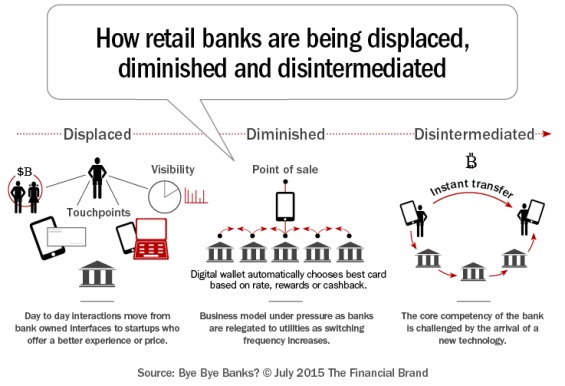
Now, add banks to the list of entities which would be worried about WhatsApp. The telcos have hated the global messaging app; now the banks join the fray. The risk to banks is clear: if WhatsApp becomes very successful in payments, it may become a small bank of itself. In other words, if people decide to be leaving money in their wallets without moving them to their bank accounts, most banks would struggle [liquidity issues].

In other words, you can leave N100k in your WhatsApp account to handle basic things, and only move the money to the bank when you need hard cash. Under this scenario, the bank is merely serving as a dumb terminal which is good when you need to withdraw cash or pay in money. Once the money is in the wallet, you have no need of your bank. Think of what MPESA did to banks in Kenya: disintermediation which means the “removal of intermediaries in economics from a supply chain, or cutting out the middlemen in connection with a transaction or a series of transactions”.

Most Nigerian banks are enjoying growing transaction-based fees with ATM charges and all kinds of charges including stamp duty on digital transfer. WhatsApp could help Nigerians to handle their financial transactions without hitting any bank server, and in the process avoid most of those fees. The excessive fees would push many people to adopt WhatsApp. Just load your WhatsApp wallet, and from there handle basic things of your life. Provided the money is leaving the wallet, banks would not access the stamp duty, SMS fees, etc.

And this would explain why bank apps may not add much value in coming years: they would be totally disintermediated. Who needs to leave WhatsApp to launch a bank app before he or she can send money to a friend chatting on WhatsApp? None, if WhatsApp supports payment and transfer. As that happens, watch out for Western Union, MoneyGram and other global remittance entities to begin to struggle as they experience a new level of competition in the market.

Some Comments from LinkedIn

  1. Another very insightful article from Ndubuisi Ekekwe I remember, about 13yrs ago, hinting Interswitch on the reality of disintermediation as they made type approval of POS terminals seem like a journey to space. Today payment aggregators have taken a chunk of their market share creating opportunities for agile companies like eTranzact International PLC AppZone Parkway Projects Ltd. Flutterwave Paystack to mention just a few. Similarly, mobile operators are stiffling a huge economic potential in the sector by failing to fully open their APIs for development of value added services that would generate new revenue streams and create wealth. Meanwhile, they are lobbying for the NCCto restrict use of WhatsApp and other OTT for eroding their revenues. Banks on the other hand are reluctant to evolve into the global trend #OpenBanking. They don’t seem to understand the importance of collaboration with FinTechs but see them as competition. We requested for mobile recharge API from a leading bank 5 weeks ago we’re still pushing emails back and forth today. I read few days ago PiggybankNG reached a milestone of mobilizing N1 billion savings. SureRemit raised ICO of $7m – the stories are endless. I hope banks would be smart & act swiftly

  2. Ndubuisi Ekekwe Online payments in China: In 2016, 500+ million Chinese used mobile payments and transacted 97 billion times on non-bank mobile apps valued more than US$8.51 trillion with Alibaba and WePay chalking 54% and 40% market share respectively. What the government has done to regulate online payment system is to have them route all transactions through a newly created Internet Clearing and Settlement Platform. A shift from current direct connection model which bypasses the Central Bank’s clearing system which makes it difficult for regulators to track and monitor the capital flow of those payments.

One Oasis Strategy – A Management Guide [PDF]

0

We have launched a store on Tekedia where I would be sharing frameworks, strategies, constructs, theories, cases, applications, books and other vital business and technology tools with focus on Africa in a globalizing world. We begin building that store with this management guide – One Oasis Strategy. All the documents would be concise and deep.

I am making this first guide free. Subsequent ones would only be available to Tekedia subscribers (past, present and future). We now have a single subscription interface ($20 or N7k in Nigeria per year).

Present subscribers you do not need to do anything; your active subscription covers this and future works.

To download the PDF, visit our store and click One Oasis Strategy [Free]. Download the PDF; please do not post online. The PDF is coming due to requests from subscribers who use some of our works in their companies and have asked for some contents in PDF format.