DD
MM
YYYY

PAGES

DD
MM
YYYY

spot_img

PAGES

Home Blog Page 7223

The Anomaly of Banned Abuja Painted Taxicab

0

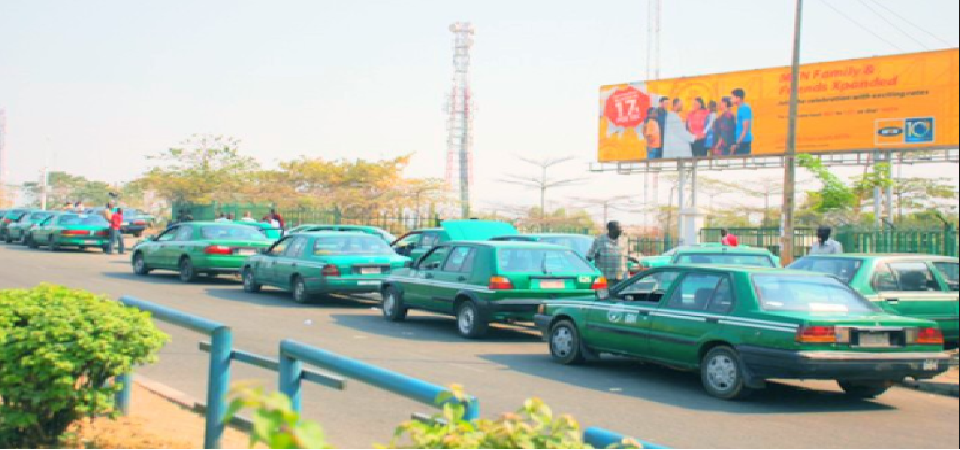
I like Abuja taxi network. It is the best in the nation. Abuja is the only city in Nigeria where you do not need to break a bank to jump into a taxi. The brilliance is unbelievable because the price economics does not make sense. With no deep bus system, you would have expected Abuja taxi system to be (relatively) expensive. Far from it: the drivers have kept prices low.

Of course, we can argue that Abuja has great road networks which ensure that one can move from point A to point B with minimal traffic.  Put together, the price is fair since a ride rarely takes more than 45 minutes. Yet, do not take that for granted, as in Lagos, a trip that takes 45 minutes would still command at least N1200 with a Lagos cab.

But while these drivers are doing their best to keep prices low, the Nigerian government is not helping them. Yes, the Nigerian government through the FCT is unfairly discriminating against the official Abuja painted taxis.  The government has this regulation which encourages taxi owners to paint their vehicles with the city color. Yet, if you check very well, most painted taxis are not allowed into some government premises. In other words, the same government that asked taxis to paint their vehicles with city color is the same one that is telling them that you cannot come into our premises as painted cars. This did not start today; it has been going on for years. It needs to stop.

Government needs to show leadership because most major hotels in Abuja have now banned painted taxis into their premises. That seems very strange: yes, there is something wrong with Nigeria. If not, what is the reason for not allowing a painted cab into a hotel? I mean, the painted taxi is arguably the least harmful car in town since it is already registered by the city. Yet, hotels and governments make the trade harder because they followed the law by painting their vehicles.

I think government has to fix this rule: all painted taxis should be allowed to drive pass gates of hotels and government agencies, just as unpainted ones do. Anything short of that is certainly unfair to those that decided to do the right thing, by spending money to paint their cars Abuja taxi color.

Nigeria Rockets over South Africa on Startup Funding

0

Finally, it happened: Nigerian startups, in 2017, received more funding than their South African counterparts. Joining Nigeria and South Africa is Kenya at third position. Overall, African startups received $195 million in venture funding, up 51% from 2016, Disrupt Africa reports. Fintech led all categories.

We are in the era where finance would fuse with mobile. With Opera in-browser payment and amalgam of many fintech solutions engineered for the mobile-mainly African citizens, fintech would continue to see growth.  We have seen these fintech startups receiving excess of $100 million in venture funding since 2015. Reporting on the same report, Quartz broke it down. 

Aside from fintech, investors also favored e-commerce and agri-tech in 2017. E-commerce startups saw funding quadruple to $16.7 million.

Overall, Nigeria, South Africa and Kenya remained the countries with highest funding raised, consistent with their record from previous years. Even though a higher number of South African startup raised funds, Nigeria’s funding surpassed South Africa’s, skewed by a hefty $40 million raised by coding school Andela—nearly the same amount as all Nigerian startups raised collectively in 2016. (Quartz newsletter)

We are making progress, from $0 to nearly $200 million. But yet, it would be really catalytic when African startups could raise a cumulative $500 million in a year. I expect that to happen before 2020.

Why Your Online Sales Are Failing

0

Last year, we did a project for an East African company which had wanted to go big on online sales. The company had tried many things but had struggled to boost its online channel revenue. The firm wanted to know why despite its capacity to bring customers to its sites, getting them to buy things was not happening. This firm is not an ecommerce company; selling things online does not make a company an ecommerce firm. For the firm, online is just an additional channel to sell products: without the web, this company has a business offline, unlike a typical ecommerce firm which is largely dependent on digital channels.

We wrote codes to analyze the site and put applets to essentially understand what people do when they arrive. I bought things myself to understand the challenges. We re-created the scenarios and asked people to test different experiments. We also hired some shoppers, we spoke and interviewed people.

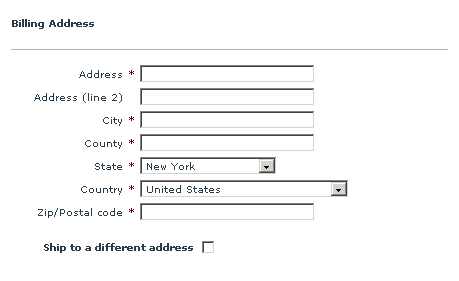
Simply, after our experiments, we noticed many things. I will share one of them here. The address has an optional zip code field. It turns out that many shoppers were rattled by its presence. Zip code is very common in U.S. websites. And African developers have adopted it in many stores they build online in the continent. That is unfortunate since we do not have functioning zip codes in the continent.

Typical U.S. address template with Zip Code field

We asked the client to remove the zip code field. Immediately, the conversion rate went up. Yes, zip code could destroy your online store capacity to get customers to buy. Our finding was that it frustrates shoppers by asking them to provide something they cannot technically provide. No one knows his or her zip code in Nigeria unless you are working in the Post Office. Yet, asking for that, even optional, is common in online stores in Nigeria.

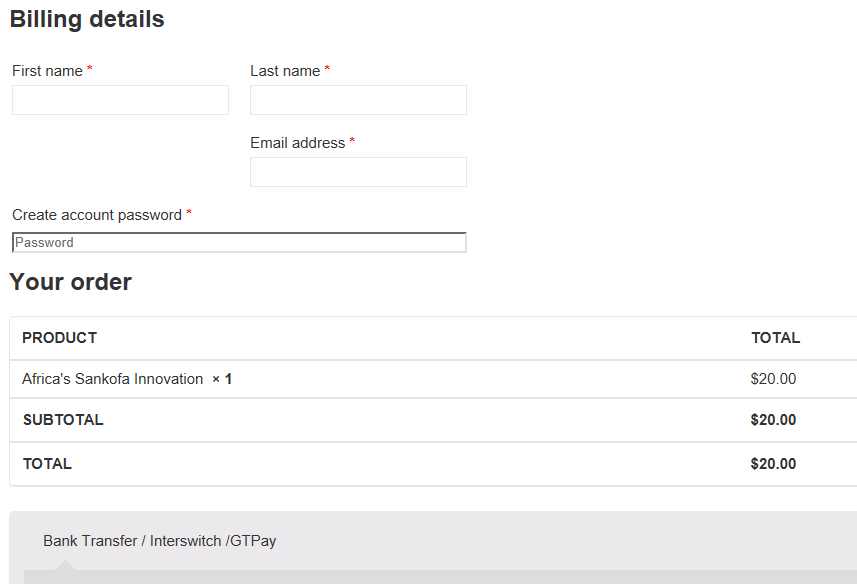
Please remove that field. You can borrow a line from Tekedia store here. We have only email and password. No need for address or zip code [we sell virtual things]. Then in stores in our other businesses, we make sure we ask for address in comment format, not the typical address structure, to ensure customers have the freedom to explain it in any form he or she wants. We do not use the limiting U.S. address format.

Tekedia Address format (here, we removed the zip code and address fields)


So, someone could write for address as thus: “The bungalow painted white behind Mr. Biggs, after the fuel station by the left. There is a water tank painted on top, if you are looking from the express.” This address would not fly in most U.S. address templates but not giving the customer this freedom will convince him or her that you would never ship that item since there is no way you could trace the house, to deliver the item. If you do not have what the customer thinks he/she needs to explain the address, the person would close the browser.

You need to take a harder look on what you copy and paste from systems and solutions engineered for U.S. and European markets. Those could be causing your conversion problems [inability to convert visitor traffic to revenue]. If you visit your store traffic, and only very few customers are finishing payment, you have a real problem in your hand. Before you call the payment company, check if those fields in the address form are in order. It could be as simple as not giving enough fields for someone to “explain” the address. Yes, in Africa, we explain address, and not just “write” one. The U.S. template was engineered for writing an address, but typically fails when there is no formal address, as typical in our lands.

Neither Silver nor Bronze in America

2

If football (yes, the real football) had been invented in America, there would neither be Silver nor Bronze prizes in competitions. Largely, U.S. does not believe in any prize that is not No.1 (the Gold), and that is why in most of its games, competitions and prizes, minimal provisions are made for second or third places. It is either you are No. 1 or you go home without a metal.

Yes, in the soccer, American football, baseball and hockey, there is nothing like 3rd place medal. That thinking is what drives America. They do not derive joy in coming second, and they have made their systems to eliminate second places. President Donald Trump has amplified this philosophy which has been at the core of the superpower, even though muted in past presidencies.

Boldly, the U.S. does not believe in the “Rise of the Rest” because it views that as destabilizing. In a recent report, the U.S. Defense Department made it clear that the “great-power competition” [with China and Russia], not necessarily terrorism, must drive U.S. national security. The report notes that China and Russia are actively working to “co-opt or replace the free and open order that has enabled global security and prosperity in since World War II.” Simply, if China rises, the world would see imbalance. And if Russia comes up, there would be a dislocation. Essentially, the global order which must exist is the one which America holds the Gold medal.

America has the right to its philosophy on its national security. They have the technology, economy, military might and they fought themselves into the position they are today. No one gave it to them. Joggling for that position is part of humanity: yes, it has been like that since the days of Nebuchadnezzar through Caesar to the British Empire.

On Friday, the U.S. Defense Department released an 11 page unclassified summary of its 2018 National Defense Strategy identifying competition with China and Russia as “principal priorities” for the US military. The report, distilled from a more detailed classified document submitted to Congress last year, warned that the two U.S. rivals are actively seeking to “co-opt or replace the free and open order that has enabled global security and prosperity in since World War II.” Henceforth, “great-power competition,” not terrorism, must be the primary focus of U.S. national security, the report declared: “The central challenge to U.S. prosperity and security is the reemergence of long-term strategic competition,” primarily from China and Russia. (Fortune Newsletter)

Implications

You may not like that way of thinking because we like to preach win-win and co-opetition in markets. But the way I see it is that America wants domination, from its governments to its startups. That is how they are educated and that is how they play sports. Yes, the only win is when you have all the cakes, for the United States of America.

Contrast that with our Nigerian mindset; you will see where things change. That global domination is not just in our way. One of our former presidents was so disturbed with so much money in our national bank account that he started paying salaries of striking workers in other African countries. Had it been an American president, he might have asked for a piece of territory of that country. Unless kindness is exerted through power, which is undisputed as who holds the gold medal, it has no value.

That American fixation with China would be a long battle. The U.S. recently stopped a company owned by the founder of Alibaba from buying MoneyGram, a money remittance company. It indirectly truncated a deal between Huawei and AT&T, a U.S. wireless carrier. But China would not go away: it wants that gold medal. A China-based venture capital firm in Shenzhen, Green Pine Capital Partners, has launched a $155 million fund to lure Chinese scientists who are living overseas to return to China and start businesses.  I bet you dozens of elite Chinese researchers in leading U.S. companies may be going home. That is the battle U.S. has to fight. Why? That $155 million could become $1.55 billion through support from the Chinese Central Government if the citizens answer the call.

In recent years, many talented Chinese scientists have abandoned Silicon Valley to seek greater opportunities at home with local tech firms. Now they will have an added incentive as Chinese venture capital firm Shenzhen Green Pine Capital Partners has launched a RMB1 billion (US$155 million) fund to help overseas Chinese scientists start businesses in the southern city of Shenzhen.

Together with the fund, Green Pine Capital Partners also established a start-up incubator for overseas Chinese scientists. The incubator will provide free office space in Shenzhen for half a year, help scientists find business partners, and provide business consulting in areas like equity structuring, corporate finance and property rights

They would make the trips back to China. And from across the Pacific, the battle for the Gold medal continues.

All Together

In America, nothing matters but No.1. Their kids grow up having that understanding. It is an agitation that if you make mistakes, you are off the chart. Sure, there is no published data on any correlation [I can cite in any scientific journal) between that way of seeing things to how they conceptualize the whole construct of creating companies that are out to dominate the world. Yet, I would not give up that a kid that notices that coming second is a waste of effort would not be conditioned to do all to be No. 1 even when running a business. And if necessary, do all to have 100% of the cake because that is not really bad!

SoftBank Now Dominates Global Ride-Hailing App Business

0

SoftBank, the Japanese investment company, has put a statement on its investment in Uber.

We are very pleased to have successfully closed the Uber investment and appreciate the support and professionalism of the Board, management team and shareholders who made this transaction possible. Uber has a very bright future under its new leadership. It is now part of a wider SoftBank network ranging from Sprint to WeWork. I look forward to SoftBank helping Uber become an even bigger global success [SoftBank statement]

Yes, Uber is now part of the SoftBank Network. Also in that network is the world’s most valued private technology startup, China-based Didi. It was Didi that gave Uber heat in China, and later on picked up the assets of the U.S. ride-hailing app pioneer. Besides Uber and Didi, SoftBank has Grab in the network through Didi.

Simply, if the industry becomes tougher with margin-depressing regulations, I would expect Uber and Didi to merge. It is going to be a logical thing to do, to avoid value-destroying competition. Why have Didi and Uber waste resources when both are partially controlled by one huge investor?

Lyft, the other U.S. ride-hailing app may be the loser in this game. It has been circled and it has only one market to work on: United States of America. It may not necessarily be all that bad since this business is largely localized. That you have an app does not mean you can be everywhere without dealing with regulators. Contrast that with products from Facebook and Google which are global on launch. For ride-hailing apps, they still need to have booths on ground to operate the businesses.  Yet, Lyft’s future is settled: it would not be the category-king but a regional business largely in North America. Over time, it may become increasingly irrelevant at the global level.

In all these redesigns, SoftBank is now the largest ride-hailing business in the world. It is irrelevant that it is not making apps in Japan. Right now, SoftBank is creating the apps that really matter: feeding platforms with dollars to dominate a sector. It has eminently done well and we can now say that it has won this category. Yes, the global ride-hailing app sector belongs to SoftBank