DD
MM
YYYY

PAGES

DD
MM
YYYY

spot_img

PAGES

Home Blog Page 723

The Importance of Strategic Saving in Wealth Building [podcast]

0

In this Tekedia Daily video podcast, I present a compelling argument for a balanced approach to wealth building that prioritizes both strategic saving and smart investing. The host begins by challenging the common “invest, invest, invest” mantra often found in online finance content. The core thesis is that while investing is essential for long-term growth, an overemphasis on immediate investment can be a strategic mistake.

He argues that a critical component of a successful financial strategy is the ability to save strategically, accumulating liquid capital to seize timely opportunities. He provides a vivid example of a market downturn where a valuable asset becomes available at a low price; without cash on hand, an investor would be unable to capitalize on this opportunity.

The presentation then delves into a breakdown of three key investor types: the Income Chasers, who seek consistent returns from dividends and bonds; the Growth Makers, who take on significant risk for high-growth startups and hedge funds; and the Value Pickers, who strategically acquire undervalued assets during market turmoil, drawing on historical examples like John Templeton and Carlos Slim. This categorization helps the listener understand different investment philosophies.

The speaker concludes by forecasting a coming economic recession, which he frames not as a negative event but as a fertile ground for opportunity. He supports this prediction with insights from a US banking executive, citing rising credit card delinquencies, and the impact of student loan defaults on credit scores. He emphasizes that these localized economic pressures, coupled with a globally interconnected system, will lead to a broader market reset.

The central takeaway is that those who have strategically saved and have liquid capital ready will be in the best position to deploy that capital and reap the rewards during the coming economic shift. The final message is a call to action: save for the opportunity and then deploy that capital with a clear investment thesis that aligns with your financial goals and expected returns.


Podcast VideoSign-up at Blucera and check Tekedia Daily podcast category under Training module.

Jumia Accelerates Path to Profitability With Strong Q2 2025 Performance

0

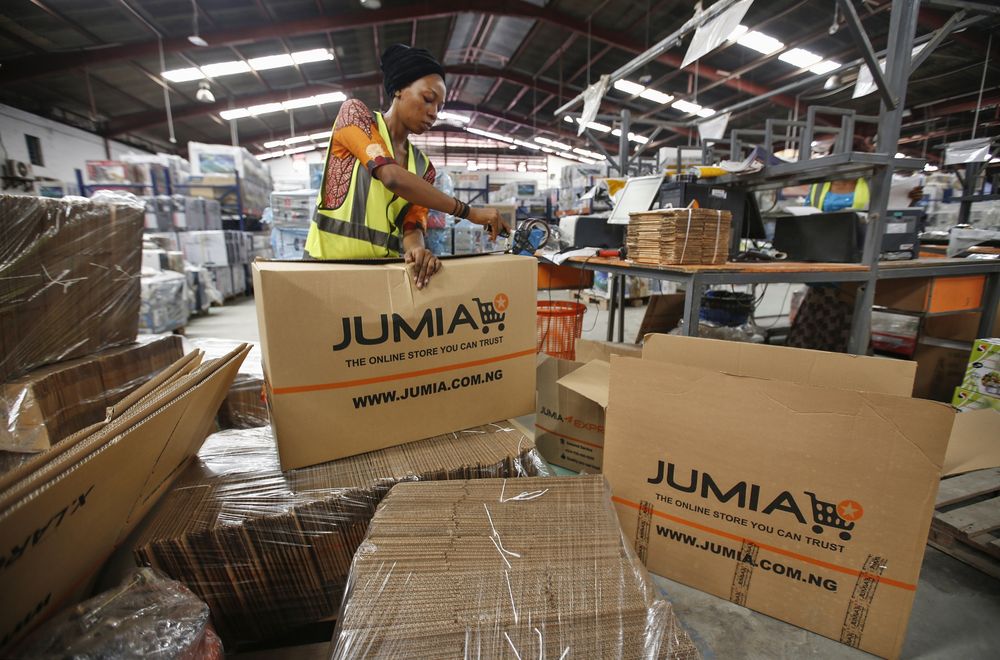
Jumia Technologies has taken another confident step toward profitability, delivering a robust performance in the second quarter of 2025.

The African e-commerce giant posted a significant revenue growth, improved operational efficiency, and narrowed losses, signaling that its strategic focus on cost discipline, core category expansion, and enhanced customer experience is paying off.

Jumia reported revenue of $45.6 million, a 25% increase year-over-year from $36.5 million in Q2 2024, and a 22% rise in constant currency. Gross Merchandise Value (GMV) climbed to $180.2 million, up 6% year-over-year, or 5% in constant currency. Excluding South Africa and Tunisia, GMV recorded an even stronger 10% year-over-year growth in physical goods.

Operating loss improved to $16.5 million, down 18% from $20.2 million in Q2 2024. Adjusted EBITDA loss also narrowed to $13.6 million, representing a 17% year-over-year improvement. Loss before income tax fell by 28% to $16.3 million, while the company ended the quarter with $98.3 million in liquidity. Net cash used in operating activities was $12.7 million, aided by a positive working capital contribution of $4.1 million.

Commenting on Jumia’s Q2 2025 report, CEO Francis Dufay expressed confidence in the company’s trajectory, highlighting robust usage growth, strong engagement across markets, and a significant reduction in cash burn compared to the previous quarter.

He said,

“Our second quarter results demonstrate continued momentum in our core consumer business, with robust usage growth and strong engagement across markets. We believe year-over-year trends are reflecting the underlying strength of our platform. We also delivered a meaningful improvement in cash burn quarter-over-quarter, driven by growth and a positive impact from working capital.

“This reinforces our confidence in reaching our strategic goal to break even on a Loss before Income tax basis in the fourth quarter of 2026 and achieving full-year profitability in 2027. Based on current trends, we are raising our full-year 2025 guidance and long-term profitability targets. These results underscore the resilience of our platform and our focus on profitable growth and operational excellence.”

Orders grew 18% year-over-year, driven by strong execution and improved product assortment across.

Key categories

• Quarterly Active Customers ordering physical goods grew by 13% year-over-year, demonstrating sustained engagement and customer retention.

• GMV increased 10% year-over-year, driven by robust consumer demand, partially offset by lower corporate sales in Egypt. Excluding corporate sales, GMV in reported currency grew 24% year-over-year.

• Nigeria’s momentum accelerated, with Orders growth up 25% and total GMV up 36% year-over-year.

• Gross items sold from international sellers grew 36% year-over-year in the second quarter 2025, reflecting strong cross-border merchant engagement and rising consumer demand for differentiated products.

Gross profit reached $23.9 million, up 11% year-over-year, with gross profit margins improving to 13.3% of GMV, driven by stronger marketplace margins. Jumia’s strategic initiatives, particularly the launch of an advanced seller advertising platform in June 2025 are expected to enhance monetization, with advertising revenue currently representing 1% of GMV and significant room for expansion.

The company’s GMV increase was driven by robust consumer demand, partially offset by lower corporate sales in Egypt. Orders grew 4% year-over-year to 5 million, with physical goods orders rising 18% when adjusted for perimeter effects. Orders from secondary cities represented 59% of the total, up from 52% in the same period last year.

Jumia has intentionally reduced emphasis on digital products sold via its JumiaPay App, which contributes high order volumes but limited revenue. Instead, it is focusing on physical goods and expanding into upcountry regions, while maintaining a disciplined approach to marketing spend through targeted online campaigns, CRM, SEO, and select offline channels.

Looking Ahead

Jumia now anticipates physical goods orders to grow between 25% and 30% year-over-year, up from the previous forecast of 20% to 25%, citing strong value propositions and momentum in key marketing channels.

The company remains committed to scaling usage, improving operational efficiency, and driving further reductions in cash burn as it navigates the remainder of 2025.

WASIU AYINDE: The Flask, the Tarmac, and the Fracture of Public Trust

0

When news broke that Fuji legend Wasiu Ayinde Marshal, K1 De Ultimate, had been stopped at Abuja’s Nnamdi Azikiwe International Airport over an alleged breach of aviation rules, the incident seemed straightforward. The Federal Airports Authority of Nigeria (FAAN) issued its statement. The musician’s camp countered with its own version.

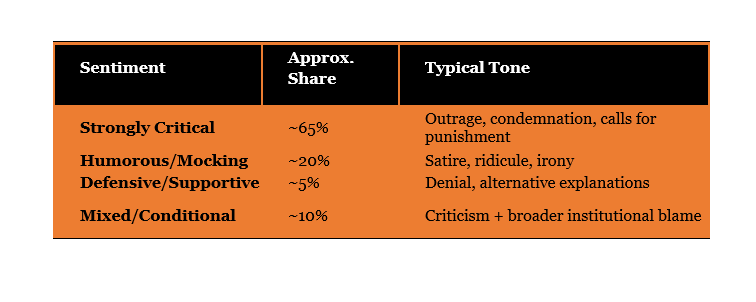
After analysing series of tweets that trailed the incident, our analyst notes that beneath the headlines, the episode has tapped into something deeper. It has stirred a long-standing crisis of public trust in Nigeria’s institutions and a widely held belief that power, not the law, determines outcomes.

FAAN’s account is unequivocal. The liquid was alcohol, the passenger resisted instructions, and security intervention was required. This is the language of official authority: procedural, technical, and certain. It carries the weight of institutional legitimacy. Yet in a society where officialdom is often suspected of bending to influence, even the clearest statements are met with scepticism.

Source: Twitter (X), 2025; Infoprations Analysis, 2025

That scepticism found its sharpest expression in comments that framed the incident not as a matter of aviation safety but as a test of whether political connections outweigh public rules. One widely shared reaction read:

“If you attempt to hold a commercial aircraft hostage, it is an act of terrorism. If Wasiu does not spend a long time in jail, then we know why (obviously).”

The “why” here is shorthand for proximity to power. K1 is known to be a close friend of President Bola Ahmed Tinubu. For many Nigerians, that connection alone explains why a celebrity might expect to avoid consequences. Another voice was blunter still:

“Wasiu Ayinde, KWAM 1, abusing his closeness to Tinubu. Imagine if na one Igbo man, will they allow him to go?”

These remarks reveal more than frustration with one individual. They point to a broader perception that Nigeria operates under two systems of accountability: one for the connected and another for everyone else.

It is this perception that corrodes public trust. In healthy democracies, institutions maintain legitimacy by demonstrating that rules apply equally to all, regardless of status. In Nigeria, many believe that enforcement is negotiable for the powerful. This belief is reinforced not only by rumours but also by lived experiences and past incidents where the rich and well-connected have escaped sanction.

Even those who focused on the safety dimension could not avoid linking their arguments to the question of influence. One commentator argued:

“If an aircraft has been cleared for takeoff, the pilot has no business with noisemakers on the ground. The people that should be suspended are those helping Wasiu. They violated safety protocols.”

Here, the attention shifts from the celebrity to the system itself: ground staff, security officers, and even the pilot who, in the public imagination, may have acted differently because of who the passenger was.

This is the heart of the trust problem. When power is seen to distort process, the legitimacy of the process collapses. People no longer ask whether a rule was broken. They ask whether the person involved was powerful enough to bend the rule.

FAAN’s promise to investigate and hold all parties accountable is an opportunity to counter this cynicism. But promises alone are not enough. What will restore public trust is visible and proportionate enforcement that treats a friend of the president no differently than an unknown traveller.

Without such action, the incident risks becoming another example of how influence trumps law in Nigeria. Every such example chips away at the fragile contract between citizens and the state. That contract says institutions exist to serve the public, not the powerful.

Power in any society depends on legitimacy. When the public no longer believes that institutions act impartially, those institutions may retain formal authority but lose the moral authority that makes citizens willing to obey. The K1 airport saga is not only about a flask or a tarmac dispute. It is about whether Nigerians can still believe that the rules are indeed the rules.

Until that question is answered decisively, public trust will remain in short supply, and power will continue to be seen as a shield to escape the very laws meant to protect the people.

Altman Says OpenAI Still Hasn’t Cracked AGI, Despite GPT-5 Leap

0

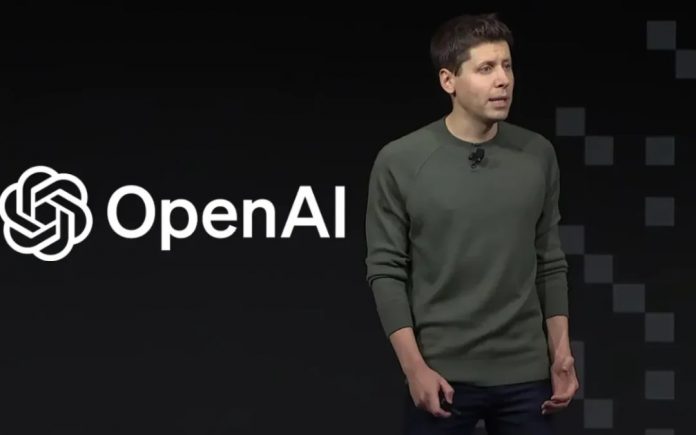
OpenAI CEO Sam Altman says the world is still far away from artificial general intelligence (AGI), despite the release of GPT-5, the company’s most advanced AI model yet.

According to Altman, while GPT-5 marks a significant leap in capability and general intelligence, it still falls short of what could be considered true AGI — a system that can match or exceed human reasoning across the board.

Altman, who has been one of the most vocal proponents of AGI development, stressed that OpenAI’s core mission to build artificial general intelligence that benefits all of humanity remains unchanged. However, he acknowledged that GPT-5, despite its power and versatility, still lacks several key features that he believes are essential to AGI.

Among those missing pieces is the ability to learn continuously from its environment. “This is not a model that learns as it’s deployed,” Altman noted, calling that absence one of the major indicators that OpenAI has not yet reached AGI.

He emphasized that the system does not improve itself dynamically by drawing from real-world interactions after training — something he sees as critical to what would qualify as general intelligence.

To understand the weight of Altman’s comments, it’s worth looking at how far the company has come. The first iteration of GPT, short for generative pre-trained transformer, was released in 2018, offering modest capabilities in text generation. Then came GPT-2 and GPT-3, with exponential improvements, culminating in GPT-4, which stunned the world with its ability to write, reason, code, and hold nuanced conversations. GPT-5 builds on all of this, introducing multimodal abilities, broader context windows, and a significantly more fluid understanding of human language and intention. Yet, even with all of that, Altman says there’s something missing — or many things.

The comments come at a time when debates around AGI are becoming more intense, with some voices warning that the tech industry is rushing blindly into a future it doesn’t fully understand, while others remain skeptical that AGI is anywhere close. Altman’s assessment threads the needle between optimism and caution. He says GPT-5 is a major step forward, “a significant fraction of the way to something very AGI-like,” as he put it, but not the finish line.

He also pointed to what comes next: superintelligence. For Altman, AGI is not the ceiling — it’s a milestone. His broader vision includes the creation of tools that not only think like humans but vastly outthink them, systems that could accelerate scientific breakthroughs and reshape the future of civilization.

What’s Under the Hood of GPT-5

GPT5 is a unified system with multiple internal models — a fast responder, a deeper reasoning variant, and a high-capacity “thinking-pro” edition. A real-time router dynamically selects the best model for each query, effectively replacing the need for users to manually pick the right tool for the task. Variant tiers — regular, mini, and nano — cater to different usage needs and budget levels.

In ChatGPT, GPT-5 is accessible to all users:

  • Free tier: Standard GPT-5 with usage caps and automatic fallback to GPT-5 mini when limits are hit.
  • Plus users: Higher usage thresholds and selectable access to “GPT-5 thinking.”
  • Pro tier ($200/month): Unlimited access, including the more powerful “GPT-5 Pro.”

Developers using OpenAI’s API can choose among models scaled for cost, from full GPT-5 to budget-friendly nano options, with input/output token pricing that varies accordingly.

What’s Improved

OpenAI claims GPT-5 delivers state-of-the-art performance across domains:

  • In coding, it excels at building responsive UIs, debugging large codebases, and executing long, agentic tasks.
  • In writing, it handles structural ambiguity and literary nuance with greater fidelity.
  • In health, it acts more like an active thought partner, probing context, flagging concerns, and scoring well on benchmarks like HealthBench.
  • It also achieves top marks in math, science, vision, and multimodal reasoning.

Industry critics believe GPT-5 represents a pivotal shift in usability — a model that now truly feels like interacting with a PhD-level expert across domains. It also sets a new standard for practical, versatile AI assistance. Yet as OpenAI emphasizes, ambition remains on superintelligence — a theoretical level of AI exceeding human capacity and transformative potential in science, innovation, and society.

Nvidia Pushes Back Against Kill Switch Demands Amid Mounting US-China Pressure

0

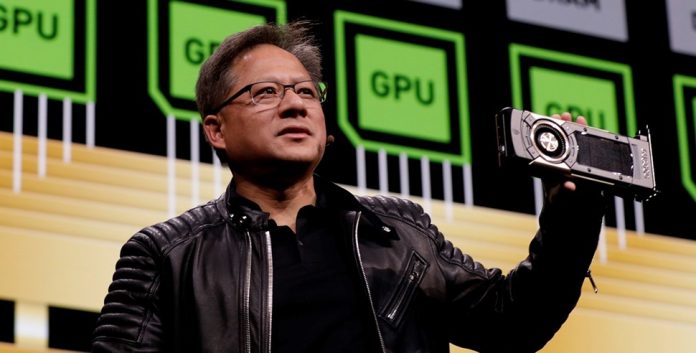
Nvidia’s Chief Security Officer, David Reber Jr., has issued a strong public denial of claims suggesting the company’s chips contain secret backdoors or kill switches, saying, “there is no such thing as a ‘good’ secret backdoor—only dangerous vulnerabilities that need to be eliminated.”

His remarks come as the company finds itself under growing pressure from both sides of the geopolitical divide, with US lawmakers advocating tighter control over chip exports and Chinese officials accusing the chipmaker of embedding covert access mechanisms in its AI hardware.

“To mitigate the risk of misuse, some pundits and policymakers propose requiring hardware ‘kill switches’ or built-in controls that can remotely disable GPUs without user knowledge and consent,” wrote Reber Jr. “Some suspect they might already exist,” he continues, in a nod to a probe already launched in China over alleged “loopholes and backdoor” vulnerabilities in the H20 chips that have been sold in the country.

The controversy stems from a convergence of domestic political pressure in the United States and intensifying scrutiny from China. In May, a bipartisan group of US lawmakers introduced the Chip Security Act, legislation that would require AI chipmakers like Nvidia to include embedded tracking systems capable of identifying unauthorized exports and potentially disabling hardware remotely. Though pitched as a national security safeguard, the bill leaves open the possibility of adding kill switches—components that could render the chips inoperable from afar.

While the bill is still in early legislative stages, it has already sparked concern among global buyers, especially in China, where regulators have accused Nvidia of secretly inserting such mechanisms into its AI chips. The allegations culminated in a public summons by Beijing’s cybersecurity watchdog, which demanded an explanation over what it described as “loopholes and backdoor” vulnerabilities in Nvidia’s H20 chips—products that were specially redesigned for China after Washington banned the sale of its most powerful AI processors, such as the A100 and H100.

The H20 chips were developed as a workaround to the US export restrictions imposed in 2022 and further tightened in 2023, which aimed to slow China’s progress in artificial intelligence and supercomputing. After months of review, the US government approved the H20 for limited export to China, signaling a green light for Nvidia to re-enter a lucrative market that had once been its largest revenue generator outside the US.

However, Beijing’s approval came with strings attached. Upon allowing the import of the modified chips, Chinese regulators initiated a technical review to ensure the chips did not contain any features that would allow them to be tracked, controlled, or shut down remotely. Officials in Beijing have warned that such components would constitute a national security threat and violate China’s sovereignty.

The probe is ongoing, and analysts say it underscores China’s deepening mistrust of US technology providers in the wake of broader Washington sanctions and scrutiny against firms like Huawei and TikTok.

Reber Jr.’s blog post appears to be a strategic defense against growing doubts from both Washington and Beijing. Addressing US policymakers directly, he wrote that mandatory kill switches would be “an open invitation for disaster” and “not sound policy.” His comments suggest that Nvidia is caught in a precarious position, attempting to reassure lawmakers in Washington of its compliance while also trying to calm fears in Beijing that it could be used as an extension of US intelligence interests.

AI chip sales are driving Nvidia’s explosive growth, and its ability to operate in China, still the world’s second-largest economy, could determine whether it remains dominant in the long run. But that dominance is now under threat. China is fast-tracking its own semiconductor ecosystem, with firms like Huawei rapidly advancing domestic alternatives to Nvidia’s technology. Analysts say that if Chinese regulators conclude that Nvidia’s chips are compromised or politically risky, it could accelerate Beijing’s decoupling from US tech suppliers.

Ironically, Huawei’s own fall from grace began under similar suspicions—that it had built backdoors into its telecom equipment for Chinese government access. Now the tables are turning, with Chinese regulators warning that it is Nvidia who may be giving foreign governments covert entry points into critical computing infrastructure.

Both Washington and Beijing appear determined to bend Nvidia’s business to their respective strategic goals. The US wants guarantees that its chips won’t fall into the hands of adversaries, while China wants assurance that US tech won’t be used as a geopolitical Trojan horse. Caught in the middle, Nvidia is trying to convince both sides that its hardware is neutral and secure—a hard sell in today’s fractured tech landscape.