DD
MM
YYYY

PAGES

DD
MM
YYYY

spot_img

PAGES

Home Blog Page 7247

Apple’s New Growth Under Finite Hardware Maturity Evolution

0

Apple is growing, but it is also looking for new sources of growth at this moment. Its effort to diversify into shows and movies is a testament that it understands that iPhone cannot carry it forever. As I have noted many times, iPhone is a hardware, and it has a finite maturity in its evolution. In other words, there is going to be a time when any new feature or advancement becomes incremental. I am not sure there is any PC or laptop anyone can sell today that will be radically differentiated from PCs and laptops we have in the market. iPhone will get to that level. And when it gets there, the new basis of competition which has brought Apple unprecedented accumulation of value will be marginal.

A post-fashionista iPhone life will be challenging for Apple, because Apple will need a business model redesign to execute any strategy for the “volume market” where quantity is as important as big purse. Having a proprietary hardware packaged in exclusive software named iOS will not fix many issues because under most cases, on services, the sheer volume of users matter.

You may have 100 iPhone buyers, and you can make good money from them. But when you launch TV shows, the advantage may not just be having 100 iPhone users, but having as many people in the ecosystem as possible, unless the purpose of the shows is to stimulate the purchase of iPhone. It would be very strange if Apple makes its shows exclusive to iOS devices. Doing that will hamper growth of the services, despite a possibility of stimulating growth of iPhone and iPad, in the short-term. But that is most likely the strategy because an Apple that makes it services available to anyone is one that has lost its fashonista’s vision. That exclusivity which Apple has used will be tested and most partners will run away from it.

Case Study – Walmart Pay

Apple is beatable in businesses where everyone matters: poor, rich and in-between. Walmart Pay which is used in only Walmart Stores is giving Apple Pay a tough challenge. Walmart had declined to work with Apple Pay, passing over the exclusivity, for a product that welcomes anyone with a smartphone to the Walmart fold. The people include users of Android and also iPhone. That is a strategy that makes sense in all ways. It is working for Walmart.

Walmart’s decision to turn its back on a major Apple initiative might have been a smart gamble.

In a study from Pymnts.com, 5.5% of iPhone users said that they had used Apple Pay at participating retailers in June, up from 4% in March and 4.5% in October 2016. Walmart Pay, the retail giant’s mobile payment alternative, attracted 5.1% of Walmart shoppers in June. That was up from 3.3% in March. In an interview with Bloomberg, which earlier reported on the study, Walmart senior vice president of services and digital acceleration Daniel Eckert said Walmart Pay should soon pass Apple Pay for usage at participating retailers, making the retail giant’s service the most popular in the U.S.

Eckert’s comments were echoed by Richard Crone, a researcher who monitors the mobile-payment market, who told Bloomberg that Walmart Pay should be bigger than Apple Pay by the end of next year.

Like Apple Pay, Walmart Pay is a service that allows users to make purchases from their smartphones without ever taking out a credit card. However, Walmart Pay is exclusive to Walmart stores. Apple Pay is available at a variety of retail stores, including the Apple Store, Walgreens, Best Buy, and others.

The reality is that the only important differentiator in Apple Pay is the device which is made by Apple. The credit card remains ones issued by Visa, MasterCard, AmEx and Discover. Technically, the upscale Apple does not win here. Many Walmart stores customers are not necessarily affluent, so having an exclusive device like iPhone does not make sense. But having a product that can work in Android and iPhone, and agnostic of hardware, is a slam dunk.

Yes, Walmart Pay has an edge over Apple Pay which works only on iOS. There is no reason for anyone to go with Apply Pay when it is possible to combine Android and iOS. Simply, you want more devices to enable you pay with credit cards.

Walmart Pay is a feature in the Walmart mobile app that enables you to quickly, easily and securely pay with your smartphone in Walmart stores.

Walmart Pay works with any iOS or Android smartphone capable of downloading the Walmart app, at any Walmart checkout lane, and with any major credit, debit, pre-paid or Walmart Gift Card.

The path to services requires volume, and Apple’s closed iOS will be a challenge when the company stalls in its evolutionary finite hardware improvements. I do think that Apple must learn from the Walmart Pay experience: in a consumer market, especially on services, the best model is to welcome everyone. Simply, the exclusivity of iOS may not be strength, going forward.

We’ve Launched Tekedia Forum

3

I just added a Forum on Tekedia. The goal is to make it easier to share very short insights which may not be developed enough for a full post. Think of a one-paragraph perspective. It will remain insightful, adding value to readers.

As always, we will remain focused on technology, business/startup, innovation and strategy with focus on Africa and Nigeria in particular.

I have a policy on Tekedia to respond to any comment by a user. In this Forum, that will remain the case.

Finally, open your own Forum thread. Let us discuss business in Africa and experience our moments.  LinkedIn gets lost after days but this Forum is designed to be easily searchable. I do hope you can find time to share: I want to learn what is happening.

You can access the Forum, from the menu bar here. Everyone can be an author.

Nd

The Fascinating Opera Browser, Becoming Africa’s Internet

1

I do not use Opera because my Android smartphone is registered to my Gmail account. Google would not allow me to do YouTube upload, buy Android Play apps, etc without that Gmail account. That is fine, though in the past, it was not necessary to register with only a Gmail account. Since I linked the phone and the Gmail, it has been largely permanent. So, Chrome is my default mobile browser. I like the personalization that comes through recorded search: Google learns more about me when I search through logged account than otherwise. It also helps me in managing my passwords and bookmarks, from one device to the other,

Yet, six months ago in Nigeria, I installed Opera. I wanted to test the mobile browser, after reading about it. Interestingly, Opera does not get a lot of airtime in Western media because its products are largely not used in the Western world. Opera is built for emerging region like Africa where Internet access is metered and people take drastic actions to reduce waste of precious browsing minutes.

Opera develops and sells web browsers for the desktop, device, and mobile markets worldwide. It enables over 350 million internet consumers to discover and connect with the content and services that matter to them. It helps advertisers reach the audiences that build value for their businesses.

Opera also delivers products and services to more than 120 operators around the world, enabling them to provide a faster, more economical, and better network experience to their subscribers. It was launched in 1995 and is based in Oslo, Norway.

After using the browser, I can write that Opera is delivering value to its users. It blocks all JavaScript-advertisements by default making it impossible for you to see any advert in any site you visit. In Africa where Internet is still used for consumption, as people cannot practically do any useful work on metered Internet, blocking ads is a good strategy: watching ads is expensive, irrespective of how engaging it could be. In short, even when you are not watching, just having the ad images load when visiting websites costs you precious broadband minutes. So, making sure that no ad goes through makes Opera delightful to users. It has more than 100 million of such users in Africa.  Watching ad costs data in Africa; in the Western world, it is largely a nuisance, and that explains why Opera and Google Chrome are different.

Opera (source: WSJ)

Unless you use metered Internet you will not understand the mission of Opera. Simply, it saves users data costs through many strategies. Since I installed it, I have noticed that when in Nigeria, the browser could help the browsing hours go further, especially when I am in an area where the problem is not the money but finding where to reload 9Mobile data. They have made real efforts, using their AI systems, to reduce costs of browsing: “Opera users in Africa will get fully personalised and localised content delivered to their browser, the entry point for their internet experience while the data usage can be reduced up to 90%”. It may not be 90%, but it is significant reduction..

The Africa’s Internet

Opera wants to become the Internet for Africa with its bold vision of doing many things in its browser: media publishing, content aggregation, and financial services. It plans to invest $100 million to deepen those services by turning Opera into an ecosystem of apps where many things can happen, at browser level.

Opera, the developer of the most popular mobile browser in Africa, … announced its plan to invest $100 million USD (30 billion Nigerian nairas) over the next two years to facilitate the growth of African digital economy. The company will use the investment to speed up internet adoption in Africa and strengthen the internet ecosystem with local partners.

Africa is on its way to transform itself into digital continent with the rapid adoption of mobile internet. For the past five years, the Opera Mini browser has been a key facilitator in bringing more than half of Africa’s internet population online by featuring tools for lowering data costs. Recently, the company celebrated 100 million monthly users in Africa and is now focusing on making the next generation of web browsers to cater the needs of African internet users.

[…]

“We aim to invest heavily in Africa, to build a local platform and grow with the local business partners. This platform will expand the user base for content providers, e-commerce businesses, operators, OEM’s and others to strengthen the African internet ecosystem.”

If you read that press release carefully, you will see that Opera wants to build solutions which can help content providers, e-commerce businesses, OEMs and other ecosystem participants. The implication is that it wants to abstract away many things we do online (i.e. on websites) like payments and move them into its browser. Imagine a scenario where your browser becomes your payment platform. In other words, the Opera browser offers a payment layer to enable payment. In other words, all that you do via PayPal, Paystack and Flutterwave can be executed right on the browser with no need of going further into the web.
I do not think that antitrust busters will allow Google to do that on Chrome. But I do know that Opera is out of the global radar, being small, and can offer those services. This means that Opera can become the “internet for Africa” as its ecosystems will offer many services you will expect on the web, without leaving it. Since I installed it, I like to read headlines news from the browser even when outside Africa. I do not even have to visit any website, because Opera delivers all at its browser level.

The Industry Dislocation

Opera’s strategy is brilliant for the firm, but it will put it in the crosshairs of many local companies. As more Africans use Opera, most local companies can experience erosion in their brands. Yet, it is also possible that Opera can move in the path of aggregation where it can make it easier to find leading payment, ecommerce and other partners through its browser. But no matter what happens, I do expect massive dislocation as Opera becomes a platform with commercial activities happening at the level of browser. It will be very interesting: Opera needs a business model to make money.

[This section is updated] Opera does need that because it has to pay bills. Chrome supports Google’s advertising business. Opera [browser business in Africa] does not believe in ads via the JavaScript but runs content advertisements. It needs to find a way to monetize that browser business [it could be already making money, in Africa, depending on agreements with partners it shows their contents on its homepage], and having an ecosystem is one of the paths. It hosts contents, aggregates contents and certainly has the pieces to make money. It runs some adverts for banks, but those are content adverts different from the typical JavaScript ads like the ones you see via Google AdSence. Once you exit Opera homepage, it blocks all other ads for products like Opera Mini. In other words, it prevents you from seeing ads outside the contents ads it is showing on its homepage.

All Together

Opera is evolving as a platform with capabilities to abstract away most internet services at the level of its browser. That is a solid business model, and that is exciting. My thinking is that Opera will increasingly make it easier for the bulk of its customer base to do more on its platform, thereby saving them more money in visiting the main Internet. Technically, your Internet can end in Opera because it will allow you do most things there. Simply, Opera is transmuting as an aggregator.

With its plan of investing $100 million in Africa, mainly in South Africa, Kenya and Nigeria, watch out for services that will unlock new levels of experiences and engagements for the users of Opera. Those services will be personalized and customized. And using them while saving broadband costs will ensure Opera stays relevant in Africa. Then, in 2022, Google or Apple will buy Opera.

Google will like it to disappear to avoid loss of revenue through advertising. The 350 million users of Opera who do not watch adverts are not good friends to Google. For Apple, it needs new users for services like shows and movies it plans to unveil. Those services will need a developing region appeal to be profitable. I do think Opera will be acquired within five years.

Zenvus Deploys 27 Young People for Farm Boundary Mapping in Adamawa

0

On December 4th, 27 young Nigerians will have jobs in Adamawa State. They will be mapping farm boundaries for some local farmers. The young people will work with farmers and community leaders to bring the farms to the 21st century. That is the first phase of Zenvus deployment: we map the boundaries of farms to localize areas of interests when our sensors are installed. These young professionals, experts in local languages, will also help in transitioning farmers into Zenvus Services during the dry farming season. All of them are natives of their wards. This minor pilot operation, for dry farming, will be massively expanded during the main farming cycle.

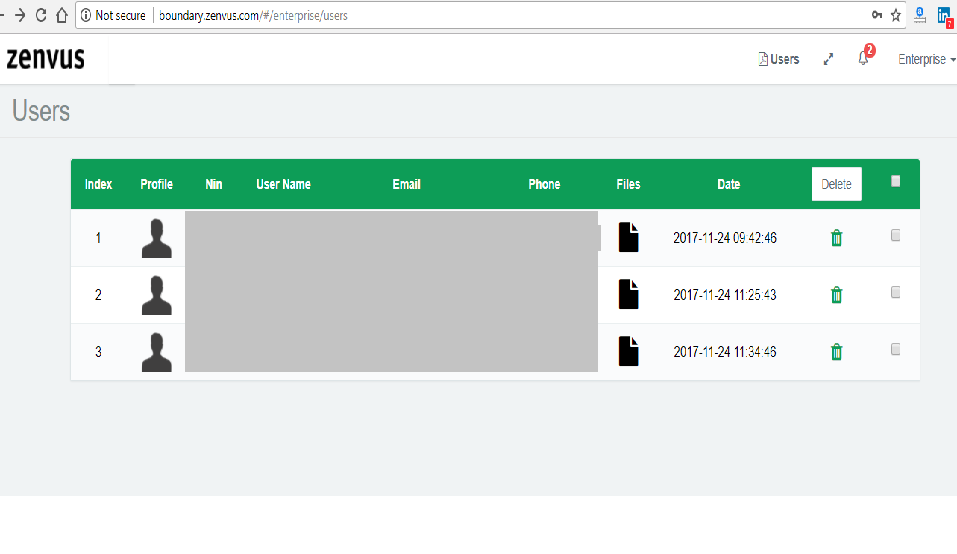
We have automated the mapping process: walk round your farm, press a button, and you can visit our portal to print your farm boundary. If you belong to a cooperative, the report will be automatically made available to the cooperative’s enterprise account with Zenvus. The leader of the cooperative has a responsibility to work with you and those you share boundaries in your farm to ratify the farm boundary. Our local team will handle those things to make sure the integrity is there.

Once that is done, you can take your report to the Federal Ministry of Agriculture, and they will issue you some documents. Your State’s  Lands Registry Department will also honour the report. With those documents, you can boldly visit Bank of Agriculture for agro-loans as you have collateral in your hands.  We are driving financial inclusion through formalization of farm assets.

Our technology calculates area, perimeter and pertinent details automatically which farmers can use in their farming operations. Zenvus does not work with individual farmers: we work with cooperatives or governments. If you want our services, you must talk to your government or organize as a cooperative. We need scale to execute the services we do. We do not sell technology; we offer services to the hardest working people in Africa: farmers.


Emerging Asymmetric Warfare In Consumer Technology

0

Within the next five years, Uber and Lyft will merge. They are fighting in the rings now, destroying value, because that is the only way to know the CEO of the future combined company. Lyft, after the recent $1 billion raise led by Google (yes, Alphabet), wants another $500 million. If all the money Uber has raised has been sent to Nigerian Senate, we will be in perpetual recess, enjoying the beaches of Paris and Bahamas.

Uber and Lyft will go the ways of many: Elance/Odesk (now UpWork),  Groupon / LivingSocial,  Sirius / XM and  Rover / DogVacay. I mean, there is warfare right now in how technology companies compete. Yes, you remember that U.S. Marines tagline: “the few, the proud”. That is even a crowd. The tech one is called Category-King and that means only one entity wins. You cannot have two Twitters, two Facebooks, and two WhatsApps but you can have many Salesforces, many HPEs, and many IBMs. Why? The former group belongs to consumer market while the latter group is enterprise focused.

The tech firms are in warfare, and that is good for consumers. In military, we have asymmetric warfare, or asymmetric engagement: a “war between belligerents whose relative military power differs significantly, or whose strategy or tactics differ significantly. This is typically a war between a standing, professional army and an insurgency or resistance movement”.

In the technology world, it is a real asymmetric competitive warfare which involves U.S. tech giants and their Chinese counterparts, but here the asymmetry is not on technology might, but on tactics. It is evident that few Western companies understand Chinese firms. That asymmetry in tactics is causing real problems. Western companies do not know what exactly they are competing against because the Chinese firms are always muted until they emerge. Because they are amorphous, you will struggle to understand them. They are bringing the tactics documented in the Art of War by Sun Tzue which their ancestors have perfected for generations.

Apple may consider buying Netflix, and possibly spend $100 billion, putting its future on TV. That sounds right because one day iPhone and iPad will stop to be magical: they are hardware with finite maturity evolution. Apple needs to find a future on services which will deliver future growth. It has hired some ace performers and also bought rights to Lords of the Rings, as it gears for this future on shows and movies. But possibly making this move, Apple is hedging because the competition has become cloudy. This is not just about Samsung, China is bringing heat. As Fortune Newsletter notes, China is a big concern.

The prominence of Chinese technology companies is impossible to avoid these days, and the company of the moment is Tencent. Competitor Alibaba is better known in the West. Huawei, a network equipment company, suddenly is a leader in smartphones. But Tencent is in now in the spotlight because its products are a leading example of Chinese innovation and its balance sheet has become a source of funds for startups around the world.

Tencent is no Johnny-come-lately. It is worth nearly $500 billion, and its WeChat messaging service is how young Chinese people communicate. It’s also a major video game publisher, a payments processor, and many more things. Its success begets so many other successes. Just as Masayoshi Son’s fortunes were secured because of SoftBank’s major stake in Alibaba, Tencent has saved the South African media company Naspers. Its early stake in Tencent is so valuable that investors have rated the core business of Naspers as worthless in comparison.

These Chinese companies have cash and are entering into new territories. Tencent has invested in Snap (maker of SnapChat), Tesla, mapmaker HERE Technologies, etc. It is possible it could go for Netflix because these companies have resources through China. As they wage their muscles, not just in China, but also in U.S., you should expect more U.S. companies to react.

You do not expect Amazon to make decisions without considering Alibaba. Of course, WeChat has evolved past WhatsApp and that means it is left for WhatsApp to capture it. Baidu is working to build the operating system of autonomous vehicles. The asymmetric warfare, based on tactics, is building up, and many companies will merge. The company Uber lost in China could one day come to challenge it in Africa and U.S. because Chinese firms are becoming increasingly bolder and intensely-globalizing.  No territory is off-limit, and that is exciting for end-users because services will improve even as costs drop.

Finally, one thing I cannot tell you is which company that is going to win this warfare. (I know that customers will win.) It looks convoluted for the consumer technology giants. Expect Tencent to buy Snap in coming years and integrate it fully into its ecosystems.  The hyper-competition in the  consumer tech sector will trigger mergers and consolidations, even as markets correct valuations in the very near future (within three years).

The competition from China in coming years will force many U.S. companies to readjust how they do business.