DD
MM
YYYY

PAGES

DD
MM
YYYY

spot_img

PAGES

Home Blog Page 7248

MTN Nigeria Dials The Sun, Delta State Goes for Agro-Parks

0

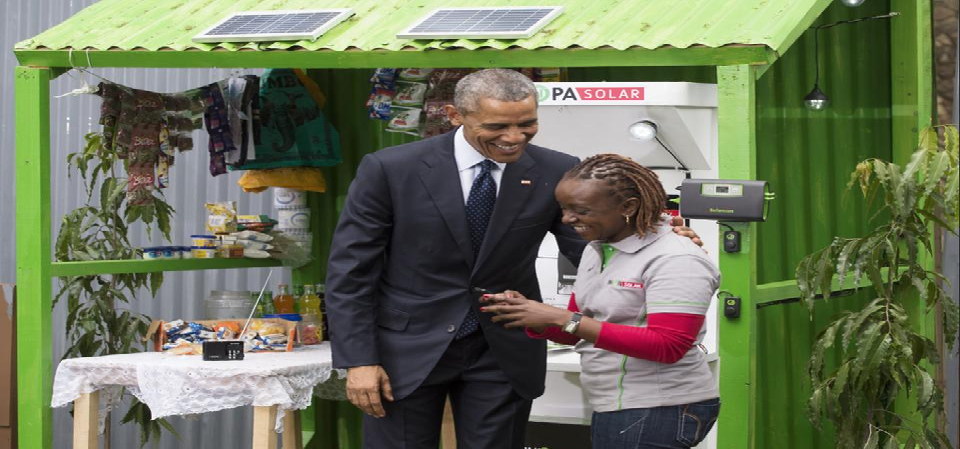
Finally, it is here: MTN Nigeria numbers can now dial the sun to provide electricity in homes. When I visited Kenya earlier in the year, I saw the team that pioneered what MTN and partners are bringing to Nigeria. Kenya’s M-KOPA has made it possible for families to use their mobile phone numbers to unlock solar power and pay for electricity. They give you some solar panel systems, you install in your house, and provided that you keep reloading your mobile phone number, with airtime credits, you will have electricity. It is the closest that you can get to pay-as-you-go model in electricity.

Using the pay-as-you-go model popularised by mobile phones, a remarkable Kenyan company, M-Kopa Solar, is providing rent-to-own solar energy products that will help provide cheap solar power to rural homes.

The M-Kopa IV Solar Home System includes a solar panel, control unit, three low-energy LED light bulbs (one of which is a portable, rechargeable torch) and a rechargeable radio. The control unit also has a USB port for charging cellphones. It’s a perfect off-the-grid solar system for Africa, where land-based infrastructure is poor and electricity supply is frequently erratic.

For a deposit of $35, buyers get the system then make 365 daily payments of $0.43 through mobile money system M-Pesa. When it is all paid off, the system belongs to the buyer outright.

Through Lumos, MTN Nigeria has brought this solution to Nigeria; it has sold its 60,000th unit. There could have been companies that started before Lumos/MTN, but you cannot discount the fact that MTN is behind this one. I expect it to be big, provided the acquisition cost is low. In short, if not for theft, the best penetration model could have been to make it pure energy-as-a-service where the initial acquisition cost is waived. That way, Lumos retains ownership of the solar systems, removing the burden to poor families who may be unable to afford the initial cost outlay.

But doing that will be irresponsible as people may not take good care of the equipments if they receive them free. A balance will be to make it rent-to-own where the customer can pay over time, and upon completing the payment term, takes ownership of the equipment. From Lumos press release sent to email:

This week, the Lumos Mobile Electricity Service deployed its 60,000th Y’ello Box, an at-home solar electricity device that lets users gain access to reliable electricity at an affordable price. The Lumos service is combining the power of the sun and your MTN mobile phone to bring a new type of power to Nigeria.

[…]

TMobile phones have transformed the way we spend our daily lives. In fact, a recent report declared Nigeria as the ‘world’s most mobilized country’ (http://apo.af/qD8dM5) with more mobile traffic than any other nation. With more and more mobiles, they not only drive our demand for more accessible and reliable power, but they can also help provide the solution.

Lumos Mobile Electricity Service operate in partnership with MTN. Once MTN customers have joined the service, they pay their monthly subscription fee for power from their MTN’s mobile phones air account by texting a simple code. There’s no need for mobile money, bank accounts or expensive machines. This is quick, easy, affordable, quiet and clean.

This is one of those elements that will help families. But it does not take away industrial and commercial needs for electricity. We still have to find ways to power the country, but incremental innovations like what Lumos and MTN are doing, if affordable, could offer choices to families in their homes.

The Agro-Park in Delta

While you rejoice with the MTN dialing the sun for homes in Nigeria, Delta State wants to go big on agriculture.

Overall the focus of the agro-industrial park development strategy is to bring about the accelerated structural transformation of the state’s economy through graduated industrialisation, leveraging the share of the industrial sector of GDP and the GDP share of the agricultural based manufacturing sub-sector.

In value terms, the development of agro-industries parks in Delta State creates the stimulants and opportunity to accelerate economic development and achieve its industrialisation goals. Primarily, the government’s state executive council agro-industrial park initiative remains a potent vehicle for the structural transformation of the Delta State economy. The initiative is also expected to help pave the way for the realisation of Nigeria’s Vision 2020 of becoming a leading manufacturing hub in Africa.

The agro-industrial park will also promote economic diversification and growth of the state, including creating more than 5,000 jobs along the agricultural value chain. It will also provide common dedicated infrastructure and facilities for agro-processing, value addition and agribusiness as a means to improving the ease-of-doing business.

According to the commissioner, the park will be executed through Public-Private Partnership involving the Delta State government, the Israel based Mirai Group and Norsworthy Investments Limited.

It will be very fascinating if Delta State goes ahead to execute this project. Agriculture in Nigeria needs to be industrialized and this initiative will help. Yet, government may soon understand that industrializing farming will require electricity and MTN phone numbers cannot support the energy capacity required.

Informal Sector Lending Model for Africa

0

I made it into Johannesburg, South Africa today. I like coming here because the cities of Cape Town, Johannesburg and Pretoria treat me fine. I am with one of my colleagues in our U.S. office. We will be spending eight days on business. My path is through Pretoria while my colleague goes through Cape Town. […]

To access this post, you must purchase Tekedia Mini-MBA (Feb 9 – May 2, 2026) | $170 or N120,000.

Why I Do Not Care About Net Neutrality

0

The global conversation on net neutrality is heating up, as the U.S. regulators decide the fate of the open Internet. The U.S. is the world’s technology powerhouse and anything it does is easily adopted by most parts of the world. If the World Wide Web has a switch, it is possibly in one room in America. So, the decision of Trump Administration on net neutrality will have real implications in the future of electronic commerce.

Net neutrality is the principle that Internet service providers and governments regulating most of the Internet must treat all data on the Internet the same, and not discriminate or charge differently by user, content, website, platform, application, type of attached equipment, or method of communication.[1] For instance, under these principles, internet service providers are unable to intentionally block, slow down or charge money for specific websites and online content.

Yet, the concerns on net neutrality may be overblown.  Certainly, we should be unhappy if a telecommunication provider slows down our internet connections to selected websites.  But we should not be blindfolded to think that any company that does so will not bring severe consequences to its business, in this age of virality. Imagine the implication of slowing connection to Facebook in a college dorm, and all the students decide to cancel services with the telecom provider. The telcos have invested money to make sure their services are fast. It will be a tough call for them to reverse course to turn a 4G network to suddenly slow down to a 2G network just to get Facebook or Google to send them money.

Let us consider a scenario where MTN slows down Facebook or Google Search connections to Nigerians. And the telco goes ahead to ask Facebook or Google for money to normalize the speed of the connections. If neither Facebook nor Google agrees, then the decision will fall to users like us, because MTN has decided to make connections to Facebook and Google very slow. Personally, once I notice that MTN is slowing Facebook or Google connections, I will look for another telco. I do agree that I have to overcome switching costs. But in Nigeria, most people have multiple SIM cards; they just load the right sim card, abandoning the troublesome network. Yes, the switching cost is not really over-bearing.

The Case Against Net Neutrality

I wish the web is the way it is now but I also note that infrastructure is asset which must generate value for the owners. Facebook has its Likes, Google its Search algorithm, and telcos like MTN have their masts and infrastructure. These are private entities, not owned by government. It is free enterprise: every firm has rights to joggle to create value for stakeholders.

These companies have the rights to decide how to monetize their assets including how they meter traffic in their systems. After all, Facebook and Google have their businesses and governments should not help them to make more money. Net neutrality does not mean that only the ISPs (internet service providers) and telcos must lose. Let market forces drive this since it is not government that builds masts unlike roads. Governments have “net” neutrality on roads, making sure Honda and Bentley have the same access levels to roads. That is fine. But governments are not the ones keeping the communication equipments working. Private companies are invested and they should be allowed the free speech to monetize their assets.

Sure – all the telcos can band together to behave the same way. But I do promise you that it will not last more than 6 months for that vacuum to be filled. Someone will come up and offer a completely open Internet to subscribers. Any ISP or telco that thinks that it can slow traffic and retain customers will be shocked.  In short, I do not see this as an issue because we live in a world of choices, unlike in the age of the old monopolies.

Yes, I understand the concern that big telcos may ask startups to pay, and if these small companies cannot pay, their websites will be lost in the deep blue sea, with none aware of them. That is a big concern but that will not happen. Customers are not stupid. Any telco or ISP that does that will be gone. If you see how these companies work hard to improve speed to keep customers, and you believe that they will even intentionally slow their networks to get money from big web companies, you have not paid attention.

The confusion with net neutrality is that telcos are not good on virality communications, and are against native web giants and masters of web communication. So they are losing the arguments in the public.  The other side has Facebook, Twitter, Amazon, Microsoft and Google, who are masters of social media buzz. Twitter can make anything it wants to trend, even if the facts are not there. There are no ways companies like Verizon and Comcast can win because the web companies are confusing people as though they are defenders of small companies. They make arguments that small companies can be lost in the web if net neutrality is overturned. When did companies like Google and Facebook start supporting small companies to care that much? What is at stake is the ability for these web companies to keep pile of free cash in tax havens at the detriment of telcos. They want government to help them keep the status quo because it is working for them. I do think government needs to get out and let free markets decide.

Let Market Forces Decide This

I do wish that government does not need to get into this as I am afraid of Trump Administration. Trump can wake up the wrong way and cause problem for the ecosystems with his tweets.  The web should not have been allowed to evolve in this way. Governments build roads and it should be openly free, but when a firm builds telecom infrastructures, I think it is fair to allow it to execute a business model that will work for for it. A world that fights for Apple, Facebook and Google when they have cash reserves that can buy all the big telcos is rigged.

Compare this to an investor in U.S. who thinks that his non-cash investment should be taxed at 15% when a janitor that works for him is taxable up to 39%. He thinks because he is reading business plans, his labour deserves special protection while the cleaner working for him does not get the same tax benefit. So, the boss pays tax at 15% while the workers pay up to 39%. Interestingly, the hedge funds and the Silicon Valley investors like this. Most funded the web companies!

The Trump government will kill Net Neutrality. The world will not fall apart. Markets will correct any anti-consumer stunts from ISPs and telcos. I am very confident of that. If Verizon slows my Google, I am sure T-Mobile may use that to win my business from Verizon. Period.

On December 14, the FCC will vote on whether or not to roll back Obama-era policies protecting a free and open internet. In fact, during yesterday’s announcement of the upcoming vote, the FCC neglected to mention the historic 22 million comments on the issue, the majority of which were opposed to its rollback.

[…]

The long story short on Net Neutrality is that it protects consumers and the internet from ISPs who might want to create internet ‘fast lanes’ for content or websites that they prefer or that pay them more.

Watch out, organizations will emerge to publish details of telcos which are slowing websites. You cannot sell me a service that says 25MB downlink/uplink, and you decide to slow it down based on the website I am visiting. If you do that, I will switch.

The inherent nature of the web, unbounded and unconstrained, will make it nearly hard for any telco to play any fast game without losing customers. A strategist that proposes that will have to get everyone in the industry to band together to execute such. That will be nearly impossible because of many consumer protection regulations in place.

All Together

If they kill net neutrality, the first feature update in browsers will be alerting you when your telco is slowing your traffic artificially. The companies have been investing billions of dollars to offer great products to customers. Now, we do think they will suddenly take a 4G speed to 2G because Google and Facebook have refused to pay? I do not think that will happen. The real problem here is constraining a private entity on how to monetize its assets, and I do hope Trump administration corrects that.

Markets can fix all the issues of net neutrality and no one will notice it. Anyone that tells you that the web is neutral has not signed up for a broadband service in America where they can sell 25MB/50MB depending on your choice. The only difference, I understand, is that the speed to all parts of the web through that network may not be uniform, without net neutrality. My argument is that any telco or ISP that thinks it can do that, at scale, could collapse over mass exodus of customers. This is the age of social media: the citizens have so much power. Net neutrality is not an issue to worry about. If they kill it, markets will correct all the issues within weeks.

This Is Jumia 2.0: Bold And Promising

5

If you are paying attention, over the last few months, some web businesses in Africa are moving offline, even as they expand their online properties. The recent revelation of the depressing numbers from many of the online platforms shocked industry players: when it comes to spending money online, Africans are not in yet.

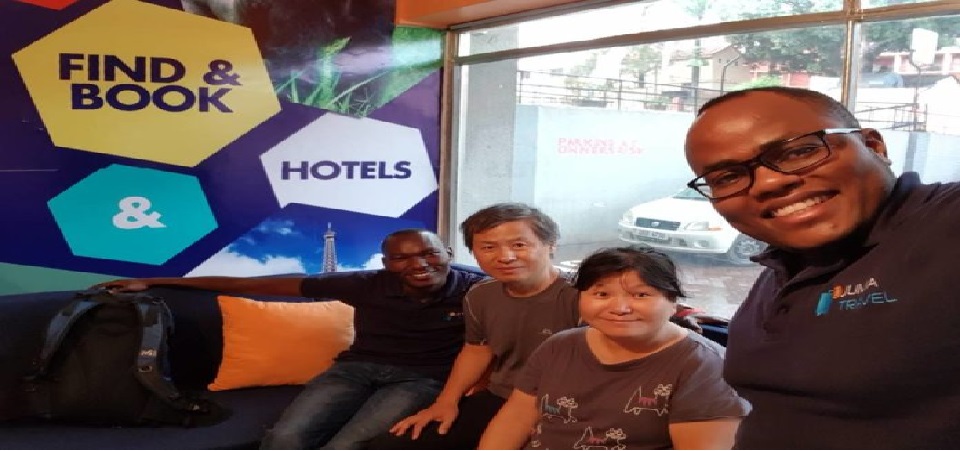
iROKOtv had figured this out many months ago with its physical kiosks. Jumia Travel has joined the league, adding offline presence in its operations in Uganda. Yes, Jumia is now your typical travel agent with physical address. It has physical operations now in ten countries, and will continue to roll out these new features across the continent.

Jumia Travel Uganda has launched a new travel agency, signaling a desire to win over Ugandan travellers who are not online by setting up a physical office in Kampala. The physical premises, according to Jumia Travel Country Manager Timothy Mugume are designed to tap into the significant market of Ugandans who do not have access to the internet.

“We have a very strong presence online, however we would like to be all inclusive and provide our services to the customers who are not online, and build them up to embrace it. Only less than 25% of Ugandans have access to internet or services, and our target market lies here too,” Mr. Mugume said.

Uganda therefore becomes one of 10 African countries where Jumia Travel has set up offices. According to a company official, this is set to increase to all major cities. In a statement, the company said the new travel agency will provide services including hotel reservations, flight/ticket bookings, and visas, among others. Jumia Travel said its online platform boasts more than 300,000 hotels worldwide

This is the new Jumia: Jumia 2.0. Expect the financials to come alive positively in coming quarters with this hybrid play. Jumia has brand recognition in Africa, and will become a clear leader as an offline travel agent in major African cities where it operates.

But this goes beyond travels: I expect Jumia to buy a major supermarket in Lagos or Abuja next year. Jumia Supermart will be a great ecosystem for people to shop. Think of Paris in Abuja; LA in Lagos. You cannot beat the brand.

Nigerian entrepreneurs: the industry is changing, from Amazon to Alibaba. You need to adjust your strategies to account for these changes. Sure, online is the future, but we must find cashflow to get over the next billing cycle. The implication is that we need to push into where the present opportunities are located even as we plot for tomorrow’s moments. The money is still in the physical space and we need to deal with that reality in our business models.

The Brilliance of Safaricom’s Masoko Ecommerce Business

0

In the league of African telecom operators, Kenya’s Safaricom is peerless in innovation. It pioneered mobile money transfer through MPESA. It is profitable with one of the finest marketing strategies when it comes to telecoms in Africa. When you walk through the streets of Nairobi, you will feel connected with Safaricom with its local language promotions. Kenyans love Safaricom as they continue to rate it one of the top brands in the nation.

Yet, Safaricom is part of the telecommunication institutions which are going through redesigns due to over-the-top services like WhatsApp and Skype which make it possible for people to communicate more efficiently and cheaply, even when depriving the telcos extra revenue. The telcos do make money, at least for the users to be online, but they lose money when the people send SMS on WhatsApp and do video calls on Skype, without directly paying the telcos, for those extras. Indeed, you can load N700 (about $2) data in Nigeria and send 1,000 messengers on WhatsApp. Without WhatsApp, that could have cost you at least N40,000 in the hands of telcos. You have saved, but value has been destroyed for the telcos. Oh yes, you can argue that no value was destroyed until you start building telecom infrastructures. Telcos do believe that the N700 you have paid is not enough to cover the N40,000 worth of activities which went through their systems.
.

Masoko from Safaricom

So, Safaricom is looking for growth and planning a future where data and voice may not take care of the margins. It has launched an e-commerce operation, named Masoko.

Safaricom has officially announced the launch of its e-commerce portal, Masoko. Masoko (Swahili for ‘markets’) aims to leverage the mobile phone to provide local merchants with unlimited potential to sell their products and services via an online platform.

Users of the platform will be able to access items ranging from groceries to books to auto parts.

[…]

Masoko will accept all mobile money payments as well as Visa and MasterCard payments and will have dedicated delivery fulfillment partners such as Wells Fargo and Sendy to provide a seamless customer experience that is versatile, fast and secure.

“By leveraging the strength and reach of our network, our customer base, and a number of partnerships with vendors, we hope to create a solution that can power the next phase of growth for the Kenyan economy. We hope to create a universal platform that will connect the smallest of vendors in Kenya to a nationwide market,” said Mr. Ogutu.

Why This Is Unique

Unlike most ecommerce operators in Africa, Safaricom could find success easily. If you read clearly, Safaricom is looking for the best way to expand the Kenyan economy because that is where its “currency”, MPESA, is very dominant. If that “next phase of growth for the Kenyan economy” happens, through its contribution in this new venture, Safaricom’s MPESA will benefit. It wants to build an integrated market that will unlock more values in the Kenyan economy, including the informal sector. Here are the core strategies this company is deploying:

One Oasis Strategy: Safaricom is launching this ecommerce to help in the growth of MPESA, its very best product: “Masoko will accept all mobile money payments …” The more Safaricom can move more Kenyan commerce to MPESA, the more it benefits because MPESA is in its ecosystem. So, technically, even if it does not make money through ecommerce, Safaricom will make money through more activities in MPESA. Ecommerce is generally hard to make money, but there are many ways of making money in it.  You play parallel, using it to grow another product.

Double Play Strategy: Safaricom is going to run the typical double play which is used by leading global ecommerce businesses.  These companies always have complementary services to ecommerce. Safaricom has one in MPESA and that will help its positioning in the market

In baseball, double play is a defensive play where two players are put out. It turns out that the leading ecommerce companies like Amazon and Alibaba have such strategies in their businesses. Amazon runs an ecommerce operation, which largely loses money, but makes money via cloud computing services. In the world of Amazon, if it can destroy many brick and mortar retailers and force them to go online, it will have cloud services to sell to them. For Alibaba, its double play comes from its asset-light marketplace and the Ant Financial which processes payments across its ecosystems. Besides the commission for selling on Alibaba, Alibaba takes another cut for handling the payment. When you examine these companies, one thing is obvious: no one makes good money by running just an ecommerce operation; you need a double play to supplement it.

Safaricom Data

I am expecting Safaricom to move into other sectors like insurance after this ecommerce venture has been executed. The fact remains that no one understands the buying habits of Kenyans more than MPESA. By looking at MPESA, you can get a good picture on how Kenyans are spending. This means that you can create products and services around those patterns. No other company in Kenya can do this better than Safaricom in Kenya.
It can use data from MPESA to have a very good feel on what is trending in Kenya and then make sure it is prepared for it. If people are buying insurance from one of the merchants that sell so, Safaricom could see that as the next big thing. (Data policy in Africa is weak, we will continue to debate what companies can see and not see. But today, no one is policing them.) This ecommerce operation is largely a marketplace where it is mainly bringing buyers and vendors together, without necessarily carrying inventory. Yet, it is possible that Safaricom can see from MPESA the wares which are selling well and could decide to stock and sell them directly.

The best business Safaricom will have in coming years will be data business. MPESA makes that possible because you are using real data on actual purchases. It will be hard for anyone to beat any operator with that level of insights about any economy and the broad consumers.

All Together

Yes, the data Safaricom has about Kenya is unprecedented and this company can use it to build new businesses. The ecommerce business it is running is not the risky type: this is a marketplace where the risk stays with the vendors. The main goal of this new venture is helping MPESA to remain the dominant mobile money despite whatever the banks are planning in Kenya.

I do not see a highly successful ecommerce operation that will defeat Jumia in marketplace sub-sector, but I see an operation that will seed more markets and opportunities for MPESA. That is One Oasis Strategy fused with Double Play which has been used by leading ecommerce giants around the world. When those are executed in sync, with the data Safaricom has on Kenyan commerce, through MPESA, great things happen. That is the brilliance of Safaricom.