DD
MM
YYYY

PAGES

DD
MM
YYYY

spot_img

PAGES

Home Blog Page 7251

Zenvus Deploys 27 Young People for Farm Boundary Mapping in Adamawa

0

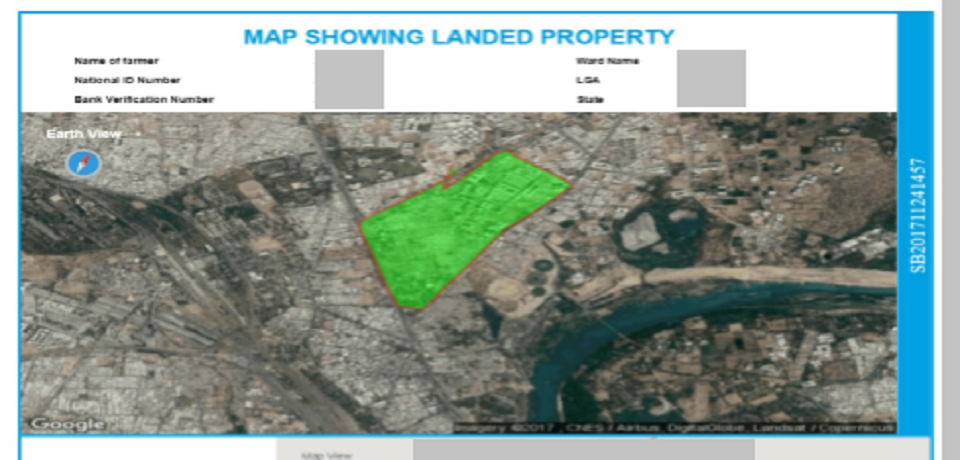
On December 4th, 27 young Nigerians will have jobs in Adamawa State. They will be mapping farm boundaries for some local farmers. The young people will work with farmers and community leaders to bring the farms to the 21st century. That is the first phase of Zenvus deployment: we map the boundaries of farms to localize areas of interests when our sensors are installed. These young professionals, experts in local languages, will also help in transitioning farmers into Zenvus Services during the dry farming season. All of them are natives of their wards. This minor pilot operation, for dry farming, will be massively expanded during the main farming cycle.

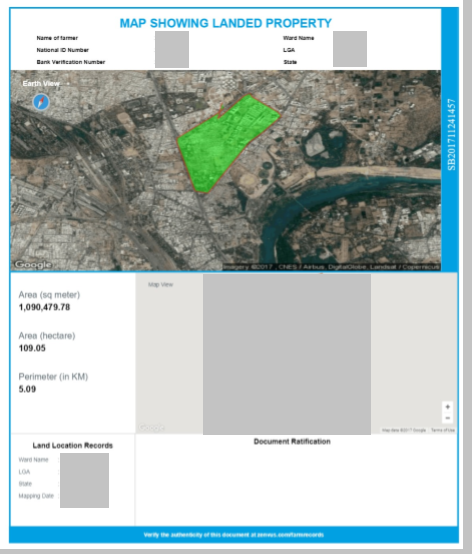
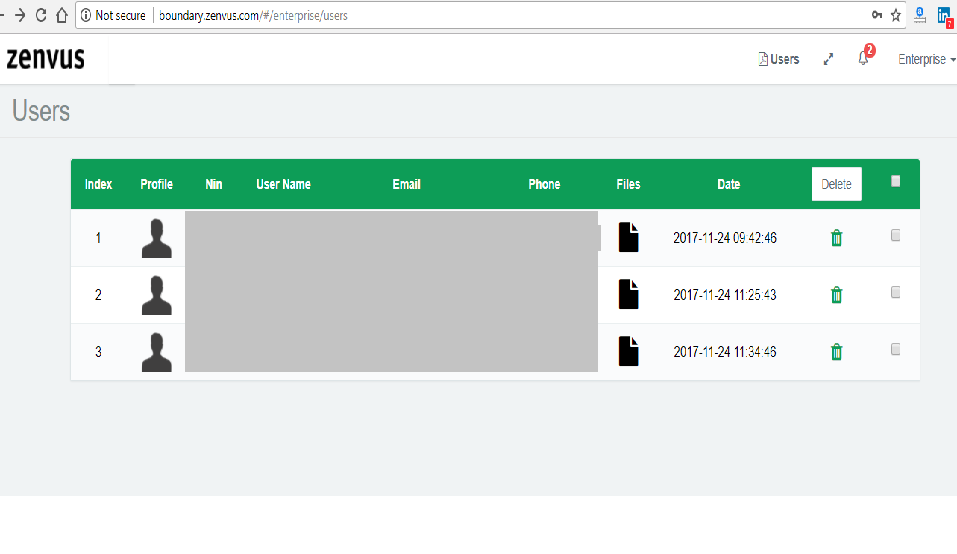
We have automated the mapping process: walk round your farm, press a button, and you can visit our portal to print your farm boundary. If you belong to a cooperative, the report will be automatically made available to the cooperative’s enterprise account with Zenvus. The leader of the cooperative has a responsibility to work with you and those you share boundaries in your farm to ratify the farm boundary. Our local team will handle those things to make sure the integrity is there.

Once that is done, you can take your report to the Federal Ministry of Agriculture, and they will issue you some documents. Your State’s  Lands Registry Department will also honour the report. With those documents, you can boldly visit Bank of Agriculture for agro-loans as you have collateral in your hands.  We are driving financial inclusion through formalization of farm assets.

Our technology calculates area, perimeter and pertinent details automatically which farmers can use in their farming operations. Zenvus does not work with individual farmers: we work with cooperatives or governments. If you want our services, you must talk to your government or organize as a cooperative. We need scale to execute the services we do. We do not sell technology; we offer services to the hardest working people in Africa: farmers.


Emerging Asymmetric Warfare In Consumer Technology

0

Within the next five years, Uber and Lyft will merge. They are fighting in the rings now, destroying value, because that is the only way to know the CEO of the future combined company. Lyft, after the recent $1 billion raise led by Google (yes, Alphabet), wants another $500 million. If all the money Uber has raised has been sent to Nigerian Senate, we will be in perpetual recess, enjoying the beaches of Paris and Bahamas.

Uber and Lyft will go the ways of many: Elance/Odesk (now UpWork),  Groupon / LivingSocial,  Sirius / XM and  Rover / DogVacay. I mean, there is warfare right now in how technology companies compete. Yes, you remember that U.S. Marines tagline: “the few, the proud”. That is even a crowd. The tech one is called Category-King and that means only one entity wins. You cannot have two Twitters, two Facebooks, and two WhatsApps but you can have many Salesforces, many HPEs, and many IBMs. Why? The former group belongs to consumer market while the latter group is enterprise focused.

The tech firms are in warfare, and that is good for consumers. In military, we have asymmetric warfare, or asymmetric engagement: a “war between belligerents whose relative military power differs significantly, or whose strategy or tactics differ significantly. This is typically a war between a standing, professional army and an insurgency or resistance movement”.

In the technology world, it is a real asymmetric competitive warfare which involves U.S. tech giants and their Chinese counterparts, but here the asymmetry is not on technology might, but on tactics. It is evident that few Western companies understand Chinese firms. That asymmetry in tactics is causing real problems. Western companies do not know what exactly they are competing against because the Chinese firms are always muted until they emerge. Because they are amorphous, you will struggle to understand them. They are bringing the tactics documented in the Art of War by Sun Tzue which their ancestors have perfected for generations.

Apple may consider buying Netflix, and possibly spend $100 billion, putting its future on TV. That sounds right because one day iPhone and iPad will stop to be magical: they are hardware with finite maturity evolution. Apple needs to find a future on services which will deliver future growth. It has hired some ace performers and also bought rights to Lords of the Rings, as it gears for this future on shows and movies. But possibly making this move, Apple is hedging because the competition has become cloudy. This is not just about Samsung, China is bringing heat. As Fortune Newsletter notes, China is a big concern.

The prominence of Chinese technology companies is impossible to avoid these days, and the company of the moment is Tencent. Competitor Alibaba is better known in the West. Huawei, a network equipment company, suddenly is a leader in smartphones. But Tencent is in now in the spotlight because its products are a leading example of Chinese innovation and its balance sheet has become a source of funds for startups around the world.

Tencent is no Johnny-come-lately. It is worth nearly $500 billion, and its WeChat messaging service is how young Chinese people communicate. It’s also a major video game publisher, a payments processor, and many more things. Its success begets so many other successes. Just as Masayoshi Son’s fortunes were secured because of SoftBank’s major stake in Alibaba, Tencent has saved the South African media company Naspers. Its early stake in Tencent is so valuable that investors have rated the core business of Naspers as worthless in comparison.

These Chinese companies have cash and are entering into new territories. Tencent has invested in Snap (maker of SnapChat), Tesla, mapmaker HERE Technologies, etc. It is possible it could go for Netflix because these companies have resources through China. As they wage their muscles, not just in China, but also in U.S., you should expect more U.S. companies to react.

You do not expect Amazon to make decisions without considering Alibaba. Of course, WeChat has evolved past WhatsApp and that means it is left for WhatsApp to capture it. Baidu is working to build the operating system of autonomous vehicles. The asymmetric warfare, based on tactics, is building up, and many companies will merge. The company Uber lost in China could one day come to challenge it in Africa and U.S. because Chinese firms are becoming increasingly bolder and intensely-globalizing.  No territory is off-limit, and that is exciting for end-users because services will improve even as costs drop.

Finally, one thing I cannot tell you is which company that is going to win this warfare. (I know that customers will win.) It looks convoluted for the consumer technology giants. Expect Tencent to buy Snap in coming years and integrate it fully into its ecosystems.  The hyper-competition in the  consumer tech sector will trigger mergers and consolidations, even as markets correct valuations in the very near future (within three years).

The competition from China in coming years will force many U.S. companies to readjust how they do business.


MTN Nigeria Dials The Sun, Delta State Goes for Agro-Parks

0

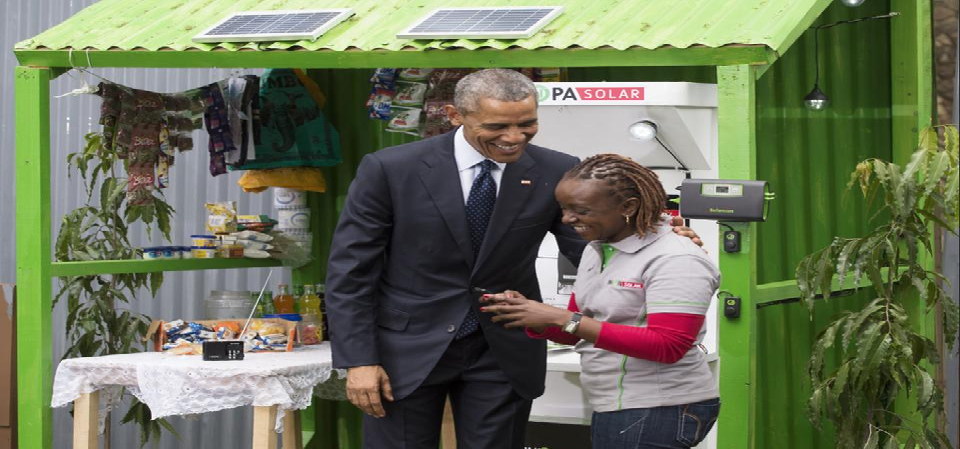
Finally, it is here: MTN Nigeria numbers can now dial the sun to provide electricity in homes. When I visited Kenya earlier in the year, I saw the team that pioneered what MTN and partners are bringing to Nigeria. Kenya’s M-KOPA has made it possible for families to use their mobile phone numbers to unlock solar power and pay for electricity. They give you some solar panel systems, you install in your house, and provided that you keep reloading your mobile phone number, with airtime credits, you will have electricity. It is the closest that you can get to pay-as-you-go model in electricity.

Using the pay-as-you-go model popularised by mobile phones, a remarkable Kenyan company, M-Kopa Solar, is providing rent-to-own solar energy products that will help provide cheap solar power to rural homes.

The M-Kopa IV Solar Home System includes a solar panel, control unit, three low-energy LED light bulbs (one of which is a portable, rechargeable torch) and a rechargeable radio. The control unit also has a USB port for charging cellphones. It’s a perfect off-the-grid solar system for Africa, where land-based infrastructure is poor and electricity supply is frequently erratic.

For a deposit of $35, buyers get the system then make 365 daily payments of $0.43 through mobile money system M-Pesa. When it is all paid off, the system belongs to the buyer outright.

Through Lumos, MTN Nigeria has brought this solution to Nigeria; it has sold its 60,000th unit. There could have been companies that started before Lumos/MTN, but you cannot discount the fact that MTN is behind this one. I expect it to be big, provided the acquisition cost is low. In short, if not for theft, the best penetration model could have been to make it pure energy-as-a-service where the initial acquisition cost is waived. That way, Lumos retains ownership of the solar systems, removing the burden to poor families who may be unable to afford the initial cost outlay.

But doing that will be irresponsible as people may not take good care of the equipments if they receive them free. A balance will be to make it rent-to-own where the customer can pay over time, and upon completing the payment term, takes ownership of the equipment. From Lumos press release sent to email:

This week, the Lumos Mobile Electricity Service deployed its 60,000th Y’ello Box, an at-home solar electricity device that lets users gain access to reliable electricity at an affordable price. The Lumos service is combining the power of the sun and your MTN mobile phone to bring a new type of power to Nigeria.

[…]

TMobile phones have transformed the way we spend our daily lives. In fact, a recent report declared Nigeria as the ‘world’s most mobilized country’ (http://apo.af/qD8dM5) with more mobile traffic than any other nation. With more and more mobiles, they not only drive our demand for more accessible and reliable power, but they can also help provide the solution.

Lumos Mobile Electricity Service operate in partnership with MTN. Once MTN customers have joined the service, they pay their monthly subscription fee for power from their MTN’s mobile phones air account by texting a simple code. There’s no need for mobile money, bank accounts or expensive machines. This is quick, easy, affordable, quiet and clean.

This is one of those elements that will help families. But it does not take away industrial and commercial needs for electricity. We still have to find ways to power the country, but incremental innovations like what Lumos and MTN are doing, if affordable, could offer choices to families in their homes.

The Agro-Park in Delta

While you rejoice with the MTN dialing the sun for homes in Nigeria, Delta State wants to go big on agriculture.

Overall the focus of the agro-industrial park development strategy is to bring about the accelerated structural transformation of the state’s economy through graduated industrialisation, leveraging the share of the industrial sector of GDP and the GDP share of the agricultural based manufacturing sub-sector.

In value terms, the development of agro-industries parks in Delta State creates the stimulants and opportunity to accelerate economic development and achieve its industrialisation goals. Primarily, the government’s state executive council agro-industrial park initiative remains a potent vehicle for the structural transformation of the Delta State economy. The initiative is also expected to help pave the way for the realisation of Nigeria’s Vision 2020 of becoming a leading manufacturing hub in Africa.

The agro-industrial park will also promote economic diversification and growth of the state, including creating more than 5,000 jobs along the agricultural value chain. It will also provide common dedicated infrastructure and facilities for agro-processing, value addition and agribusiness as a means to improving the ease-of-doing business.

According to the commissioner, the park will be executed through Public-Private Partnership involving the Delta State government, the Israel based Mirai Group and Norsworthy Investments Limited.

It will be very fascinating if Delta State goes ahead to execute this project. Agriculture in Nigeria needs to be industrialized and this initiative will help. Yet, government may soon understand that industrializing farming will require electricity and MTN phone numbers cannot support the energy capacity required.

Informal Sector Lending Model for Africa

0

I made it into Johannesburg, South Africa today. I like coming here because the cities of Cape Town, Johannesburg and Pretoria treat me fine. I am with one of my colleagues in our U.S. office. We will be spending eight days on business. My path is through Pretoria while my colleague goes through Cape Town. […]

To access this post, you must purchase Tekedia Mini-MBA (Feb 9 – May 2, 2026) | $170 or N120,000.

Why I Do Not Care About Net Neutrality

0

The global conversation on net neutrality is heating up, as the U.S. regulators decide the fate of the open Internet. The U.S. is the world’s technology powerhouse and anything it does is easily adopted by most parts of the world. If the World Wide Web has a switch, it is possibly in one room in America. So, the decision of Trump Administration on net neutrality will have real implications in the future of electronic commerce.

Net neutrality is the principle that Internet service providers and governments regulating most of the Internet must treat all data on the Internet the same, and not discriminate or charge differently by user, content, website, platform, application, type of attached equipment, or method of communication.[1] For instance, under these principles, internet service providers are unable to intentionally block, slow down or charge money for specific websites and online content.

Yet, the concerns on net neutrality may be overblown.  Certainly, we should be unhappy if a telecommunication provider slows down our internet connections to selected websites.  But we should not be blindfolded to think that any company that does so will not bring severe consequences to its business, in this age of virality. Imagine the implication of slowing connection to Facebook in a college dorm, and all the students decide to cancel services with the telecom provider. The telcos have invested money to make sure their services are fast. It will be a tough call for them to reverse course to turn a 4G network to suddenly slow down to a 2G network just to get Facebook or Google to send them money.

Let us consider a scenario where MTN slows down Facebook or Google Search connections to Nigerians. And the telco goes ahead to ask Facebook or Google for money to normalize the speed of the connections. If neither Facebook nor Google agrees, then the decision will fall to users like us, because MTN has decided to make connections to Facebook and Google very slow. Personally, once I notice that MTN is slowing Facebook or Google connections, I will look for another telco. I do agree that I have to overcome switching costs. But in Nigeria, most people have multiple SIM cards; they just load the right sim card, abandoning the troublesome network. Yes, the switching cost is not really over-bearing.

The Case Against Net Neutrality

I wish the web is the way it is now but I also note that infrastructure is asset which must generate value for the owners. Facebook has its Likes, Google its Search algorithm, and telcos like MTN have their masts and infrastructure. These are private entities, not owned by government. It is free enterprise: every firm has rights to joggle to create value for stakeholders.

These companies have the rights to decide how to monetize their assets including how they meter traffic in their systems. After all, Facebook and Google have their businesses and governments should not help them to make more money. Net neutrality does not mean that only the ISPs (internet service providers) and telcos must lose. Let market forces drive this since it is not government that builds masts unlike roads. Governments have “net” neutrality on roads, making sure Honda and Bentley have the same access levels to roads. That is fine. But governments are not the ones keeping the communication equipments working. Private companies are invested and they should be allowed the free speech to monetize their assets.

Sure – all the telcos can band together to behave the same way. But I do promise you that it will not last more than 6 months for that vacuum to be filled. Someone will come up and offer a completely open Internet to subscribers. Any ISP or telco that thinks that it can slow traffic and retain customers will be shocked.  In short, I do not see this as an issue because we live in a world of choices, unlike in the age of the old monopolies.

Yes, I understand the concern that big telcos may ask startups to pay, and if these small companies cannot pay, their websites will be lost in the deep blue sea, with none aware of them. That is a big concern but that will not happen. Customers are not stupid. Any telco or ISP that does that will be gone. If you see how these companies work hard to improve speed to keep customers, and you believe that they will even intentionally slow their networks to get money from big web companies, you have not paid attention.

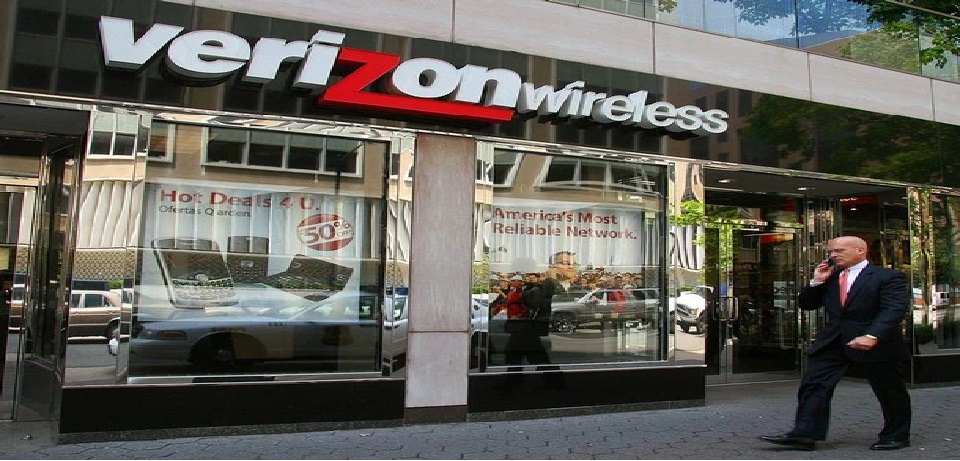
The confusion with net neutrality is that telcos are not good on virality communications, and are against native web giants and masters of web communication. So they are losing the arguments in the public.  The other side has Facebook, Twitter, Amazon, Microsoft and Google, who are masters of social media buzz. Twitter can make anything it wants to trend, even if the facts are not there. There are no ways companies like Verizon and Comcast can win because the web companies are confusing people as though they are defenders of small companies. They make arguments that small companies can be lost in the web if net neutrality is overturned. When did companies like Google and Facebook start supporting small companies to care that much? What is at stake is the ability for these web companies to keep pile of free cash in tax havens at the detriment of telcos. They want government to help them keep the status quo because it is working for them. I do think government needs to get out and let free markets decide.

Let Market Forces Decide This

I do wish that government does not need to get into this as I am afraid of Trump Administration. Trump can wake up the wrong way and cause problem for the ecosystems with his tweets.  The web should not have been allowed to evolve in this way. Governments build roads and it should be openly free, but when a firm builds telecom infrastructures, I think it is fair to allow it to execute a business model that will work for for it. A world that fights for Apple, Facebook and Google when they have cash reserves that can buy all the big telcos is rigged.

Compare this to an investor in U.S. who thinks that his non-cash investment should be taxed at 15% when a janitor that works for him is taxable up to 39%. He thinks because he is reading business plans, his labour deserves special protection while the cleaner working for him does not get the same tax benefit. So, the boss pays tax at 15% while the workers pay up to 39%. Interestingly, the hedge funds and the Silicon Valley investors like this. Most funded the web companies!

The Trump government will kill Net Neutrality. The world will not fall apart. Markets will correct any anti-consumer stunts from ISPs and telcos. I am very confident of that. If Verizon slows my Google, I am sure T-Mobile may use that to win my business from Verizon. Period.

On December 14, the FCC will vote on whether or not to roll back Obama-era policies protecting a free and open internet. In fact, during yesterday’s announcement of the upcoming vote, the FCC neglected to mention the historic 22 million comments on the issue, the majority of which were opposed to its rollback.

[…]

The long story short on Net Neutrality is that it protects consumers and the internet from ISPs who might want to create internet ‘fast lanes’ for content or websites that they prefer or that pay them more.

Watch out, organizations will emerge to publish details of telcos which are slowing websites. You cannot sell me a service that says 25MB downlink/uplink, and you decide to slow it down based on the website I am visiting. If you do that, I will switch.

The inherent nature of the web, unbounded and unconstrained, will make it nearly hard for any telco to play any fast game without losing customers. A strategist that proposes that will have to get everyone in the industry to band together to execute such. That will be nearly impossible because of many consumer protection regulations in place.

All Together

If they kill net neutrality, the first feature update in browsers will be alerting you when your telco is slowing your traffic artificially. The companies have been investing billions of dollars to offer great products to customers. Now, we do think they will suddenly take a 4G speed to 2G because Google and Facebook have refused to pay? I do not think that will happen. The real problem here is constraining a private entity on how to monetize its assets, and I do hope Trump administration corrects that.

Markets can fix all the issues of net neutrality and no one will notice it. Anyone that tells you that the web is neutral has not signed up for a broadband service in America where they can sell 25MB/50MB depending on your choice. The only difference, I understand, is that the speed to all parts of the web through that network may not be uniform, without net neutrality. My argument is that any telco or ISP that thinks it can do that, at scale, could collapse over mass exodus of customers. This is the age of social media: the citizens have so much power. Net neutrality is not an issue to worry about. If they kill it, markets will correct all the issues within weeks.