
DD
MM
YYYY

PAGES

DD
MM
YYYY

spot_img

PAGES

Home Blog Page 7263

Nigeria’s 5G Challenge And Why It’ll Take Very Long To Happen

0

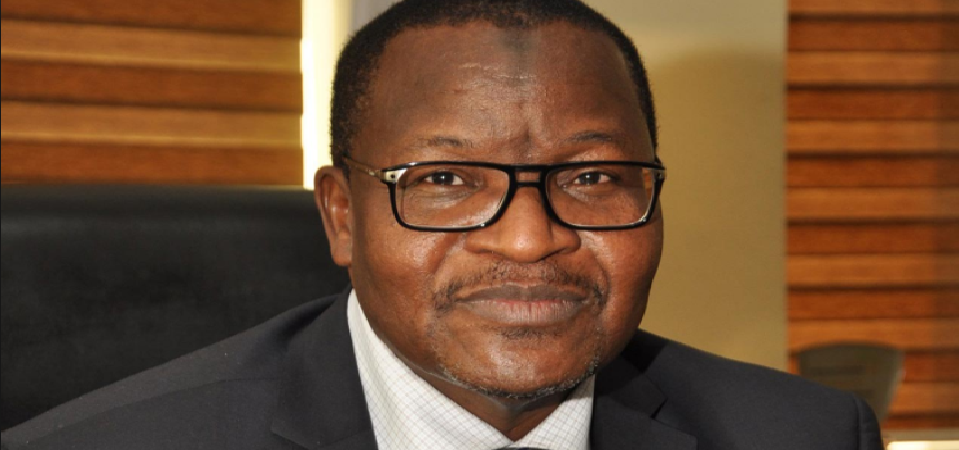
The Nigerian Communications Commission (NCC) has since provided clarity that it has no interest in regulating Over The Top Technology (OTT) solutions like WhatsApp, WeChat and Skype. Prof Umar Garuba Danbatta, NCC’s Executive Vice Chairman (EVC) noted that few days ago, saying that it will “be difficult to regulate OTT”.  An over-the-top (OTT) application “is any app or service that provides a product over the Internet and bypasses traditional distribution” channels like the ones offered by telecom companies.

Prof Umar Garuba Danbatta, NCC’s Executive Vice Chairman (EVC) disclosed this information on 19 of October 2017 when a delegation from the United States (US) embassy paid a working visit to the commission’s headquarters in Abuja.

According to him, though NCC understands the operators’ “plight” the truth is that there is nothing we can do for now.

The NCC EVC, said he had interacted with heads of telecom industry’s regulatory agencies in the US and some other advanced economies and he was indirectly told that OTT couldn’t be regulated for now.

[…]

“We want investors to come and invest in telecoms infrastructure across the country. I believe they will make their money in no time. Our investment environment is becoming friendlier, our security has improved greatly and the Federal Government had promised some number of incentives for would-be investors.”


Largely, this statement is just a confirmation of what many people had expected: NCC lacks the technical capacity and also the legal frameworks to do such. Nigerian people can sue it if it blesses the practice in the industry. While the people are using the WhatsApp, the users have already paid a fee to connect to the Internet in order to have the capacity to use WhatsApp. What the telcos need, in my opinion, is to explore new business models that will move into monthly plan. They have the customer identities and can practically work together to ensure that a monthly plan business works. Once the customers are moved from pay-as-you-go to monthly plans, relying on the data of customers they have, the issue of OTT will be lightly managed. If they offer usage data tiers, people can subscribe to what works for them, monthly.

The Transition to 5G Era

In the next few years, most global telecom operators will begin the transition from 4G to 5G. It is going to be a challenging period for telcos in Africa if they do not find new revenue sources. Yes, we will expect the migration to 5G but without the funds, nothing will happen in Africa. In a way, you have to pity these companies for providing dump pipelines upon which aggregators like Facebook, WhatsApp and WeChat feed upon, without any compensation. Unfortunately, that is the structure of the web. From Fortune Newsletter:

…. Most of them are in the telecoms equipment business. Nokia’s shares fell 15% Thursday after it warned of a wider-than-expected loss this year and said 2018 could be just as miserable. Last week, Ericsson had reported its fourth straight quarterly loss. Mobile carriers have simply stopped spending until it’s time to upgrade to the 5G standard.

I do not see how Nigerian telcos can participate in financing the 5G without capital. MTN will be dealing with fines imposed on it for the SIM card registration over the next few years. Airtel is really challenged in Nigeria as market shows in India. Glo is not making money that much either while 9Mobile is loaded with debts. So, the 5G era may be long before it comes to Nigeria.

What Telcos Can do

The available options to raise capital for 5G are not easy. I will list some of them here:

  • Diversification of Revenue: MTN has been leading in startup investment with its partnership with Germany-based Rocket Internet, the owner of Jumia. MTN invested massively in this business. The problem is that Jumia is not going to make so much profit that will reward MTN with dividend to fund 5G. Kenya’s Safaricom is turning itself into many things: from ecommerce company to taxi app. But Safaricom is unique: it is part of the Kenyan government with the control of MPESA. So, it can do many things which other players in most markets cannot do. I am not sure anyone could have gotten the go-ahead on MPESA if not for the government’s interest in the telecom giant. Nevertheless, even if you build these operations, you need to burn capital to win. The profit will not come fast enough to help in financing 5G network.
  • Ask OTT Players to Pay: There is also an option to ask Facebook which owns WhatsApp to pay the telcos. But this does not make sense. Facebook, if NCC supports such an idea, will simply make WhatsApp not available in Nigeria. Nigeria is not such a critical country to bully Facebook in this way. They will just go instead of having to pay. Google did a similar thing with newspaper companies in a European country and exited its Google News when the regulation became very difficult. Of course, when Google left, the newspapers saw massive drop in traffic and went and begged Google to return.
  • List in Nigerian Stock Exchange: That is a reasonable path. My suggestion will be for them to dual list in Johannesburg Stock Exchange even as they list in Lagos. That will help the telcos raise capital.
  • Private investment: Very tough because if the revenue stream is dropping, due to technology disruption, raising private capital will be more challenging. So, for this to work, the business will be restructured with a business model that shows paths to profitability.

All Together

It will be challenging to have the capacity to raise new funds when your main product is under threat from many angles. The telcos have one clear path to fixing this problem: concatenate all the biometric data they have and quickly use that data to unveil monthly-plan only products in Nigeria. Then make sure there are many options in the monthly plans, structured by data size, for Nigerians to subscribe based on their needs. Once you do that, it is irrelevant whether they are using WhatsApp or Skype in the platforms. At least, they will pay monthly fees to have access to the web to do the WhatsApp or Skye.

The technology industry is very challenging and it is unforgiving: Apple was rumored to have fired an engineer whose daughter posted a video of his iPhone X in YouTube. That shows you that no one wants to lag behind. Apple likes the aura of expectation that comes with its products, even as people paying now for iPhone X can only wait for extra 6 weeks to have the product. So, in this business, there is nothing like forgiveness as everyone wants to win. The telcos need to have that mindset because Silicon Valley will not send them any help: they will continue their global domination. Only novel business models can provide paths for local firms to win. The telcos can do that if they innovate.
 

Global Disruptions as 9Mobile Enters the Next Phase

0

The technology sector is full of changes. That is because innovation and disruptions are the elements which drive the business. If you fail to innovate, you become also-ran. But when you innovate and change the basis of competition, you will experience glory with the honor of wearing your category’s kingship banner. Making that disruption happen is hard because it is a fluidic system with amalgam of forces coming after you, from many angles.

Teforia, a company that uses internet-of-things to brew tea, has cut its product price from $1,000 to $199. Unless you share the same spirit with the bankrupt Juicero, there is no reason on earth why a pricing team can put a price tag on a largely commoditized product with $1,000 and then within weeks cut it to $199. Indeed, no one was paying attention to the real market. (This firm has gone out of business. nevertheless.)

As the turbulence of Teforia happens, we have learnt that Nikon, the camera making Japanese giant, will be closing its digital camera factory. Who needs a camera in this age of smartphone? The business of camera will be the super-premium ones required in the media industry. But the entry-level market is just about gone; market has fallen to less than a tenth of its peak. Most smartphones have decent cameras for anyone to worry about having a phone and also carrying a camera.

That smartphone disruption may even destroy one giant company. Apple plans to adopt MediaTek and Intel processors over Qualcomm which it thinks is using its market dominance to make too much money for itself through its novel pricing of whole-product percentage. Both Qualcomm and Apple are in courts. With this Apple move, Qualcomm could be in trouble. But this may not help Apple that much if everyone sees it as a bully. It technically killed the UK-based mobile processor supplier when it decided to take the business in-house. Samsung will be watching because its soaring memory chip business is rocking because of Apple. With a consortium which includes Apple buying Toshiba memory business, Samsung will in future gets its own moment from Apple. Samsung’s $12.9 billion quarterly profit is driven by Apple, its main competitor. Apple will not like that very much in the future.

But innovation is not just in devices and digital technologies. Chinese scientists plan to build a 621 mile tunnel that will turn a Xinjiang arid region into a center of modern agriculture by channeling water from the Tibetan River. That is the kind of innovation we need in Northern Nigeria.

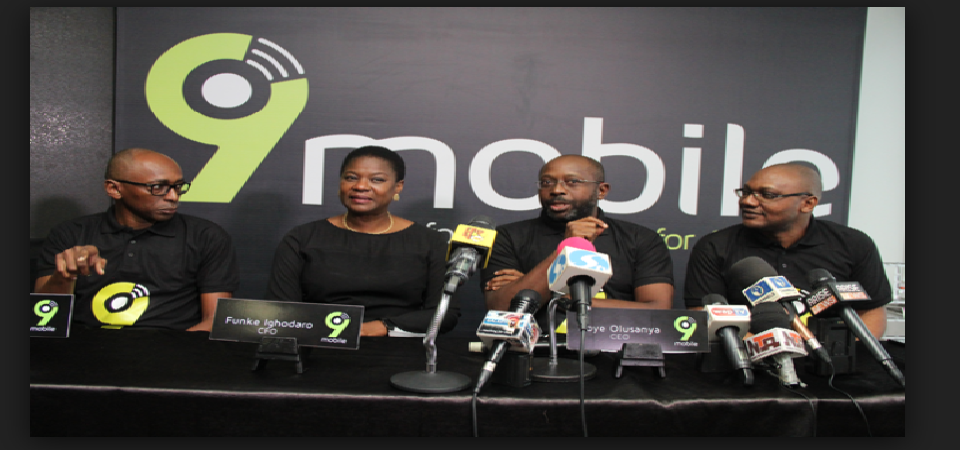
So, disruption is happening at really fast pace. One local company has seen its own share of that. 9Mobile, nee Etisalat Nigeria, has hired Barclays, a bank, to help it find new investors. The company is debt-laden and will need new capital to mount a serious challenge in the telecom market. It is #4 (with 14% market share) in Nigeria after MTN (47%), Glo (20%) and Airtel (19th).

Nigerian lenders have picked Barclays to try to find new investors for debt-laden 9mobile, two banking sources said on Thursday.

[…]

Etisalat Nigeria took out a $1.2 billion syndicated loan from a group of 13 local banks but struggled to make repayments this year due to a currency crisis and recession in Nigeria.

The Nigerian central bank intervened to save the company from collapse and prevent creditors from putting it into receivership, leading to a change in its board and management, as well as the new name 9mobile.

The crisis forced the telecoms company’s one-time parent Etisalat to terminate its management agreement with its Nigerian business and surrender its 45 percent stake to a trustee following the central bank intervention.

9mobile CEO Boye Olusanya has said he is focused on getting the telecoms company back on track to make a profit, while working on the paperwork to eventually raise new capital, adding the company was open to new investors.

The decision to hire Barclays makes sense. The Nigerian Stock Exchange does not have the liquidity to accommodate 9Mobile especially with 9Mobile shaky balance sheet at the moment. So, extremely skeptical investors even on profit-making technology companies will not be wowed to invest. Also, a big question remains on how a #4 operator can survive in Nigeria. It is nearly impossible to make profit as #4 in most telecom markets. Usually, you have two dominant players with most times a weak #3. Having #4 is a crowd that most forget.

I remain on my prediction that Glo will acquire 9Mobile provided that banks will massively write-off a huge part of the deal. It is only Glo that can make that deal happen because the regulator, NCC (Nigerian Communication Commission), will support it as a Nigerian company. It certainly will like to see Glo succeed. MTN is off the line because it has massive obligations to settle the Nigerian government over on fines for not registering SIM cards. So, over the next few years, MTN may not even be making profit as it will be paying the government for the fines. For Airtel, market data published in its home country (India) indicates that Nigeria is a very tough market for the operator. It may not have the appetite to put more capital in the nation. So, I return back to my prediction: 9Mobile will be acquired with massive discounts on its assets by likely Glo: it is always very hard to raise money with huge debts as #4 in any sector. To succeed, you have to offer major discounts which could be worse than selling.

In this videocast, I make a case why Globacom, the operator of the Glo brand in Nigeria, will acquire Etisalat Nigeria, in 2017. Etisalat Nigeria is in a very challenging position to pay back about $1.2 billion loan to a consortium of banks. In the current market dynamics, with deteriorating ARPU (average revenue per user), it will be extremely difficult for the telecom company to meet that obligation. Glo has liquidity, relatively, and is owned by a respected businessman (Mike Adenuga) who can raise any capital required to close a deal. Glo needs to close its subscriber gap with MTN which enjoys more than 20 million extra subscribers. You may ask – why not MTN, Airtel or AMCON? Answers here.

Prof. Umar Garba Danbatta of NCC, We Want UNIQUE Mobile Subscribers in Nigeria

2

According to the Nigerian Communications Commission (NCC), there are about 93 million mobile internet subscribers in Nigeria. Facebook records about 20 million users in Nigeria, and those users are largely unique by the nature of Facebook business.  Uber, despite spending huge amount of money and advertising across Nigeria, has 267,000 active riders in Nigeria. Last year, a report from the biggest investor in Konga showed that the ecommerce operator has less than 200,000 active customers.

So, the number NCC is putting out is totally uncorrelated with what companies are seeing. That is not NCC problem. Yes, NCC number is correct but what it is reporting has limited value. I have struggled to make sense of its numbers because it does not provide deeper insights when you work for clients. I want to know the unique numbers when all the subscribers from the networks are concatenated or combined, with duplication/triplication removed.

One way I have gone around its reporting is to use MTN as my basis (it has the largest subscriber base, around 58 million) and then add 10 million extra users. (Note that some users have multiple MTN numbers, so my estimate could be off.) With that, I have about 68 million unique mobile subscribers in Nigeria [See update below]. But that is my estimate. I want the real number so that we can have a good idea on what is happening in the ecosystem.

This is what I expect from NCC: begin to report the total number of UNIQUE users across the networks, for voice and mobile internet. In other words, besides what it does now which has been the tradition, it needs to use the biometrics to come up with the number of unique users. I have SIM cards from two of the networks. At the end of this exercise, NCC should see me as one unique user. This is an important market data that even the National Bureau of Statistics should strive to provide.

The Bank Verification Number (BVN) custodian publishes the number of unique bank accounts just as it also provides the total number of bank accounts in Nigeria. The unique number gives us a clear picture of the number of people with bank accounts despite all the duplications/triplications. The unique bank account per person has been the core of the CBN policy on financial inclusion. Looking at the number of total bank accounts and not the unique account per person, you may miss the mark. The total number of unique Nigerian bank customers is less than 30 million. But we have more than 70 million bank accounts. That shows why the unique number is important.

Yes, I do agree that populating all the data from the networks and sorting them to come up with unique subscriber number will be hard. Sure, it will be hard, and that is why it needs to be done. What we have now is the easy one, but it fails the test of value. We need unique numbers and Prof Umar Garba Danbatta can help here.

Comment from LinkedIn Users

My use of 58 million for MTN may not even be ideal since that 58 million covers the whole subscriber base (data and voice). Some pros in the game actually would prefer we use 32.5 million which is MTN’s total internet (data) subscriber number. That data number is more relevant to this piece for MTN. I do agree with them.

Yea, distinction is the ~50M range is MTN overall total, 32.5M is internet (data) service only. Your reference article is pointing to the internet (data) numbers, which is the service type we care about in the context of this article. NCC publishes both total subs and internet data subs in different headings under their Industry Statistics.

Now if MTN has 32.5 million, it means the unique subscriber base for mobile will not be as much as I had estimated. You may be looking at 45 million: ” This is a good question. If we use GSMA surveys of SIM per sub ratio, it suggests about 50% of NCC number would be unique subs”. That quote is from the same pro who provided further insights on this via LinkedIn.

Key Steps in Building Great Startups in Africa

6

There are many phases involved when creating startups. In this piece, I focus on what it takes to build startups in Africa. Though we have challenges with our infrastructure and legal ecosystems, the fact remains that people are building great startups in our continent. If you spend time in Nairobi, Cape Town and Lagos, you will observe that founders are turning the challenges into opportunities.

In my journey as an entrepreneur, here are steps to consider as you begin your exploration and excursion into the future of making over just talking (Update: I have added some examples as requested in the comment section using Zenvus, my agtech firm. as an illustration):

  • Fix a Friction: Frictions exist in markets and because of those frictions we have the need for companies. Those frictions are the market needs which companies are created to solve and fix. As an entrepreneur, your main job is to find frictions which are prevalent in markets and which affect many people and companies. For example, in Nigeria, we have a friction in the inadequacy of electricity. It affects many people and companies and certainly something that needs to be fixed.
    • A friction could be providing precision agriculture to African farmers, making it possible for farming to become science, with lesser guesswork involved. You want to fix that guesswork which has affected their capacities to improve yield over the years.
  • Map a Solution: You have identified the friction. Next is finding a clever way to fix it. That means you need to provide a solution in the marketplace. How smart this solution is will determine if you would be successful in this venture. If you are very ingenious, you may even change the basis of competition. When you do that, you have disrupted the incumbents.
    • The solution is to provide a data-based decision system that uses data from farms to help farmers make decisions, at scale. That solution has to be affordable and also usable by spectrum of farmers with different level of capabilities on technology. So, you need a business model that will provide capacity to the farmers.
  • Raise Money: You need to have money to execute any idea. The nature of the problem you are trying to solve will determine where you will raise money. But the key is that you need to raise. It could be from families, friends or even from a venture capitalist.
    • Raise money from family, friends or even international organizations. In the Zenvus case, USAID (United States Agency for International Development)  and Western Union Foundation funded it. A startup can raise capital from an Africa-focused VC like HartNamtemah.
  • Build Capabilities: Once you have identified the friction and the solution, the next phase is to develop or acquire capabilities in the specific area to implement the solution. In other words, you want to solve the problem and you need to have the talent and skills to solve the problem. Sometimes, you already have the capabilities. Where you do not have the capabilities, you can hire people and build a team to fix that problem.
    • We have a team led by me. I have built capabilities in electronics, AI and modeling. I brought in guys with skills in crop science, agronomy etc to build the business.
  • Begin Small for MVP: You cannot build completely whatever you have conceived before you can launch your business. You need to have a minimum viable product (MVP). That means something good enough that markets will understand that you are ready to fix that friction. It may not be perfect, but it must add value to users in the process of fixing the friction. Just note that if Google founders have waited to have the Google they have today, they may never be where they are today. Yes, building a business is a journey, but you must begin that journey to have any chance of success.
    • We unveiled our first product and it was awesome. We learnt some new things and updated our software to deal with larger farmers and cooperatives. Those cooperatives were not part of our initial business strategy. Today, we focus on cooperatives and governments to have the volume to work with farmers.
  • Test, Iterate and Improve: As you launch that MVP, you need to ascertain how the market is responding. It may be that your old hypothesis has not aligned with the friction in the market. You need to iterate and improve your strategy based on what you are seeing from the market. The use of a product is whatever customers use it for. That must be clear in your mind because it is possible that customers may even push you to pivot to an entirely different angle.
    • We continue to improve our AI, adding more crops and improving their growth engines. As we learn more, we improve and farmers send feedback, we update.
  • Begin Growth Phase: Immediately the pivot has happened, and traction has emerged, the next phase is to grow the business. In other words, you have seen what is working. No argument, scale that thing that is working. This is where having a great scalable advantage becomes critical. That growth can take many phases but the key thing is that you are adding customers and/or building revenue. Yes, in some web businesses, the focus may be just adding users in order to enjoy the benefits described in the invertibility construct.
    • We have since started growth phase by working largely with cooperatives and governments, having validated our hypothesis. With the volume such entities bring, we can provide better support to customers, at scale.
  • Continue to Innovate: Building startups is a race. It is a continuum. You never finish building and that is the main lesson. As you grow, you need to keep innovating. That is one way you can keep your customers.
    • Zenvus is unveiling Zenvus Genius to help people use mobile devices to ascertain if baby food, drugs etc are adulterated. We want to ensure the food chain is safe, and this device is part of the innovation pipeline that will keep Zenvus on top of its category in Africa.

All Together

The phases involved in building startups are not linear. Nevertheless, you can see key elements in what I have noted above when you speak with founders and entrepreneurs.  The most important phase is identifying a good friction to fix.  While it may be an idea to prevent the sun from shining, you may be out of luck finding many customers to buy that product even if you have a novel way of doing that. So, take time to find an exciting friction to fix and pursue it. The good news is that Africa has many opportunities, from agriculture to energy. When you have a good one to work upon, your moment of glory could come.

Updated: This piece has been updated. A reader asked us to provide examples. I just used a case from my firm.

Beautiful Nigerians, They Just Want A Good Working Country

0

Honestly, I am thankful for the efforts our fellow citizens have put by sending suggestions and contributions to assist my planned presentation to a Nigerian Senate Committee. Professors, bankers, doctors, students, engineers and indeed professionals from across all key industrial sectors have written publicly and privately to assist. On LinkedIn, the contributions came from all parts of the world: UK, U.S., Australia and our home. Simply, our people want a better nation and they are ready to offer whatever it takes to make that happen. I just received a 15-page tome on how to fix Nigeria.

We are Nigerians, we are great people and I can see the passion and the energy in our people. If people could make this time to offer these ideas for the good of the nation, I think it is high time our leaders did the right thing. Indeed, Nigerians can fix this country because they truly love Nigeria.

My opinion has always been this: If government thinks that it has the right policy but no one is investing, it means the policy is broken. Nigeria cannot have all the opportunities and yet no one is coming to make money unlocking them. There is opportunity in energy but no one is providing electricity. There is opportunity in clean water but no one is providing clean water. You cannot tell me that you have the right policy and yet markets are not after your opportunities.

My experience serving in a committee in the United States National Science Foundation taught me something: when markets shun opportunities, it means the policies are not market-friendly. Nigeria does not have many market-friendly policies and that is why we have many ideas, but no products and services to serve our citizens.

Yet, I must acknowledge that government has gotten many things right: we got the BVN (Bank Verification Number) with the banking community right. We can have such home runs across many industrial sectors. This country needs to work, for everyone.

I believe in this nation. Nigeria made me. I enjoyed highly subsidized tertiary education in Federal University of Technology Owerri. That is a something I continue cherish.  Though we could be very difficult to deal with as Nigerians, but generally we love our nation.

A repeat of the credit and liquidity squeeze, which rocked the banking sector in the wake of the takeoff of Treasury Single Account (TSA), may be in the offing if the Federal Government succeeds to acquire private accounts operated without Biometric Verification Number (BVN) numbers.

The Federal High Court, Abuja, penultimate week granted the Federal Government’s prayers to have thousands of account in commercial bank, that are still without BVN forfeited if owners do not come forward to claim them in two weeks.

[…]

According to industry source, no less than N600b, and an alleged undisclosed N400b by “smarter banks,” mostly belonging to politically exposed persons, may be sterilsied in the exercise, if followed duly and diligently by authorities.


You just wonder why people cannot make time to visit their banks and add their BVNs. It is very strange that about N1 trillion may be unassociated with any person in Nigeria today. That is about 10% of the total market capital of the Nigerian Stock Exchange.  In the past, Nigeria allowed people to operate bank accounts without identities, but today the government has fixed the loophole. We just need to work and do the right thing. That is how we will continue to be a great nation and good people.

To all that contributed and continue to send ideas, Thank You. We would do justice to it.