DD
MM
YYYY

PAGES

DD
MM
YYYY

spot_img

PAGES

Home Blog Page 7271

“There is no tech ecosystem in Nigeria” Emeka Okoye Repeats

0

In Data Science Nigeria today, Emeka Okoye, one of the panelists clarified an earlier comment he made. He had noted in the past that Nigeria does not have any technology ecosystem. Part of his thesis was that Nigeria was simply building applications, instead of instituting technology pillars. He made a case that Nigeria has no culture of R&D and broad innovation enablers, and without those elements, it would be hard for us to develop an indigenous technology capability.

He had listed the following as part of the components:

Someone in the audience challenged Emeka, pointing out that Nigeria may not necessarily need to invest in R&D for us to advance in our technology sector. The person did note that Nigeria can just cut and paste, relying on the works of others, as we develop our technology capabilities. Emeka replied that building on top of other technology platforms will not necessarily help the nation. His point was largely that we cannot have the capacity to evolve our technology ecosystem if we do not invest in the fundamental elements that make technology happen.

In other words, any limitation imposed by Silicon Valley owing to how it sees global problems will bound our abilities to create solutions that address our needs. That we have Android to make apps does not mean that we are technically advancing the nexus of technology creation. In his opinion, we are only accelerating the vision of Google at consumerism phase.

Emeka, the founder of Cymantics, a startup working in the domains of semantic web, AI, and analytics, later explained to me today in a private conversation that he would expect Nigeria to go beyond computer science to work on the development of mathematics, physics and broad technical education. In his view, we cannot sacrifice all these fundamental elements of technology with fixation on coding. He wants our universities to lead the charge for that redesign into a future where Nigeria will have real technology ecosystems, over ones structured to accelerate mere technology consumerism.

In some ways, I do agree with Emeka. There are many technology elements besides our fixation with IT and computer science. Yet, I do not really think we need to build everything from scratch. That may not be necessary. I have made similar points in a different way in the past.

Ndubuisi Ekekwe, a professor of engineering at Babcock University in Nigeria, speaking at the Tech4Africa conference in South Africa, said the continent has the ability to climb the technology pyramid, and be the creators of technology, not just the consumers. “Africa has to have a strategy whereby we do not just consume technology. We have to figure out a way to create technology. We can get there by re-designing our educational model and then providing an intellectual property framework so that people can actually make investment risks in Africa, but knowing that their investment is well protected by the law,” said Ekekwe. Ekekwe discussed different technology sectors in Africa, and urged researchers to look beyond information and communications technology. Nanotechnology, he said, can create systems that are very energy efficient, as well as provide another engine for Africans to build upon, innovate, and invent a new future. But, he added, “Africa has a very marginal participation in Nano technology. It’s not just Nano technology – our agricultural technology is dead, our mining technology is dead and our geo-physical technology is dead.

Selected Comments from LinkedIn on this Feed

  • Ndubuisi Ekekwe…this is surely a promising read and I will be deep diving into it over the weekend. But for your synopsis above, here’s my one thought. Both sides of the argument is right to some extent. Emeka is right for the long term, while the audience person is right for the short to medium term. In supporr of Emeka though. I posit that Nigeria missed opportunities in the technology development space in the short to medium term, therefore it must now look to the long term lest it misses another opportunity. It was countries like India and China that took advantage of short to medium term opportunities in technology. By demonstrating a can-do attitude and certain work ethic, they convinced the world that they could do tech much cheaper. Even though not better but at least those companies would have a chance to scale their core operations and meet market demands in the medium term, and clean up any tech messes much later. It worked for India and China. Nigeria couldn’t do it. Today, India and China has moved on to the long term with resources and capabilities they built exploiting opportunities in the short and medium term. It’s codenamed China 2.0 and India Rising.
  • Well, this sounds more like an academic statement than what reality tells us in Nigeria’s case. The subjects mentioned are basic sciences, and we have been doing them for ages; unfortunately they cannot or have not been able to address our challenges. From Number Base System to Trigonometry and Geometry, and then further mathematics of Partial Fraction and co, up to engineering mathematics of Laplace, Fourier and Partial Differentiation. Then in Physics, from Weighing Systems and SI Units to Energy and down to Wave Particles and Duality of Matter; we have been doing them. What are we going to do differently in these subjects now? Yes, we do not have a clearly defined tech ecosystem, but we have leveraged on existing technologies to build applications that have helped to reduce frictions and provide solutions in several fields. Silicon Valley is what it is, and you cannot have a replica of it elsewhere. You can only look at where there are gaps and try to see how you adapt the existing technologies to fill those gaps. Expecting every country to develop a tech ecosystem from scratch may never work, because you don’t earn much credit for reinventing the wheels. Knowledge rules, use what is available to deconstruct and reconstruct.
  • Firstly I doubt if Nigeria will catch up with others if we focus our efforts on going back to build technology pillars. We can have a strategy of “adopt, extend and expand” of the incumbent and emerging technology substrates. The extend part will need a good grasp of the fundamentals which universities and research can help with. And we will do that in a way that speaks to our needs! By expand, I mean there must be a clear path to industrialise and commoditise. China produces a lot of tech for its market today; Apple and Facebook aren’t No 1 there and Google is not even allowed there. Where and how did they start? My second point touches on what one of the earlier commenters wrote. Mathematics? Physics?… I’m not an educator but the fundamental principles in these areas don’t change that often. I love Calculus dearly and I appreciate how Statistics is an enabler of machine learning today. Maybe I can help Emeka make the point here: we need to uplift “Applied subjects and courses”. It’s a shift, in my view, from pure Tech and Engineering. Quickly transition students from the basic and fundamentals principles to real life applications. This puts them in a good place to “adopt, extend and expand”
  • …most of us are aligned that there is not a fundamental organic technology ecosystem in Nigeria and we’re at the ‘fringes’. The ‘hype’ with computer science/application development is led by developed economies and we’ve caught the bug. But we are not in control so before it plateaus, we can take a step back to analyse how our education system translates applied sciences into industry, that ‘gap’ is wide as our academic curriculum/teaching methods have not evolved. Hence, the case to build new R&D led institutions (#AFRIT) or at the least a new curriculum that serves to deliver the fundamental organic technology framework to enable localisation of applications/new technologies etc.
  • I love the conversation here. Both points are valid. I would have to agree with Justin though. Without growing our technology ecosystem, we will have stunted growth in the existing applications we are leveraging. There are good developers and coding is hip these days, but without the technological base (Applied Sciences, Math), we will plateau very soon and the innovation that is currently gathering momentum in the Nigerian Techspace will become stunted. It is necessary we build up on them because they are truly the only way we can predict our growth. It is the reason why modern day innovators like Elon Musk, Bill Gates, and Mark Zuckerberg can delve into different industry spheres. It’s because they understand the foundations of applied sciences. It’s more of a long-term vs Short term result.

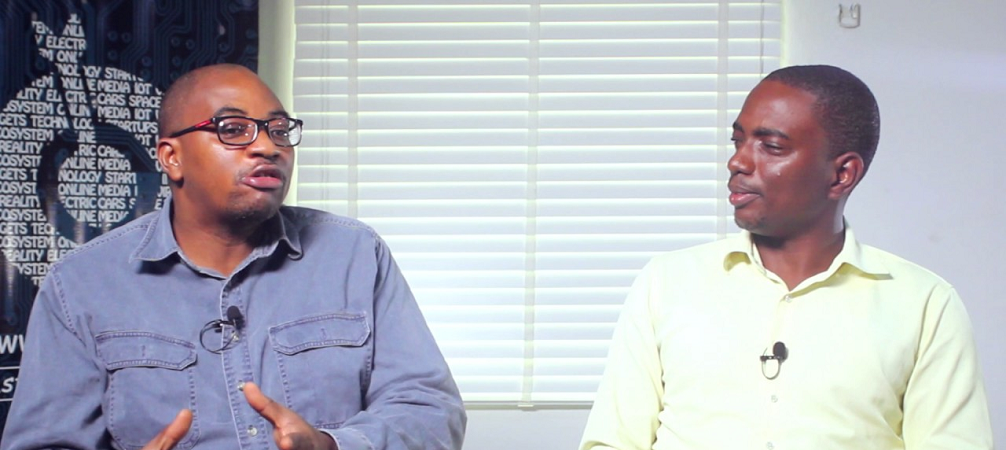
(Photo credit: techpoint. Emeka,left, with a techpoint staff)
Overcoming Founder’s Comparative Inferiority

0

We do get a lot of emails through our works in the non-profit African Institution of Technology. Also, I get questions regularly via LinkedIn from founders and entrepreneurs. But recently, I have noticed a pattern from our young African entrepreneurs especially the female founders: they tend to think that their works are inferior. That is a big problem which has to be addressed.

Why it is desirable to benchmark, in my experience, the best way to achieve any greater state is to have self-confidence. There is a huge difference between pursuing perfection and thinking that you cannot even compete. Sending us a link and immediately pointing out a Silicon Valley company that does what you are trying to do better will not really help your personal drive. While you can learn from the Silicon Valley company, your motivation must come with understanding that you can adapt the idea to meet the needs of a local market.

I call this problem Comparative Inferiority where people are always comparing themselves with others and always putting themselves at a lower barometer. You think you went to the wrong school, you worked in the wrong company, and came from the wrong country. Get a break! The biggest asset in your company is not your history: it is you. And the future is unbounded and unconstrained. The implication is that despite any past, you can achieve what you have dreamt for your company. But that can only happen if you believe. Beginning with the mindset of being inferior will put you in a position to lose even before the game starts. Confidence is not an absence of weakness. It is simply a testament that you have made progress despite the obvious fact that you have more works ahead.

In this video, I address that Comparative Inferiority. My thesis is that people have to be confident in any state they are, even as they pursue a higher state. You have already achieved something by starting something. Your work is not inferior but it can be improved upon. You need to find a way to communicate confidence and put brilliance in your work even when you are not satisfied of its current state, knowing that you need to continue to improve.

If you know the edge people you are comparing yourself have, you will certainly appreciate how far you have come. They need to inspire you, motive you but you must not be intimidated by them. I want legends to inspire you. But you must not be intimated by them.

Comment on LinkedIn. A LinkedIn user posted this on this post feed. It offers deep insights

Guys…let’s not pretend you don’t know what this post is going to be about. Anyone who has worked in, or run,a small business has felt the urgly sting of inferiority complex to their largest rivals at some point. Sure, having your own business is liberating and rewarding and a life changing. But sometimes it would be nice to get corporate card back and walk into a new business opportunity knowing without a doubt that everyone in the room had already heard of your company.

Of course, that’s an overly Rosy picture of what it is to work for a large company – but you get the picture. The thing is, when it comes to this infiriority complex that many small business owners and employee might feel, it typically only comes down to three things: Perceived lack of size, Perceived lack of experience, and perceived lack of resources. The irony of each of these is that what is holding you back from confidence in your own business in each area is probably the same thing that is making that issue a barrier for your business in the first place.

The good news about that is if you can Address this question for your potential customers, you can likely solve it for yourself and your staff as well. Let’s tackle each of them one by one….?

Five Phases Required To Build High Performing African Companies

0

Bottomline: In this piece, I present five phases which are necessary to build high performing technology-enabled companies in Africa. Indeed, the thesis goes beyond technology but to any specific industrial sector. I also explain that one of the key elements of high performing companies is arriving in the market with new ways of doing things. […]

This post is only available to members.

This Dangote Interview Confirms My Writing On His Business Philosophy

3

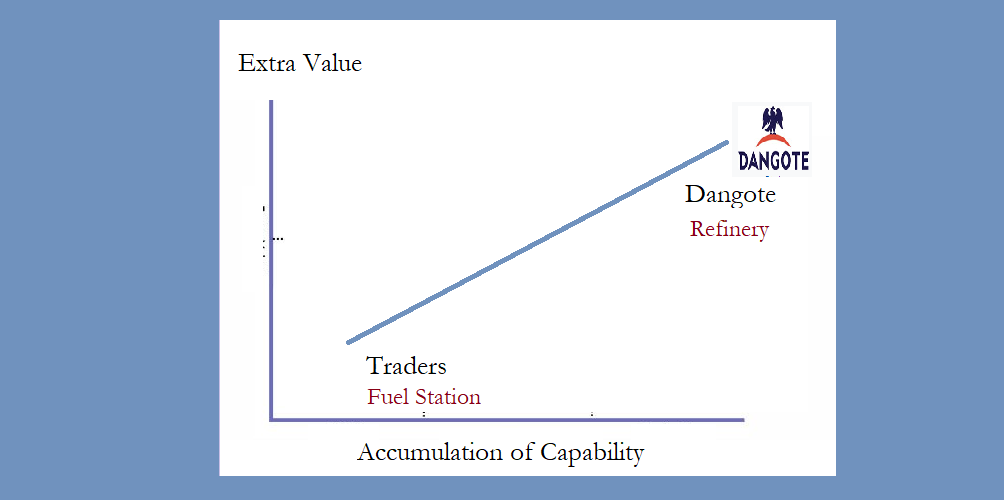
In these videos, I explain the Accumulation of Capability Construct and how makers of Indomie Noodles used the same  strategy which Aliko Dangote uses in Africa to defeat Dangote Group in the noodle business. I did make a case that anyone can use the same technique to execute a winning strategy in business. The key is operating at the upstream level of business. Read this interview from APO newswrie: Dangote essentially validates what I had noted on his business philosophy.

At the Financial Times’ 4th annual Africa Summit at Claridges in London, editor in chief Lionel Barber conducted an extraordinarily candid public conversation with Nigerian Aliko Dangote, Africa’s most successful business leader, …

Mastering detailed production statistics and highly-compelling demographics on promising sectors of the African economy, Dangote outlined the key to his success: self-sufficiency and backward integration, a manufacturing strategy that extracts value from entire processes. “We are not going to import anything any longer,” he said. “In Nigeria we are learning how to produce the entire value chain.” Once a heavy importer of fertilizer, Nigeria is now gearing up to produce 3M tonnes of locally manufactured fertilizer, transforming the nation into one of the largest fertilizer exporters in Africa.

In 2007 Nigeria was the second largest importer of cement after the US, Dangote reminded the audience of business elites. “Today, we have not only satisfied domestic needs; we have become a leading exporter of 6-7M tonnes of cement,” he added.

Diversifying into agriculture, Dangote has eyes on the dairy industry motivated by the fact that “98% of all milk consumed in Nigeria is imported.” Same for rice.  Dangote Group has invested heavily in rice production by investing in local farmers and then offering to buy back the 1M tonnes at open market prices that they are growing. “Soon we will be able to feed not only Nigeria but the entire 320M large West African market.”

Dangote’s business accumen was on rare exhibition as FT editor Lionel Barber himself seemed impressed with the business mogul’s quick familiarity with the nuts and bolts of his businesses. “Are we going to continue to import everything?” Dangote asked. “Freight rates are now cheap but they will go up soon. A population of over 200M cannot continue to import basic needs on a daily basis,” he answered himself.

By 2100 Dangote stated Africa will represent 49% of the world’s population, up from 30% today. “If you don’t think big we won’t grow at all,” he said. “In Africa you have to play long-term.”

Aside from Nigeria, which African nations do you think are good growth opportunities? Barber asked Dangote. “Aside from Nigeria?” the business leader repeated and smiled. “I’d have to pick Nigeria. I am a big fan of Nigeria. We are only using 8% of our land.”

Simply, Dangote is attacking all the elemental production phases, looking for values. By the time he has improved and perfected them, removing all possible wastes and inefficiencies, no new player can find further avenues to compete. By going to rice farming, he makes sure that he can control the value chain and improve the whole production systems of rice. He will improve the rice farming business and remove any inefficiency therein. Once done, a competitor cannot enter the market through that angle.

Dufil Prima Foods, the maker of Indomie, built schools, invested in farming, produced their electricity, etc making it nearly impossible for any further improvement to have material impact on noodle pricing. Through the efficiency they have in the system, there is nothing left for Dangote Group to improve upon. Unlike in the past, Dangote Group could have reduced cost through electricity generation, raw material production, distribution etc. But Dufil had done all those things. In other words, when Dangote Group joined the noodles business, it was essentially doing what makers of Indomie were already doing.

But Dufil had more scale with a known brand. It has all the advantages and there was nothing Dangote Group could do. Over time, Dangote Noodles sold to Dufil.


Book Launch Date Postponed to Oct 30th

0

Good People.

We have shifted the date for the launch of the Cybersecurity Africa book to Oct 30th. One of the technical reviewers could not finish on time. He is a Chief Information Security Officer in an African bank and certainly has his main priorities. The other reviewers came on time. So, we have given the CiSO more time, and he is certain he would round up on time for us to launch by Oct 30, 2017.

While you wait, you can read your Africa’s Sankofa Innovation and our exclusive contents.

Nd