DD
MM
YYYY

PAGES

DD
MM
YYYY

spot_img

PAGES

Home Blog Page 7273

Apple’s Troubling Sainthood

0

Qualcomm, a global chip maker, has filed a lawsuit in China against Apple. It wants China to ban the production and sale of iPhone in China. Without China’s assembly lines, there will not be any iPhone. So, technically, if China agrees with Qualcomm, iPhone will be off market.

Bloomberg News reported on Saturday that Qualcomm had filed a lawsuit in Beijing seeking a ban on the assembly and sale of iPhones in China — a vital Apple manufacturing base and sales market.

The two California companies are fighting over Apple’s claims that Qualcomm is abusing its market power over certain mobile chipsets in order to demand unfair royalties

The fashion company named Apple (get the joke, we like fashion companies) which largely scratches core engineering is living on crises it manufactured. Apple thinks that Qualcomm is greedy by asking smartphone companies to pay a percentage of the product value as royalty for using its mobile chipsets. Apple had wanted a fixed price for the chipsets. By asking for a fixed price, it will be possible for Apple to buy a Qualcomm chipset at say $18 and create a luxury product it sells for $1,000. Qualcomm maintains that it wants a percentage and that means if Apple jacks up its price, Qualcomm makes more money since the percentage remains the same.

Apple pivots into a fashion company, in the likes of Louis Vuitton, with the launch of iPhone X today. It costs $999, heavy on fashion elements, but hardly moves the technology trajectory. But that does not matter, because it is Apple. The world will cover it for free, and Apple will enjoy a great earned media. From CNN to NBC to Nigeria’s AIT, the message will be the same: there is a new product from Apple.

In the semiconductor industry, what Qualcomm is asking is new.  Usually, partners pay for fixed prices of components. The prices are usually discounted for bulk buyers. Apple buys many chips from Samsung and pays at fixed prices.

Apple has scale and as the world’s most valuable company with hundreds of billions of dollars in cash reserves, it can bully anyone it wants. It wants Qualcomm to fade by asking manufacturing partners to even stop paying anything to Qualcomm. Its argument was that Qualcomm pricing was not fair.

When a fashion company tells an engineering company that how it prices its products is not fair, you will agree with me that there is a problem. A fashion company can use materials valued at $300 and make a product it sells for $1,000 to the people. But for it, that is fine: the people want the best phone ever, a luxury. Simply, Apple wants all the margins for itself and does not care if Qualcomm has a right to a new business model.

Qualcomm has maintained that its pricing is fair and Apple knew about it before choosing its chipset.  Yes, Apple has been paying as agreed for years to Qualcomm. Apple knows that only one company in the world can provide the 4G chipsets it needs. Intel Corp and others are just getting into the party and no one comes close to the quality of Qualcomm’s mobile chipsets. For 5G, the gap is even more: Qualcomm has a decade advantage.  (It has been reported that Apple has been hiring many engineers from Qualcomm to help build its own internal chipset.)

Apple has hired Esin Terzioglu, a vice president of engineering at mobile chipmaker Qualcomm.

Terzioglu had worked at Qualcomm since 2009, where he had led the company’s central engineering organization and was responsible for directing the company’s technology roadmap. Before Qualcomm, he was the cofounder, CTO and CFO of Novelics, a provider of memory intellectual property that was acquired by Mentor Graphics

[…]

Apple and Qualcomm are also currently locked in a major legal battle over how Qualcomm licenses its phone technology. In January, Apple filed a lawsuit against Qualcomm for alleged monopolistic tactics and overcharging for its patents. Some analysts speculate the lawsuit comes as Apple may be working on its own cellular chip — an expensive and complicated piece of technology. Apple has filed a number of patents in this area.

Apple game plan is to weaken Qualcomm. As those engineers see their stock options evaporate, they will start moving to Apple. As this happens, the anti-trust busters will continue to think that they are dealing with St. Apple who is fighting a just fight. They ought to allow market forces to settle this. Apple does not need government help on how much it pays for its components. It is the richest company in the world. Its crusade to sainthood is troubling.

Over the last few months, Apple has used its power to push anti-trust campaigns against Qualcomm. Qualcomm has paid severely for that as its market capitalization continues to fall.  Apple has succeeded by getting countries like South Korea and U.S. to believe that any firm has a right to determine for others how to price their products. Apple has all the rights to go and develop its own chipsets or buy from others based on the terms they want.

Sure, I do not really commend unfair market practices but in this case I do support Qualcomm. Apple wants to play the win-lose game they always do to semiconductor companies where you buy components for pennies and make products you sell at huge margins. Qualcomm is pioneering a new model where the value of the component is tied to the final price of the product. I do agree that it is not only Qualcomm products that power iPhone, but its model can be copied by other chip makers to their advantages. So, everyone gets a piece of the price hike by Apple as it turns iPhone into a fashion product.

To Qualcomm, the move in China will not work. China will never stop the production of iPhone because it will mean it will fire tens of thousands of people that work on the assembly lines and material sourcing to produce iPhone. The lawsuit is a waste of time. China will not take jobs away from its citizens to please a foreign company over another foreign company. Qualcomm needs to try another plan to get Apple to begin to pay the royalties. The suit at the World Intellectual Property Organization makes more sense than this Chinese one.  If WIPO can ban iPhone, Apple will come back to pay Qualcomm and there is a possibility that will happen.
Dangote Conglomerate Taxes

3

Dangote Group is one of the most successful companies in Africa. It has the operational quality and scale to compete and win markets. It is an industrialized conglomerate. And it has one feature every major global conglomerate has: it taxes the economy. I will explain three ways conglomerates tax economies. It is a good thing when you have many of such companies, because at the end, the net effects are always positive.

Conglomerate Tax: Nations

Dangote wants to invest excess of $1 billion in rice farming. It is moving heavily into agriculture and agro-processing deploying its management philosophy which is to vertically integrate any business. So, the vision begins in farms all the way to food processing thereby giving it the opportunity to extract any possible efficiency along the chains. That helps it to set competitive prices, and with its scale, that creates a moat for any competitor to overcome. When it perfects all the value chains, you have nothing left to improve and that means, you cannot find an opening to enter. The rice farming begins from Kogi State, as noted in a newswire Tekedia received.

A multi-million Naira Youth Farming Initiative that will engage teeming unemployed Nigerian graduates in rice farming has been launched by the Dangote Rice Limited in Kogi State. This is even as the Company prepares to hit the market with One million metric tons of Dangote rice in 2018.

The Dangote Youth Rice Farm project, mainly an out-grower scheme for youths only was flagged off at the Lower Niger River Basin Authority, Kampe, Ejiba in Yagba West local government area of the state where youth have embarked on rice cultivation over 100 hectares of land. The rice farm project, which was preceded by a special training for the youth farmers on the dynamics of the rice farming, will see the youths cultivating the rice paddy on a 100 hectares of land, which will then be bought over by the company for processing.

Under the scheme, the Dangote Rice Company provides the seedling, anti-pest-chemicals, and fertilizers while the Basing Authority provided the land for the young farmers.

The Kogi state scheme will be launched in more states soon. As noted in the press release, the Basing Authority will provide the land. That means Dangote Group will not have to pay for it. There is nothing wrong with that. He is investing to provide food security, provide youth employment and also improve the communities. That is what conglomerates do because they are the best creators of jobs, at least in short terms. While the state can plan to sell the land and invest the proceeds in startups, it may take years before those startups can generate the kind of employment and economic activity a conglomerate like Dangote can deliver in a year. For having that capacity, conglomerates tax nations. In other words, you have to subsidize their businesses through government supports for them to help you fix your pain points like unemployment as a government. They operate at the upstream level where the pain points are massive in the operations of governments. Their reward is Conglomerate Tax: the subsidization of their business operations due to their capabilities to help support government initiatives at scale.

Please note that Conglomerate Tax  is a global thing. U.S. government may waive taxes for GE but will not listen to Facebook because GE is a conglomerate. They are treated differently because they technically build nations. Government may have the money but may also need a special plastic for a new warplane. There are few companies that can deliver such products. So, a government may engage a company like GE to research and develop the plastic. The company can ask for concessions to take that risk. Those concessions are taxes to nations since the nations must still buy the plastics if the conglomerate succeeds.

Conglomerate Tax: Businesses

Another way conglomerates tax the economy is through their capacities to exert influence on practically any part of the economy. If you are building a major house, the possibility is that you may be using Dangote Cement. Largely, the conglomerate taxes the construction industry which as they scale and expand, Dangote Cement takes a cut in whatever they are doing because it is the industry-near monopoly in cement. You can also be in bakery, requiring flour from Dangote Flour; as your business empire expands, there is a tax from the industry-leader on your business. There is nothing wrong with that. That is how conglomerates operate. They make critical infrastructure investments which help to unlock values and opportunities in markets. The reward is that they become centrally critical that everyone depends on them to operate.  The implication is that they tax those sectors usually operating at the downstream level of the business.

Companies must develop and accumulate capabilities in order to compete in the market place. In this video, I explain how any firm can do that and why accumulating capability is very strategic. From Google to Dangote Group, when companies accumulate capabilities, they see themselves operating in the segments of markets with higher value (usually upstream) compared with where their competitors operate (usually downstream). Dangote Group can deploy massive assets and technical know-how in cement production, making it harder for new entrants and rivals

Conglomerate Intra-Tax

Interestingly, conglomerates tax themselves also. But that is the brilliance of their business models. Dangote Fertilizer will begin operations next year. Its biggest customer will likely be Dangote Rice which will quickly stop buying fertilizer from other sources to buy in-house. The implication is that Dangote Fertilizer will be a customer to Dangote Rice, removing any market risk associated with external demand. Simply, even if there are no other buyers, Dangote Rice is a ready buyer for Dangote Fertilizer. And as Dangote Rice expands across Africa, Dangote Fertilizer will mimic its trajectory. It can be making 10-20% margin on that business: call it the tax on Dangote Rice.

All Together

For all the talks of startups, the reality is that nations need conglomerates because their sizes help them make critical investments. For example, Dangote Refinery can help fix some challenges in the transportation sector through efficient supply of fuel in the economy. When you have many of them, your economy does better. That means, you have companies with capacities to tackle serious market challenges. Yes, as conglomerates do so, they get huge rewards: they become tax collectors on the economy.

My Talk At Elumelu Forum Will Be Posted Here Tomorrow

0

Good People,

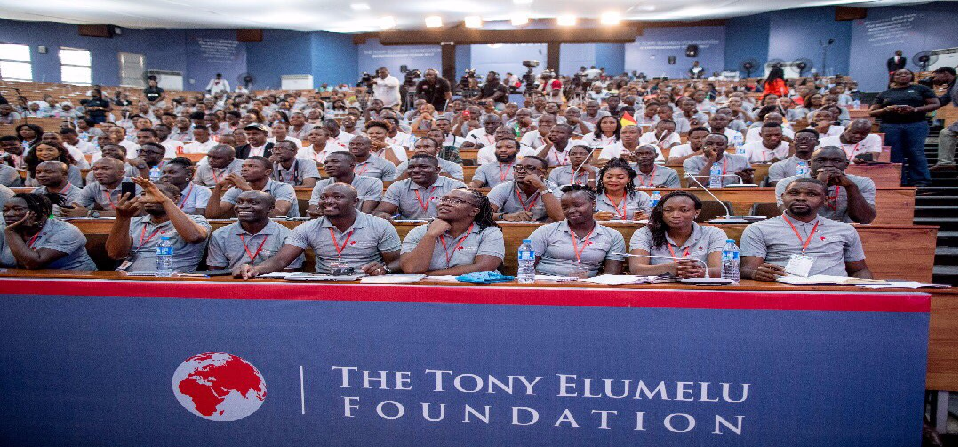
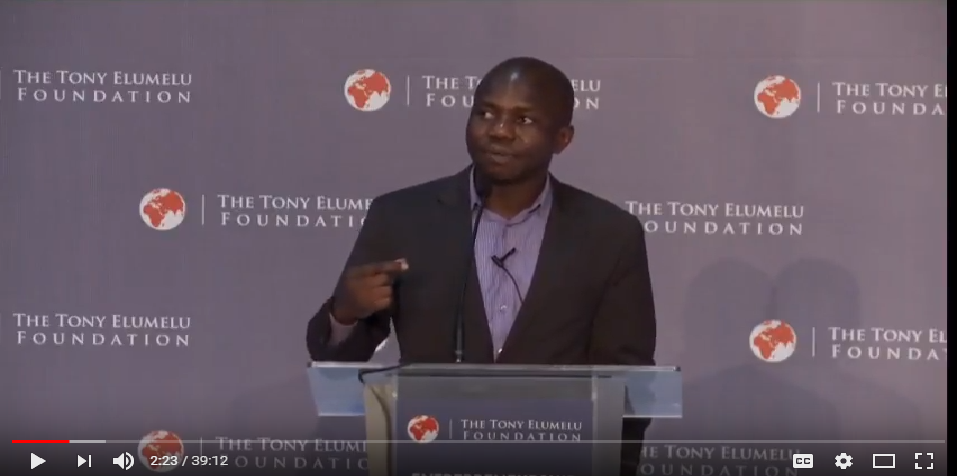
I will share my talk at the Tony Elumelu Foundation Entrepreneurship Forum here tomorrow. We have it and the exact section where I spoke. But network has not allowed me to upload to YouTube. My team will do that when they resume for business tomorrow.

Meanwhile, to our subscribers, we have added SSL on Tekedia to protect your email address. That is the only thing along with your name that we keep. I treasure your confidence in us and asked my team to ensure that private data is safe with us.

Thanks

Nd

InsureTech Business Model for Africa

2

I have written extensively on the need for the Nigerian insurance industry to use technology to redesign the industry. Everyone knows that technology brings productivity gains and our banks have done great works in the use of technology to redesign their businesses. People used to complain about our banks with the legendary comedian Lomaji Ugorji […]

To access this post, you must purchase Tekedia Mini-MBA (Feb 9 – May 2, 2026) | $170 or N120,000.