It is big news. Goldman Sachs is possibly joining the list of believers in the cryptocurrency called Bitcoin and others like it. This may be the moment the adherents of Bitcoin are waiting for. This also suggests that regulators may be reading the signs poorly.
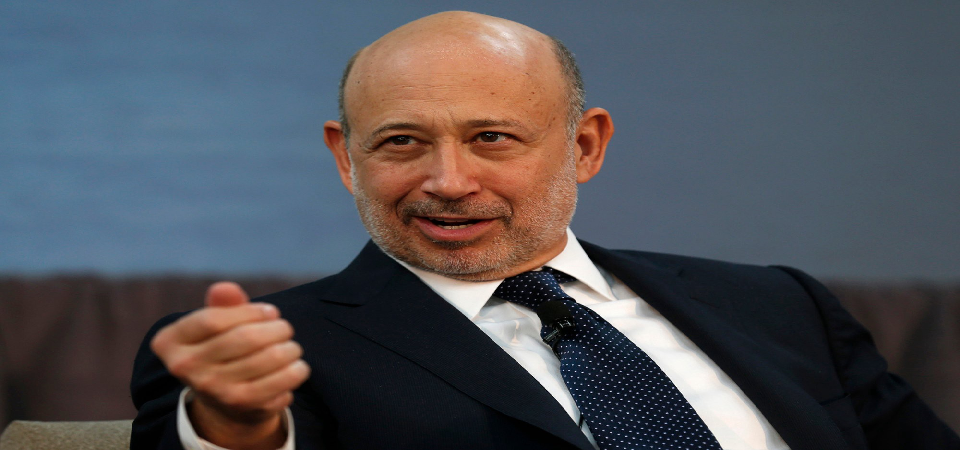
Goldman Sachs Group Inc. is weighing a new trading operation dedicated to bitcoin and other digital currencies, the first blue-chip Wall Street firm preparing to deal directly in this burgeoning yet controversial market, according to people familiar with the matter.
Goldman’s effort is in its early stages and may not proceed, the people said. The firm’s interest, though, could boost bitcoin’s standing among investors and fuel the debate around digital currencies, which were initially viewed as havens for illicit activity…
The mere thought that the best of the breeds can have this type of conversations with its clients is an indication on the durability of cryptocurrency. I do believe that digital currency is here to stay. It will not disappear because there has never been a technology on earth which emerges, becomes a household name and then disappears without an impact. Sure, the impact could be bankruptcies and ravaging of lives, but I do not think so.
Even if Bitcoin should fail, it will lead to another flavor of digital currency. Before Facebook, we had MySpace. And before Apple, we had Nokia. So, evolving technologies do not necessarily disappear when they actually deliver value to some people in the society, at scale. All the competitors will joggle until we reach maturity phase. Then the utilities-like category kings will emerge. When that happens, the surviving one becomes part of the society. Facebook is now part of all aspects of our lives including the political spheres. There is no government that does not think of Facebook.
Oh yes, that transmutation and evolution before maturity is the risk on cryptocurrency: you do not know if it will be Bitcoin or one from Japan or China or Nigeria that will survive. That uncertainty is why this is severely risky. But when Goldman Sachs sees alpha, I know the world will follow. Just like that, they have beatified Bitcoin and its cousins in this Gregorian Year of 2017.
Coming Home – Nigeria
My position remains that we do not need Bitcoin but Nigeria needs a digital currency tied to the Naira that will enable the efficient functioning of the blockchain infrastructure which I expect to evolve in coming years in the nation. If the Central Bank blesses such a plan, we will experience a virtuoso innovation system in redesigning the architecture of some of our industrial sectors and make them more efficient even while being cost-efficient. As I noted in my entry on Blockchain Africa, blockchain has a promise for Africa. Nigeria just have to find a way to lead in that promise at least in West Africa where its impact is huge. As Goldman Sachs goes closer to Bitcoin and digital currency, we may be too slow that very soon, it becomes an entirely foreign imports to Nigeria.
We pray for the victims of the U.S. Las Vegas shooting. We pray for their loved ones and families. But if these cyclical problems do not teach America to modernize its gun laws, nothing will. Yes, the U.S. is a beacon on innovation and excellence, but on gun control, it is terribly backward. For all the brilliance in U.S. Constitution and Bill of Rights, nothing there can equate for a man to stock ammunition as though he is going to setup a military battalion.
I mean, when they sold these guns and ammunition to the shooter, did they think he was going to use them on squirrels, elephants or bears? It is puzzling for a nation that is known for its brilliance getting trapped in this seasonal mayhem. From Fortune newsletter:
The worst mass shooting in modern U.S. history is dominating news coverage this morning. A single gunman perched on the 32nd floor of a Las Vegas hotel-casino unleashed a hail of bullets on a crowd at a country music festival, killing at least 58 people. Horrific beyond words. […]
Gun control advocates were quick to point out the absurdity of allowing civilians to buy weapons of mass assault. But, as is usual after such events, gun stocks went up in anticipation of a surge in sales sparked by fears of new gun restrictions. The White House tried to downplay such fears.
Africa fights wars and we have armed robbers. But those are wars and armed robberies. Apart from those, we do not have a history of a man waking up one morning and going to a hotel to kill people like this. Sure, there are terrorists but those are retarded humans. And their guns are always stolen or illegally acquired. So they have broken the laws to have access to the guns. The laws are against them for holding the guns to start with.
But in U.S., that one man can kill 59 people shows that many things are broken. For all the Silicon Valley technology bravado and financial excellence in Wall Street, America is making a mockery of itself by allowing this 18th century way of thinking to exist today. In the 18th century, no one had a gun that could kill at this scale. To maintain that regulation on gun control is not needed despite the advancement in the sophistication of these weapons diminishes America.
In the near future, artificial intelligence (AI) can be connected to weapons to go on wars. I know some will ask for the rights to use AI-guns to hunt for squirrels. But we hardly see the need of hunting squirrels with multi-rounds ammunition some nations cannot afford for their military barracks. Yes, U.S. will sell those guns to one man for his “entertainment and sports”.
President Trump, bring America to the 21st century. Citizens should not acquire weapons as though they are soldiers being deployed for wars. If they want to be soldiers, enlist them, but it is morally unfair to allow someone pile up these weapons in their homes. Enough is enough.
A year ago, a Nigerian state government contacted my investment syndication business to help fund a water board in one of the south-south states. We received the document and prepared for our funding partners. The business thesis was good except one problem: the water tariff in the state. The last one was reviewed in 1987. We told the government to put a small legislation/regulation to change the water rate. Everyone was afraid of sponsoring the bill. No member of the state house of assembly agreed to put his or her name on it. And the government was afraid to be known as the government that was going to increase the water rate.
Simply, the investment collapsed. We told the government that investing in the deal was a waste of money because the water rate would not even cover 30% of the water cost. Largely, the state water board is subsidizing water to the rich citizens who get water from the water board. That is unfair to the citizens in the villages who do not get water from the water board. That deal reminds me of the electricity issue in Nigeria.
Nigeria is in a loop right now on electricity supply. You can call it a vicious circle. I do not see how we can come out of it until a leader takes a stand. I think President Buhari is the only one that can fix this problem. We have wasted time on the regulatory process. What we need now is someone that can get us out of theloop.
The Transmission Company of Nigeria Plc (TCN), has demanded for a review of the current electricity tariff, ostensibly cost reflective, which will entail more payment by the end users of power.TCN demand was contained in an application filed to the Nigerian Electricity Regulatory Commission (NERC), for an extraordinary tariff review, as a means of ensuring that generation companies (Gencos) are incentivised to provide sufficient spinning reserves and other ancillary services that are critical for managing the national grid.
[…]
The Transmission Company is the only unit of the 18 successor companies unbundled from the defunct Power Holding Company (PHCN) that was not privatised alongside others, but placed under management contract.
Hitherto, Distribution Companies (Discos) had been at the fore of agitations for electricity tariff review and increase, while consumers are opposed to it due to the prevailing power outages.
The issue is now precarious. The generation companies (gencos) do not see the pricing as optimal to waste their efforts generating power. The distribution companies (discos) do not even bother accepting all available electricity to sell to consumers. Discos think it makes no sense selling something at a loss. And the consumers do not want to see any increase because the past ones have not resulted to any improvement in power supply.
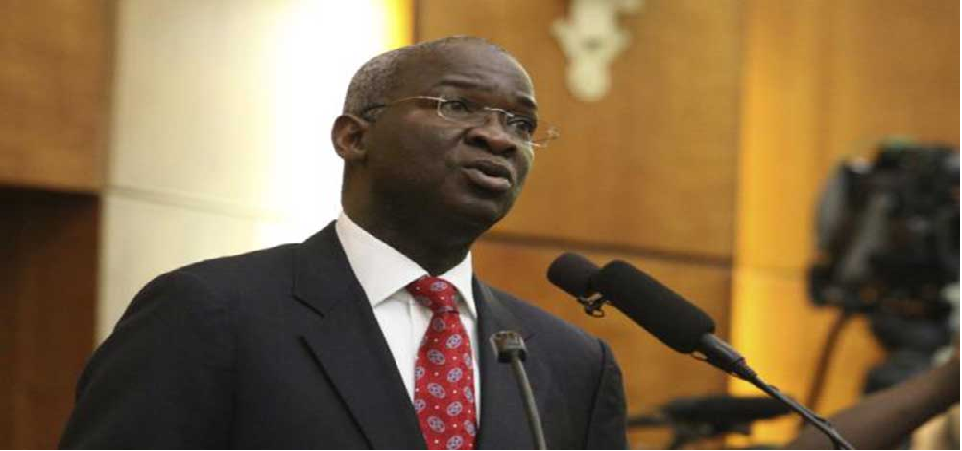
Nigeria’s Minister of Power, Babatunde Fashola
Technically, everyone is right. But I do think, focusing on that misses the point. In my office in Nigeria, the national grid is now the second backup. In short today, we are servicing our main generator. Team has suggested that we disconnect from the national grid to avoid any justification of sending bills which continue to happen despite no power supplied. I told them to hold on. The consumers are indeed frustrated. The process is a mess. You are asked to pay for services not delivered.
But ranting from that angle will not solve this paralysis. The only part of the old NEPA/PHCN that was not privatized, the Transmission Company of Nigeria (TCN), has spoken. TCN has joined gencos and discos asking for a reflective tariff. Government should listen. While I do not want to pay more as a user, the alternative of running two generators, spending more on fuel, oil and mechanics, is not a better option. I am open to pay more because I do think getting power from the national grid will be cheaper when compared to what I have now. Government should listen and take action.
Mr. President, if the court had struck the increased tariff, ask the Attorney General to support the Nigerian Electricity Regulatory Commission (NERC) which I understand is challenging the ruling in the court. Until we can fix this pricing issue, we will not make progress.
Nigerian government has to make good, and go back, and increase electricity tariff as agreed pre-privatization. The citizens do not have to pay this extra fee. Government can decide to write the discos cheques yearly. After all, it tricked the investors to invest based on the tariff. That the court struck and reversed the tariff is irrelevant. Investors did not sign any agreement with the court. That was the condition precedent and where it was voided, the discos have the rights not to deliver electricity. It makes no sense for them to be doing so losing money.
A reflective tariff is critical for us to get out of this vicious circle. Only Mr. President can lead now.
I believe in one UNITED Nigeria. In short, Nigeria is too small. I wish it will be possible for all of West Africa to be one country. But that will not happen. So, the one I have now, which is ONE Nigeria must stay. There should not be any argument on the indivisibility of Nigeria.
While I respect all the agitators from the East to South, North to West, the fact remains that any part of Nigeria that breaks out will weaken the nation. Our strength is our diversity, and our diversity is an unlocked opportunity which should cushion us from any cyclical market shock. Nigeria could be a resilient nation that will survive anything from the slump in crude price to crises in agricultural production. There are very few countries in the world with the diversities in resources as we have in Nigeria.
Yet, I do acknowledge that Nigeria is not working. We have not managed the nation excellently. Certainly, the answer is not breaking away. Also, restructuring while it sounds great may not even help fix the federating units. Our problems go deeper than what mere restructuring will do.
Restructuring, A Wounded Idea
The main reason I like restructuring is that it could make the regional governments to develop their respective areas. That will help create jobs for the citizens. So, the region that is good for farming will invest in agriculture and that will deepen Nigeria’s agricultural capabilities. The area with resources for tourism will put efforts in that area to boost it. The same applies to those with excellence in trade. By aggregating all those pieces, Nigeria could develop faster.
That is the textbook expectation when you run the model on paper. Allow the regions to run their affairs and over time, great things will happen in the land. Unfortunately, the reality on what we have seen since 1999 does not usher a lot of confidence that restructuring can fix Nigeria
Why Restructuring Has Limitations
Why restructuring looks good on paper, there is nothing that says it will work. Most of the former governors are in courts fighting corruption cases. In short, restructuring will simply make it easier for them to have more to steal. In Nigeria, I am yet to see any evidence that more money will lead to more economic development. When the Paris Club money was released, some governors just got bigger cars. Their teachers were on strike, they did not care. One governor used the money to buy a mansion in excess of N500 million for a traditional ruler. Are these same governors the people that will run the post-restructured states?
Technically, the only consolation for most people will be that their tribal men are the ones stealing their commonwealth, instead of someone from another tribe. That is the only consolation: the money belongs here and the son of the soil is the one stealing it, so be it. Except that, mere restructuring has marginal benefits.
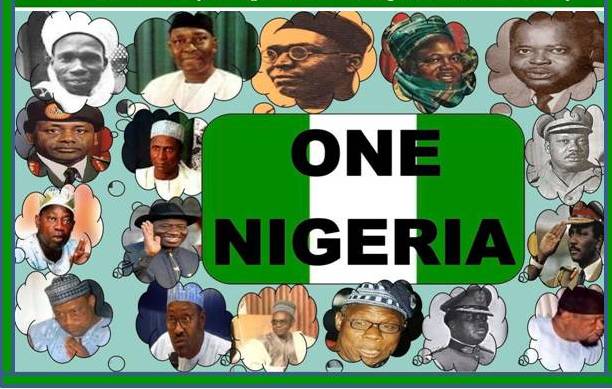
One Nigeria (source: edeson)
Making Nigeria Great
You can restructure all that you care; however, the same politicians will still be in charge, stealing the money. Instead of Abuja now, the stealing will happen in State Houses. Unless you can fix the quality of people that lead in Nigeria, nothing of value will happen. Unfortunately, doing that will be hard with the introduction and scaling of stomach infrastructure. When a man is hungry, you can manipulate him. His conscience lost to his stomach. But if the man can hold a little bit to vote with his conscience, he can offer that stomach a better meal in future. Unfortunately, that is not coming anytime soon.
Nigeria is a puzzle. I am not sure the rich-resourced states have done better jobs in human and infrastructure developments when compared with some states that have lesser resources. So even if you quadruple the resources in some of these states, you will get marginal value. The same people will waste them. Check the data, more money has not changed anything.
Let me explain with an example from the Second Republic where leadership was more advanced. Sam Mbakwe was the governor of the old Imo State and within about five years he started an airport, 5-star hotel, largest poultry farm in Eastern Nigeria, power plants, great science secondary schools, palm plantation, built pioneer roads in the state, etc. His impact is still visible today. But if you can name one single project in both Imo and Abia States since 1999 any governor has done, I will congratulate you. Since 1999, I cannot tell you of any vital project except maybe paying workers salaries. But in the golden age of Nigerian leadership, we saw real developments with more resources. In this age, that does not happen.
Nigeria initially thought that local government administration will facilitate development. Unfortunately, that only expanded the axis of corruption with the governor managing foot yes-men. Some governors have strategically ensured that no election holds or even when it does, they can suspend and take over the local administration. Except making it possible for people to get some government services without going to state capitals, there is no value in the local government administration. The state government could have done those services without a political appointee or elected official. Put them under one state ministry and they could be supervised from the state capital. That will save us from buying more cars for the LGA Chairmen and their cohorts.
So even if we restructure, we have to cut the size of government. We cannot afford all these apparatus. It is too much and it will drain the states. Nigeria wastes so much on bureaucracy.
What I Suggest
Financially restructure Nigeria into 6 regional governments with only 6 governors: South South, South East, South West, North East, North Central, North West and the Federal Capital Territory. That means the South East will have one governor. All the present 5 states will collapse into one. From the SE State, there will be 5 senators representing it in Abuja. The House of Representatives will be 15, three from each of the present five states.
At the state level, for each of the present five states, the state house of assembly will present only nine representations in the state capital. In total, we will have 45 state house members. Phase out the political arm of the local government administration and move it into a ministry within the state. Through this, South East will save more than 40% on the present administrative costs. That money will go into developing the region. Those in other new states will do the same.
Our goal is to make sure that more resources translate into more development. That correlation can only happen if we have the right people in power. So, I want to see the states focus on manpower development and supreme accountability. By investing in attracting and retaining top minds in government, the states will make more progress.
How do we do that? We will begin from election. The regional state government under their own electoral umpire, different from INEC, must stipulate the maximum amount any politician can spend on primaries. At the main election, the state will also cap the spending. By making over-exceeding that limit a felony, money politics will dissolve to politics of ideas. We are already in the age of electronic banking; the state will track and ask the politicians to file paperwork.
And finally, no politician will give a gift to any voter that is more than N50. That will remove the bags of rice, vegetable oil, etc. Once we run these processes for two election cycles, you will see higher improvements in the quality of governance.
But without those core elements, restructuring will simply move corruption from Abuja to state capitals. Believe in Nigeria.
Summary From a Reader: You can see this as a nice summary from a LinkedIn reader
There are three points i like in your piece. One is the point of reducing the cost of governance to maximize the actual value of our resources that is targeted at development. This will transform Nigeria. The second point is reducing sub-national governance to it’s most viable economic entity without prejudice to our diversity. The last is the leadership imperative. While there are formidable challenges with trying to even conceive its implementation, your proposal does trigger some food for thought
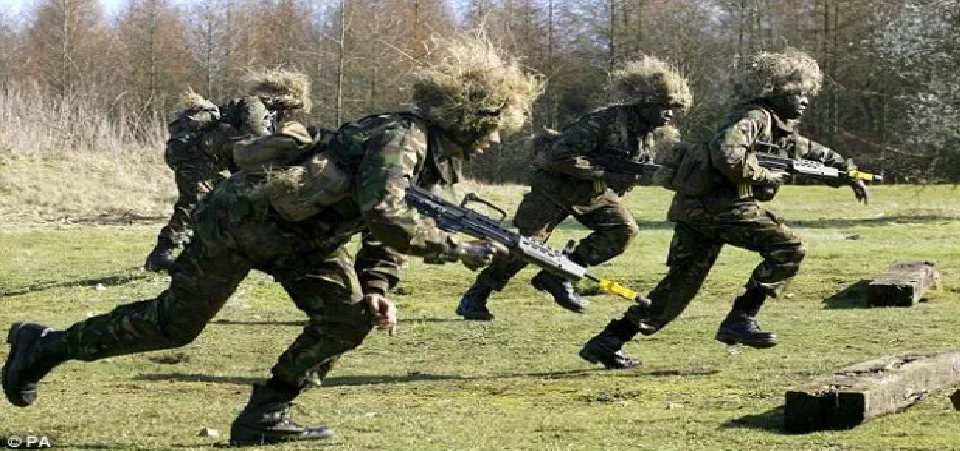
Nigerian Army possibly has a “brand expert” that comes up with operational codenames they use these days. The latest is Crocodile Smile for Ogun State operation. Sure, sending the Army internally is not a smiling matter. It means something is broken. Yet, there is something to learn here. (EFCC had engaged a Twitter maestro, F.Shaw, to get traction. So, do not dispel the notion that the Army may be using brand masters.)
Hitler used Operation Barbarossa as Nazi invaded Russia. Frederick I Barbarossa was the Emperor of the Roman Empire. U.S. used Desert Storm against Iraq. Code-naming is military.
In the past, Nigerian military used to have names like Operation Maximum Safety, Pulo Shield [Search & Rescue], Iron Fence [Armed Robbers] and Operation Crackdown (Boko Haram). Then, they went local with Operation Lafiya Dole [Peace is a Must], Awase [pipeline], Operation Tsare Teku [pirates in Niger Delta].
But they now prefer animals. In South East, they used Egwu Eke [Python Dance]; Southern Kaduna, Operation Harbin Kunama [Scorpion Sting], Crocodile Smile, etc.
I do think they are trying many things to brand their operations for the press. Sure, it is a bad thing when the Army/military is on the streets. But despite the nonsensical paradox of python dancing and crocodile smiling, they are making these programs “noticeable” (cannot use memorable in this context; there is nothing memorable when you have Army on the streets) for press to report. Perhaps, Nigerians relate better with animals.
If you subtract the nature of the operations, people are relating with the animal-based codenames more and the discussion is more nuanced than dropping stale names like Operation Crackdown. If the Army is coming to town, what do you expect? Or the obviously thoughtless codename like Operation Maximum Safety. Everyone knows that when the government sends the Army, it is for safety. But the imagination of crocodile smiling makes it “remember-able”. Whether crocodile smiles or not, it is none of their businesses.
I know that most churches use animals especially birds to brand programs. You may test if branding with animals can get your products further. I am not saying it will work but there could be something there with us on animals. After all, Dangote Group logo is a bird. We may be up to something in the country with animals. I am so surprised on the recent tractions of the Nigerian military operation with regards to their webinalities. They gave the press things to remember and write with.