DD
MM
YYYY

PAGES

DD
MM
YYYY

spot_img

PAGES

Home Blog Page 7286

What American Soccer Teaches us on Nigeria’s Developmental Challenges

0

United States is a brilliant nation. It has the capacity to connect its citizens to a shared vision. From science to technology, literature to military, America has always set the global benchmarks. But in one specific sports, soccer (yes, football in anywhere else), America continues to struggle. This year, a very small country, Trinidad and Tobago, extinguished the U.S.’s plan to play in Russia 2018 World Cup. That is it: U.S. Men Soccer lost to Trinidad and Tobago and will not play in the next World Cup.

The U.S. men’s national soccer team is not going to the World Cup next year. Let that sink in for a moment.

A U.S. squad that had qualified for soccer’s global spectacle every four years since last missing out in 1986 will watch the Russian-hosted tournament from home.

All it needed to do was defeat or tie last-place Trinidad and Tobago on Tuesday night.

Instead, the Americans played a shameful first half and lost, 2-1, before a few thousand observers in a lonely little stadium 25 miles from the capital

What has been happening in the U.S. Men Soccer can teach us some basic things in our developmental journeys in Nigeria. There are three key features I will like to examine:

  • Opportunity: The U.S. Soccer has opportunities for sportspeople. But it is not as exciting as American Football and Basketball. The hockey and baseball are also there. In the order of things, for most talented young men in U.S., soccer is not among the top three options. While a football player can sign millions of dollars in contract, some soccer players earn less than $40,000 per year playing for teams. So, the opportunity may be there, but for most players, they are not seeing them at individual levels.  You can relate this scenario with our country: there are opportunities everywhere in Nigeria but people, the citizens, are not experiencing them.

Beginning and lower-echelon players in Major League Soccer make a minimum of $35,125 a year, by far the lowest minimum salary of major professional team sports in America. As of the end of the 2013 season, 154 players made less than $50,000 a year. The average salary in the MLS, however, was $160,000, and the median salary was $100,000. About 45 percent of MLS players — that’s 249 — made over $100,000.

  • Talent: With the individual lack of clear opportunity in U.S soccer, the U.S. struggles to find talent. With lack of talent, they have nothing to develop, at scale. Why play soccer and earn $40,000 yearly when football can make you a multi-millionaire? Talent moves into areas of opportunities. And it teaches us a major lesson as a nation: you need the right talent to unlock developmental big gains. Yes, unless you have the talent, the nation will struggle. Nigeria needs the talent in emerging technologies, banking, insurance and other areas to compete globally. That talent is expected to be seeded in the universities for the markets and the economy. Where the university is not doing that, markets and our economy cannot necessarily do much. There is a limitation on what can be done without a solid talent pipeline from the universities. U.S. is doing everything it can on soccer, but talented American kids do not want to waste time on sports they will be paid $40,000 per year. The Nigerian case is that markets have limited talent to expand because our schools are not supplying talent. So, in business, small countries are knocking us out of business world cups.
  • Outcome: The outcome in U.S. Men Soccer is similar to what we have in Nigeria. Everyone knows that Nigeria has huge opportunities but we are yet to experience the real outcome collectively. The developmental results have not been extremely stellar. American soccer has the same issue, internally and globally: it is not popular at home compared with other sports and the team continues to struggle at global level.

All Together

U.S. will continue to experiment on how to fix its soccer. A possible option will be to entice talented foreigners to join the team. That is an option Nigeria may not have. But for U.S. to follow that model, the soccer teams must also pay well. (From those teams, they can form a national team.) But they cannot pay well without revenue coming from TV rights and ticket sales. With not many people interested in seeing soccer games, that is a challenge. But at the root cause of this issue is that the boys that can make soccer exciting in U.S. are not interested to participate because they prefer other sports. U.S. has a talent problem there. And when that happens, the result is always poor whether it is a nation or a sports commission.

Nigeria should learn that nothing is magical because even America can struggle big time due to its lack of capacity to unlock the talent it requires to develop its soccer game. For Nigeria, the stakes are even higher: it needs to develop its economy and markets. It needs talent for those and it’s high time for the universities to make the talent available. Indeed, there are things which cannot be leapfrogged: you must deal with the basis before you can improve the outcome.

The Evolution of Nigeria’s Instagram Economy

0

For all the talks of Facebook and Twitter in Nigeria, one solution that will have real impact in the lives of many Nigerians will be Instagram. I see Instagram evolving to become an ecommerce company that can effectively compete with ecommerce companies if they add payment interface. As we check Instagram, we are seeing shoe designers, clothe designers, necklace makers, etc showcasing their works.

Facebook.com, which owns Instagram, does not have the capacity to do that, effectively. Also, Twitter fails the test. The reality is that Instagram could win the ecommerce race when it begins to focus on that. Instagram could be so huge that we may not need the traditional ecommerce sites in some markets where there are functioning postal services that can deliver the goods when bought. Indeed, Instagram will be a competitor to Amazon because Instagram can be used to sell anything that can be captured as a photo. I want you to pay attention to Instagram, if you plan to monetize any physical product you make in Aba, Osogbo and Kano.

Instagram is a mobile, desktop, and Internet-based photo-sharing application and service that allows users to share pictures and videos either publicly or privately. (wikipedia)

Instagram is going to be big in Nigeria for business marketing. In 2011, we ran a very important article. Simply, we told Nigerian developers that Android will win over Blackberry, iOs, Symbian and Windows. It was a bold call because everything happening then was Blackberry. However, we saw real problems with every mobile OS in Nigeria but Android.

For the 2011 piece which was titled “Nigerian Developers – Fasmicro says Focus on Android Platform”, we have the following predictions right:

  • We wrote thus: “We understand that Blackberry is popular today in Nigeria, but Android will eclipse it within the next few months”.
    • That turned out to be completely correct. We used that conviction, based on our model, to ask Nigerian developers to move into Android from Blackberry and Windows: “Now, you are a young graduate or a freelance who wants to get into the App business. You want to know what platform to build”
  • In our analysis, we focused on affordability of the product: “Another reason has to do with market. Apple and Blackberry are premium…Android gadgets are more affordable simply because you do not have to pay for any software – it is free by default”We correctly predicted that cost will help Android adoption in Nigeria and that was what happened.
  • Then we made a very bold statement:

In the next 6 months, the number of Android devices in Nigeria will eclipse all the Apple and Blackberry combined. Our studies show that customers MTN will make this possible with its advertising power and brand. Etisalat did not make much impact with Galaxy Tab because of the cost. Even myPad from Starcomms is built on Android. Of course, Fasmicro and Microscale new Ovim Plus and Ovim MiE are all Android devices. Encipher Inye and Inye 2 are also Android. They will compete against the high premium Blackberry and will surely win. The notion that iPad can do well in Nigeria is not supported by any data. It is expensive and that brand is not structured for the Nigerian market.

Today, if you make shoes, chairs, upholstery, clothes, etc, the best social media site to be in Nigeria is Instagram. That is the place you can actually monetize your wares. It is a product engineered for the ecommerce world. Get there right now and begin to build user base because it will help you share those images that customers will like to see. Then when you add payment button, great things will happen.

For ecommerce companies, your competitors are not just your peers, you need to watch out what Instagram is doing. It could be the disruptive force if it begins to build logistical systems across cities. With its massive user base and solid photo-sharing experience, it can create a new basis of competition that will cause havoc. Pay attention and expand your market scanning beyond the typical ecommerce sites and consider what Instagram has in stock.

Fixing AI Discrimination

1

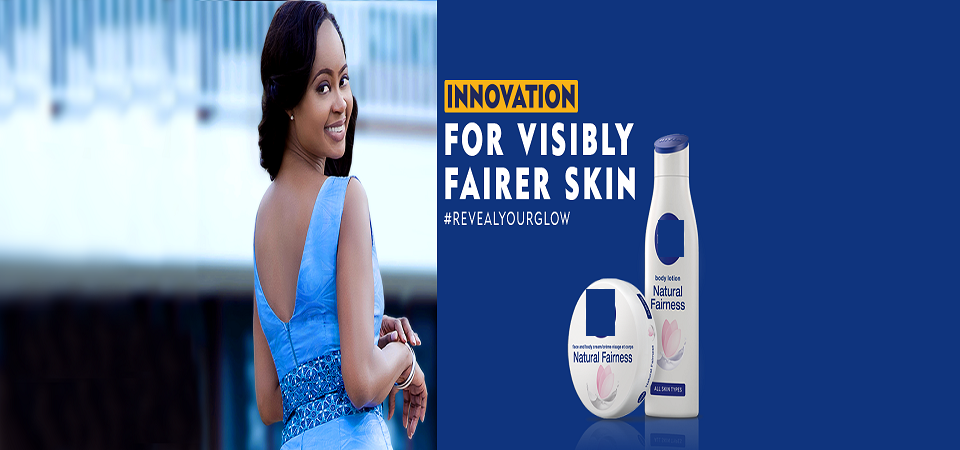
We hate discrimination and machines discriminate just as humans do. Discrimination is a phase of racism even when done by machines.   Take a drive across many parts of Lagos. You can easily notice Nivea advertisement sign-posts promising some Nigerians how a cream will make their skins “visibly fairer”. Apparently dark skin is not good enough; it has to be fairer.  That is a data point for the internet. If Nigerians prefer whiter skin, Google has taken note. That means beauty must be “white” in Nigeria.

Indeed, if you ask Google and machines to judge a beauty contest in Nigeria, it may call it for girls with fairer skin since it has datasets that show that many Nigerian women are using creams to turn their dark skins to white ones (very painful on health grounds). AI (artificial intelligence) uses data and that data informs what it thinks is normal. Usually, the largest cohort of the datasets shapes its constructs of normality.

This company makes dark skin to become fairer and many Nigerian girls are believers

If you make a chatbot and feed it 20,000 messages with 19,000 of those messages racist and crude, the likelihood that the bot will see racism as being normal is there. That is why it is very easy to train any Twitter bot to be anything you want: saint, racist, etc. Just feed the data you want and over time, that bot correlates the most data as the new normal. Unless there are breakers in the design, there is nothing you can do about it, if you really want a near-natural bot.

The Greek philosophers have always maintained that Number is the universe. If the Number is that more people want to be fairer, and will pay for it, it can be deduced by machines that Fairer is more beautiful. You may blame machines which generate and generalize the outcome, but check what you are feeding it with! In this age of AI, empires will be reshaped at scale.

That bots can be stupid does not make it right: developers have to find ways to mitigate that problem. Among many options, one easy way is to find a way to generate “balanced data”. For Africa, if we do not generate contents, allowing Silicon Valley, Paris and London to feed the new species of AI with only data from the Western World, the AIs will see them as the normal data. In other words, if the bot sees out of every 20,000 photos of girls, only 100 are dark-skinned, it may not necessarily capture dark photos as being normal. The system will default to white photos as the normal state. In some extreme cases, it may simply throw away the dark photos as totally non-human. Mitigating that problem will be feeding say 11,000 white and 9,000 dark photos. With that balanced datasets, the AI will have a better equilibrium.

That reminds me of a training I went while in the industry on IP protection. We were told to respond to email conversations via email instead of asking the person to talk things over. For example, if someone writes you capturing a statement like “I saw that Intel used this design and has a patent on it, there is a way I can get around the patent”. You do not tell your subordinate to see you for you to explain. It is better you write “Please if the design is patented, leave it and explore other designs”. The problem with talking it over without documenting is it that if bad things happen and there is litigation, what will make it to court is the written evidence. That is what the AI searching the emails will be fed with.

While that analogy: Africa and the black race will have to generate its own datasets to ensure machines can use same as they build the new data economy. Even if we are complaining of the obvious AI discrimination, without generating data, nothing will change. If you allow one cohort of people to be writing, talking and generating data, Google and the rest will think that the world is simply about those cohorts. That is why Amazon Alexa, a personal assistant AI, struggles with my Nigerian accent: it does not see that version of English a lot, so it is abnormal in its own world. It is not necessarily discriminating against me, it is just using datasets they have fed it to deconstruct my communication. Unfortunately, I am not sure they have any datasets from Nigeria.

Africa needs to create data to balance the game. Complaining on how machines dehumanize us will not fix the problem. It will only get worse unless we are ready to participate as technology creators and not just consumers who merely consume whatever they package for us.

Sure, that does not stop the makers from making sure decency rules in the market with circuit breakers to prevent situations where humans are classified as animals. No excuses on such failures!

Try This Feature In Your Nigerian Ecommerce Business

2

Over the last one week, I have asked some heads of Nigerian large companies on what they expect to move their household consumer goods to ecommerce platforms like Konga and Jumia.

The main thing I am hearing is that they expect to have a dedicated space in these platforms which will be under their controls. In other words, they want a clearly defined and dedicated digital store, just as you have in physical malls. They will hold the digital key and can brand as they want in that space. Consider something like konga.com/brand-name where that page showcases exclusively what that brand offers with no other brand therein.

My probing is not scientific. But if you are building an ecommerce business, I will recommend that you consider a structure where companies can create dedicated malls in your platform. Their goods will not be mixed with others. When people go to their corners in your platform, they see only products from the specific brands.

One of the leaders noted that pricing and brand protections are key factors. They do not want to degrade their brands by lumping some products in the same search outcomes or categories.  By giving them a space, they own their spaces and will not be mixed with other brands. One told me that they do not sell in some physical malls because they wanted to be classy. But by going digital and be commoditized, they lose identity.

I do not know what will work. Nevertheless, I do not see any risk asking the big brands to pay a special fee to give them a dedicated page while making sure their products do not mix with others if they so desire. Getting ecommerce right in Africa will require many phases of experimentation. Apparently some do not want their brands to appear alongside a local soap brand.

Yet, these companies do want to expand and are very ready to go online provided someone will handle the logistics while they drive the online sales.

The Fish Bait Acquisition Construct

2

There are fundamental constructs which define companies that run and then TRANSFORM their sectors. In this video, I explain. The reality is that succeeding as a business requires reinvention as customer needs evolve with time. Companies that transform are good at staying ahead of customer needs and perceptions; no matter what comes, they tend to be ready.

One company that has done that very well is Intuit, an American company that is known for selling tax software. A key attribute of Intuit is giving most things free. You can accuse the firm that it hates revenue. You see competitors building products and solutions on its platforms. But there is a catch: after a few years, the competitors become invisible. They become folded into Intuit business in the eyes of customers.

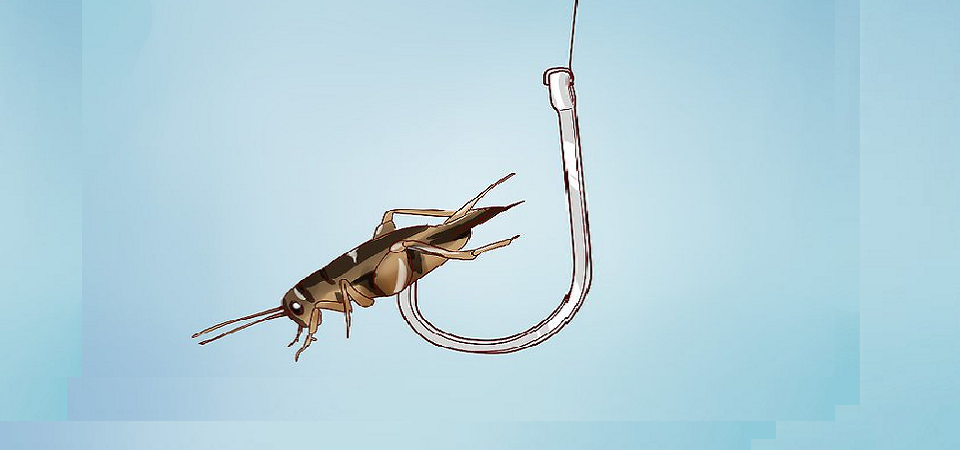
So, for decades, Intuit continues to swallow competitors without buying them. I have called its model the Fish Bait Acquisition Construct. It is a model where you give things free to competitors. As they come to enjoy the freebies, you trap them, and over time, they become weak. The end game is that at the end, they beg you to take over their assets.

Besides Intuit, Domino’s is also a reinvention machine. It is the best pizza business in the world, as far as execution and process innovation are concerned. That is the only pizza I eat. If you compare Domino’s with Pizza Hut, you will see two companies separated by miles in product quality and processes. There is no new innovation in the pizza business that did not evolve from Domino’s. Sure, I give Yum! Brands (owners of Taco Bell) high marks for the smile app which orders tacos for you simply by smiling to your phone. But Yum! is not known for selling pizzas.

Here in Nigeria, I give credit to Unilever for its capacity to weather the challenges in the home consumer goods. When P&G came, many thought Unilever Nigeria would fold. But despite the competition, it has been redesigning its business. Unlike PZ, Unilever remains a strong business in Nigeria. In the beverage sector, Star Larger Beer brand is also a reinvention engine. The biggest innovation in Star was not the taste (the people say, I do not drink alcohol) but the bottle. With the new bottle, Star solved a big problem: people bottling “33” and other Tier 2 beers with Star labels went out of business. It was so bad that despite most beer joints drinking Star, Nigerian Breweries Plc, the maker of Star, was not seeing any growth. Then, they changed the bottle and growth came. That was reinvention as they have used bottle to differentiate the category-king.

As you do the reinvention, consider these words from John Donahoe, CEO of ServiceNow.

“I believe that great, enduring companies are almost always driven by a clear sense of purpose. My simple model is that each company must answer the ‘what, how and why’ question. A sharp strategy addresses what customers we serve, what products we sell, and what business model we embrace. Execution plans address how we will deliver for our customers and shareholders. Purpose answers the ‘why’ question: why do we exist, why do we care, why should I work here? The most talented people want to work for a company with a clear sense of purpose. And companies that combine clarity of purpose with strong strategy and execution are able to win over time and have the biggest positive impact in the world.”