DD
MM
YYYY

PAGES

DD
MM
YYYY

spot_img

PAGES

Home Blog Page 7290

The Problem With Technology

0

North Korea launched another missile over the heads of Japanese. I called a friend in Japan to know how he was feeling. He was not happy. He noted that he would find it harder to trust any government, going forward. He was not happy because they had been promised for years, that Japan has anti-missiles to protect them. But on two live occasions, the Japanese military technology did not answer the calls. North Korean missiles flew over their heads. No interceptor was fired.

He was even more annoyed that the military was able to detect the missile seconds it was launched. But yet nothing happened. And in Japan, for months, they have been focusing on tracking any missile from North Korea. In other words, the launch was not a surprise. They expected the launch. But at the end, they could even blow it up.

An Aegis destroyer operations room – all the computers and displays etc make up the combat system that would guide a missile interception is here. Picture: US Navy Source:News Corp Australia

Japan, U.S. and South Korea have extensive amalgam of radars in South Korea, the Sea of Japan and inside Japan, positioned and stationed for the two moments North Korea had demonstrated. U.S. has worked with these allies in developing and installing these tools.

Sure. Japan could have determined that it was not pointed at it. Yet, it flew over it. Or maybe, they wanted to know how far the missiles could go. For me, that was nonsense. That was an opportunity missed to test their defense systems with real missiles from an enemy fire.

Do not get me wrong. I just hope we do not put so much confidence in these defense technologies. All it takes is one. I mean one successful missile out of say 100 for bad things to happen.

In my opinion, U.S. should re-calibrate and call North Korea to the ceremony as a nuclear power and give it the book, DO NO EVIL, because it is now a nuclear power. Nothing else will work until we can relocate Japan and South Korea.

We continue to wish the good people of South Korea and Japan good luck because most are terrified. For me, I will not even enter plane as missiles could be flying. They are right to be worried .

In the end, the prospect of successful interception of one IRBM would come down to a great number of variables going in the favor of the United States and Japan. Even if one missile is successfully intercepted, the odds of going four-for-four with North Korea’s Hwasong-12 salvo over the Sea of Japan using SM-3s are likely to be vanishingly low.


Everyone needs to be worried because even in U.S., no one knows what they have there. It goes beyond fire and fury. This North Korean guy is a bad actor and the world must understand and deescalate the situation.

Trump has repeatedly responded to North Korea’s attempts to build up its nuclear arsenal and obtain a nuclear weapon capable of striking the U.S. mainland with fiery rhetoric, once warning of “fire and fury” if it attacked the U.S. or any of its territories.

It is scary because most have believed this technology, the anti-missile defense system, to do the protection. Now, we all know that the technology may not be reliable.

Private Financing of Nigerian Public Universities via Tax Innovation

2

The Academic Staff Union of Universities (ASUU), a Nigerian union of university academic staff, is still on strike. They want more funding in the nation’s universities. There is nothing wrong with that. But the very fact remains that government has expanded the university system beyond its possible capacity to fund. What ASUU wants, even if met by government, may not last long, before new strikes evolve.

Nigeria has to find ways for private sector to become partners in our university system financing. Private financing in the public schools will help our schools. Today, that is not happening because there is no practical benefit for companies to do so. The schools are not centers of excellence and companies cannot see them as partners in the creation and dissemination of knowledge.

The very few donations coming from individuals are also small. Most donate to get recognition and titles like Honorary Doctoral Degrees. They might have done better if there is a way government can create financial incentives for companies and individuals to open their bank accounts and donate to our public schools. When you provide incentives, which help citizens and companies to do well and also save money, great things happen..

The U.S. Model

In U.S., alumni make great donations to their alma maters. Michael Bloomberg might have given nearly $1 billion to my alma mater, the Johns Hopkins University. Across the U.S., many U.S. business schools are named after business leaders. Those people opened their wallets and made donations. Sure, they love the institutions to have made donations. But many would not have done so if the tax system has not stimulated the giving through financial incentives. Making those donations help balance many elements in their personal and company finances. Nigeria does not have that at the moment.

Right now Apple is working with 30 community colleges in U.S. as it pushes the adoption of the SWIFT language. Community colleges are like Nigeria’s OND education in our polytechnics. What Apple does is to support those schools to deepen their capabilities and help the students learn new skills which will help them in their careers. It is a great win-win, and any school chosen will be better off..

Community college students may have a lot more Apple-related course work during the new school year.

The technology giant said Friday that its education curriculum related to its Swift programming language would be offered at 30 community colleges throughout the U.S.

Apple CEO Tim Cook announced the curriculum rollout at a press conference in Austin, Tex. with the city’s mayor, Steve Adler. Several community colleges in Austin will begin teaching the Apple-sanctioned curriculum, which Apple said would reach 74,000 students this fall

There are good implications when companies like Ford, GM, Chrysler and other top American companies put money in schools. They not just fund the schools; they provide the avenues to introduce new areas the schools need. Here are the benefits for the firms and the schools:

  • Companies can outsource the training, allowing them to focus on their businesses. The schools do the work for them. In Apple’s case noted above, it wants to popularize the Swift language. There is no better way to do so than working with schools
  • Donation money given to schools is tax deductible because the schools are tax-exempt under the U.S. Internal Revenue Service tax code. This is the key reason. If Apple or GM were to do the training in-house, the tax benefits will not materialize. They will still train the young people, but they cannot deduct that money. But by giving the money to colleges, they get the trained people and still get the deductions. This makes it easier when you need scale, beyond what you can have inside as staff for talent pipeline.
  • Apple through this training will be getting pipeline of talent. The same applies to most U.S. firms. They want welders; they fund a local school to train welders to ensure they have enough for their businesses.
  • It also provides goodwill as the local economy will see a boost through the injection of capital in the schools. The implications are huge: the school fees will drop for the students as companies have subsidized some parts, nearby businesses grow, and everyone is happy.

What Nigeria Can Do

The Nigerian tax system is not designed to support philanthropy. That is why we do not have a vibrant one. It does not mean that a nation must be rich first before its tax system can be engineered to stimulate philanthropy. ASUU can lead on that, through Tax Reform, and make it possible for individuals and companies to put money in the schools and get tax benefits. Sure, ASUU members may be busy, but that should not stop them from helping the government to revamp our tax codes to drive innovation.

The 501(c)3 tax structure in U.S. has unlocked a lot of private sector capital into the “doing good” business. Nigeria must find its own model.  I explain why this will be appealing in the educational system.

If Company A wants to start a factory in Owerri Nigeria and needs to train 1000 people in the areas it does business. It can ask Federal University of Technology Owerri to do that training, providing the manuals and documents required. It will fund it say with $3 million for three years. FUTO may integrate the program in its curricula (NUC may need to approve). FUTO has received funding, expanded its program and at the same time graduating students that will likely have jobs when they finish. Brilliant!

For Company A, it has moved the non-core training out to focus on its business, knowing that whenever it wants talent, FUTO is preparing them. Then on that $3 million, Nigerian government allows it to deduct it, non taxable. Simply, the revenue where that money has come will not be taxed because it has been used to do good to the society. Just like that, the company has saved money and at the same time assisted FUTO to deepen its programs. That is an incentive which does not exist right now, and Nigeria needs to update our tax system to make it possible.

Today, what is possible is to deduct that $3 million as an expense, meaning that it is recognized in the tax book as pure business. That is not enough as the resulting balance will be taxed accordingly. In U.S. that $3 million is treated differently, offsetting not just its expense but other areas the company might have experienced losses. So magically, you use donation to make-up. That is why giving is financially good, under some circumstances, for both the recipients and the givers.

Here is how they do it in U.S, according to Fidelity, the best in the world.

  • Capital gains taxes are eliminated when you contribute long-term appreciated assets directly to a charity…
  • In those select situations, you may choose to supplement a charitable gift of securities with a charitable contribution of cash so that the maximum charitable contribution deduction limit of 50% of your AGI may be claimed. This strategic combination of giving is an opportunity to reduce your taxable income.
  • One simple offsetting measure is aligning your charitable giving with the rebalancing process. Instead of writing a check to a favorite charity this year, consider donating your most highly appreciated security, which you have held for over a year. Capital gains taxes typically will not apply to you or the charity receiving the donation, and because you didn’t write a check, you may have cash available to purchase more stocks as part of your rebalancing exercise

Fidelity has nine strategies, I have noted only three above. In short, if you are rich and not giving in U.S., you may be losing money!

Now, over to ASUU and those that love education! If you want local Microsoft, Google, Oracle and more to give and support our schools, you may need to update the tax laws in Nigeria. They will respond if you make it easy to do good to the society, and save money via donations; I guarantee that.

The Fear of Extra Revenue, Emerging Normal For Global Digital Firms

0

I have noted in the past that one way to handle excessive tax engineering by ICT utilities like Google, Facebook, Amazon and Apple will be to tax revenue and not profit. And you tax that revenue at the locality where it is earned. Though that is bad as it takes away the concept of intellectual property (IP), but that seems to be the only fair way, to balance excessive tax engineering and public pockets. Globalization, consolidation and unconstrained growth of these companies demand a radical new thinking to ensure societies have funds to deal with public needs. They cannot take all the revenue and yet not return money to the public as tax.

In Nigeria, for example, Uber Nigeria pays tax on profit to Nigeria only after Uber Nigeria has paid licensing fees on IP it has used to Uber X that holds the intellectual property. That Uber X is probably located somewhere in one tax haven.

Let us assume that Uber makes $100 in Nigeria. It can consider “$70” to be fees the Nigerian unit must pay the Uber Netherlands or Uber Ireland (usually the place they run the double dip, like double Irish before it was phased out). So, at the end, Uber could be making a profit of $1 in Nigeria. Then, the Nigerian government will get the tax based on that $1 profit. Doing that saves the company money as it has moved profit it could have paid Nigeria to a tax haven where no one will tax it.

Nigeria has an agency that manages this complicated IP and revenue issue. The agency is National Office for Technology Acquisition and Promotion (NOTAP). NOTAP has to approve many things before companies can repatriate funds back to their home countries or outside subsidiaries.

It has been the normal: move profits to tax haven. Digital companies have abused the tax flexibility. You have a situation where a company opens a post office address in one country to hold intellectual property used to operate in another country (the real or operating country) just to deprive the real country tax benefits. It hurts the real country and makes public finance unmanageable. The facilities have been used for the services, but the corporations are not bringing tax funds to support their maintenance. All the money saved via tax engineering goes to the companies, making already rich billionaires richer. That is not a roadmap for the future of the world, and that is why what EU is planning will be important.

From Reuters, France is attempting to persuade the EU to hike Google’s taxes. It will not be only Google. They will expand this to every digital business.  The French finance minister Bruno Le Maire will work to get other colleagues to  tax tech firms based on revenue, not profit. Historically, EU has taxed on profit, not revenue. This meeting will hold on  Saturday in Tallinn, Estonia.

Germany, Italy and Spain have already signed onto a French proposal that digital multinationals such as those two leading companies should be taxed in Europe based on their revenues, rather than only profits as at present.

Currently such companies are often taxed on profits booked by subsidiaries in low-tax countries like Ireland, even though the bulk of their sales comes from other EU countries….

Technical discussions would have to focus on defining how much revenue comes from a given country and what rate to use, a second ministry source said, suggesting that the rate would be of the order of several percentage points.

What This Will Mean

If this deal goes through, the following will happen:

  • Revenue will be recognized in the “real or operating country”  where it happens. For example, in the case above, Uber will have gotten a revenue of $100 from Nigeria. The tax will be levied on that revenue, assuming that Nigeria implements the same tax structure
  • The concept of licensing intellectual property (IP) will be muted. That means Google Nigeria will not have to pay license to Alphabet (yes. Google) to make money through Alphabet IPs which are used in Nigeria. The country will tax Google based on the revenue and Alphabet will be deprived of the IP licensing fees from its subsidiary in Nigeria
  • Many countries will cut-off local subsidiaries and country operations. To avoid being local, Google may decide to close Google Nigeria, serving Nigeria from U.S. to avoid being classified as local. That way it does not have to pay for revenue which is generated from Nigeria. That means, many technology firms will have many countries served from their headquarters to avoid classifying revenue as being earned locally. This decision could be catastrophic for local jobs.
  • Tax payment will be simplified but pursuit of revenue clouded. This is obvious when you tax revenue. For the profit-based taxation, you do not care how much your company spends to get that revenue, because it will deduct it pre-tax. (Sure, you do care because you need to keep expenses low. But I hope you get the argument.) But if you tax revenue, many things will change. The implication is that every digital company will fear revenue. Why? If you know that having extra 10 marketing staff will get you extra revenue and you cannot deduct the expenses from those extra manpower, you may think again as you pursue that growth.

All Together

It will be a very huge dislocation in global commerce to tax revenue and not profit. Taxing revenue will make companies afraid to pursue revenue by all means. It can hurt the world because innovation will be stifled. Also, the model of taxing revenue will also destroy the fundamental element of capitalism which is that IP has to be paid for. If you tax revenue without allowing the company to take money home to fund new ideas, very soon, it will lack motivation and resources to innovate.

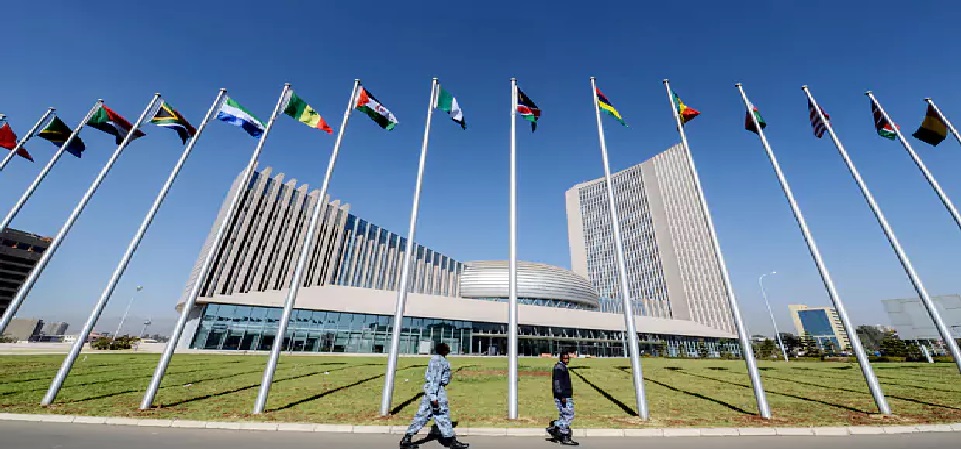
Yet, global technology companies have not been fair. They need to understand that the world has changed. You cannot allow a post office box to make more profit than you make from a whole country. The fact that you do it is the very reason why this change is coming. Whether France/EU does it this year or not, the future is one that will tax revenue because innovation and AI (artificial intelligence) will keep many people out of work. Government needs more money to settle them to avoid a breakdown of the global order. As EU takes a look, I expect the African Union to also consider its options.

The Catwalk of Bits, Bytes and Nano

1

They have done it and it is real: the displacement of animal leather with technology. The Economist reports that engineers have created good-grade leather from biotechnology and nanotechnology. No animal involved. Simply, by manipulating and combining atoms, a new world is born, right in the lab.

These contrasting facts make leather manufacturing a tempting target for technological disruption. And tanned animal skins are indeed about to face a rival. The challenge comes not, as might be assumed, from a substitute made of synthetic polymer, but rather from something which is, in most respects, the same as natural leather. The difference is that, instead of coming from an animal’s back, this leather is grown, by the metre, in factories.

I wrote about this possibility few weeks ago where I noted on the potential disruption of agro-commodities like rubber by technology. I had seen some works in universities and was writing based on experimental data I had seen. But it seems, Modern Meadow, the company behind the biotech leather is ahead.

The biggest crisis is coming. It will come when nanotechnology would have matured from lab to the market. First, it will help displace millions of cotton, rubber and agricultural workers across the globe when engineers can make these devices in the lab. They can hire fifty people to produce the same quantity of cotton one million people produce in Sudan. They will displace those workers and clusters of wars would take place across the developing world.

They are not yet in the production line, but the trajectory is obvious: within a decade, we may not need to kill animals for leather. Labs will supply them. Think about it: many African farmers could be displaced in their agricultural endeavors. This will be life-shattering and could be consequential to many nations.

I am truly concerned because this lab leather has many advantages over the one from animal as noted in the article: you can customize it in texture, structure and even color. That will reduce the cost of dyeing in subsequent phases of making wears.

One other advantage of Modern Meadow’s manufacturing process is that it permits different parts of a sheet to be given different properties. That can change both the look and the feel of the product in controlled ways. One area might, for instance, be made stiff while another is made soft. This would allow the newfangled “hides” to be custom-built for particular designs of shoe. The process could also be tweaked, though the company has announced no plans to do so, to expand beyond cow hides, by encoding other types of collagen in the yeast. That would permit analogues of specialist leathers, such as ostrich or alligator, to be grown.

You cannot beat a totally engineered material and that is why we may see the markets move. It is very certain that the lab one will be cheaper. All the combinations will put people that rear animals for leather on the verge of disruption. There is nothing technology does not go after, even leather. Imagine that!

So in the near future, the catwalk will not involve any animal. Purely, the bits, bytes and nano will drive it. That should concern Africa because we had expected that agriculture will save the future. That may not be true anymore.

So what do we do? The best defense is really to go on offense and master technology capability to compete, not just to make leather in the lab, but to save other sectors from technology. The age of disruption demands nothing less.

We’re Investing In Africa, Send Projects

13

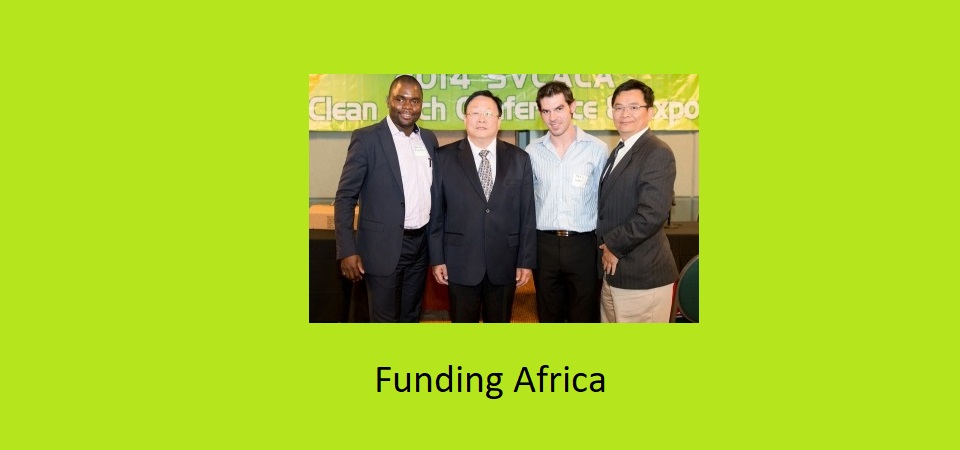
Last week, my co-owned California-based investment banking institution, JPL Financial Group, closed a deal with Guangdong Provincial ChangDa Highway Engineering Co., Ltd (CGCD) to help the Chinese firm accelerate its vision in Africa.

JPL Financial Group is a joint venture formed by  John Lee and Prof Ndubuisi Ekekwe. Mr. Lee was formerly a Senior Vice President in a big US investment bank and later a Senior Vice President with UBS International. Prof Ekekwe founded FASMICRO Group, an Africa-operating holding company.

CGCD is a state-supported enterprise, under the Central Government of China and China Central Bank. It is big in infrastructure and has been operating for over 60 years.

China Guangdong Provincial Changda Highway Engineering Co Ltd (CGCD), founded in 1952, is an extra-large engineering enterprise including design, construction, scientific research and capital operation, possessing the qualifications of super-A class for general contract on highway construction, A class for highway design and the “Approval for Enterprises with Foreign Trade Rights” for executing international
projects. The main business covers the construction of highways, bridges, tunnels, ports and navigation channels, railways, house building and municipal public works, highway investment and operation & management, highway investigation & design, highway maintenance, engineering equipment & machinery supply, professional training and others. Market development scatters in thirteen domestic provinces and cities including Guangdong, Guangxi, Zhejiang, Jiangxi, Fujian, etc., and foreign countries such as Mongolia, Yemen, Nepal, Pakistan, Zambia, Cambodia, D.R. Congo, Vietnam, Malaysia, etc. Up to now, CGCD has become a great enterprise including seven branch companies, five wholly-owned subsidiary companies, six equity participation companies, one engineering design institute and one training school.

We are looking for public sector infrastructure projects. The value must be at least $100 million, though we can consider $50 million in some specific sectors. Our funding capacity runs into billions of dollars and must be government projects. The broad terms are as follows:

  • Sovereign guarantee from the local government
  • 10% down payment by local government; we will finance the balance 90%
  • Financing is multi-year with grace period for loan payment
  • Loan interest is in low single digit
Chairman/CEO of JPL Financial Group, J Lee (left)

If your government has an opportunity or you know government that does, please reach us with the following:

  • A letter stating that your government offers sovereign guarantee for the specific project
  • A letter stating that you can provide the 10% down payment
  • An investment brief of maximum of two pages stating the big picture of the project and the estimated project cost.

Email it to info@jplfinancialgroup.com.

Our team will review your project. We do not fund projects in Sudan and Somali, owing to U.S. trade restrictions.

Ndubuisi Ekekwe, PhD

Co-Chairman/President ! JPL Financial Group, USA