They have done it and it is real: the displacement of animal leather with technology. The Economist reports that engineers have created good-grade leather from biotechnology and nanotechnology. No animal involved. Simply, by manipulating and combining atoms, a new world is born, right in the lab.
These contrasting facts make leather manufacturing a tempting target for technological disruption. And tanned animal skins are indeed about to face a rival. The challenge comes not, as might be assumed, from a substitute made of synthetic polymer, but rather from something which is, in most respects, the same as natural leather. The difference is that, instead of coming from an animal’s back, this leather is grown, by the metre, in factories.
I wrote about this possibility few weeks ago where I noted on the potential disruption of agro-commodities like rubber by technology. I had seen some works in universities and was writing based on experimental data I had seen. But it seems, Modern Meadow, the company behind the biotech leather is ahead.
The biggest crisis is coming. It will come when nanotechnology would have matured from lab to the market. First, it will help displace millions of cotton, rubber and agricultural workers across the globe when engineers can make these devices in the lab. They can hire fifty people to produce the same quantity of cotton one million people produce in Sudan. They will displace those workers and clusters of wars would take place across the developing world.
They are not yet in the production line, but the trajectory is obvious: within a decade, we may not need to kill animals for leather. Labs will supply them. Think about it: many African farmers could be displaced in their agricultural endeavors. This will be life-shattering and could be consequential to many nations.
I am truly concerned because this lab leather has many advantages over the one from animal as noted in the article: you can customize it in texture, structure and even color. That will reduce the cost of dyeing in subsequent phases of making wears.
One other advantage of Modern Meadow’s manufacturing process is that it permits different parts of a sheet to be given different properties. That can change both the look and the feel of the product in controlled ways. One area might, for instance, be made stiff while another is made soft. This would allow the newfangled “hides” to be custom-built for particular designs of shoe. The process could also be tweaked, though the company has announced no plans to do so, to expand beyond cow hides, by encoding other types of collagen in the yeast. That would permit analogues of specialist leathers, such as ostrich or alligator, to be grown.
You cannot beat a totally engineered material and that is why we may see the markets move. It is very certain that the lab one will be cheaper. All the combinations will put people that rear animals for leather on the verge of disruption. There is nothing technology does not go after, even leather. Imagine that!
So in the near future, the catwalk will not involve any animal. Purely, the bits, bytes and nano will drive it. That should concern Africa because we had expected that agriculture will save the future. That may not be true anymore.
So what do we do? The best defense is really to go on offense and master technology capability to compete, not just to make leather in the lab, but to save other sectors from technology. The age of disruption demands nothing less.
Last week, my co-owned California-based investment banking institution, JPL Financial Group, closed a deal with Guangdong Provincial ChangDa Highway Engineering Co., Ltd (CGCD) to help the Chinese firm accelerate its vision in Africa.
JPL Financial Group is a joint venture formed by John Lee and Prof Ndubuisi Ekekwe. Mr. Lee was formerly a Senior Vice President in a big US investment bank and later a Senior Vice President with UBS International. Prof Ekekwe founded FASMICRO Group, an Africa-operating holding company.
CGCD is a state-supported enterprise, under the Central Government of China and China Central Bank. It is big in infrastructure and has been operating for over 60 years.
China Guangdong Provincial Changda Highway Engineering Co Ltd (CGCD), founded in 1952, is an extra-large engineering enterprise including design, construction, scientific research and capital operation, possessing the qualifications of super-A class for general contract on highway construction, A class for highway design and the “Approval for Enterprises with Foreign Trade Rights” for executing international
projects. The main business covers the construction of highways, bridges, tunnels, ports and navigation channels, railways, house building and municipal public works, highway investment and operation & management, highway investigation & design, highway maintenance, engineering equipment & machinery supply, professional training and others. Market development scatters in thirteen domestic provinces and cities including Guangdong, Guangxi, Zhejiang, Jiangxi, Fujian, etc., and foreign countries such as Mongolia, Yemen, Nepal, Pakistan, Zambia, Cambodia, D.R. Congo, Vietnam, Malaysia, etc. Up to now, CGCD has become a great enterprise including seven branch companies, five wholly-owned subsidiary companies, six equity participation companies, one engineering design institute and one training school.
We are looking for public sector infrastructure projects. The value must be at least $100 million, though we can consider $50 million in some specific sectors. Our funding capacity runs into billions of dollars and must be government projects. The broad terms are as follows:
Sovereign guarantee from the local government
10% down payment by local government; we will finance the balance 90%
Financing is multi-year with grace period for loan payment
Loan interest is in low single digit
Chairman/CEO of JPL Financial Group, J Lee (left)
If your government has an opportunity or you know government that does, please reach us with the following:
A letter stating that your government offers sovereign guarantee for the specific project
A letter stating that you can provide the 10% down payment
An investment brief of maximum of two pages stating the big picture of the project and the estimated project cost.
Email it to info@jplfinancialgroup.com.
Our team will review your project. We do not fund projects in Sudan and Somali, owing to U.S. trade restrictions.
Magic Leap, the category-redefining startup working on wearable gadgets, is in the market, raising money, on a valuation of $6 billion, up 33% within a year. It has already raised $1.3 billion. The startup’s much-anticipated augmented reality/mixed reality glasses will be shipping on beta in Q1 2018. We wrote about this company few months ago, and want to up-share it again, with this news. If this firm succeeds, the iPhone X may be a primitive tool.
The most amazing and futuristic company in the world right now is called Magic Leap. . Magic Leap Inc. has designed a new Photonic Lightfield Chip that will use nano-scaled technology to project a false reality straight to your retina. That is what they call augmented reality but this one is really REAL Reality, like having an elephant in your palms.
The company is developing a wearable display that will deliver augmented reality: overlaying information or game characters on what we see naturally, without causing eye strain. Instead of transporting you to a virtual world, Magic Leap’s goggles make you see virtual objects in your own world. It is the kind of reality that makes it possible for a shark to splash water in your school gym.
But the company is still keeping its technology largely under wraps, and only a few people knew the magic behind Magic Leap product. But what we know is that the company has created its product using photonic lightfield chip. This is not a small feat and they will have to contend with many challenges from prototypes to products.
The Technology
According to the CEO and founder Rony Abovitz, while speaking with MIT Technology Review, Magic Leap is making a light-field chip that relies on silicon photonics. Rony noted that the company has developed novel fabrication techniques and is using them on a pilot manufacturing line in Florida. Abovitz also said that the company is now “out of the R&D phase and in the transition to product introduction.”
Silicon photonics is a broad term that refers to the semiconductor industry’s efforts to bring optical components into or closer to today’s silicon computer chips, which trade in electrons. Photonic components can carry more data farther and faster, without heating up and without degradation in the signal.
But it has challenges associated with diffraction because when you are dealing with photonics, you are essentially working on light rays.
Magic Leap CEO Rony Abovitz describes the lightfield chip as a “three dimensional wave… component that has very small structures in it, and they manage the flow of photons that ultimately create a digital lightfield signal.”
What they are doing is very pioneering in any level of it.
Integrating them with existing electronic components is proving to be an engineering challenge. In 2013, Intel announced with fanfare that it would mass-produce silicon photonics. Since Intel has announced that it would delay shipment of its first silicon photonics products because of manufacturing troubles with one of the components. Making new hardware is incredibly challenging even for Intel, a company that’s synonymous with silicon.
Experts following the company say Magic Leap seems to be taking a gamble on silicon photonics because the technology would dramatically improve the augmented-reality display. Typical augmented-reality goggles use mirrors and beam splitters to reflect images from a microdisplay into the eye. These systems also let in light from the real world. They can achieve a 3-D effect by simultaneously showing slightly different images to the right and left eyes. This is called stereoscopic 3-D, and even though today it’s done with moving images produced by LCDs rather than the static photos used in the 19th century, it’s a technology with major limitations. Being confronted with left and right images that appear to be at slightly different distances can literally be a headache.
To eliminate these conflicting focus cues, Magic Leap must have figured out a way to simultaneously show not just a left and a right image but multiple images to the left eye and multiple images to the right eye. This should free the eyes to focus naturally. When company representatives talk about silicon photonics and stacked, nanostructured light-field chips, they are probably referring to stacked silicon waveguides.
An Optical Waveguide (PSU)
Venture Capital
Magic Leap has raised more than a billion dollars. In 2014, the Florida-based startup stirred up $542 million from Google, Qualcomm Ventures, Vulcan Capital, and Andreessen Horowitz, while the perhaps unprecedented $793.5 million it raised in Series C funding earlier from investors such as Alibaba Group, Warner Brothers, Fidelity Management, J.P. Morgan, and Morgan Stanley at a valuation of $4.5 billion has put its funding-to-date at over $1.4 billion.
It is important to note that Magic Leap is not just raising capital for development, it is also building factories.
Competitors
Magic Leap is not working alone in this space. Oculus, Vive and PlayStation VR have since arrived, and the hype around VR is turning into the more mundane fare of people actually using the headsets, the attention around Magic Leap is only set to increase throughout 2017.
Its most fierce competitor is Microsoft which has the HoloLens.
Like Microsoft’s HoloLens, Magic Leap is using waveguides to superimpose 3D images over real world objects. It’s a form of augmented reality, or as Microsoft and Magic Leap like to call it: mixed reality. Magic Leap doesn’t like describing its technology as lenses, instead opting to call it a photonic lightfield chip.
Wired claims the quality of Magic Leap’s virtual objects “exceeds all others,” and an accompanying video shows some additional demonstrations of the 3D objects virtually projected into the real world. Like previous videos, the projections look a lot like Microsoft’s HoloLens, but it’s not clear yet whether Magic Leap can fix the small field of view issue of HoloLens.
While Microsoft is shipping early HoloLens units to developers, Magic Leap has just released a developer page.
Using our Dynamic Digitized Lightfield Signal™, imagine being able to generate images indistinguishable from real objects and then being able to place those images seamlessly into the real world.
Imagine what experiences you could create if you had this ability. Imagine how this would completely transform how people interact with both the digital and real-worlds. Imagine you being one of the first to help transform the world forever.
Why a billion dollars of funding before launching?
According to this Technology Review article Magic leap isn’t just building a head mounted display — they’re advancing Silicon Photonics technology to suit the demands of AR that presents virtual objects to the eye that are indistinguishable from physical objects. From the article:
CEO and founder Rony Abovitz said Magic Leap is making a light-field chip that relies on silicon photonics.Abovitz said that the company has developed novel fabrication techniques and is using them on a pilot manufacturing line in Florida.
Whether Magic Leap can create that product will depend on whether it can scale up a new chip-making process for silicon photonics—something that’s a big undertaking even for semiconductor giants. The startup’s $592 million in funding is rich for an early-stage company, but it may need a lot more than that to make the leap to consumer products...
With WETA Workshop effects
Who is behind it?
You might have seen Rony Abovitz’ incredible, bonkers TEDx Talk from way back in 2013. Before he founded Magic Leap, which is now based in Dania Beach, Florida, Abovitz co-founded a company called MAKO Surgical Corp which made surgical robotic arms and was sold for $1.65 billion in 2013. He is the best kind of eccentric entrepreneur, at least in terms of his public persona.
Abovitz has announced a partnership between Magic Leap and Twilio with plans to add its software, which lets app developers tack on phone calls or text messaging, to the Leap system.
How much will it cost?
No clue. We’re crossing our fingers for a sub-HoloLens price as the dev kit of that – very impressive – AR helmet costs around $1,000 – $3,000. All we really know is that if there’s enough interest in the first iteration and the rest of the industry continues to experiment and release products, the price will eventually come down.
The Future
Magic Leap secrecy is unprecedented. It goes beyond what even Apple does.
Magic Leap has kept its projects and progress tightly under wraps as funding has cascaded in. Unlike the more common virtual reality (VR) experiences we haveseen fine-tuned over the past several years, which allow users to explore fully immersive visual and aural landscapes via Oculus or other headsets, the name of Magic Leap’s game is mixed reality (MR). The technology instead attempts to integrate virtual sights and sounds into the real-life spaces and moments we occupy.
Magic Leap is building the future of computing in an unprecedented way. The CEO Rony Abovitz believes that it has cracked the next big thing. Though Magic Leap is one of several companies developing MR technology in a field that has mega-tech hubs like Facebook, Google, Apple, Amazon, and Microsoft all racing toward patents and possible applications for the Next Big Thing(s) in interactive, experience-rich, artificial reality, it is one of the eminent ones.
The Magic Leap product line-up is being called Sensoryware (filed for trademark in 2013). Right now, the company is working in parallel on both the hardware and the content itself. In order to drive these experiences, Magic Leap first contracted Peter Jackson’s WETA Workshop, then took them on board to create new immersive experiences.
Monetization capabilities are immense, and there are already recording artists which have signed up to offer themselves in a virtual form. Mixing Sensory Ware and music will create visual experiences that surpass music videos in terms of immersion, and the market for that is beyond huge.
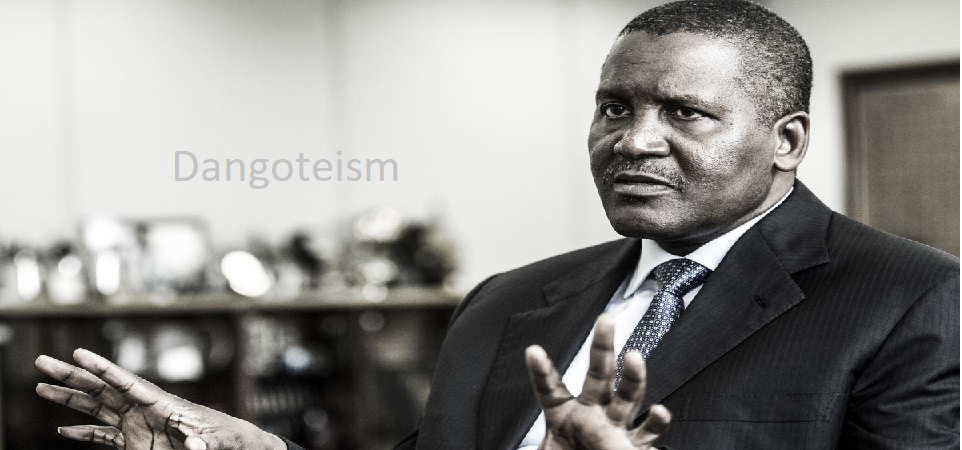
Bottomline: Legendary investor Warren Buffett is the father of Buffettism. He has built wealth, over the years, through one consistent principle. In Africa, we have our own, Dangoteism, after Aliko Dangote, Nigeria’s business icon, and Africa’s richest citizen. Studying how Buffett accumulates wealth, you will see that Dangoteism shares core elements with Buffettism. Though the applications […]
I do hope that the recession has ended in people’s lives and not just in government data.
The active mobile GSM lines saw a drop of about 4 million subscribers, from 142,654,738 (June 2017) to 138,731,598 (July 2017), in Nigeria.
The Guardian breaks the numbers further.
Statistics from the Nigerian Communications Commission (NCC) showed that the growth of the four GSM operators contracted collectively by a negative 21.54 per cent.
Individual statistics of the service providers showed that by the end of Q2, MTN recorded -12.08 per cent growth; Globacom saw -0.22 per cent; Airtel had -1.53 per cent, and 9mobile down by -8.15 per cent.
The NCC statistics showed that MTN still controlled the market with 35.8 per cent market share and 49.7 million subscribers. It is followed by Globacom with 37 million subscribers and 26.8 per cent market share. Airtel controls 24 per cent of the market with 34.1 million subscribers. 9mobile has 12.7 market share with 17.6 million after losing between three million and four million customers during the controversies that surrounded its protracted $1.2billion syndicated loans from 13 banks.
At a recent interaction with journalists, in Lagos, NCC’s Executive Commissioner, Stakeholders Management (ECSM), Sunday Dare, confirmed that the Commission was aware of the loss in mobile subscriptions in the country, occasioned by the economic crunch.
This is certainly not what the GSM operators need now. They need growth.