DD
MM
YYYY

PAGES

DD
MM
YYYY

spot_img

PAGES

Home Blog Page 7292

Fixing AI Discrimination

1

We hate discrimination and machines discriminate just as humans do. Discrimination is a phase of racism even when done by machines.   Take a drive across many parts of Lagos. You can easily notice Nivea advertisement sign-posts promising some Nigerians how a cream will make their skins “visibly fairer”. Apparently dark skin is not good enough; it has to be fairer.  That is a data point for the internet. If Nigerians prefer whiter skin, Google has taken note. That means beauty must be “white” in Nigeria.

Indeed, if you ask Google and machines to judge a beauty contest in Nigeria, it may call it for girls with fairer skin since it has datasets that show that many Nigerian women are using creams to turn their dark skins to white ones (very painful on health grounds). AI (artificial intelligence) uses data and that data informs what it thinks is normal. Usually, the largest cohort of the datasets shapes its constructs of normality.

This company makes dark skin to become fairer and many Nigerian girls are believers

If you make a chatbot and feed it 20,000 messages with 19,000 of those messages racist and crude, the likelihood that the bot will see racism as being normal is there. That is why it is very easy to train any Twitter bot to be anything you want: saint, racist, etc. Just feed the data you want and over time, that bot correlates the most data as the new normal. Unless there are breakers in the design, there is nothing you can do about it, if you really want a near-natural bot.

The Greek philosophers have always maintained that Number is the universe. If the Number is that more people want to be fairer, and will pay for it, it can be deduced by machines that Fairer is more beautiful. You may blame machines which generate and generalize the outcome, but check what you are feeding it with! In this age of AI, empires will be reshaped at scale.

That bots can be stupid does not make it right: developers have to find ways to mitigate that problem. Among many options, one easy way is to find a way to generate “balanced data”. For Africa, if we do not generate contents, allowing Silicon Valley, Paris and London to feed the new species of AI with only data from the Western World, the AIs will see them as the normal data. In other words, if the bot sees out of every 20,000 photos of girls, only 100 are dark-skinned, it may not necessarily capture dark photos as being normal. The system will default to white photos as the normal state. In some extreme cases, it may simply throw away the dark photos as totally non-human. Mitigating that problem will be feeding say 11,000 white and 9,000 dark photos. With that balanced datasets, the AI will have a better equilibrium.

That reminds me of a training I went while in the industry on IP protection. We were told to respond to email conversations via email instead of asking the person to talk things over. For example, if someone writes you capturing a statement like “I saw that Intel used this design and has a patent on it, there is a way I can get around the patent”. You do not tell your subordinate to see you for you to explain. It is better you write “Please if the design is patented, leave it and explore other designs”. The problem with talking it over without documenting is it that if bad things happen and there is litigation, what will make it to court is the written evidence. That is what the AI searching the emails will be fed with.

While that analogy: Africa and the black race will have to generate its own datasets to ensure machines can use same as they build the new data economy. Even if we are complaining of the obvious AI discrimination, without generating data, nothing will change. If you allow one cohort of people to be writing, talking and generating data, Google and the rest will think that the world is simply about those cohorts. That is why Amazon Alexa, a personal assistant AI, struggles with my Nigerian accent: it does not see that version of English a lot, so it is abnormal in its own world. It is not necessarily discriminating against me, it is just using datasets they have fed it to deconstruct my communication. Unfortunately, I am not sure they have any datasets from Nigeria.

Africa needs to create data to balance the game. Complaining on how machines dehumanize us will not fix the problem. It will only get worse unless we are ready to participate as technology creators and not just consumers who merely consume whatever they package for us.

Sure, that does not stop the makers from making sure decency rules in the market with circuit breakers to prevent situations where humans are classified as animals. No excuses on such failures!

Try This Feature In Your Nigerian Ecommerce Business

2

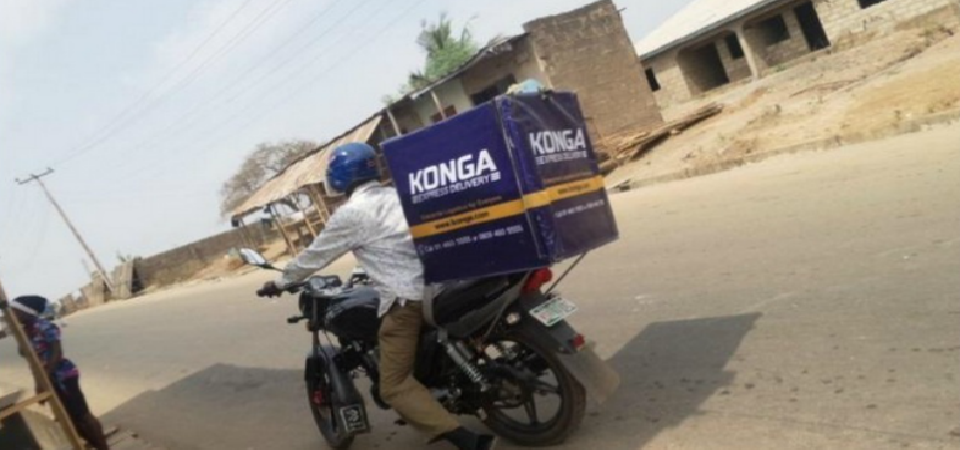
Over the last one week, I have asked some heads of Nigerian large companies on what they expect to move their household consumer goods to ecommerce platforms like Konga and Jumia.

The main thing I am hearing is that they expect to have a dedicated space in these platforms which will be under their controls. In other words, they want a clearly defined and dedicated digital store, just as you have in physical malls. They will hold the digital key and can brand as they want in that space. Consider something like konga.com/brand-name where that page showcases exclusively what that brand offers with no other brand therein.

My probing is not scientific. But if you are building an ecommerce business, I will recommend that you consider a structure where companies can create dedicated malls in your platform. Their goods will not be mixed with others. When people go to their corners in your platform, they see only products from the specific brands.

One of the leaders noted that pricing and brand protections are key factors. They do not want to degrade their brands by lumping some products in the same search outcomes or categories.  By giving them a space, they own their spaces and will not be mixed with other brands. One told me that they do not sell in some physical malls because they wanted to be classy. But by going digital and be commoditized, they lose identity.

I do not know what will work. Nevertheless, I do not see any risk asking the big brands to pay a special fee to give them a dedicated page while making sure their products do not mix with others if they so desire. Getting ecommerce right in Africa will require many phases of experimentation. Apparently some do not want their brands to appear alongside a local soap brand.

Yet, these companies do want to expand and are very ready to go online provided someone will handle the logistics while they drive the online sales.

The Fish Bait Acquisition Construct

2

There are fundamental constructs which define companies that run and then TRANSFORM their sectors. In this video, I explain. The reality is that succeeding as a business requires reinvention as customer needs evolve with time. Companies that transform are good at staying ahead of customer needs and perceptions; no matter what comes, they tend to be ready.

One company that has done that very well is Intuit, an American company that is known for selling tax software. A key attribute of Intuit is giving most things free. You can accuse the firm that it hates revenue. You see competitors building products and solutions on its platforms. But there is a catch: after a few years, the competitors become invisible. They become folded into Intuit business in the eyes of customers.

So, for decades, Intuit continues to swallow competitors without buying them. I have called its model the Fish Bait Acquisition Construct. It is a model where you give things free to competitors. As they come to enjoy the freebies, you trap them, and over time, they become weak. The end game is that at the end, they beg you to take over their assets.

Besides Intuit, Domino’s is also a reinvention machine. It is the best pizza business in the world, as far as execution and process innovation are concerned. That is the only pizza I eat. If you compare Domino’s with Pizza Hut, you will see two companies separated by miles in product quality and processes. There is no new innovation in the pizza business that did not evolve from Domino’s. Sure, I give Yum! Brands (owners of Taco Bell) high marks for the smile app which orders tacos for you simply by smiling to your phone. But Yum! is not known for selling pizzas.

Here in Nigeria, I give credit to Unilever for its capacity to weather the challenges in the home consumer goods. When P&G came, many thought Unilever Nigeria would fold. But despite the competition, it has been redesigning its business. Unlike PZ, Unilever remains a strong business in Nigeria. In the beverage sector, Star Larger Beer brand is also a reinvention engine. The biggest innovation in Star was not the taste (the people say, I do not drink alcohol) but the bottle. With the new bottle, Star solved a big problem: people bottling “33” and other Tier 2 beers with Star labels went out of business. It was so bad that despite most beer joints drinking Star, Nigerian Breweries Plc, the maker of Star, was not seeing any growth. Then, they changed the bottle and growth came. That was reinvention as they have used bottle to differentiate the category-king.

As you do the reinvention, consider these words from John Donahoe, CEO of ServiceNow.

“I believe that great, enduring companies are almost always driven by a clear sense of purpose. My simple model is that each company must answer the ‘what, how and why’ question. A sharp strategy addresses what customers we serve, what products we sell, and what business model we embrace. Execution plans address how we will deliver for our customers and shareholders. Purpose answers the ‘why’ question: why do we exist, why do we care, why should I work here? The most talented people want to work for a company with a clear sense of purpose. And companies that combine clarity of purpose with strong strategy and execution are able to win over time and have the biggest positive impact in the world.”

Indeed, The Nigerian Stock Exchange Is Struggling

0

Someone commented on a recent piece on the Nigerian Stock Exchange (NSE) which focused on why the bourse must find ways to boost liquidity. I had noted that the NSE is not working and must evolve to serve investors better through strategic partnerships with other exchanges. The comment, on LinkedIn is thus:

Ndubuisi Ekekwe I bet to differ. NSE isn’t struggling , if you look at the year to date return measure as ASI [All Share Index\, we are looking at above 30% . Technology companies however, haven’t really done well but generally, NSE isn’t struggling .

This is my response on why Nigerians should not be so happy with their exchange:

  • Nigerian Stock Exchange total market cap is about N13 trillion (or $38 billion).
  • But one company, Naspers, the owners of MultiChoice, in the Johannesburg Stock Exchange is worth $107 billion.

Now, tell me why we should not note that NSE is not working: our national stock exchange is not even half of the value of one single South African company. The case in NSE is pathetic. We are having liquidity issues and I do hope the management takes that as a challenge. We need action to bring investors back including retail investors that fled during the Great Recession. They need to see NSE as failing to be driven to fix it.

Yes, that we are adding 30% this year is irrelevant. While every major global exchange has recovered from the valleys of the Great Recession, the NSE is still trapped there. The last FBN IPO was priced in the region of N50 before the market collapsed around 2008. Today, FBN is still below N7. If you include the devaluation of the Naira, the real impact is that FBN is still off by N45. The same applies across board except GTBank.

Nigeria’s Fintech Weakest Link

4

There is a major weak link in the Nigerian fintech sector. It is not electricity. It is not customer digital illiteracy, and it is neither distrust nor fraud. The weakest link is NIBSS (Nigeria Inter-Bank Settlement System). Yes, the very institution which is supposed to be the anchor and the strongest link of the evolving digital economy.  NIBSS is the custodian of the Bank Verification Number (BVN) and  it warehouses all financial transactions in the Nigerian banking sector. Its data is the gold standard because everything else is a subset of NIBSS dataset. From fintechs like Interswitch, Remita, e-Tranzact and Paystack to all the banks, everyone merely feeds from the NIBSS. NIBSS understands that and has effectively made the national data largely private.

The BVN was partly funded by the Nigerian people since the Central Bank of Nigeria (CBN) contributed money in support to the banks and their partners. Technically, the data collected from BVN ought to belong to the citizens. Those citizens should have major controls on what anyone does with the data. That is not the case: NIBSS treats the data as its own property and by doing so is crippling innovation in the fintech sector.

At the moment, even when a fintech is certified by CBN, NIBSS does not allow access to some critical data which can help the startups create products which the markets need. Without NIBSS data, the credit –based economy will not happen. For any fintech to offer lending services, it will need data from NIBSS but at the moment that is not happening at scale. Even when a startup wants to help customers organize their financial ecosystems by aggregating all their financial accounts in one portal, NIBSS does not provide data access to fintechs working in this sector.  I do think NIBSS must change its viewpoint if the nation expects the fintech sector to evolve.

Fragmentation

With the paucity of primary data, what is happening in the industry is the evolution of secondary data sources. Interswitch is working with about six banks and Paylater and Piggybank to drive lending services. Technically, that is a service that Interswitch could have launched across all the banking platforms if it has access to NIBSS data. What is happening here is that Interswitch is focusing on providing services to only customer data passing through its pipes which is largely a subset of NIBSS data. By doing so, customers not using Interswitch products will not optimally benefit from its lending products.

One of the most important companies in Nigeria in the area of digital banking is Interswitch. Interswitch is now taking action to take advantage of its position in the sector and lead the acceleration of what Paylater and Piggybank are doing. The Nigerian digital payment pioneer is working with six banks and three startups to begin a new era in Nigerian banking sector. The banks will provide the data while the startups will help deliver the products. Interswitch will stay at the back to make sure the data integrity is there. It will also over time build the credit score. The product is named Interswitch Lending Services (ILS). ILS is a very powerful product in the Nigerian financial sector which can bring many citizens into the sector through micro-lending and financial inclusion.

The same applies to Remita from SystemsSpecs which is partnering with Access Bank to offer some quasi –credit services by looking at customer earnings. I am not sure Remita has access to NIBSS, otherwise it would have made that service available to all the banks. So, I do think the partnership with Access Bank is to qualify customers using Remita system and then make calls if they are capable of taking credits. Remita does not do the lending, but rather, uses data in its network to provide indicators on customers’ capacities to take loans. I expect Paystack to use its own data to offer credit services in future. And just like that, we will have fragmentations. This is so because none has access to the centralized one which is kept by NIBSS. That is a Nigerian problem and it goes beyond banking: in telecom, every telco has its own data when a centralized one could have worked.

The US Model

In the United States, there is a charter that empowers three main companies (Equifax, Experian and Trans Union) to provide credit related services by using data provided by banks and other sources.  These credit bureaus receive the data from the banks and using the data build profiles of American residents on their credit worthiness.  Any company that applies for access to the data and passes through the regulatory requirements will have access to the data. So, fintech will have access to any of the credit bureaus and using the data they offer services to customers. And as they offer those services, they supply back data to the bureaus.  This feeds a virtuous circle which is great. In Nigeria, we do not have that and that is a problem.

Customer Data

In U.S., even though the credit bureaus maintain the data, the customers have to authorize them before any company can access them. If you are applying for a loan or getting a new phone line, you have to offer consent to the company to check your credit. They cannot check your credit without your express permission. Today in Nigeria, there is nothing like that. That is why customers cannot ask NIBSS to make their datasets available to Remita or Paylater for examinations. That weakens the system as the customers do not have any capacity to shape how their data is used. Also, it also makes it challenging for NIBSS to have a comprehensive insights on customer datasets. So, the fragmentation continues. That is very unfortunate.

NIBSS Pricing

NIBSS needs to be paid. There is nothing wrong with that. I do think it needs to come out and say so. It needs to offer fair pricing. If that happens, any CBN-certified fintech will simply pay the fees and have access to the necessary data to run its business. And as it generates its data, it feeds to NIBSS and that strengthens the datasets. Over time, landlords and mortgage lenders will join the fray. Within a decade, Nigeria will have a solid credit-based economy. The fintechs with the ambitions to build businesses which are affordable and accessible to consumers will help NIBSS generate income on the data. For example, as a customer applies for a loan, that loan upon approval will come with say N50 being for credit check. If the loan is declined, the fee is voided. There are many ways this can be structured. The key is to make sure that NIBSS is paid. It can even offer yearly license or monthly subscription to partners. NIBSS has a business and must make it work for the country.

NIBSS Credit Product

I do think NIBSS has a plan to operate a credit bureau.  By limiting access to the data, it does think it will remain the only company that can offer the most comprehensive data in the nation. However, its partly closed model will make it challenging for Nigeria to have a high quality credit system since a possible outcome is a fragmented ecosystem. So, if NIBSS wants to be the credit bureau, let it just do it immediately and unveil the product to the market. There is no need of wasting time. It does not want another company to do it with its privatization of data, so it falls on it. I have noted some major considerations for the nation as we build a credit bureau.

The alignment of the interests of the banks, credit bureaus and citizens will be catalytic in establishing a functioning credit ecosystem in Nigeria. This is not included in the current CBN’s guidelines for establishing credit bureaus in Nigeria. We cannot do it the way the Americans have done it. We need a system that provides a citizen element so that credit bureaus have clear incentives to deliver good services. You cannot be selling people’s data and yet have no incentives to serve the people and protect their data. With this proposed model, the oligopolistic system that runs in the credit bureau industry will be dismantled in the Nigerian model. The outcome will be a virtuoso credit bureau system that secures customers data as it serves its core customers, the banks.

Banks on Fintech

In the industry today, banks have their walls guarded from fintech. Except the basic and rudimentary transfer and payment, no fintech can easily link to any of the banks. A product like Mint.com which makes it possible to aggregate all bank, mortgage etc accounts will not be possible at scale in Nigeria. The fintech has no access to link and connect to bank customers at scale. This is something I do think needs to be sorted out for the sector to develop. We need a model that ensures that data can be shared. Banks have to find ways to monetize their data, if necessary, but they must share to certified companies under CBN watch.

CBN Mandate

At the end, I do think that the Central Bank of Nigeria must institute an open banking framework to guide the industry.  That interoperability will be critical for the success of the cashless and digital societies it is driving in the nation. The whole constructs of financial inclusion will not happen without a solid credit-based system. CBN has an opportunity to make that happen by providing a framework where data sharing will enable new generation companies to emerge. Those companies will serve Nigerians which have been forgotten by the present financial system. What we have today is not working and if we do not change it, other African countries will leapfrog Nigeria in the digitalization of their financial systems.