Watch this movie first: it compares what you see with a smartphone display of 720p and another with 1080p.
I am not sure the difference is that significant. So, if you have bought a phone with 1080p, it is possible you have wasted money because the value derivable is not there. But we do it because it makes us look advanced and trendy. In the process, we waste money. This is the fact: a human eye has a maximum possible resolution it can handle. Most times, what we buy are beyond that natural capacity.
Now, read this piece from Fortune Newsletter.
In TV land, where we sit a few feet away from a screen that may be four or five feet across, the difference is often discernible. But on your tiny phone screen? Pretty tough to choose, don’t you think?
And that’s why the kerfuffle about Verizon’s decision this week to downgrade HD videos for its mobile phone customers from 1080p to 720p is probably getting way too much attention. (Tablet users still get 1080p.) AT&T, Sprint, and T-Mobile have been downgrading video even more significantly for many of their unlimited data plan customers—from HD all the way down to DVD-quality 480p, a resolution with only about 350,000 pixels. And all three have reported that customers can’t tell the difference or don’t much care.
So, next time you go shopping, please do not waste money on that 1080p phone display. It does not add much value in the user experience.
Tekedia is evolving as a community. We offer a book that goes for $20 subscription (N7k in Nigeria) per year. When you subscribe to our book, Africa’s Sankofa Innovation, your subscription offers the following:
Access to Africa’s Sankofa Innovation• Access to a new book coming next month (details in coming days)
Regular exclusive articles on business, innovation, and technology. The articles explore how you can unlock value in Africa
Priority access to the author via email/skype for his insights as you explore opportunities in Africa
Member Discussion Forum where members discuss articles, ideas etc.
Our payment system supports PayPal (plus Visa, Amex, MasterCard, and Discover debit/credit cards) and bank transfer/Interswitch. SUBSCRIBE HERE.
Update: I like this comment from a LinkedIn user on the piece feed. ” Dangote wants to invest 50b USD outside Africa. I believe Ndubuisi’s post is about how best he can invest outside Nigeria (to achieve geographical diversification) and at the same time derive additional value from synergies with his investment in agriculture in Nigeria.”
The Dangote Group plans to invest up to $50 billion in U.S. and Europe in coming years, according to Bloomberg.
Africa’s richest man, Aliko Dangote, plans to invest $20 billion to $50 billion in the U.S. and Europe by 2025, in industries including renewable energy and petrochemicals.
The 60-year-old Nigerian cement tycoon aims to move into these territories for the first time in 2020 after completing almost $5 billion of agricultural projects and an $11 billion oil refinery in his home country, he said in an interview with Bloomberg Markets Magazine this month.
“Beginning in 2020, 60 percent of our future investments will be outside Africa, so we can have a balance,” said Dangote, who’s worth $11.1 billion, according to Bloomberg’s Billionaires Index. Dangote Group will consider investments in Asia and Mexico, but will focus mainly on the U.S. and Europe, he said. “I think renewables is the way to go forward, and the future. We are looking at petrochemicals but can also invest in other companies.”
Dangote Group will invest nearly $5 billion in sugar, rice and dairy production across Africa. But he does not want to get close to the telecom sector. Also, he is not necessarily interested in the broad technology startup ecosystem, except to take equity, but not to run the business.
[Dangote] When I look at telecom, for instance, I think that would be very tough for us. We are a little late. Some players have been in this market for 17 years already. There’s no way you can go and jump over somebody after 17 years of their hard work. So I think we would pass when it comes to telecom today. There are other businesses that we understand better.
[Bloomberg] Why not back more tech startups?
]Dangote] We can really do almost anything, but I think technology is not really one of the areas we want to go into right now. If I am going to invest in a tech company, I can buy shares, but it’s not something I want to go in and run. I am very passionate about industrialization—more than going into a tech company. It doesn’t make any sense for us to go direct there.
So, Dangote is not going to own technology companies and a telco. There is no problem with that. But Dangote may not know that he can actually do well in technology. He understands consumers through his companies and he can sell mobile devices to some of those customers. My recommendation will be for him to use part of that $50 billion to buy HTC Corp, the struggling Taiwanese smartphone maker. The position of this firm is explained thus, via a Bloomberg Newsletter:
Beleaguered smartphone maker HTC Corp. is exploring options that could include a full sale. The company, whose market value has slumped about 75 percent in the last five years, to $1.8 billion, is working with an adviser as it considers bringing in a strategic investor or unloading its Vive VR headset business, according to people familiar with the matter.
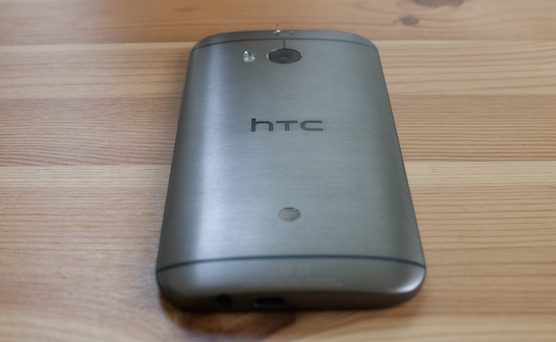
A HTC phone (source: paste mag)
Right now, it is rumored that Google wants to buy this company. But do not hold your breathe, Google will do the Motorola deal – take the patents and sell the company. HTC cannot compete in North America and Google knows that. The once innovative phone maker has lost grounds and may not have the resources to recover in the age of Apple, Huawei and Samsung. Google cannot save HTC, either.
The report said HTC and Google are expected to strike a deal by the end of this year as the Taiwanese firm cannot bear any additional losses from its smartphone operations. The report gave the market a different perspective about HTC’s future development since the market had widely speculated that the company will dispose of its virtual reality assets.
Rationale for HTC Acquisition
Dangote is investing heavily in agriculture and many sectors. Having HTC will help it modernize the agriculture sector and create new demand for mobile devices in the farmers networks. That will help it build a new business, adding more value in the agricultural value chain. The farmers that work with his company could be the first customers of a new device business if he uses his scale and HTC technology to deploy integrated solutions that will improve farming and agricultural services in Africa. This is a growth area and only Dangote has the ability to execute. HTC will have Dangote companies as its first customers, and when that happens in a Group, good things materialize.
Upon acquisition, he should close HTC sales operations in Europe and America and focus the firm in Asia, Latin America and Africa. In Africa, specifically, he will add more value to HTC products, at both the design and the applications inside them. This is one way Dangote Group can engineer huge growth and diversify its portfolios. Some of the areas below are opportunities which HTC acquisition can help Dangote unlock in the agriculture sector. It can build an integrated farming network that will be the foundation of agriculture 4.0 in Africa. And Dangote can use technology to create new businesses in these sub-sectors.
Agriculture insurance technology: making insurance products geared for farming
Agro lending technology: delivering capital to farmers at scale supported by technology
Farming ecommerce: expanding farmers’ markets by providing digital platforms for trade
Pricing aggregation: facilitating trading through provision of produce price data
Storage: African farmers struggle with storage of produce. Building solutions in this area will be catalytic
Logistics: there is a huge opportunity to facilitate the delivery of produce from rural areas to urban areas across Africa with our poor road networks
Digitization of transactions: from payment to tracing origins of produce, we have a huge need to digitize farming systems in Africa
Commodity trading: building exchanges for trading commodities
Others: there are opportunities like making digital tools farmers can use. These could include farm diary, mapping solutions, etc
All Together
Dangote Group wants to invest up to $50 billion outside Africa to diversify its business geographically. It has already planned to invest or rather investing about $5 billion in agriculture in Africa. I recommend that it buys HTC Corp to help it unlock more value in the investments in agriculture. Agricultural commodity is projected to become a $1 trillion business by 2030 in Africa, according to the African Development Bank. The data/equipment/tools around agriculture could be at least $150 billion by then. HTC will help Dangote Group play a major role in this emerging agro sector as mobile computing will anchor that data future. Though the firm may not have the experience to run technology-enabled businesses, selling mobile devices, once they are made in Taiwan, will not necessarily be different for a man that understands consumers and their taste trajectories. Once he brings HTC inside, he needs to close sales operations of HTC in U.S. and Europe since the firm cannot compete in the age of Apple, Samsung and Huawei. This acquisition will create value for the company.
As Internet penetrates, the world will continue to transition markets and businesses into the cyberspace from the meatspace. Consequently, individuals, firms and nations will do more transactions online. Online business and communication offer speed, efficiency and cost reduction.
Nonetheless, as cyber culture increases, governments, firms and individuals will be faced with digital terror, digital fraud, and intellectual property thefts, among others. The solution is not to decouple from the cyber community; rather, to develop a holistic strategy that will mitigate these threats.
During my days as a bank IT infrastructure administrator with certification in Cisco technologies, I noted some points on what firms and individuals can do to protect themselves. The following are updated suggestions on how to stay secure in a digitalizing world for the trio of governments, individuals and firms.
Establish IT Security Policy
Many organizations do not have IT security policy. That creates vulnerabilities for them. Irrespective of your size, you must have a policy that ensures that your firm’s digital asset is well secured and protected with steps defined on how those will be done. Understand that your cyber threats are not just from the computers, those Smartphones are internet nodes and could destroy your firm’s competitiveness. As staff accesses more office data via these phones, you must have a policy to ensure that you have your data secured. There are many Wi-fi enabled devices today; those are potential threats if they can compromise your data. Even a GPS location system could harm your strategy if it can reveal to the whole world where your marketing directors are going. You must specify how those marketing team use those solutions.
Government agency NITDA whose DG appears on photo above has a mandate to assist institutions deepen their cybersecurity resilience
Train Your Staff
While you can have an IT Security Policy, that is not enough. Every firm must make sure that staff understands this policy and what they must do to keep the digital ware safe and secured. Do not assume anything. And this training must be continuous; as the digital threats evolve, you must update the knowledge of your staff. My business offers a good training program for companies.
Make Your Staff Partners
This is perhaps the most important for financial institution. The most threats come from the staff or what they call internal customers. While you can have policies and tell them what they do, you must ensure that you have ethical and honest work teams that are dependable. It turns out that many IT security issues in financial institutions happen due to mistakes or involvements of staff.
Under Industrial Espionage
Assume that in this ultra competitive world that your firm may be under attack. Understanding this means you must develop ways to curtail it. You must protect your trade secrets; otherwise your survivability can be compromised. Think through the ways you package your technology and how you relate with your customers if there are potential threats to trade secret. Also, assume that some other firms in other nations may want to steal from you. Be vigilant.
Get Data off the Web
In the most critical instances, the most secured data are those which are not online. You can disconnect your very important servers online or dynamically in sequence change their network addresses. It is not all machines that have to be online. As a young graduate, I told a former university chancellor who was opening a tax business that one machine must be offline since he could not guarantee that it cannot be hacked. In the same way, build a network where you create a cushion between your most critical server and the web. In other words, have a redundant server between your critical data and the web so that any attack will first hit that redundant one.
Backup
While the digital world makes life so cool, it could also destroy life. Have a backup strategy irrespective of the size of your business. Never assume that the computers will be working. And when you backup, use a protected storage device. I have come to like Flash Memory Keys that are password protected for individuals. For big firms, there are tapes which are developed for this that can store lots of data. For banks, they not only have to backup, they must move the backup away from their locations. In other words, when you backup in Victoria Island, you can store that backup in Ikeja (both in Lagos State, Nigeria). For big organizations, you may have to move to another state with a larger geographical spread.
This is important since if a natural disaster happens in Victoria Island, you can easily recover and continue operation in Ikeja. For the most critical institutions, you can do live off-site backing where data is sent live to an offsite that is in another state or even country. Again, that communication must be well secured.
Note that using Dropbox can be a very successful backup strategy. Backup has been simplified in this age.
Use Bank Vaults
When I came to the United States from my home nation, I used bank vaults for all my important documents. As a student in the graduate student living area, I was not confident to leave my data there. That made sense since losing the items could be problematic. The same goes for some company IT backups, if you cannot store in a good secured place, use a bank vault, where available.
Individuals, Move Tax Documents off Computers
Until I started working and could afford to upgrade my personal computers with good security software, I never stored any of my tax documents in my computer. In short, I do not now even though my computers are protected. I have this understanding that my small machine cannot keep up to date with hackers since they have more resources and I do not want shocks. What I do is this, as soon as I finish completing my tax documents online, I save the PDF document on my laptop. I do that after I have put my computer off the Internet. Quickly, I move the data to my flash key which is password protected and print a hardcopy. I then delete the file and reconnect to the web.
Develop Your Security Tools
For big organizations with more major threats, it is not all security tools that can be bought. The more security tools diffuse, the more hackers or bad people try to compromise them. So, if all uses one security tool, the risk of breaking it is higher than the lesser used one. During my master’s programs (in Information Technology), I developed a simple metric to determining when to buy or build. The more market share a security software gets, the lesser points I assign it, as I assume that its risk profile correlates with market penetration. That is counter-intuitive, but it makes sense. My point is that lesser known solutions are not prime targets. If you lack ability to build, negotiate for a custom solution that will not be distributed to the mass market.
For military, I even imagine them getting a different kind of network since they have allowed us to use the present one. It makes no sense that Pentagon and Nigerian military command use the same net backbone I use in my house. They need different ways of getting into the web, the rest of the bad boys cannot understand. The same goes for how you store data on cellphones and other Apps. They are threats and you must follow up.
We have the nuclear; yes, we need the cyber equivalent in this world. While nuclear bombs are dangerous and quick destroyers, cyber weapon can kill slowly a nation’s economy and long-time competitiveness. United Nations must step up and provide leadership to ensure our digital world is safe for next generation. In a piece, I noted: “our future wars will not be fought with machetes and guns, but by bits and bytes”. Yes, we can destroy our modern economy if cyber-wars escalate. And that is why we need non-proliferation treaty on cyber-weapon. When Elon Musk talks of AI World War, that is the higher end of that cyber-weapon, because the AI wars will be fought online. UN needs to lead here.
Amazon has moved into offline with the acquisition of Whole Foods. The ecommerce giant had noted the limit of ecommerce when it comes to grocery. With a physical store, Amazon can offer a better user experience to its customers than a business that relied solely on trucking grocery across cities.
Now Alibaba, the king of marketplace with focus on connecting buyers and sellers, is reportedly building a physical store. Alibaba does not typically own the inventory in its portal; it feeds on commissions from transactions executed on its platforms. This strategy of building a store is new and it is a big deal.
Alibaba, the operator of China’s largest online sales platform, is reportedly building its own mall as it seeks to enrich the real-world shopping experience with technology and convenience.
The five-story shopping center — which the company is calling “More Mall” — is located at Alibaba’s headquarters in the eastern Chinese city of Hangzhou.
The mall was built on a 40,000-square-meter plot of land and is scheduled to open in April, according to linkshop.com. Currently, construction crews are finishing up work on the building’s interior. —
Under the initiative, Alibaba is moving fast into offline spaces to help remake traditional retailing, including launching unmanned convenience store and bringing big data technology to 1 million mom-and-pop stores. Now, it’s building its first shopping center.
Walmart, the world’s largest retailer, has efficiently integrated its physical stores with its online operations. From Macy’s to Bestbuy, we are seeing companies capitalizing on their physical stores to deepen their competitive capabilities in the digital space. If that is the trend, I do think Jumia and Konga need to follow the bandwagon. Sure, they need to examine if that makes sense for them.
This is a way they can do this: build a store in each of Abuja, Lagos and Port Harcourt. The movers and shakers have said it:
“Alibaba believes the future of New Retail will be a harmonious integration of online and offline,” said Daniel Zhang, CEO of Alibaba Group, in a statement in July.
I will not call it New Retail; I will call it Hybrid-Commerce or h-commerce for short. Of course, someone might have used the same term. But that is the way I see it. I do think the interface of the meatspace and internet will help companies like Konga and Jumia compete in the Tier 1 cities in Nigeria. If the pioneers of the sector are moving to h-commerce, I do think they need to do so. This is the era of h-commerce. It is ON.
A hybrid commerce business is one that sells both online and offline. The primary purpose of the business is retailing. It will fuse the meatspace and the ecommerce drawing on technologies such as mobile commerce, electronic funds transfer, supply chain management, Internet marketing, online transaction processing, electronic data interchange (EDI), inventory management systems, and automated data collection systems.