

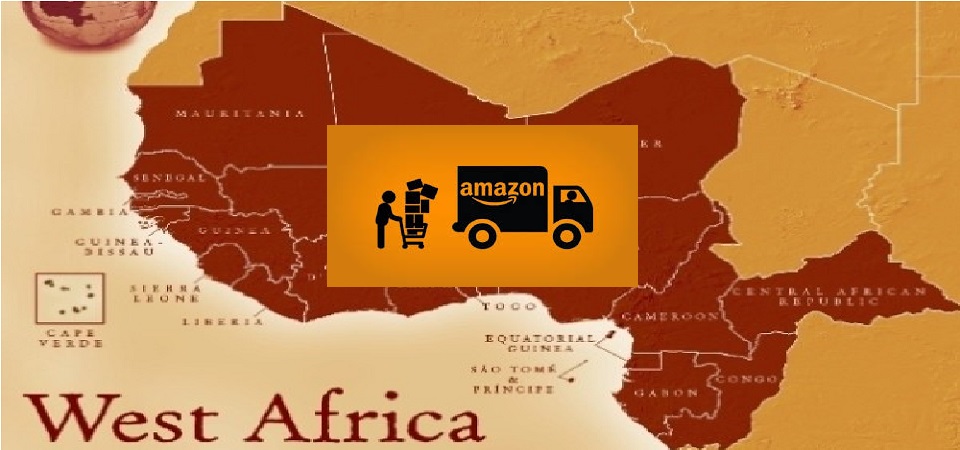
Bottomline: Last week, Amazon posted a new job description, titled “Business Development Manager – eCommerce/ West Africa”, but quickly took it down. Amazon wants to be in West Africa, using its best product, the ecommerce, as a landing platform to expand its empire, and have new data sources. Those empires include Echo/Alexa, Amazon Web Services, […]
Thank You, Corporate Subscribers
Our community is getting more exciting and the next level is here. We are now having companies subscribing to Tekedia for their staff. It comes like this to our email; this one from a LinkedIn user (we have his permission to share) to my InMail:
Sir,
Good morning…. interesting outlook on some of your articles..I am actually going to subscribe your article for my employees in Nigeria to read…. You have some interesting outlook on the economy.
We welcome that. Thank you.
Apology for Offline
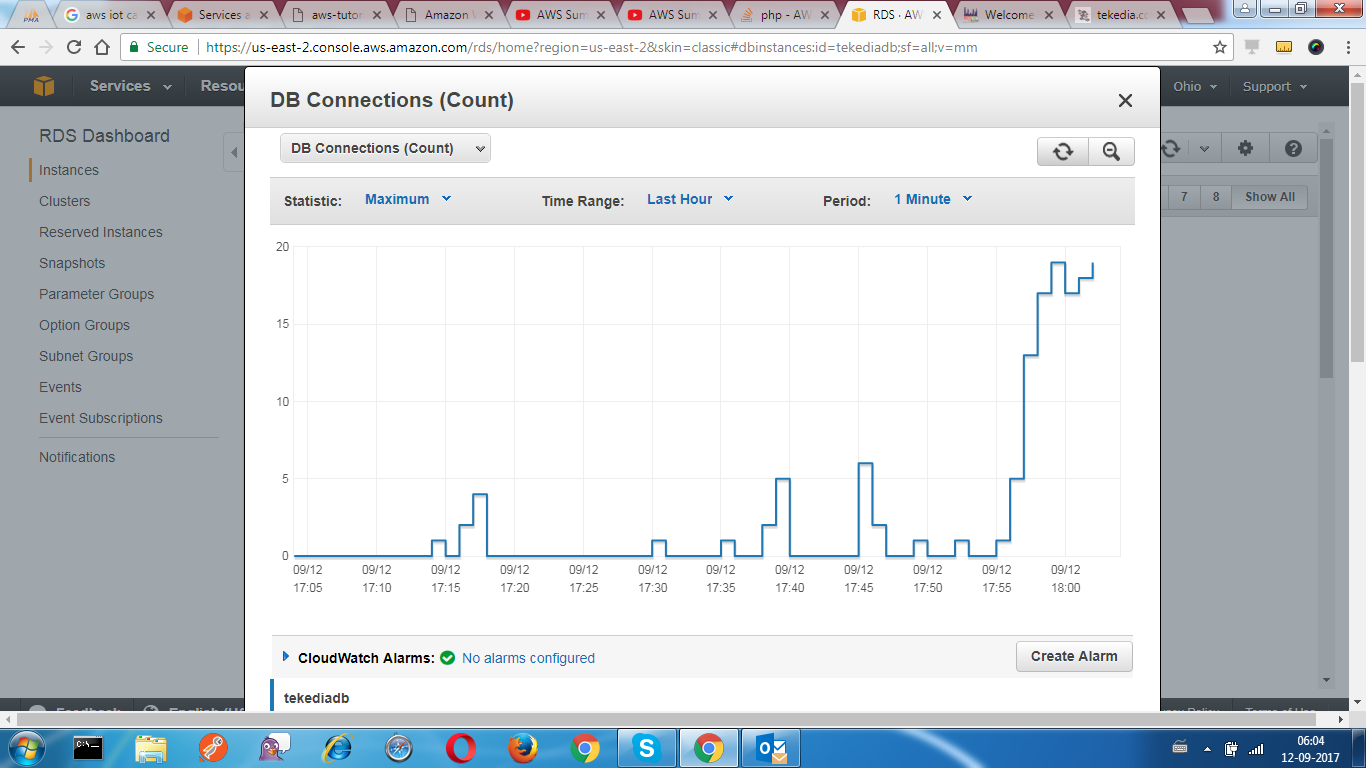
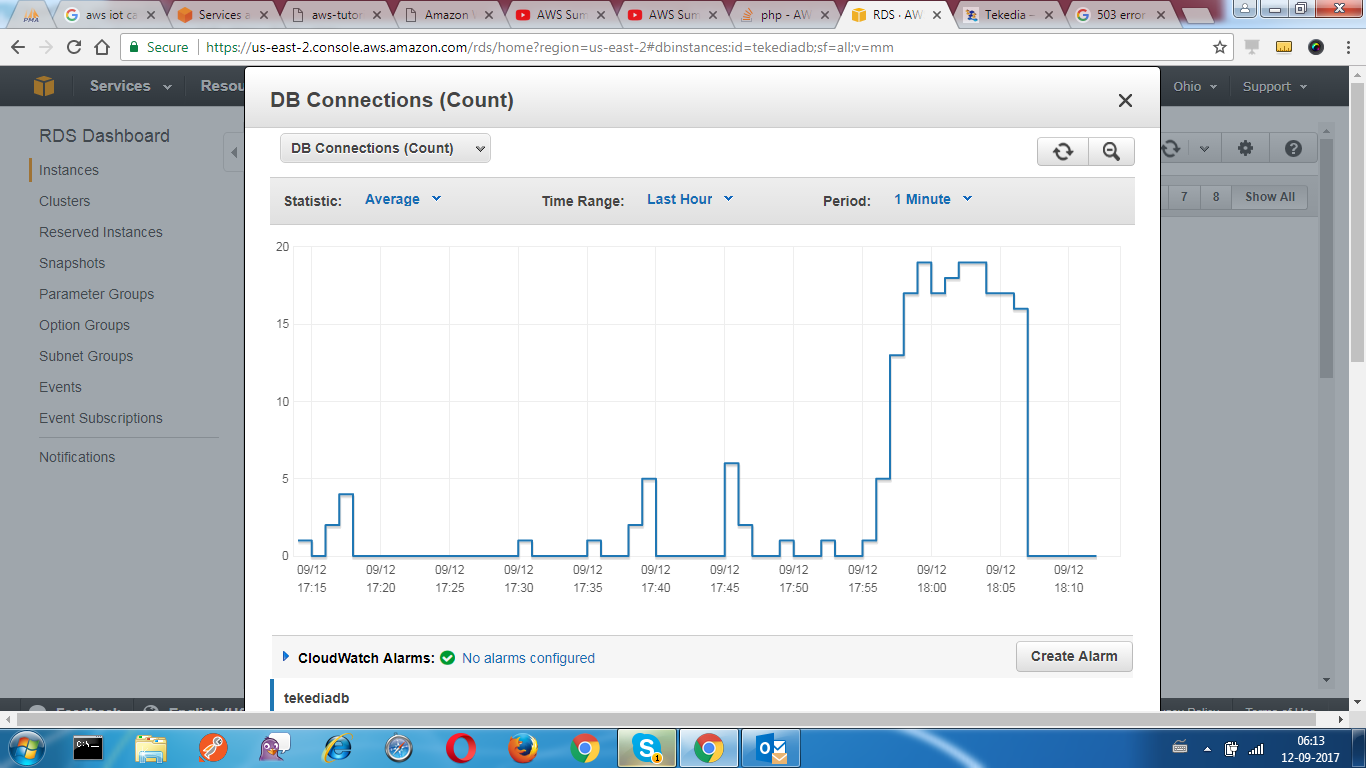
But one hour ago, site crashed. We are on Amazon Web Services but just noticed that AWS does not guarantee blanket traffic growth. We will upgrade and team is evaluating options. We started with the lowest possible plan but it needs to evolve. I apologize for the service interruption that happened.
This is a good problem to have and I thank you for the patience. We will get site to the best possible quality. Here are some data snapshots. When the data was high, site froze. And people left, and site came back live. That is not supposed to be. I had expected AWS to accommodate the traffic surge at the peak hour. We will get into the right plan to ensure we enjoy that elasticity AWS offers.
Apologies for the Downtime This Early Morning – Trying to Implement SSL

We want to apologize for the downtime early this morning. We were trying to implement SSL on Tekedia. But owing to traffic, it was not just working. We aborted the process to get the site back online. We apologize. We will work on that during the weekend.
We do not really need SSL but Google has noted that it needs it to improve a site ranking. We want more people to find Tekedia articles on search engine and we are just complying with almighty Google.
Thanks
Tekedia Admin
Using the Car Salesman Pricing Strategy in Your Startup

Getting customers to open their wallets and pay for products requires a lot of work. If you think otherwise, you will be making a mistake. In short, a sign that you do not really care means that you will lose the customers pretty fast. Consumers are smart. Daily, they have to deal with opportunity costs in a world where they have limited resources to meet their largely unlimited needs.
There are many ways of getting customers to open their wallets and buy from you. Over the years, I have noticed one technique that works. I call it the Car Salesman Pricing Strategy. Most car salespeople in U.S. do not give price as a whole amount when you visit dealers for car shopping. Rather, they give you the price based on your estimated monthly payment installment amount, for cars that will be financed. They do not want you to be thinking of committing to a huge amount with all the associated burdens of paying back. The monthly payment is very manageable, in your brain.
Let us say you want to buy a car that costs $24,000 to be financed at 0% for 6 years. A good salesman will give you the price, usually in a written pad, as $333 per month, instead of $24,000. That $333 is more manageable than $24,000 even though the price is largely the same at 0% financing. That you can get 0% means that you have a good credit and the system is rewarding you for that. The product actually costs lesser when you factor inflation over time. But the reality is that you have a product of $333 and not necessarily $24,000 as you will be dealing with paying only $333 every month. You think of your paycheck to see if it can accommodate additional $333 monthly.
This Car Salesman Pricing Strategy is not new. It has been part of the retail industry especially where the companies offer financing. You want to offer the pricing in ways that customers get to sign the papers as quickly as possible. Apple is deploying it as it works to obfuscate the very fact that its recent iPhone smartphones are expensive in excess of $1,000. Simply, they offer payment plans, focusing on the monthly servicing over the complete number. Samsung does the same.
The phone makers are going to great lengths to elide this psychological price barrier by reframing just how much their devices will cost you. Samsung lists its cheapest Note 8 price at $929.99, but right below it on the company website is the installment price, $38.75 a month for two years. (That zero percent interest rate represents a significant subsidy.) Apple charges $969 for the most expensive iPhone currently on store shelves, the 7 Plus with 256 gigabytes of storage, and over the past year has been heavily promoting its $40-a-month plan. Samsung is also emphasizing ways to defray the cost of a new model. Customers trading in their old phones can now get as much as $300 toward a Note 8 or Galaxy S8, up from $200 before the Note 8 was announced….
A $1,000 iPhone would likely cost customers less than $50 a month over two years. If you’ve absolutely got to have the latest hardware, that’s a lot easier than telling your friends you paid $1,000 for a phone
Apple is dealing with some issues. It is upgrading its phone in the age where innovation means more features and higher performance. According to Quartz, the “ $1,000 special anniversary smartphone, called the iPhone Edition or iPhone X, featuring an edge-to-edge screen, wireless charging, no home button, and a powerful set of dual cameras” will be unveiled today and Apple plans to make sure people do not see the real price they will be paying. They will use the monthly financing strategy.
Besides the monthly payment plan strategy, there are other ways companies use to create this psychological illusion in the minds of customers.
- Sign up customers to supporting subscriptions or products: Common examples include gym or club memberships for buying some items in your business. Someone buys a car and you pay for the gym membership. The customer will remember that side attraction as though it matters that much.
- Free optional accessories with the main products: Though the product may not be that valuable, it creates an illusion that you got a deal. Time Magazine has one terrible watch that it gives to new subscribers of its magazine as a time. That cheap watch seems like a big deal but it was nothing of value. But signing up and getting a watch could make the brain think like you have got a great deal
- Offer “buy one get one” free to customers: You do this when the price of one is high enough to cover the two items. That means, customers are paying for the two items, even though you are making it seem like they are getting a good deal by paying for one item and you giving away another. Fast food companies do this a lot.
- Reward system: You can give restaurant coupons to customers that sign up. That could be the edge over competitors. Possibly, the idea of going to that nice restaurant can move the customer to buy from you.
- Through other company products: The cruise industry is good with this technique. They make you pay for cruise but right inside the ship, you could be paying $9 for a bottle of water. By the time you are done after 2 weeks, they have made so much from you to cover the subsidized cruise ticket.
All Together
Irrespective of what you sell, you need to have a strategy to make customers think they are getting value when they buy your products. Customers like to win and you must deliver that construct to them, always. The Car Salesman Pricing Strategy works anywhere and in any industry, and you need to deliver one in your company.
The Boundless Citizen Energy

Since democratic system of governance was invented many centuries ago, the present transformation or redesigning phase it is experiencing across many nations is noticeable. From America to Africa, technology is restructuring how citizens relate with their leaders. With readily available information, the citizens have become more informed and active in the affairs of their nations.
Leadership has morphed into a very simple two-way feedback system that is cheap, efficient and timely. And that has come through the powers of social media networks which enable interactions between any interested citizen and the leaders. From American President to his Nigerian counterpart, Facebook provides a platform for dialogue. Citizens can go online and post simple questions and expect the leaders to take note.
This evolving trend is possible because communication systems have become cheaper and accessible. In the old network TV model, only the very influential people could get on the TV to make suggestions on how the country could be managed. But today, what is important is an idea: a great one can be read by the world in minutes.
It is not just the political leadership that is using this citizen energy. Businesses are increasingly sourcing and sharing ideas from the consumers of their products. They get insights that help them shape future products. And the consumers also pass across their feelings when they do not get the products rights. In this piece, I will focus on the political leadership.
Never before is the citizen exerting more influence than what we have today. And the future looks more exciting because Moore’s Law will guarantee us more access to networks of more people as technology prices continue to go down even with more efficiency and performance.
In the midst of this development is a challenge for government to be ethical. Every citizen is a pseudo journalist and control over the media empires will not stop any bad act from being transmitted across the globe.
It used to be, take care of the big networks and any scandal will never be made open. It does not work anymore because there are many avenues to break news without the media houses. And those can move faster with devastating impact that even retraction makes no sense since the digital footprints are always there.
This implies that governments must be mindful that in the era of modern democracy, it has become more open. And this openness brings a challenge to act ethical at all times. There is no more a season of deals because anything can appear on the web. Technically, there is no secret.
The Tripod Relationship
Governments must understand that the tripod relationships among them, citizens and institutions have changed drastically over the years. Globalization makes it possible to have access to information for benchmarking what other constituencies are doing. And immediately, firms and people change their expectations from their governments.
Over the course of many centuries, governments have moved from central, regional, then central, and now to citizen government, especially in democracies. The self-aware citizens do not accept polices hook, line and sinker. Even in feudal systems, the citizens are asking questions and that old dominance has since been challenged on accountability.
In America, the citizens could organize under a Tea Party umbrella; in Nigeria, they have MuMuDonDo. Despite their different names and modus operandi, these organizations and many that can be found in any democracy are pushing leaders to be more open, accountable and responsive. And they honestly think that directing the future of the nation must not be left alone to the politicians. They want to influence dialogue and the nation’s trajectory. They ask questions on areas of national concerns and they want change.
Forty years ago, they might appear to be ill-informed. Not anymore! They have access to information that used to be seen only by government officials as technology has made dissemination easier. From Think Tanks to universities to non-governmental organizations, anyone could read their analyses online, free. Even the government’s own writings are easily available and suddenly that secrecy that leaders enjoyed over things that shaped their policies is eroding. People now challenge them with data and can authoritatively make their points for new directions.
Leadership in this era provides an opportunity that a star could be born overnight as performance news pass across boundaries. It offers an opportunity to be ethical and honest in dealing with the citizens. One understands the difficulty leaders face in trying to engineer the nation to long-term prosperity when most of the citizens are interested in the short-terms. How you communicate the need for minor pains today for major joy tomorrow will depend on how trustworthy you are. Citizens will believe an honest leader and can give concessions for the good of the nation.
As the opportunity is also the threat. It is easier to see politicians resign quicker and faster after scandals are broken. The bad news go through the same pathway the good ones pass.
The Expressive leadership
In open democracy, what is leadership? Can we argue that China which shortened a century of western innovation into a quarter century under no internationally accepted democratic norm is not displaying leadership we could envy? No open democracy, but the world, especially Africa is looking towards China. They envy that state capitalism where the leaders build world class public institutions that Wall Street gladly accepts even when they criticize governments going into business in America and Africa. From banking to energy, we have pseudo government-run empires in China that best investors welcome through successful IPOs.
The reality is that under a citizen government, economic vibrancy is not the only gain of governance. People want freedom, by nature. Nonetheless, leadership and good one minus other externalities is not only found in democracy. However, to the people, denying them the right to attain that position of leadership, if they choose, shows the leader is not a good one. It is about having rights to exercise wishes under the law. And every person irrespective of birth can fulfill a dream. Under this hypothesis, many African leaders that oppose elections are designated as bad leaders by the West irrespective of their efforts in other areas. By acculturation, the West thinks that a political leadership should be expressive and open.
Leadership is the biggest challenge in Africa today. The capacity to redesign the economy with visions that connect young and old, with lofty imaginations of unbounded future, has to be stimulated by a man or a woman. Some seemed to be emerging like the President Rwanda Paul Kagame, but the tonic allure of power has made him an apostle of one nation, under one man, instead of a legacy to have built an institution men and women will commit for generations.
Without institutions, Africa becomes exposed to the turbulent and irrational open democratic process where the same people that complained of lack of development will accept a penny to vote a man that will steal dimes tomorrow. In Nigeria, it is a very strategic system to win elections and has been christened “stomach infrastructure”, and it works. Once the citizens accept the ” stomach infrastructure” , the other types of infrastructures like roads, water, and electricity are corruptly extinguished like wild fire across state houses.
Yet, there is hope because of the citizen energy. I dream of a world where governance is open and transparent with a vista not only to economic greatness, but individual rights. It must be one where citizen energy is exerted in the affairs of the nation and leaders stewards not only to the citizens, but the nation. And those leaders taking the opportunities that technology brings, through openness and continuous improvement, to restore the dignity of man.