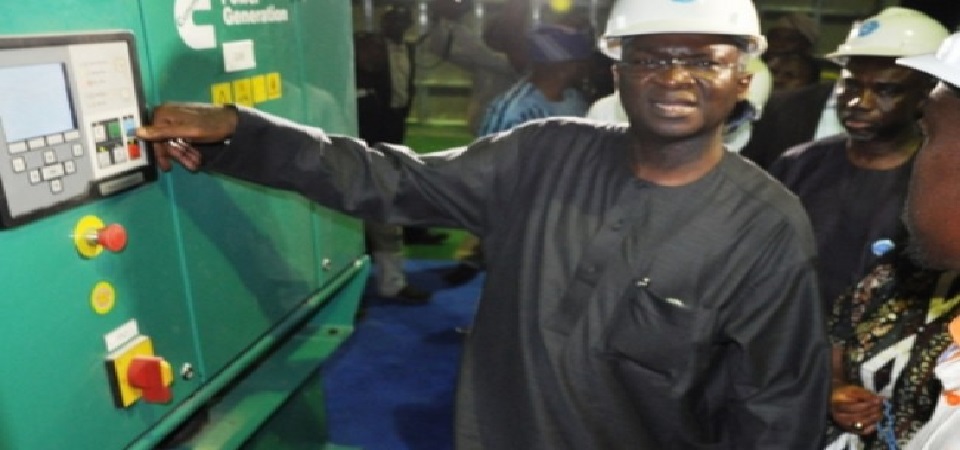
Mr. B. Fashola, Nigeria's minister supervising electricity sector
You have this great idea: build a solar farm and use blockchain to take Africa to the new age of electricity distribution and retailing. Congratulations for being ahead of the technology curve, in the continent. But I have a hard news for you: that project will fail in most African countries.
Why? It turns out that in places like Nigeria, for example, only the distribution companies (discos) can install meters. So, if they do not like your meter, there is nothing you can do about it. The electricity sector is bundled which means startups cannot just have access to the national grid unfettered. You have to go through one link to connect to the grid, and that is the disco. That is the regulation today. And when you go, you have to pay them. The government does not have any template on that revenue distribution. Technically, you are at a disadvantage in negotiating any contract with the discos.
So, before you begin to pitch investors on energy projects and how you can revolutionize Africa with solar and blockchain, check the regulation on what it can allow you to do. Electricity supply is terrible in Nigeria, and our entrepreneurs understand the opportunities in the sector. They can provide solar and some other supporting technologies to serve customers. But there is one problem: if they serve customers, they will need to grow and scale. But to scale, the present regulation must be changed or updated to give them access to the national grid.
Use of blockchain in smart metering is used in some countries. But regulations may affect adoption in some African countries (image credit: Indigo)
While you can have solar power in each home, the value will come when you can use solar to support a village or community. To have the capacity to do that, you will need to pipe the electricity through the national grid and meter it appropriately. (I do think you will not like to build new poles and connecting wires.) But the discos, knowing that they have no challenger, may not cooperate with your plans. Without the meter, which only discos supply, with specifications largely defined by government, you have no business. And right now, there is no specification that a smart meter can be powered by blockchain. Largely, discos may not be sold to that idea. They have no motivation to innovate because the territory is assigned to them.
In Nigeria, there are few of these discos spread regionally. Unless you can work with them and convince them, knowing that they have minimal incentive to innovate, do not waste your time.
It is only a new regulation that can change the situation. Simply, government has to unbundle the electricity sector so that entrepreneurs can help improve it. The biggest challenge today is not technical, but regulation, for entrepreneurs. We do hope they will lead there as they promised during the election. Perhaps, the entrepreneurs can lobby government to change the regulation. They need to find a way for discos and small players to co-exist for small competition to happen.
I like it when American media giants discuss China within the constructs of copycats. They have a right to do that. Everyone wants to be patriotic. For me, Nigerian jollof rice is better than the Senegalese one (and the whole of West Africa), irrespective of what any minister thinks in Nigeria. Sure, I like to call things the way they are, but for rice, I think there is no argument: Nigerians make better ones.
Now, to the issue at hand. China is actually huge in innovation. They have the best chatbot in the world. WeChat has advanced more than anything of its class including WhatsApp. With WeChat, you have a bank app, doing all kinds of things, including paying school fees and paying for bus ticket. Uber saw heat when a local rival, Didi Chuxing, challenged it and won. The best civilian drone maker in the world today is DJI which is a Chinese firm. The reality is that China is building category-king companies, across technology sectors.
But China is not just satisfied; it is going to the upstream of the technology pyramid. Huawei, a Chinese IT giant, plans to use artificial intelligence to redesign many features in mobile devices in order to challenge Apple and Samsung, the two industry leaders. The firm has built a new chip, Kirin 970, which it claims can preserve battery life on phones by up to 50%. The phone works using Neural Processing Unit (NPU) .
Artificial intelligence (AI) built into its new chips can help make phones more personalized, or anticipate the actions and interests of their users, Yu said.
As examples, he said AI can enable real-time language translation, heed voice commands, or take advantage of augmented reality, which overlays text, sounds, graphics and video on real-world images phone users see in front of them.
Yu believes the new Kirin 970 chip’s speed and low power can translate into features that will give its phones an edge over the Apple iPhone 8 series, set to be unveiled on Sept. 12, and Samsung’s range of top-line phones announced this year. Huawei is the world’s No. 3 smartphone maker behind Samsung and Apple.
“Compared with Samsung and Apple, we have advantages,” Yu said in an interview during the annual IFA consumer electronics fair in Berlin. “Users are in for much faster (feature) performance, longer battery life and more compact design.”
Neural chips are not new, but using them in the consumer phone market is pioneering. What Huawei is doing is integrating the AI at the level of hardware, not just at the software level. It is having “Artificial intelligence (AI) built into its new chips”, beyond the software where many firms operate.
The Huawei Kirin chip illustration [source: Huawei consumer]
It brings together classic computing, graphics, image and digital signal processing power that have typically required separate chips, taking up more space and slowing interaction between features within phones.
Most importantly, Huawei aims to use the Kirin chips to differentiate its phones from a vast sea of competitors, including Samsung, who overwhelming rely on rival Snapdragon chips from Qualcomm, the market leader in mobile chip design. Among major phone makers, only Apple and Huawei now rely on their own core processors.
So in this race, Huawei is ahead of Samsung, because Samsung still uses Qualcomm Snapdragon. Chip design is not what you can clone. It requires a deeper level of engineering. So when they write-off China, be guided that most are not fair.
Huawei could be redefining the future of mobile and watch out for others to copy it. It has challenged Cisco to a draw, if you do not want to call it for Huawei. Its main problem, with competitors, is that it makes things free, because it always finds out the best way to make them cheaper. Besides any government support which everyone gets around the world, Huawei is winning on technology, not just on pricing. China deserves a lot of respect in the technology world.
I will not waste time here discussing Africa and what we can learn, except to say that the evolution of China offers us a clear roadmap towards our development. We can start small, and then over time, move to the upper level in the technology pyramid. China has stationed a good ladder and continues to climb, Africa must learn from that model.
Bottomline: Legendary co-founder and former CEO of Apple, Steve Jobs, was a legend. He pioneered a management system in Apple which successfully redesigned the firm and brought unrivaled level of product innovation in the world. He engineered perception demand constructwhich made Apple a category-king in most sectors it competes. In this long piece, I explain […]
I have been following Samsung over the last few years. It makes really great products – microchips, smartphones, kitchenware, and many others. But Samsung is not necessarily spotless. It has had its Galaxy Note 7 exploding-battery problem and continues to battle with Apple in the smartphone business. Yet, despite these issues, Samsung stock has not frozen; a QZ newsletter explains it thus:
Throughout all this, Samsung Electronics—the crown jewel of the larger Samsung empire—has been running a tear on the Korea Exchange. Its components division, which makes OLED displays and semiconductors, has kept operating profit strong. The company’s market capitalization has increased by $85 billion, up almost 44% from one year ago. It seems that in the eyes of shareholders, the turmoil surrounding Samsung Electronics remains secondary to its solid fundamentals.
And the big one few days ago: the heir to the Samsung empire, Lee Jae-yong, was convicted and sentenced to five years in prison. He had been founded guilty in an illegal donation as the company pursued its merger plans.
While not condoning what has happened in Samsung including the illegal donation and making sub-par products that put people at risks, you cannot miss the discipline of its investors. In U.S., Samsung could have paid severe penalty. In short, the conviction of the Samsung heir could have pushed the stock to deep worry territory. Of course, the guy will not even be near Samsung before the trial was over. Activists would have asked him to step down, and resigned from the company. Some could have asked him to sell his shares.
If you think former Uber CEO Travis Kalanick was misbehaving, remember that no one had convicted him of any crime. Yet, they pushed him to step down despite the clear evidence that he was generating alpha.
So, if you look at the South Korean people, you need to question how they have navigated all these issues which have befallen Samsung and still believed. They understand that the company has solid business fundamental, and have refused to be distracted by the scandals. Indeed, it is hard to fathom how a company’s owner (yes, he is the heir) of such a large firm was convicted, and the stock did not even move. The only explanation is: provided Samsung keeps generating profits, nothing matters. They are indeed confident on the fundamentals of this business and Samsung is lucky to have them.
While I do not necessarily support the level of confidence, what is happening in South Korea tells me about resilience and expectation at national level. There is something for every nation to learn here: knee-jerk reaction may not do so much good. The unprecedented collapse of the Nigerian stock market nine years ago cannot be totally blamed on the Great Recession, but the fact that we simply over-reacted to events that we were not necessarily at the center. Even if the foreign investors had pulled their capital, Nigerians could have done things differently. Of course, without solid confidence in the markets and the companies, that would be hard to expect.
According to the Oxford Dictionary, molue, in Nigeria, is a privately-owned commercial bus seating forty-four passengers. It has an origin from the Yoruba.
1970s; earliest use found in New Nigerian. From Yoruba móòluè, probably lit. ‘mould it’ (perhaps referring to the method of construction from shaped iron sheets) from English mould + Yoruba e, 3rd person singular pronoun object.
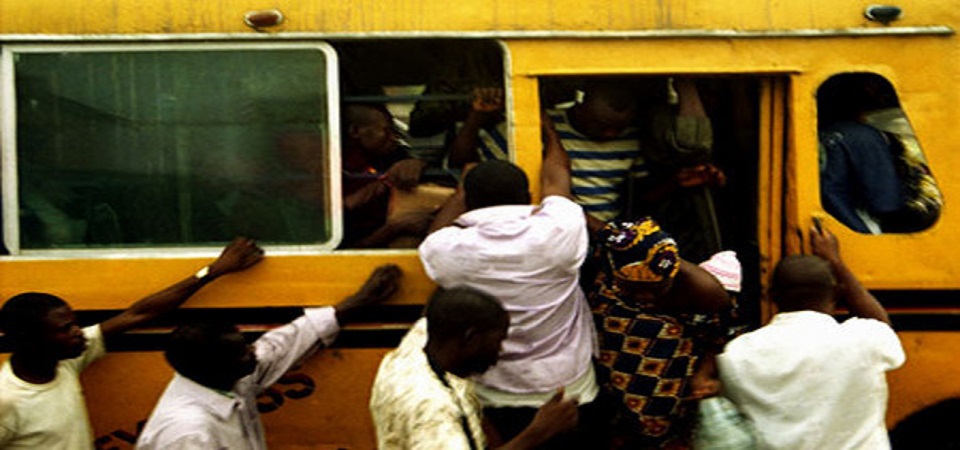
Today, we know the bus as that rickety yellow bus plying across some West African cities and most times causing mayhem. It does not have to be seating 44 passengers. There are many incarnates of molue since the 1970s origin.
But here, I am not focusing on the bus, but rather, the rules that govern its operation. In one country, molue, is a school bus, that moves primary and secondary school kids across major American cities. It has many strict rules for both the drivers, passengers and other road users. For the passengers, the students, we have the following:
Students must listen to the driver and follow the driver’s directions. The driver has the authority of a classroom teacher.
If crossing the street to board the bus, students MUST look both left and right for cars, make sure the RED lights are flashing, and wait for the driver’s signal to cross. Always cross the street in FRONT of the bus.
Before boarding and after exiting the bus, students must keep a safe distance from the bus. Keep at least 10 FEET away from the bus.
Students are to enter the bus promptly, immediately take their seats, and remain seated whenever the bus in moving.
Students are to conduct themselves on the bus in such a way that will not distract the driver. Distracting the driver puts everyone on the bus at risk.
Prepare to stop when a slowing bus has its overhead yellow lights flashing
Stop at least 20 feet away for buses when red lights are flashing, unless driving in the opposite direction on a divided highway
Slow down in or near school and residential areas
Look for clues-such as safety patrols, crossing guards, bicycles, and playgrounds-that indicate children might be in the area
Watch for children between parked cars and other objects
The school bus drivers, i.e., those driving the buses have their own rules. For example, they must ensure that all the students are seated before putting the bus in motion. They must also ensure that students who do not behave well are disciplined: they can call the Police to take an unruly student out of a bus.
The School Bus Becomes Molue
Now, the school has been imported into Western Africa, and it is now molue. All the rules governing the bus immediately cease to apply. Molue becomes a symbol of recklessness. The driver can be drunk and drive. The passengers stand-up, and their weights, in some cases, flip the buses into lagoons. The bus drivers run red lights and the highly respected American yellow buses are now disliked by road users. Molue hits cars with reckless abandon knowing that it has nothing to lose. The government of Lagos banned molue few years ago to bring sanity to Lagos roads.
But the question is this: why should it be this way? The school bus had been retired in US and West African businessmen go to U.S. and import them into West Africa. The rules books are torn and just like that, the license to mayhem is unleashed on the roads.
Yet, you may not really blame the entrepreneurs. You have to look at government. Accident kills more people in Nigeria than possibly any disease yearly. It goes beyond molue: we have real problems in West Africa.
All Together
Before its ban, whenever I was in Lagos and saw molue, I was reminded on what the color meant in America. When people jumped into a moving vehicle, I recalled that you cannot even stay 10 feet around the American molue when the red light is flashing.
But what happens to the school bus can happen in any area in Nigeria. We see medicine hawkers promoting and using drugs beyond what their legal uses are. They claim the drugs can cure anything in a broad day light and no one arrests them. We see people using tiles designed for walls for bathroom floors thereby making our bathrooms death enclaves across Nigeria, and no one is stopping that.
Sure, the old molue may be gone but the LAGBUS is turning into one.
MOST Lagos residents move from place to place by road. And due to the importance of this mode of transportation in the metropolis, vehicles of different types have been used, at different times. One of these is the notorious Molue, a long bus with capacity to carry over 100 passengers at once.
Characteristically, Molue is a metaphor of some sort – from sublime to ridicule. In those days, taking Molue as means of transportation was much cheaper, compared to its twin, Danfo and others such as taxi and Kabukabu.
But owing to the dangers inherent in Molue, former Governor Babatunde Fashola, in conjunction with the National Union of Road Transport Workers (NURTW), introduced the Lagos State Bus Asset Management Limited (LAGBUS) scheme as a way of sanitising the transport system in the state…..
Taking a ride in LAGBUS buses is now reminiscent of the old Molue. The old habits have returned. Some of the buses have more than one conductor. Indeed, more than three persons stand at the front and back doors calling out to passengers or shouting at those already inside the vehicle.
Indeed, it is not the color of the bus that matters, but the level of discipline and decency of the people, the leaders and the citizens. Covering the yellow color of molue with LAGBUS logo, as noted in the Tribune piece, does not change the people running them. Until we can strengthen our rules, and make sure people face consequences for bad behavour, we can cover molue color, but the molue styles will still be everywhere.