DD
MM
YYYY

PAGES

DD
MM
YYYY

spot_img

PAGES

Home Blog Page 730

Chainlink’s LINK Reserve is a Strategic Move to Ensure Long-Term Sustainability, Boost LINK’s Tokenomics

0

Chainlink announced the launch of the Chainlink Reserve, a strategic onchain reserve of LINK tokens aimed at supporting the long-term growth and sustainability of the Chainlink Network.

The reserve is funded by converting both onchain service fees and offchain revenue from enterprise clients into LINK tokens via Chainlink’s Payment Abstraction system, which allows payments in stablecoins or gas tokens to be programmatically converted to LINK. Over $1 million in LINK has already been accumulated in the reserve during its early phase, with no withdrawals planned for several years to ensure steady growth.

The initiative is supported by 50% of fees from Chainlink’s Smart Value Recapture (SVR) services, enhancing the token’s demand-side economics. The reserve is built on Ethereum with a multi-day timelock for transparency and security, and its growth can be tracked via an analytics dashboard at reserve.chain.link.

The announcement led to a positive market response, with LINK’s price surging 6.8–9.14% to around $17.66–$19.04 and trading volume increasing significantly. By locking funds with a multi-day timelock and no planned withdrawals for years, Chainlink signals confidence in its long-term vision, potentially increasing trust among node operators, developers, and users.

Allocating 50% of fees from Smart Value Recapture (SVR) services to buy LINK tokens increases demand for the token, potentially creating upward price pressure over time. The Payment Abstraction system, allowing stablecoin and gas token payments to be converted to LINK, further integrates the token into Chainlink’s operational model.

By locking up LINK tokens in the reserve, the circulating supply is effectively reduced, which could support price stability or appreciation, assuming demand remains constant or grows. The reserve could fund grants, node subsidies, or new oracle services, encouraging more developers and enterprises to integrate Chainlink’s services.

The reserve strengthens Chainlink’s position against competitors like Band Protocol or API3 by demonstrating a robust financial strategy, potentially attracting more institutional interest. While the announcement drove positive momentum, the crypto market’s volatility means price gains may not be sustained without continued positive developments or broader market support.

The reserve’s focus on accumulating LINK tokens benefits existing holders by potentially increasing token value through reduced circulating supply and increased demand. However, new investors or those unable to afford LINK at current prices (post-surge) may face barriers to entry, widening the gap between early adopters and latecomers.

Chainlink node operators, who earn fees in LINK, may benefit directly from the reserve’s growth if it funds network improvements or subsidies. General investors, however, may only see indirect benefits through price appreciation, creating a divide in how rewards are distributed.

The reserve’s funding partly comes from enterprise clients via offchain revenue, suggesting Chainlink is prioritizing institutional adoption. Retail users or smaller DeFi projects may feel sidelined if the reserve’s benefits (e.g., grants or new services) primarily cater to large-scale clients.

The Payment Abstraction system allows enterprises to pay in stablecoins or gas tokens, which are converted to LINK. This could make Chainlink’s services more accessible to enterprises but less relevant to retail users who primarily interact with LINK directly, potentially creating a perception of unequal focus.

The reserve’s management, even with a timelock and transparency dashboard, may raise concerns about centralized control over significant LINK holdings. If the Chainlink Foundation or core team exerts too much influence over the reserve’s use, it could alienate decentralization-focused community members, creating a philosophical divide.

By prioritizing transparency, community involvement, and inclusive growth strategies, Chainlink can mitigate these divides while capitalizing on the reserve’s benefits. The market’s initial positive response suggests strong potential, but ongoing execution and governance will be critical to maintaining trust and equity across the ecosystem.


EL Salvador To Roll-Out Bitcoin Banks in 2025 As A First Mover

0

El Salvador is set to launch the world’s first Bitcoin banks in 2025, a pioneering move to integrate Bitcoin fully into its financial system. Announced by the National Bitcoin Office, these banks aim to offer services like savings accounts, loans, and payments entirely in Bitcoin, building on the country’s 2021 adoption of Bitcoin as legal tender.

The initiative may tie into a proposed Bank for Private Investment (BPI), which would operate under lighter regulations, requiring $50 million in capital and at least two shareholders. The goal is to boost financial inclusion for the unbanked, attract foreign investment, and position El Salvador as a global crypto hub.

However, details on regulations and operations remain unclear, and challenges include Bitcoin’s volatility, limited everyday use, and skepticism from institutions like the IMF, which has raised concerns about financial risks. Max Keiser, a senior advisor to President Nayib Bukele, calls the strategy “unstoppable,” claiming it could disrupt traditional banking.

The project’s success hinges on regulatory clarity and public adoption. Over 70% of El Salvador’s population lacks access to traditional banking. Bitcoin banks, operating with lighter regulations, could provide low-cost accounts and services using Bitcoin, enabling the unbanked to participate in the financial system via mobile apps or simple crypto wallets.

By creating a crypto-friendly banking ecosystem, El Salvador could draw foreign crypto businesses and investors, boosting capital inflows and fostering a tech-driven economy. The initiative positions El Salvador as a global leader in crypto adoption, potentially spurring blockchain-based startups and financial innovation.

Remittances, which account for 23% of El Salvador’s GDP (about $8 billion annually), often incur high fees (5-10% via traditional services like Western Union). Bitcoin transactions, especially on networks like the Lightning Network, can reduce fees to under 1%, saving millions for families.

Bitcoin’s price volatility (e.g., 50% swings in 2022) could erode savings or loan values, posing risks for users unfamiliar with crypto. Unclear regulations for Bitcoin banks could deter investors or lead to compliance issues, especially with international bodies like the IMF, which has criticized El Salvador’s Bitcoin policies.

Crypto banks face cybersecurity threats, such as hacks or phishing, which could undermine trust if not addressed with robust safeguards.  As El Salvador uses the U.S. dollar, Bitcoin banks could diversify financial dependence, aligning with President Bukele’s vision of economic sovereignty. The IMF, which El Salvador has sought loans from, may push back, potentially affecting international credit access.

Bitcoin banks could enable instant, low-cost payments via Bitcoin’s Lightning Network, ideal for small transactions like groceries or utilities. This could increase merchant adoption, especially if banks offer user-friendly apps or point-of-sale integration. Bitcoin’s borderless nature allows for direct peer-to-peer payments without intermediaries, making it easier for Salvadorans abroad to pay local vendors or family instantly.

Bitcoin banks could streamline remittances by integrating with global crypto exchanges or wallets, cutting out costly intermediaries. For example, a $200 remittance costing $10-20 via traditional services could drop to $1-2. With mobile-based Bitcoin accounts, recipients in remote areas can receive funds without traveling to banks or money transfer outlets, critical in a country where rural access is limited.

Bitcoin banks could integrate with existing crypto wallets (e.g., Chivo) and global platforms like Strike or Bitso, creating a seamless payment and remittance ecosystem. By offering Bitcoin-denominated loans and savings accounts, banks could encourage users to hold and spend Bitcoin, increasing circulation and stabilizing its use as a currency.

El Salvador’s Bitcoin banks could revolutionize payments and remittances by slashing costs, speeding up transactions, and including the unbanked in the financial system. Success depends on clear regulations, robust cybersecurity, and widespread education to boost adoption. If executed well, this could save millions in remittance fees, empower local economies, and cement El Salvador as a crypto pioneer.

Apple Confirms GPT-5 Support for Apple Intelligence Won’t Arrive Until iOS 26

0
An Apple logo is seen at the entrance of an Apple Store in downtown Brussels, Belgium March 10, 2016. REUTERS/Yves Herman/File Photo

OpenAI’s newly unveiled GPT-5, which the company announced on Thursday, is already available to all ChatGPT users — including those on the free tier — but Apple Intelligence users will have to wait until the rollout of iOS 26, iPadOS 26, and macOS Tahoe 26 before they can access it, Apple confirmed to 9to5Mac.

For now, Apple Intelligence, the tech giant’s new AI framework that powers enhanced Siri capabilities and its Google Lens-like Visual Intelligence feature, still relies on OpenAI’s GPT-4o model. GPT-5’s absence means users won’t yet experience the model’s advanced reasoning, faster responses, and improved multimodal capabilities within Apple’s native ecosystem.

Apple has so far only committed to releasing its next major software updates “in the fall,” with general availability expected next month, in line with its usual post-iPhone event schedule. It remains unclear whether GPT-5 integration will be part of developer or public betas before the full rollout.

OpenAI, however, has wasted no time in making GPT-5 widely accessible. The company says ChatGPT now serves about 700 million weekly users, reflecting explosive adoption across consumer and enterprise markets. GPT-5’s release is part of OpenAI’s aggressive push to stay ahead in the AI race, offering deeper contextual understanding, more accurate reasoning, and faster multimodal processing.

However, Apple’s delayed rollout highlights the unusual nature of its AI strategy in 2024 and 2025. Long criticized for lagging behind rivals like Google and Microsoft in consumer-facing AI features, Apple surprised the industry in June when it announced a direct partnership with OpenAI—one of its rare moves to integrate a third-party AI service deeply into its core software. Under this arrangement, Apple Intelligence can hand off certain complex tasks to ChatGPT when Siri or its own AI tools fall short, without users needing to create an OpenAI account. The integration is positioned as a privacy-conscious collaboration, with Apple promising that requests routed to ChatGPT will be transparent and optional.

This partnership was born from Apple’s cautious AI philosophy, which emphasizes on-device processing and strict data privacy safeguards. Rather than building a large language model entirely in-house, an effort that could take years and cost billions, Apple opted for a hybrid approach, pairing its proprietary on-device models with established cloud-based models from partners like OpenAI.

The move is seen as an acknowledgment that the AI race has accelerated faster than Apple’s internal development cycles could keep up, while still letting the company frame the integration as “Apple-first” through tight control over data handling and user consent.

The delayed integration into Apple Intelligence also underscores the company’s careful approach to AI rollouts — a strategy Apple has consistently taken to maintain tight control over user experience and privacy. While the partnership with OpenAI marks a rare step for Apple in directly embedding third-party AI into its core software, it also places the company in the middle of the fast-moving generative AI race dominated by OpenAI, Google, Anthropic, and Meta.

But Apple’s hesitation may also be influenced by broader industry dynamics. GPT-5 arrives at a time when regulators in the US and Europe are ramping up scrutiny of AI models, data practices, and potential bias. Apple may be giving itself room to fine-tune safeguards and ensure compliance by waiting until iOS 26.

When the integration does land, Apple users will be able to seamlessly tap GPT-5 for more complex Siri queries, advanced text generation, and visual analysis — a leap that could redefine Apple’s pitch for AI-powered personal devices.

Although OpenAI removed ChatGPT-4o after the launch of GPT-5, it was forced to return it following backlash. This means that for now, Apple users will stay toggling between Apple’s GPT-4o-powered features and the standalone ChatGPT app.

Intel CEO Responds to Trump’s Resignation Call As Analysts Warn It Puts Company’s Turnaround Plan at Risk

0

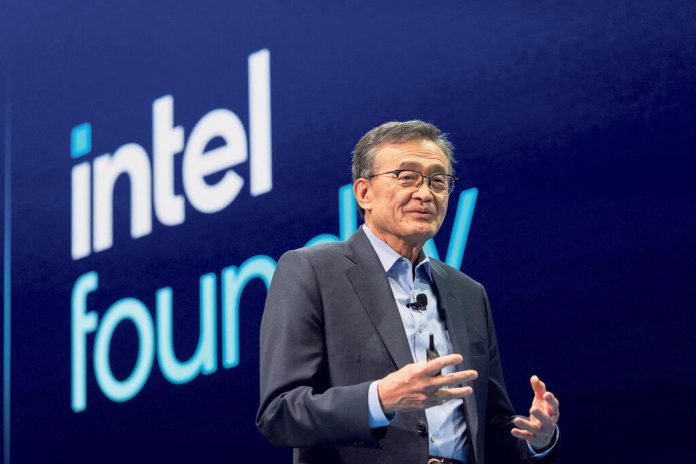
Intel’s chief executive, Lip-Bu Tan, is facing mounting pressure after U.S. President Donald Trump publicly demanded his resignation over alleged ties to Chinese technology companies.

The rare presidential intervention comes at a delicate moment for the American semiconductor giant, which is in the middle of a multi-year turnaround plan designed to reverse years of decline in market share and technological leadership.

In his first public reaction since the controversy erupted, Tan acknowledged the calls for him to step down but maintained that his priority remains executing Intel’s strategic overhaul. That plan, unveiled last year, includes billions in investments to upgrade manufacturing facilities, expand advanced chip production in the United States, and develop cutting-edge process technologies to catch up with Taiwan Semiconductor Manufacturing Company (TSMC) and overtake Nvidia in performance and efficiency.

“I want to be absolutely clear: Over 40+ years in the industry, I’ve built relationships around the world and across our diverse ecosystem – and I have always operated within the highest legal and ethical standards,” he wrote in a memo to employees on Thursday.

Tan said that Intel is working with the White House to address the situation and that he supports the president’s dedication to “advancing U.S. national and economic security.” He said Intel’s board is “fully supportive” of the company’s transformation plan.

Trump’s remarks, however, have shifted the spotlight from Intel’s operational challenges to questions of political loyalty. Two major Intel shareholders and a former senior employee told reporters that the president’s public criticism could force Tan into a drawn-out battle to reassure Washington and the investment community about his leadership. That political fight, they warned, risks derailing the aggressive cost-cutting and operational discipline necessary for Intel’s recovery.

“It is distracting,” said Ryuta Makino, analyst at Gabelli Funds, which owns over 200,000 Intel shares, according to LSEG data.

“I think Trump will make goals for Intel to spend more, and I don’t think Intel has the capabilities to spend more, like what Apple and Nvidia are doing.”

Intel has suffered repeated product delays, loss of manufacturing supremacy, and growing competition from Asian and U.S. rivals. Its once-dominant position in personal computer and server chips has been eroded by AMD, while TSMC has pulled ahead in producing smaller, more efficient chips for the world’s biggest tech companies.

David Wagner, a portfolio manager at Aptus Capital Advisors, which holds Intel shares via index funds, said Tan’s initial response lacked the strength needed to contain the fallout.

“Either defend your leader, which will be the beginning of a difficult road ahead, or consider making a change,” Wagner warned. “Having this play out over a few months is not something that Intel can afford.”

The episode underscores how deeply the semiconductor industry has become entangled in Washington’s broader push to curb China’s access to advanced technologies. The Biden administration—and now Trump—has backed sweeping restrictions on chip exports to China, while offering subsidies to encourage domestic manufacturing under the CHIPS and Science Act.

Allegations of close business ties to Chinese firms have become politically toxic for U.S. tech executives, adding a layer of geopolitical risk to corporate decision-making.

Backstory: Intel’s Struggles and Trump’s Tech Agenda Against China

Intel’s troubles did not begin with Trump’s intervention. Once the undisputed leader in microprocessors, the company has stumbled in recent years as rivals surged ahead in advanced chip design and manufacturing. Delays in rolling out its 7-nanometer process technology—while TSMC and Samsung advanced to 5nm and beyond—cost Intel valuable contracts from major clients. The company also suffered from declining PC demand, missed opportunities in mobile chips, and a slow pivot toward artificial intelligence hardware, where Nvidia has dominated.

Tan’s turnaround plan has been an attempt to reverse these losses by ramping up U.S.-based manufacturing, securing foundry contracts, and investing billions in new facilities in Arizona and Ohio. But these efforts have been costly, and profitability remains under pressure.

Trump’s latest attack fits into his broader technology agenda against China, which has intensified since his return to office. He has pushed for tighter controls on U.S. tech firms operating in or supplying Chinese companies, citing national security risks. Under his administration, several high-profile crackdowns have taken place, from restrictions on AI chip exports to investigations into semiconductor partnerships with Chinese entities.

That hardline stance has found broad political support in Washington, but it has also placed U.S. tech giants in a bind, forcing them to balance lucrative Chinese markets with increasing political scrutiny at home. For Intel, already fighting to regain its competitive edge, this political crossfire threatens to add yet another layer of instability to a company struggling to reclaim its place in the global semiconductor hierarchy.

For Tan, the challenge now is to keep Intel’s recovery on track while navigating a political storm that could intensify if the White House presses for leadership change. Industry analysts warn that if his focus shifts to survival rather than execution, Intel’s multi-billion-dollar restructuring could lose momentum, potentially ceding even more ground to rivals at a time when the global chip race is accelerating.

Apple Stock Jumped Friday to Its Best Week Since 2020, Following $100bn U.S. Investment Pledge

0

Apple’s stock surged 13% this week, its largest weekly gain in more than five years, after CEO Tim Cook appeared alongside U.S. President Donald Trump at the White House to unveil a sweeping plan to invest $100 billion in American companies and parts over the next four years.

Shares jumped 4% on Friday to close at $229.35, adding more than $400 billion to Apple’s market capitalization, which now stands at $3.4 trillion. The rally marks Apple’s best weekly performance since July 2020, placing it firmly as the world’s third-most valuable company behind Nvidia and Microsoft, and ahead of Alphabet and Amazon.

The high-profile White House event on Wednesday saw Cook pledge that Apple will source significantly more components domestically — including American-made chips — in a move that directly aligns with Trump’s trade and industrial policy goals. The president, who has long pressed U.S. corporations to bring manufacturing back onshore, praised Apple’s commitment and declared that because the company was “building in the U.S.,” it would be exempt from future tariffs that could otherwise double the cost of imported chips.

That assurance is a strategic win for Apple. The company had warned in July that it faced over $1 billion in tariff-related costs in the current quarter if trade rules remained unchanged. Trump’s protection effectively shields Apple from those immediate threats, calming investor fears about how tariffs could squeeze margins.

“Apple and Tim Cook delivered a masterclass in managing uncertainty after months and months of overhang relative to the potential challenges the company could face from tariffs,” said JP Morgan analyst Samik Chatterjee, who reiterated an overweight rating on the stock.

The announcement comes just two weeks after Apple reported strong June quarter earnings, with overall revenue up 10% and iPhone sales rising 13%, underscoring momentum heading into the second half of the year.

Beyond the market reaction, Cook’s $100 billion pledge carries significant political and economic weight. For the White House, it is a major validation of Trump’s push to realign global supply chains, particularly in strategic industries like semiconductors. Washington has spent years urging U.S. companies to diversify away from China — a policy intensified under Trump, who has combined tariff threats with incentives to manufacture domestically.

For Apple, the move signals a potential reconfiguration of its global supply chain. While the company has long relied heavily on Chinese manufacturing for its flagship products, increasing geopolitical friction and supply chain vulnerabilities exposed during the pandemic have accelerated the search for alternative production bases. Cook’s announcement suggests that Apple will lean more heavily on U.S. suppliers while still balancing its extensive network in Asia, potentially shifting some higher-value manufacturing stages to American soil while keeping mass assembly in cost-competitive regions abroad.

Economists note that this dual-track approach could allow Apple to mitigate tariff risks, tap into federal incentives from recent manufacturing and chip production bills, and position itself as a corporate partner in Trump’s broader “America First” industrial strategy, without entirely abandoning its entrenched overseas manufacturing footprint.

If successfully executed, the pledge could reshape Apple’s long-term operational model, increasing its exposure to U.S. manufacturing capacity and further embedding the tech giant into the political calculus of Washington’s trade and industrial policy for years to come.