DD
MM
YYYY

PAGES

DD
MM
YYYY

spot_img

PAGES

Home Blog Page 7309

Business Growth Strategies for Africa

0

Many western companies design their business models based on high profit margins. It pays very well to be differentiated and pursue vertical markets. Most horizontal markets are commoditized and a strategy to dominate within it is not always seen as a smart move by analysts. Increasingly firms try to innovate and differentiate in order to carve a niche where they can make hefty margins.

That is very good if your business is domiciled in the saturated Western Europe and U.S markets. There is growth inertia in these two markets with their ultra-competitions and intense regulations. Especially in the pharmaceutical industry, there seems to be no way to expect huge growth in these mature economies.

So what do you do? You have to expand out of Europe and U.S. to Africa, Latin America and Asia. They are the future. They have the population with enormous growth potentials. Despite the downturn in the global economy, they remain promising, especially Asia and Latin America.

Having worked in Lagos (Nigeria) as a banker and traveled to many Africa nations, the high margin structure will not always work in Africa, especially in the pharmaceutical industry. Many are still very poor; yet, they have the same needs as those in the developed world. From entertainment to drugs, they want to enjoy the western products. They want the new cars for their bad roads; they want the best drugs to manage diabetes; the new video games to relax; and so on. Any sense of high cost, people will abandon the product. It is very common to see people die slowly because they cannot afford drugs for treatable diseases.

Arguably, these drugs and cars are available in many parts of Africa. But the problem is that only few can afford them. With no insurance scheme to finance healthcare delivery, patients must pay themselves. What worked in Boston will not work in Botswana because the patient in Boston is being helped by the insurance firm while the one in southern Africa must pay cash. That is the major difference in marketing drugs between U.S and Africa.

Another example is in the telecommunication industry. Cellular handsets are very expensive in Africa when compared to the U.S. Understandably, a simple reason is lack of competition since not many firms have gotten into the markets. Another is the obvious fact that none of those gadgets are made in Africa. So, there are associated transportation and handling costs in selling them in Africa.

Nonetheless, the truth is that by not using value based model, many MNCs are undermining their potentials in developing, emerging or transitional economies like Africa and Asia. You have to offer what the customers can afford and do away with the cost based strategy. In the U.S, you can ask for any price; in Africa, you need sales volume, and lower price makes it happen.

For pharma industry, they have to rethink their strategies. It is time they cut down the prices of their drugs. Drug prices are patient problems, unlike in U.S where it is the insurance firms’ (for those that have, anyway). Many more people can give you sales volume and you will make more profits than sticking to your present pricing model and serving only less than 5% of the African market.

If you focus on pushing volume at good prices, more customers will come in. That alone will help you stay profitable. And they will be better off themselves by using your great products. Drugs, video games, etc must not be overly expensive in Asia and Africa compared to U.S and Western Europe.

For Entrepreneurs

Africans are extremely price sensitive because people do not have a lot of disposable income. This means that a very expensive product is not really a product. Simply, it will not work. The continent is a place where people complain of poor education, comparing their schools with the likes of Stanford University and Harvard University, even when they know they cannot pay the more than $50,000 per year required to attend the schools. So, they know the best possible value in the market. And they expect you to deliver value, even when they are not open to pay for the full value.

That puts entrepreneurs in challenging positions. My recommendation is always to follow the P&G model. Deliver the best possible value per smallest possible unit of measure. In that I mean, instead of selling a bag of Ariel detergent of poor quality, sell a high quality Ariel in sachets. The quality remains the same even though the size drops, making it affordable for families. That model can work in many industries including electronics where you unbundle product designs so that products come with optional accessories, making sure that the core product is affordable. (Many on LinkedIn had noted that Cowbell was also efficient in using sachet packaging in its competition in the diary sector, especially against Peak Milk.)

You cannot design without thinking how your customers can afford to pay for the products. Indomie Noodle is another good case study: they offer many entry choices in the market, making it easier for anyone to engage at the level of its purchasing capacity. You need to learn from Indomie as you design your pricing strategy.


Africa’s Most Fascinating Business Sector Emerges

0

I love agriculture. But I do not want to be a farmer. I want to provide the modern shovels and the cutlasses for farmers. I know one thing: agriculture in the next ten years will create more millionaires than any other sector in Africa.It is very obvious because from Ghana to Kenya, Nigeria to Egypt, the African agenda revolves around food sufficiency. This is massive and fascinating.

Africa is entering a golden era of agricultural production where technology will drive productivity. We expect continuous improvement in crop yield over the next few years. Everyone knows that fixing agriculture will fix Africa because more than 65% of Africa’s working population is employed in agriculture. So, it has the most catalytic impacts possible in raising millions of people out of poverty.

The path to making sure that farming communities are not hungry is a key strategic imperative of both the Gates Foundation and the African Development Bank.

The African Development Bank, AfDB, plans to invest about $24 billion over the next 10 years to accelerate the realisation of the food sufficiency agenda, its president, Akinwumi Adesina, said on Tuesday.

Mr. Adesina, who said the investment would be through the Bank’s ‘Feed Africa Strategy’ would require paying attention to the implementation of plans to achieve the green revolution in Africa.

Zenvus

Few days ago, it was reported that the Gates Foundation is committing about $30 billion to agriculture, and Nigerian farmers union are already tapping into the resources.

The Rice Farmers Association of Nigeria (RIFAN) says it is working to access the $30 billion agricultural grant contributed by Bill and Melinda Gates Foundation and other donor agencies for rice production in Africa. Alhaji Aminu Goronyo, the National President of the association told newsmen in Abuja on Wednesday, that the association had submitted a template that would qualify it for the grant.

The amount of money in the agriculture is huge. From Western Union Foundation to Ford Foundation, from federal governments to state governments, there are many sources of intervention programs designed for the sector. Agriculture is where to be.

How You Can Play in Agriculture

Here are ways entrepreneurs can play in the sector (disclosure: I own Zenvus, an agtech startup):

  • Precision agriculture by making sensors: this may be a little hard depending on your skill level
  • Agriculture insurance technology: making insurance products geared for farming
  • Agro lending technology: delivering capital to farmers at scale supported by technology
  • Direct Farming: owning farms and growing crops and/or raising farm animals
  • Farming ecommerce: expanding farmers’ markets by providing digital platforms for trade
  • Pricing aggregation: facilitating trading through provision of produce price data
  • Storage: African farmers struggle with storage of produce. Building solutions in this area will be catalytic
  • Logistics: there is a huge opportunity to facilitate the delivery of produce from rural areas to urban areas across Africa with our poor road networks
  •  Digitization of transactions: from payment to tracing origins of produce, we have a huge need to digitize farming systems in Africa
  • Commodity trading: building exchanges for trading commodities
  • Others: there are opportunities like making digital tools farmers can use. These could include farm diary, mapping solutions, etc

All Together

There are many areas any entrepreneur can participate in the agriculture sector. The market is huge. The head of African Development Bank noted that “the AfDB was leading a campaign to unlock the continent’s food and agriculture market, projected to hit $1 trillion by 2030”. In other words, Africa will have its first trillion dollar sector through agriculture. At that scale, you can see there will be many winners.

He [Akinwumi Adesina] said the Forum would be an opportunity to push efforts to make Africa self-sufficient in food production and transform agriculture into a wealth-creating sector.

“Agriculture is booming in Africa and holds the greatest opportunity to boost African economies, build rural economies, lift millions out of poverty, and create jobs,” he said.

He said the bank must work together with its partners, governments, the private sector, and development institutions to realise its objective.

In 2010, according to McKinsey, agriculture was a $100 billion business in Africa. It has since grown to a $330 billion business, i.e. 10% of the $3.3 trillion African GDP. That means AfDB wants to move the sector from $330 billion to $1 trillion in less than 15 years. That makes sense.

Nothing will match the scale of opportunities agriculture will provide for entrepreneurs across the continent in the next decade. I am in and liking what we see.

The Nigerian Army’s Fake News Detector

1

This is big news. Leaders NG reports that the “Nigerian Army says that it is monitoring the activities of Nigerians on the social media for hate speech, anti-government and anti-security information”. This is a huge deal, because if the Nigerian Army could do this effectively, Nigeria will be exporting the most sought-out social media technology to the likes of Google, Facebook, China, Venezuela, and indeed the whole world.

According to the information released by Director of Defence Information, Major-General John Enenche to Channels Television, the became necessary in the light of troubling activities and misinformation capable of jeopardizing the unity of the country….

Having observed the possibility that the social media can be misused the military has taken steps to address that. One of such steps is the establishment of strategic media centres.

“What are we doing? In the military, we are now taking on it more seriously than ever. We have our strategic media centres that monitor the social media to be able to sieve out and react to all the ones that will be anti-government, be anti-military, (and) be anti-security,” the military chief continued.

“We tackle them appropriately with appropriate responses. Ahead of that, we are also proactive. We have measures in place, scientific measures to be able to sieve this information and also to get the public and let them know that some of this information they are getting is not genuine are not true and their objective is an anti-corporate existence of this country.”

I sincerely wish the Nigerian Army good luck. I am hoping they succeed because if they do, our forex problems will be gone. From China to Russia, Facebook to Google, everyone needs fake news detector and terminator. If our military invents that and deploys it effectively, we could say goodbye to NNPC and just like that, our main foreign exchange earnings will be Fake News Detector and Anti-Govt Social Media Buster. Go figure, people.

Largely, I think the Nigerian Army is right to have a strategy to handle the misinformation which we are experiencing in social media. If we expect the Army to defend the territorial integrity of the nation in the meatspace, the cyberspace must be a fair game. it must be seen as a threat, depending on the veracity of the misinformation. It has to be dealt with and managed. That is why I think the Army is right on this.

Yet, it is very important that they handle this project with decency and civility, making sure that they do not use it to silence and oppress Nigerians. They must honor the tenets of freedom of speech while understanding that nothing is really free. No one that perpetuates fake news  should expect to hide under privacy and freedom of speech.

I wish the Army good luck as they work on the technology. They have to invent one that understands pidgin, Igbo, Hausa, Yoruba and indeed dozens of other languages. It will be a challenge indeed.

Amazon’s Flanking Maneuver on Walmart

0

This is a Short Note.

TechCrunch reports that Amazon’s Whole Foods is lowering prices on products, matching Walmart prices. Whole Foods is a premium grocery chain which was acquired by Amazon few weeks ago. Walmart is the world’s largest retailer, known for its low prices. Interestingly, Amazon wants to attack that same competitive weapon Walmart brings to the sector: low prices.

Amazon had announced Whole Foods price cuts on things like bananas, organic avocados, organic large brown eggs, organic responsibly farmed salmon and tilapia, organic baby kale and baby lettuce, animal-welfare-rated 85 percent lean ground beef, creamy and crunchy almond butter, organic Gala and Fuji apples, organic rotisserie chicken, 365 Everyday Value organic butter and other items. As it turned out, it had already begun discounting other grocery staples today, including milk and cheese.

That is very surprising because everyone had expected the competition to be defined on Amazon’s use of technology and logistics, as the global leader in the ecommerce sector, to challenge Walmart on grocery. If you are Walmart, you should be concerned. It is possible no one in Walmart saw the price reduction coming. Amazon may be ready to lose some money and take market share from Walmart.

What Amazon is doing is called flanking maneuver in military. Amazon is going on offense concentrating its competitive power and taking it to Walmart. What Walmart will need to do now is to respond. When you are responding, it means you could be outflanked, because the other person is defining the basis of the competition, in cases where the forces are evenly matched.

In military tactics, a flanking maneuver, or flanking manoeuvre is a movement of an armed force around a flank to achieve an advantageous position over an enemy. Flanking is useful because a force’s offensive power is concentrated in its front.

Amazon had already pushed Walmart to sign a deal with Google in order to defend the technology aspect of the competition. Google will provide the voice assistance technology to simplify ordering on Walmart as well as streamline the ecommerce business with Google Express. But with the reduction of prices, Amazon had flanked Walmart at a level it might not have prepared for.

 This week, Google and Walmart teamed up to deepen Walmart business; Google will provide a key part of the technology through its voice activated system and the Google Express.

The Lessons Here

Until you can change the basis of a competition, you can never be a category-king in your sector. And until you can innovate to flank maneuver your competitors, becoming unpredictable, you cannot be king for long. That capacity to present different views to your competitor offers both scalable and strategic advantages. New England Patriots, an American football pro team, is known for showing opponents different offensive views that make them to give up on a play even before it begins.

Amazon will be extremely tough for Walmart to deal with because Amazon is mutative in its strategic moves and Walmart will struggle to catch up and adapt. With Amazon’s decision to even lose some margins to compete with Walmart, watch out for endless battles that will end up damaging Walmart. Fortune explained it best on a newsletter thus:

Now its feels like Whole Foods’ history of struggling and failing is being erased, with breathless depictions of the much-needed price cutting that took effect on Monday. “Amazon Doesn’t Need to Make Money on Groceries,” the  [Wall Street] Journal wrote. “Amazon slashes prices at Whole Foods to kill off Walmart and Kroger,” tech news site the Next Web offered. …

Less some brilliant, Amazon-only retailing strategy, the move is a staple of the grocery business. Suburban supermarkets practically invented the loss leader as a tactic to bring in more shoppers who would then fill their carts mostly with full priced items. It’s a smart strategy that still works–and exactly the kind of “conventional grocery-store pricing and other supermarket tactics” that [John] Mackey [Whole Foods co-Founder] failed to appreciate.

But for all, the good news is that American grocery buyers will win big, because price will drop, even as value improves.


Nigeria’s Productivity Problem

2

About five hundred years ago, generations that lived apart did not experience any major change in their standard of livings. Global productivity was very low and man was generally poor. Yes, there were empires and kingdoms, but on average the world was on static economic expansion.

But with emergence of mass penetrated technology, things began to change. The industrial revolution was a quintessential moment in modern history. Technology brought productivity and man became richer. Largely, human standard of living improved. It remains till today that when technology penetrates en masse in any economy, national productivity improves, and living standards advance.

There is another caveat to this argument: Intellectual property right (IPR) is a cardinal part of this productivity. Without it, technology will not improve and innovation is stalled. The old world was an era of absence of IPR and that contributed in no small measure to the lack of wealth creation. Sure, people invented things in arts, and science, but there was only minimal wealth created.

Lack of IPR prevented meaningful market success in one major way: It prevented the pursuit of innovation since ideas could be stolen and commercialized with no penalty. The return to innovation was very low. That was why the world had many inventors and few innovators.

Yes, we read about inventors that developed nearly all the engineering principles in use today. They had ideas, bright people and created prototypes. They were celebrated as icons and legends. But many died very poor. They could not transition from inventors to innovators, not because of market issues, but because lack of IPR made it difficult to attract funding, since there was no guarantee to success. No funding, no mass commercialization and no human impact. In our contemporary time, the legendary venture capitalists will tell you that if you want to get them involved, you need to have a protected intellectual property, if the business requires one.

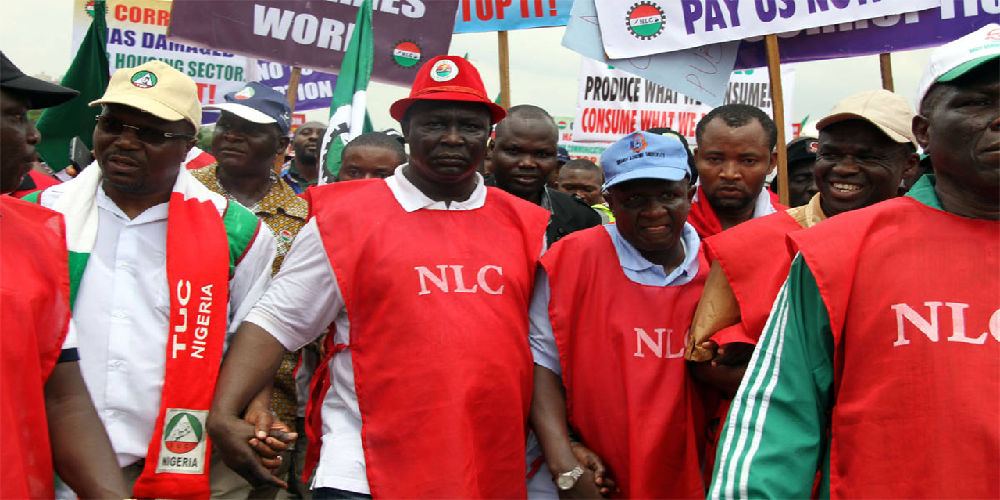
Nigerian Workers (Source: Guardian)

Two things changed the world: technology and most importantly IPR. Between the two, IPR was more important. Why? Without it, we would still be celebrating inventors with no impact on human lifestyles (just note that I respect inventors.)

Nigeria’s Productivity Problem

That brings me to the Nigerian, or indeed the African challenge. In many parts of the continent, the IPR there is still like the one that existed 500 years ago. It does mean that Africa cannot prosper, if my logic is correct, until they get a practical and working IPR. It does not matter how much aids and loans they get from foreign agencies. Without IPR, nations cannot innovate (at deep technical level) and without innovation, any economy dies a natural slow death. IPR is the catalyst that drives national technology policy, making it implementable and sustainable. You cannot have a better technology policy than a strong IPR. With strong IPR, inventors could become innovators. Without it, everyone sits on his/her ideas and the nation suffers on productivity.

In essence, Global Productivity = Technology + IPR, and productivity translates into good standard of living. When nations cannot create technology, the LHS (left hand side) of the equation suffers. Also, if they have no IPR, that suffers even more.

See the reason why Africa is not making progress? It is an illusion when boys and girls in Accra, Lagos, and Nairobi use pirated foreign software, and think they are smart. They never know that it would have been better if their nations have laws to prevent the illegality. With such laws, they have an opportunity of not needing those foreign software by developing their own and selling them locally, profitably.

In the absence of the IPR, they cannot do business because immediately they release software in the market; it appears in all shops illegally. After three months, they close their shops! It is a vicious cycle that makes innovation difficult in Africa since no guaranteed return exists. Why invest your hard earned money when there is no law to protect your creations? Why do research? You see why our businesses prefer to import and distribute than create things?

All Together

When boys hawk Microsoft Windows for N300 (about $1) openly and no one arrests them, no major creative business can incubate in that land. Nigeria is not really cheating Microsoft. Rather, we may be making it harder to build an innovation system. This goes beyond technology: it also affects our arts where people pirate Nollywood movies and resell. The reality is that productivity cannot flourish in an ecosystem with weak legal protections for creativity. The creators will be scared to invest, and that is a problem for any nation.