DD
MM
YYYY

PAGES

DD
MM
YYYY

spot_img

PAGES

Home Blog Page 7326

Practical Ideas for proposed ICT Bank of Nigeria

1
Barr Adebayo Shittu, Nigeria Minister of Communications

Good job Barr Adebayo Shittu, Minister of Communications, Federal Republic of Nigeria. The Honourable minister works really hard. He has so many ideas and he is working. While I do not like the smart city initiative, I am in for his plan to establish an ICT Bank, as reported by the Guardian.

Adebayo Shittu, minister of Communications, has said the Federal Government will soon establish a specialized bank to cater for the development of the Information and Communications Technology industry.

Shittu who stated this at the 13th International Conference of the Nigeria Computer Society (NCS) in Abuja on Tuesday also disclosed that the proposed ICT University would take off in September.

Justifying the decision to establish an ICT development bank, Shittu said the regular banks cannot cater for the needs of operators in the ICT industry because of the time it takes to develop ICT products and services, from conception to market.

The minister said the proposed bank was provided for in the ICT Roadmap which, he said, has been approved by the Federal Executive Council.He said, “I am happy to inform you today that the Information and Communications Technology Roadmap has been approved by the Federal Executive Council.

The fact is clear: the present funding institutions are not structured for funding startups. Startups can go for years, without a single revenue. This means the commercial banks and Bank of Industry cannot help. Hence, what the Honourable minister is planning is a good one.

Here, I offer some perspectives on how our Honourable minister can make this bank deliver on its mission. It has to be totally different from Bank of Industry (BOI), which requires entrepreneurs, to get sureties, and in some cases collateral. to access capital The fact is this: only those with means can have access to those documents or assets.So, at the end, the people who may need the funds, never get support from BOI.

ICT works on brainpower and that must be recognized. That one does not have rich family members for sureties, or parents that own assets like land, which can be used as collateral, must not limit the individual.

Also, it has to be totally different from the way commercial banks support companies today. The 20% interest rate will not work, when startups have to build businesses over years, before they start making money. We need a new model to build this bank which is certainly going to play a huge role in our future. This week, I made a  call for African Union to take action to accelerate such funding mechanisms, across the continent.

This is huge [Y Combinator $1 billion planned fund] and this will ensure the next generation of companies, indeed future Dropbox, Facebook, and Google, will be seeded in America. America is such a blessed country that its private companies can drive such national agenda. It is simply unprecedented at the scale they do this. As their President tweets tonight, he knows that some people are holding up for America, irrespective of whatever he will do tomorrow

We present core pillars for considerations by the Honourable Minister and his team as they craft this new bank:

  • Make the bank a clearing house: This means the bank will not invest directly by itself. Rather, the bank will pool the funds and invest in venture capital firms with locations in the specific regions in Nigeria where they will be investing. Venture Capitalists (VCs) will be required to have presence in the regions where they will invest and they must have capabilities beyond writing cheques.
  • Allow VCs to compete for the funds/Local Presence: The VCs can be local or international, but they must be located in the specific region of Nigeria where they have to invest.This is important as Nigerian startup problem is not just money. They need many things like mentoring, networks, linkages etc to get ahead.
  • VCs must De-risk the Bank: VCs must provide collateral, in different forms, to protect government as the funds are provided to them. We want only funds which are sure they are coming to invest, to join this game. And only funds with at least 3 years prior-investing experience can participate. Banks can be allowed to also participate but they must run it separately from the way they run their current lending programs,
  • Offer Funds at 5% interest rate to VCs and Strategic Guarantee: VCs will take the loans at 5%  interest rate with funds return due within 10 years. It is important the funds cost the VCs something so that they know they have to work. Government will also have to guarantee up to 75% of losses in seed funding phase, maximum of $20,000 and not more than 5 of such, pear year, for any VC. This is important to give them room to take more risks, instead of waiting for post-revenue startups. Other investments phases, above $20,000, will not have any government guarantee.
  • Tax Holiday: Every VC will have the opportunity to defer paying  taxes from the profit arising from government fund for 10 years, provided those specific taxes are re-invested. That means if they make money from the government tax, they do not have to pay any tax on it provided they re-invest that waived tax into startups. For other funds, not connected to government support, government can also offer them the same. Please note that they can use the profits to do whatever they want. But only the taxes they could have paid to government is what I am proposing they avoid  paying and put back to work
  • Investment Committee: VCs will have their investment committees and will run their businesses independently, but whenever they need to invest any money from the government-supported fund, they must inform the bank. Government will just record the transaction, nothing more. The VCs must be required to have independent investment committees, drawn from industry to ensure there is no corruption in the system.

The ICT Bank is a good idea, and must be managed to avoid bureaucratic mess. We have to structure it in such a way as to make it easier for our young people that need the funds to access the opportunities.
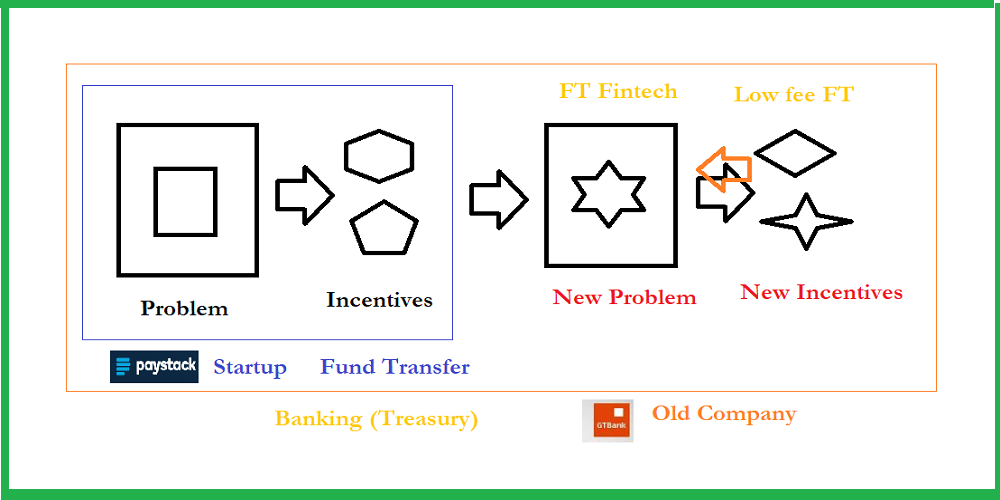
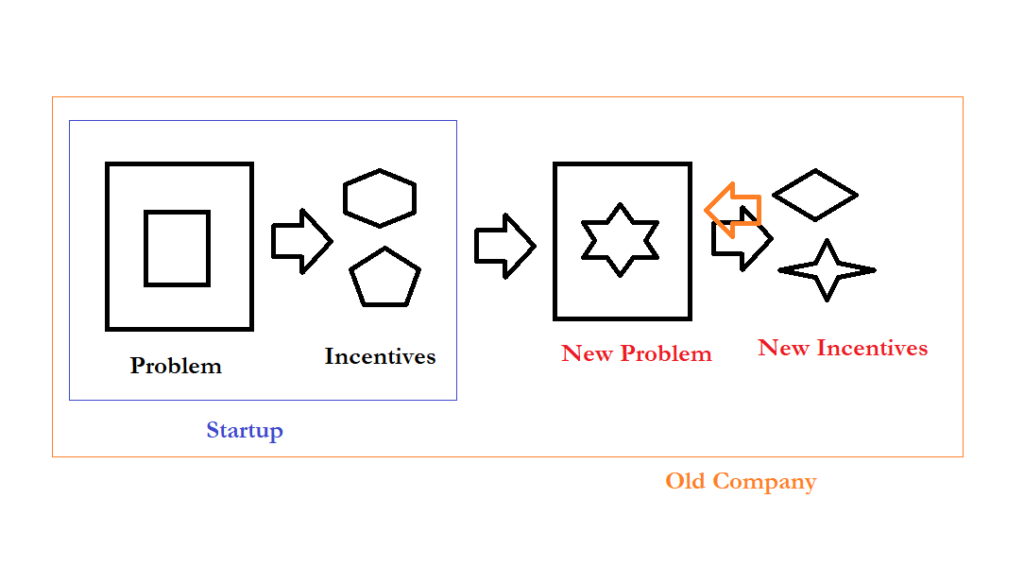
The Startup Incentive Construct

0

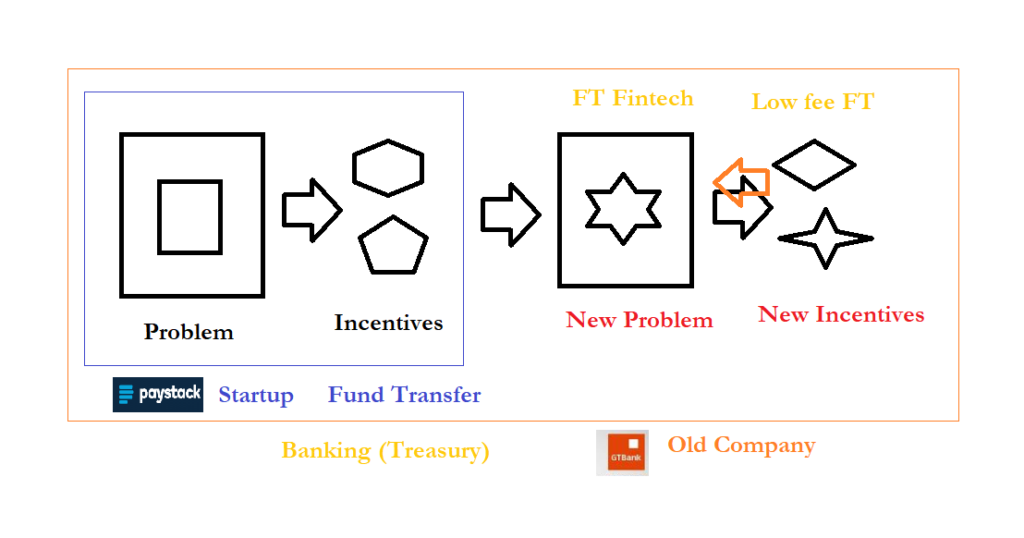
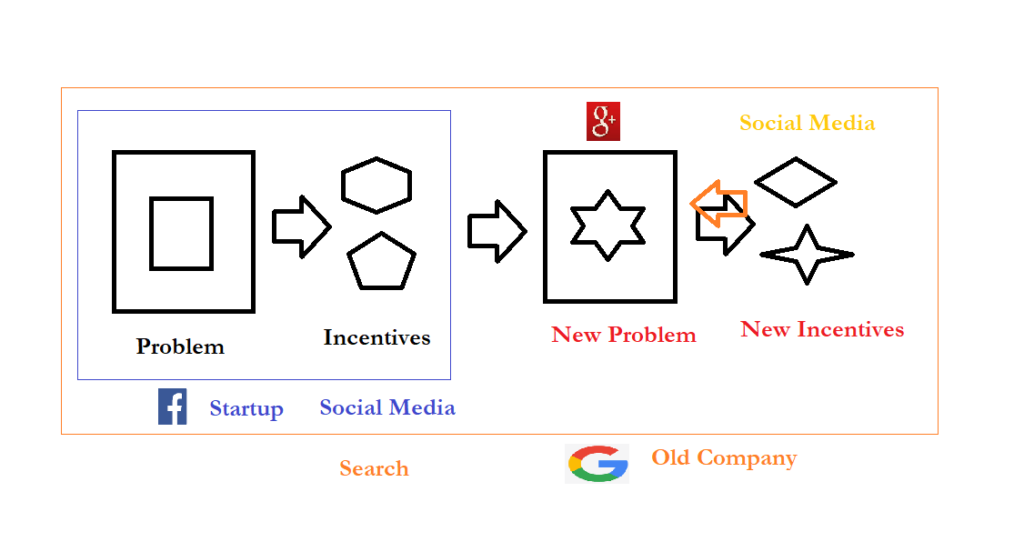
In this video piece, I explain why startups win, despite the efforts of older companies who challenge them in new areas they are pioneering. The older companies can come with money, experience and technology, but most times, they are solving problems, with the wrong incentives.

Consequently, they adjust the problems to accommodate their incentives and in the process, solve an entirely different problem, resulting in a loss. You read it from me: African and specifically Nigerian startups, you can win over the big players. Your incentives are different, and those are inherent advantages for you.

The established companies have what I have called Innovation Hangover which is an inertia to cannibalize existing revenue sources for new opportunities. See it this way: If you run a treasury operation in a bank which will yield $5,000 profit but your fintech unit (a subsidiary) can do the same for $200, would you dismantle that treasury unit, and allow the fintech unit to serve the public because one fintech startup has started offering the service for $200?

That is not what we do most times because of the revenue/profit hangover. So, what happens is this: to fix that problem, the bank has to create a new market friction, and try to solve it. Possibly, that new problem can yield for the bank $1,000 profit, and it can feel that it has innovated and has challenged the startup on pricing. Indeed, it could offer more features and services than what the fintech startup is offering for $200.

Yet, that is not the original friction which the standalone startup went for. Typically, over time, the startup can still win because the incumbent is hanging onto the established profits, and solving entirely new problems. I have called this Startup Incentive Construct.

*the GTBank Fintech in the video is just a way to explain the fintech effort of the bank. There is nothing official there.


Y Combinator Challenges African Union with $1 Billion Fund

1

First, do not be so excited. Y Combinator, the legendary U.S. startup accelerator, does not have the contact of the African Union to challenge it for anything. But whether it does or not, Y Combinator is putting the world on notice: America is well prepared to lead the innovation battle of this century. If not, how can you explain for a company, at its focused-level of investment, to be raising $1 billion?

TechCrunch reports that the accelerator is raising $1 billion, after a mere two years of closing $700 million fund.

Silicon Valley startup accelerator Y Combinator is raising up to $1 billion for a new venture capital fund, Axios is reporting this morning. The fundraising comes less than two years after YC announced the close of its first big investing vehicle, a $700 million growth fund called the Y Combinator Continuity fund that it hired Ali Rowghani to oversee.

This is huge and this will ensure the next generation of companies, indeed future Dropbox, Facebook, and Google, will be seeded in America. America is such a blessed country that its private companies can drive such national agenda. It is simply unprecedented at the scale they do this. As their President tweets tonight, he knows that some people are holding up for America, irrespective of whatever he will do tomorrow.

The Challenge for Africa Union

This is a direct challenge to the African Union. This is not talk and no action. We hear it all time: “we need to grow our startups” and everyone goes home from Addis Ababa, and nothing happens. Capital is required to make it happen. African Union should take the challenge by asking member countries to designate at least 1% of their budgets for investments in technology startups. As soon as that money is available, the government should give it to Venture Capital (VC) funds in the specific African country as loans, at 5% interest rate, for ten years. Then, the government should guarantee 75% loss on behalf of the funds, as they invest in startups.

The 5% is to make sure the fund costs the Funds something. That will give them incentives to work to cover the costs. Guaranteeing 75% of their exposures will enable them to take risks but also make sure they pay consequences if those risks fail since they have to account for 25%.

Finally, government should offer zero taxation to all the VC funds, for ten years, with mandate that all those forgone taxes must be put back into investments.

This should become an AU policy point. It is very critical because despite the fact that these technology companies are simplifying lives and making everyone happy, there are winners and losers, at government-levels. This is one way we can catch-up as the level is not even: Microsoft generates Nigeria’s total budget within 3 months.

Microsoft’s net income more than doubled to $6.51 billion or 83 cents per share in the quarter, from $3.12 billion or 39 cents per share in the year-earlier period. Excluding one-time items, Microsoft earned 98 cents per share. On an adjusted basis, revenue rose 9.1 percent to $24.7 billion.

Behind Tech Win-Win

Nearly all consumers win, because technology simplifies our lives. However, technology has shown that those that incubate and own the companies gain more. What they do is to make everything better, but those actions have consequences. We cannot use bad policies to stop value from technology, but we must work hard to ensure we compete in the space.

As most American cities have noted that despite the cheap products on Amazon, they could suddenly live without good schools because Amazon.com had out-competed those physical stores that provide the real estate tax that fund schools. So, for them, we have the cheap products and great simplified lifestyles due to Amazon, but our cities are collapsing.

A scathing new report from the Institute for Local Self-Reliance (ILSR), which campaigns for sustainable local economies, argues for action to curtail Amazon’s influence. It compares Jeff Bezos to a “19th-century railroad baron controlling which businesses get to market and what they have to pay to get there,” and it argues regulators should break up the company, and that states should reduce tax breaks and subsidies that privilege the company over its competitors.

How do you react? You pursue innovation and challenge your young people. Because they do not have entities like Y Combinator, you make it a policy to seed them. This is a moment because Y Combinator will likely, through this fund, have a company that will be one of the winners in Artificial Intelligence, with consequences around the world.

We need to reply and build our institutions. This is serious, for an accelerator, to be raising $1 billion. It is a huge deal: Africa must act, immediately. Do not remind me that Y Combinator could be investing in African companies; I get that. But people, we need to do something on technology and plan how Africa could compete in this space. Foreign funds will not save us.We need to build indigenous funding capabilities.

Failing PoS, Exciting USSD In Nigerian Fintech and Banking

0
USSD Nigeria

It is estimated that the Bank Verification Number exercise which links customers with their biometric data like facial features and fingerprints generated more than 28 million unique customers in Nigeria. Those 28 million customers accounted for about 52 million bank accounts in Nigeria. About 46 million accounts are not yet linked to BVN out of the total 98 million bank accounts in Nigeria, as at April 2017. (Please note that the exact statistics keeps changing. If you have the latest, please update in comment area)

Bank Verification Number (BVN) is a scheme introduced by the Central Bank of Nigeria (CBN) to protect customers’ transactions and enhance confidence in the Nigerian banking sector. It involves identifying an individual based on physiological or behavioural attributes, such as fingerprint, signature and others. The customers unique BVN is accepted as a means of identification across all the banking system

The number, 28 million unique bank customers, is relatively poor for a country of more than 180 million people. For the banks to get their next unique 30 million customers, they need to improve their games. There are many ways banks have been working to bring more customers into their systems. Some have worked, some are struggling, but on average, the progress is evident.

To begin, it is becoming clear that Point of Sale (PoS) terminal will not work in Nigeria, in the short-term. Despite the massive investment on PoS, merchants do not really seem to like it. It looks like a good technology but it has major underlying weak points: it requires them to run generators/inverters to keep them going and the money is not in the bank immediately. The electricity one is a big challenge in Nigeria.

A point of sale system is a combination of software and hardware that allows merchants to take transactions and simplify key day-to-day business operations.

A retail point of sale system typically includes a cash register (which in recent times comprises a computer, monitor, cash drawer, receipt printer, customer display and a barcode scanner) and the majority of retail POS systems also include a debit/credit card reader.

POS by UBA (image: UBA)


But when you move to USSD (Unstructured Supplementary Service Data) Banking, you will be happier. We think that Nigerians have chosen what they really like. USSD is very promising and certainly what could do the magic, to get more Nigerians into the banking sector.

USSD is a Global System for Mobile(GSM) communication technology that is used to send text between a mobile phone and an application program in the network. Applications may include prepaid roaming or mobile chatting.

USSD is similar to Short Messaging Service (SMS), but, unlike SMS, USSD transactions occur during the session only. With SMS, message scan [sic] be sent to a mobile phone and stored for several days if the phone is not activated or within range.

The Wireless Application Protocol (WAP) supports USSD. USSD is defined in the GSM standard documents GSM 02.90 and GSM 03.90

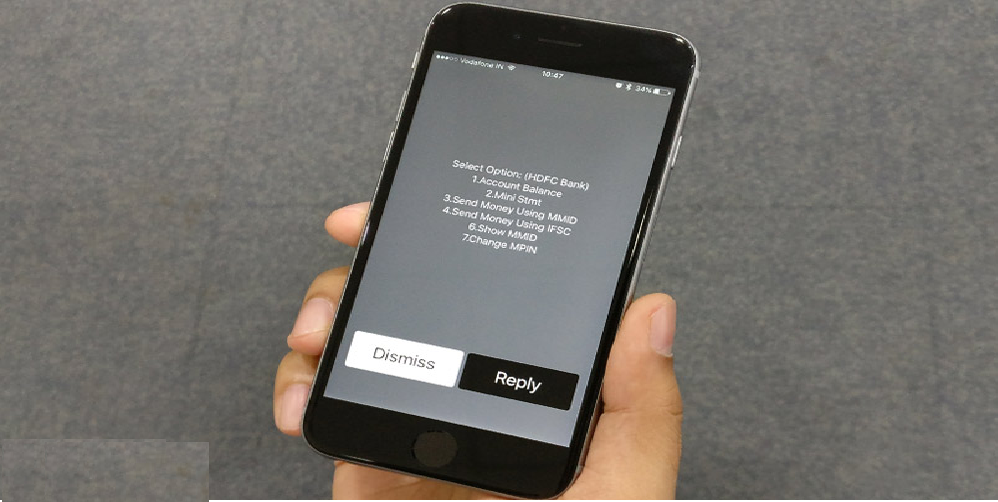
Yes, this USSD technology can be used for banking in a way that anyone with mobile device can have his or her life simplified. All you need is to dial a code provided by your bank, and through that interaction, you can do banking, in different forms. For example, Stanbic IBTC, the first bank that launched USSD Banking in Nigeria, offers a USSD mobile banking with features including getting the balance and statement for all your accounts, inter account transfer, beneficiary payments and bill payments e.g. DSTV subscriptions. It is very easy and simple to use, and most banks in the nation have since launched similar products.

USSD Banking (credit: BGR)


According to GTBank, it has on-boarded 3 million customers, within a year, largely because of USSD banking.

Guaranty Trust Bank (GTBank) has confirmed that the total value of transactions processed on its USSD-enabled payment and service delivery platform has exceeded NGN1 trillion. GTBank’s 737 platform is a USSD-based service delivery channel and its success prompted several other Nigerian banks to rollout their own USSD-powered mobile banking services, according to MD Segun Agbaje.

“Within a year of the introduction of the service, the bank recorded an uptake of over three million customers, with over N1 trillion in transaction on the platform. The platform had gained ubiquitous acceptance and global recognition,” said Agbaje.

Agbaje says part of the reason for the platform’s success has been its accessibility on all types of mobile phones – unlike banking apps that can only be used by a limited number of subscribers who can afford them

The success  of the USSD platform does show that it is a channel entrepreneurs should pursue in Nigeria. The records of GTBank is similar to what other banks are experiencing, at different levels.

Action for Nigerian Fintech Entrepreneurs

The main opportunity lies outside plugging into the banks, with apps and APIs. Largely, those features will not bring many new people in the system. Sure, you do not need new people to be successful. But to create value, that will even make the banks like to work with you, you need to solve the biggest problem in the industry – get more Nigerians into the banking sector. There are some herdsmen that do more transactions weekly than some consulting firms in Lagos. They move with their cash and people still store their money under pillows, in Nigeria. Someone has to offer value (yes, they need to see the value) for them to change those bad habits.

We need to find a way to get many under-banked citizens to do banking. Besides the massive infrastructure provided by Interswitch, Paystack and Flutterwave, the core aspect of the financial inclusion will come from those firms that pursue money transfer that connect rural areas. Products/startups Quickteller, Paga, Voguepay, Remita, Cashenvoy, PayWithCapture, AmplifyPay, ETranzact, KongaPay etc must find ways to make more people do  banking without necessarily being bank customers. There is value at the base of the pyramid and USSD banking seems to offer a roadmap to unlock it.

These startups should work to drive agency banking with new technologies, anchored by USSD, that will simplify the process and eliminate most of the inherent challenges, in serving under-served citizens.  I understand the challenges startups are facing with USSD issuance owing to telcos not providing support, preferring banks, yet, they can come together to have scale, to assure the telcos they can deliver volume, necessary for the troubles.

Nigeria’s mPesa will likely evolve out of USSD, becoming a brand that is universal, offering banking services, even though it may not be a bank product. To make this work will require working better with the banks and providing them assurances that fintechs are not there to destroy them. While the banks can compete in the cities, the fintechs owing to their cost model, are actually more positioned to explore some of the informal sectors which remain untapped.

Rounding Up

In my opinion, the fintechs that address the challenges of bringing new customers into the banking sector will be the ones banks will value as critical partners. The ones that feed or plug into their existing customers will be marginal partners. So, finding ways to connect farmers, herdsmen, petty traders, etc, while not easy, is where the value lies. USSD banking provides the architecture to build that future and our fintechs must explore business models that can make such work, for them, the citizens and the nation. I expect an amalgam of many bank USSD products in coming years: they become inter-operable, brand-agnostic and cost-efficient to unlock values in villages and communities.

List Of African Major Startup Investors, Curated By A Venture Capitalist

3

The team in VC fund, TLCom, has created a list of investors putting money in startups in Africa. We are providing a summary below, of the listed investors, in a more readable format; the investors’ contacts are provided in the document. Also, the specific name of the investor for each of the Fund is included in the document. There is a list here also. Good luck

Entity Type Website
TLcom Capital VC Fund www.tlcomcapital.com
Grey Elephant Ventures Seed Fund www.greyelephantventures.com
Savanah Fund Seed Fund http://savannah.vc/
Singularity Seed Fund www.singularityinvest.com
DiGMA Growth / PE Fund
EchoVC VC Fund www.echovc.com
EchoVC Plus VC Fund www.echovc.com
TVCLabs Angel Investor
Adlevo Capital VC Fund
Goodwell Investments www.goodwell.nl
Spark Seed Fund http://spark.ng/
V8 Capital Partners VC Fund
IFC VC Fund
Orange Digital Ventures VC Fund
Orange Digital Ventures – Africa VC Fund digitalventures.orange.com
DDF (DraperDarkFlow) VC Fund www.ddf.capital
CRE Ventures Seed Fund
4Di VC Fund
CcHUB Growth Capital Seed Fund www.gc.fund
MEST Seed Fund
Silvertree Capital/
Silvertree Internet Holdings
Growth / PE Fund www.silvertree.holdings
Invest Africa
Cisco Infrastructure Fund
Golden Palm
Spark Seed Fund
Omidyar VC Fund
Omidyar VC Fund www.omidyar.com
DOB Family Office
Digital Spring Ventures (DSV)
Horizen Ventures Africa Seed Fund
Rise Capital
Zephyr Acorn
Angel Investor
Chanzo Capital Angel Investor
FuturePerfect VC Seed Fund http://futureperfectventures.com/
Viktoria Ventures Angel Investor www.viktoria.co.ke
Africa Tech Ventures VC Fund www.africatechventures.co
LAN (Lagos Angel Network) Angel Investor
Angel Investor about.me/mzmyslowski
Novastar VC Fund
NEST VC Fund
Ringier Africa AG Growth / PE Fund http://ringier.com/en/about-ringier/activities/about-ringier-africa
Vostok Emerging Finance VC Fund
Quona Capital VC Fund
GIF (Global Innovation Fund) VC Fund
Angel Investor
Team Africa Ventures Seed Fund
Angel Investor
Musha Ventures Seed Fund www.mushaventures.com
Action Hero Ventures
Invested Development VC Fund www.investeddevelopment.com
Niche Capital Seed Fund
EWB Ventures Seed Fund http://www.ewb.ca/
Global Partnerships SVF Seed Fund http://www.globalpartnerships.org/social-venture-fund/
Energy Access Ventures VC Fund www.eavafrica.com
Venture Kinetics Angel Investor http://www.vkinetics.com
Grotech Seed Fund
Angel Investor www.goldiescot.com
Vested World VC Fund www.vestedworld.com
Neon Capital / Frontier Founders
Neon Capital
Mercy Corps Ventures Seed Fund
Cornerstone Enterprises Angel Investor
Angel Investor
Chandaria Capital
Angel Investor
GreenTec Capital Seed Fund www.greentec-capital.com
Ventures Platform Seed Fund http://venturesplatform.com/
Angel Investor
Angel Investor
Passion Incubator Fund (PI Fund) Angel Investor www.passionincubator.ng
Angel Investor
Angel Investor
Amina Capital VC Fund
Frontier Digital Ventures VC Fund http://frontierdv.com/
Angel Investor
Accion Venture Lab Seed Fund https://www.accion.org/venturelab
GreenHouse Capital Seed Fund http://greenhouse.capital/
Cactus Capital Seed Fund http://www.cactusadvisors.co.za/#invest
Face the Gorillas Seed Fund https://techcrunch.com/2017/06/22/africas-shark-tank-for-startups-is-rwandas-new-show-face-the-gorillas/
Knife Capital VC Fund http://www.knifecap.com/
Kaenaat & Angaza Seed Fund www.angazacapital.com
Microtraction Angel Investor www.microtraction.com

HartNamtemah              Seed Fund                http://hartnamtemah.com/

Tekedia Capital             Early state                capital.tekedia.com