DD
MM
YYYY

PAGES

DD
MM
YYYY

spot_img

PAGES

Home Blog Page 7338

How You Can Become Rich By Following This Dangote Strategy

2

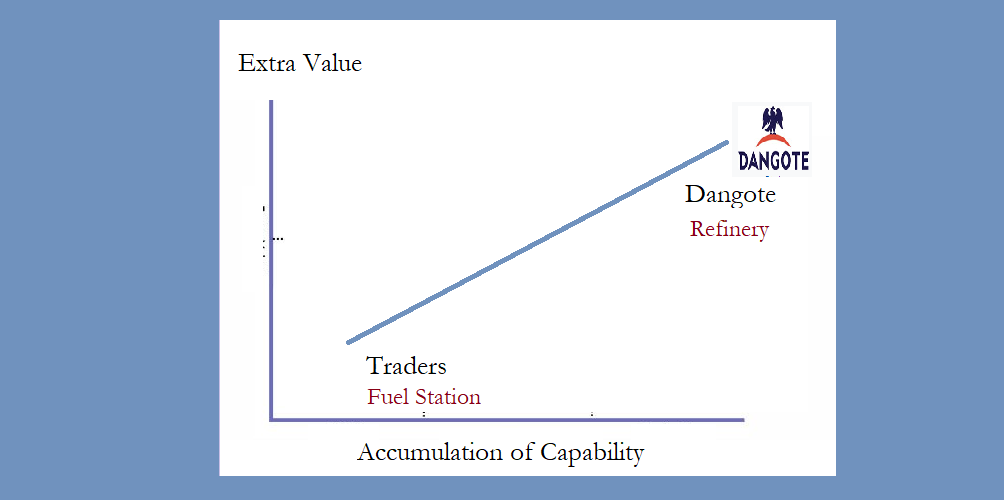
Aliko Dangote, Africa’s richest citizen, is a genius in mastering what it takes to move from a sectoral downtime to the upstream. He enters a sector, he begins the Accumulation of Capability, and systematically moves away from everyone. As soon as he does that, he takes industry leadership, making entry barriers harder, with economies of scale. Over time, he perfects that system, delivering higher productivity and economies of speed. His margin skyrockets, every other person struggles – most exit. He has won. In this videocast, I explain the Dangote strategy and what you can learn from it. A former trader, he now controls the largest conglomerate in West Africa, generating excess of $3 billion and employing about 30,000 people; he shows how wealth is built.

On this link, we present a case study of a company that actually defeated Dangote Group in its noodles business, to illustrate how to do it, and make that wealth.


The Software Industry Is About To Change Forever

0

Kaspersky, a  Russian cybersecurity firm, has given in to the US government.  CEO Eugene Kaspersky said he would let the US government review Kaspersky Labs’s source code, after a Senate proposal to cut defense-department contracts with the company. The implication is that this could do more to undermine US security than protect it, because American firms could be equally pressured to divulge code to Russia, U.S. and other countries.

The company’s willingness to share its source code comes after a proposal was put forth in the Senate that “prohibits the [Defense Department] from using software platforms developed by Kaspersky Lab.” It goes on to say, “The Secretary of Defense shall ensure that any network connection between … the Department of Defense and a department or agency of the United States Government that is using or hosting on its networks a software platform [associated with Kaspersky Lab] is immediately severed.”

The worrisome implication of this decision is that any country cant ask any software vendor to make available its source code before it can do business, in that country. Understand that even what seems harmless may not be. Kaspersky does not run on isolation – it needs OS like Windows, Linux, iOS and Android to run. So, those can be subjected to evaluations.

Russia has been making the same requests of private companies recently. Major technology companies like Cisco, IBM, Hewlett Packard Enterprise, McAfee, and SAP have agreed to give the Russian government access to “code for security products such as firewalls, anti-virus applications and software containing encryption,” according to Reuters. Security firm Symantec pointedly refused to cooperate with Russian demands last week. “It poses a risk to the integrity of our products that we are not willing to accept,” a Symantec spokesperson said in a statement.

What the U.S. plans to do has many global consequences. Yet, the U.S. has the rights to be concerned on its national security. It would have simply excluded Kaspersky from the opportunity. However, it wants to give the company the benefits to compete, despite the risks. To do that, it wants to be sure its national security will not be compromised.

For Kaspersky, it certainly sees the huge U.S. market opportunity and wants to compete therein. This means it is ready to take any risk on its IP to convince the U.S. government that it is an ethical company that will not compromise American security. Doing this will not just win its customers with the U.S. government but also with U.S. private companies. So, it’s decision to agree, is the only choice it has. If it refuses, even private companies may be worried. People may criticize Kaspersky, but considering many factors, it wants to play in the U.S. market and it does not see any other alternative than asking U.S. government to examine its source codes.

Implications

The implication of this is that companies going into new markets would be possibly expected to share source codes with the countries. Expect some of these codes to leak and end up in the hands of competitors. Also, there is a cybersecurity risk where some of the codes can leak and enter into the hands of bad people. The biggest issue is  the vulnerability of  intellectual property (IP) which companies will be subjected to. This has the potential to totally change the software industry, and how companies sell products and services in the software industry, internationally.

As the world witnesses the total redesign in the software sector, one has to link that to what is happening in the cybersecurity area. This week, many reports have suggested that hackers from a nation state have hacked into computers used by power stations. If you then share source codes to these countries, it simply means no one is safe. The company products which are sold to protect entities become vulnerable from bad state actors. Simply, any company that shares its source code may be undermining its business in the long-run. It is a not a good strategy despite the immediate gain.

One Tip For New Etisalat Nigeria Board, To Fix The Telco

3

Etisalat Nigeria has a new board with an Acting CEO, Boye Olusanya. They have the mandate to pilot the affairs of this company and make sure that it remains a critical component of the Nigerian telecommunication sector. The work will be challenging and certainly no single solution will suffice.

A new board has been constituted. The new board appointments are: Dr. Joseph Nnanna (CBN), Mr. Oluseyi Bickersteth (KPMG), Mr. Ken Igbokwe (PWC), Mr. Boye Olusanya (former DMD of Celtel) and Mrs. Funke Ighodaro (former CFO, Tiger Brands)

There are many challenges which the new board has to deal with. A LinkedIn user enumerated some of them which resulted to the default in the $1.2 billion loan which Etisalat Nigeria took from banks (edited for clarity). He was responding to our earlier piece on the Etisalat problem.

I have looked at all what Analyst have said about Etisalat and it’s root cause and this comment here is the closest to the best explanation for the root cause of Etisalat’s problem..

At times like this everyone has an opinion to support his or her own bias, but the fact remains the fact…

Revenue is halved in dollar terms from devaluation. N325m used to be about $2m in 2014; now this is $1m. So technically Etisalat’s revenue reduce 2X.

Cost: most of the Network Operational Cost are priced in USD. So technically, a cost which was N155m in 2014 is now N325m.

Short term debt..Yes because we know that even USD borrowed from a Nigerian Bank is a short term debt; Etisalat is still in its growth phase and needed capital for expansion.

Debt value: Used to be $1.2billion, or let’s say $600m; without devaluation this was N90billion, with devaluation this is now about N200billion. So in naira terms, cost has risen, revenue has remained the same, debt has doubled.

The growth phase, J curve environment for Etisalat is different from the likes of MTN and all.. There was once ARPU was $20+..when MTN had 12million subs ARPU was $18..Today’s ARPU is less than $4.

So in a nutshell, Etisalat’s issue is what is being publicly branded. Other issues which has been raised or talked about is what my CFO would refer to as scratching the surface. Pricing, innovation, customer retention and all others are issues which could easily be solved just by tweaking some decisions within.

BTW Pricing has a volume end as well, you need to understand this relationship before you take price either up or down. I am even from a position that the Telcos are suffering from under pricing. Coke has taken price and the Telcos haven’t. It’s just a matter of time and the effect would be felt industry wise especially as regards capacity investment.

Great insights from the commenter. However, we disagreed in one key sentence: “Pricing, innovation, customer retention and all others are issues which could easily be solved just by tweaking some decisions within:. I do believe that if Etisalat has managed its pricing well, to avoid customer exodus, it could have managed the challenges better. You cannot be in growth phase and be losing 3 million subscribers in 6 months.; that is Etisalat records. The table below is from from NCC.(Nigerian Communications Commission), the industry regulator.  Comments below.

These are the key takeaways:

  • Etisalat NG lost about 2 million users in Q4 2016. For a #4 operator to lose that number of customers means it is going to struggle. This has nothing to do with any loan in dollars or Naira. All other operators gained from it including MTN, Glo and Airtel
  • In Q1 2017 , it lost about another 1 million. Etisalat lost nearly the same number of users as MTN, but MTN is about 3x its size. So Etisalat lost most, technically. Airtel gained users while Glo lost just a few (about 30,000)
  • Had Etisalat NG kept the 2 million it lost in Q4 2016 and each of those subscribers spending  N2,000 during the period, on average, it would have earned N4 billion naira extra in revenue.
  • Also, had Etisalat NG kept the 1 million it lost in Q1 2017, it would have added extra revenue of N2 billion using the same average spending of N2,000 per user. Please carry forward the N4 billion owing to the lost of 2 million users in Q4 2016. With that, Etisalat would have earned extra N6 billion in Q1 2017 on top of whatever it earned.
  • Add these two extra revenues of Q4 2016 and Q1 2017, Etisalat would have made extra N10 billion (~$30 million). This would have kept it in a good position to be servicing its debt.

Rounding Up

As we wait for the latest quarter subscriber data from NCC, to ascertain if Etisalat has started growing again, the Board has one duty – stop the exodus and keep growing user base again. The loan will take care of itself if you can bring back the lost 3 million users in the last 6 months. You need to stop any more customer loss and move quickly into growing. Every Etisalat staff must be a sales person. Yes, the business for the board is simply Customer Retention and Customer Acquisition.


image credit: Dubai business directory

Nigeria In The Post-Petroleum Era

1

Over the past few decades, Nigeria has emerged as one of the key political leaders in Africa. Despite a long history of under-performance, driven primarily by leadership and visioning problems, it remains a key global strategic partner. It has petroleum with the capacity to partly influence the dynamics of global commerce and industry.  Whether the […]

This post is only available to members.

Zenvus Boundary Unveils Franchise Opportunities Across Africa

0
Nigerian children attend independence day celebrations in Lagos in October 1, 2013. Nigeria's president Goodluck Jonathan said he had formed a panel tasked with laying the ground for a national dialogue to tackle contentious issues such as religious tensions and the sharing of oil wealth during an address marking the 53rd anniversary of Nigeria's independence. AFP PHOTO/ PIUS UTOMI EKPEI (Photo credit should read PIUS UTOMI EKPEI/AFP/Getty Images)

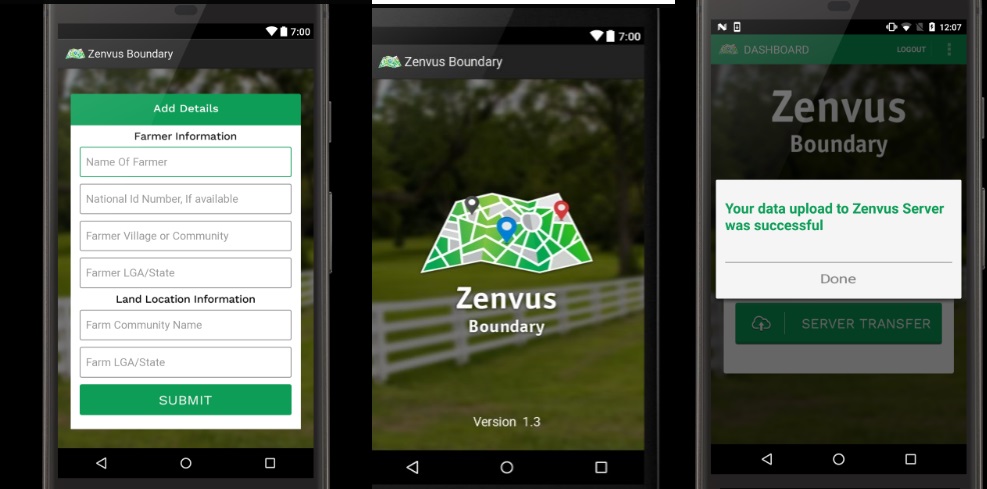
Zenvus is an intelligent solution for farms that uses proprietary electronics sensors to collect soil data like moisture, nutrients, pH etc and send them to a cloud server via GSM, satellite or Wifi. Algorithms in the server analyze the data and advice farmers on farming. As the crops grow, the system deploys special cameras to build vegetative health for drought stress, pest and diseases. Our system has the capability to tell a farm what, how, and when to farm. It has in-built GPS, compass and XL making it possible for a farmer to map the boundaries of his/her farm which could be useful during loan and insurance applications. One of the solutions available in Zenvus is Zenvus Boundary.

Zenvus Boundary

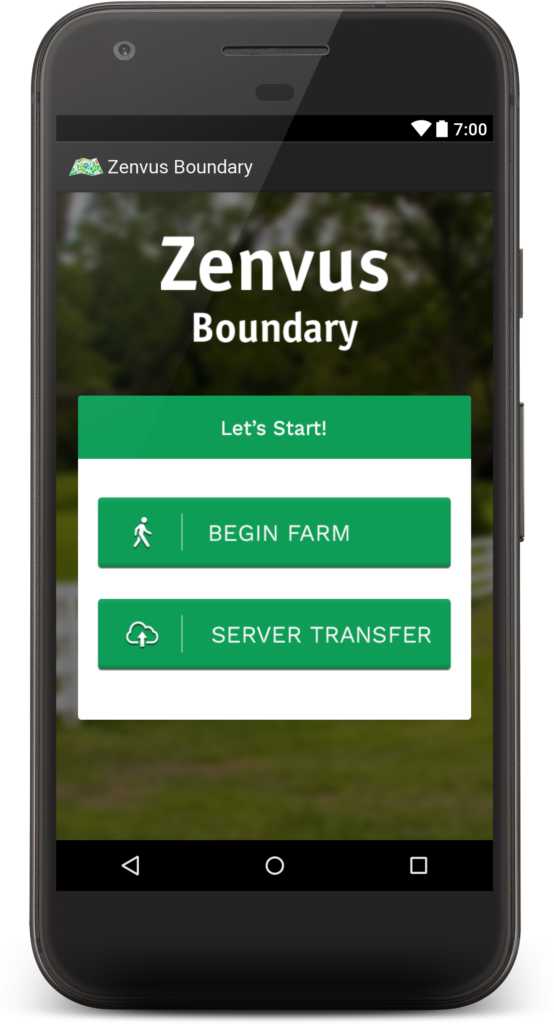
Zenvus Boundary maps farm (land, home, office or any landed property) boundaries and populates them via GIS on Google Map where the survey maps can be printed in our portal. And when done, register with their cooperatives which help them ratify the boundaries with governments. We use this to formalize farmlands and enable financial inclusion. Below is a sample result which the farmer can take to a bank as collateral for loans, after ratification by the local government..

We are looking for partners across Africa. You will use our technology to support farmers in the digitization of their farmlands. We will take a very small commission from the charges to farmers. Also, you will be required to pay membership fee in the franchise.

Contact zenvus@fasmicro.com if interested.


Email info@zenvus.com