DD
MM
YYYY

PAGES

DD
MM
YYYY

spot_img

PAGES

Home Blog Page 7339

One Tip For New Etisalat Nigeria Board, To Fix The Telco

3

Etisalat Nigeria has a new board with an Acting CEO, Boye Olusanya. They have the mandate to pilot the affairs of this company and make sure that it remains a critical component of the Nigerian telecommunication sector. The work will be challenging and certainly no single solution will suffice.

A new board has been constituted. The new board appointments are: Dr. Joseph Nnanna (CBN), Mr. Oluseyi Bickersteth (KPMG), Mr. Ken Igbokwe (PWC), Mr. Boye Olusanya (former DMD of Celtel) and Mrs. Funke Ighodaro (former CFO, Tiger Brands)

There are many challenges which the new board has to deal with. A LinkedIn user enumerated some of them which resulted to the default in the $1.2 billion loan which Etisalat Nigeria took from banks (edited for clarity). He was responding to our earlier piece on the Etisalat problem.

I have looked at all what Analyst have said about Etisalat and it’s root cause and this comment here is the closest to the best explanation for the root cause of Etisalat’s problem..

At times like this everyone has an opinion to support his or her own bias, but the fact remains the fact…

Revenue is halved in dollar terms from devaluation. N325m used to be about $2m in 2014; now this is $1m. So technically Etisalat’s revenue reduce 2X.

Cost: most of the Network Operational Cost are priced in USD. So technically, a cost which was N155m in 2014 is now N325m.

Short term debt..Yes because we know that even USD borrowed from a Nigerian Bank is a short term debt; Etisalat is still in its growth phase and needed capital for expansion.

Debt value: Used to be $1.2billion, or let’s say $600m; without devaluation this was N90billion, with devaluation this is now about N200billion. So in naira terms, cost has risen, revenue has remained the same, debt has doubled.

The growth phase, J curve environment for Etisalat is different from the likes of MTN and all.. There was once ARPU was $20+..when MTN had 12million subs ARPU was $18..Today’s ARPU is less than $4.

So in a nutshell, Etisalat’s issue is what is being publicly branded. Other issues which has been raised or talked about is what my CFO would refer to as scratching the surface. Pricing, innovation, customer retention and all others are issues which could easily be solved just by tweaking some decisions within.

BTW Pricing has a volume end as well, you need to understand this relationship before you take price either up or down. I am even from a position that the Telcos are suffering from under pricing. Coke has taken price and the Telcos haven’t. It’s just a matter of time and the effect would be felt industry wise especially as regards capacity investment.

Great insights from the commenter. However, we disagreed in one key sentence: “Pricing, innovation, customer retention and all others are issues which could easily be solved just by tweaking some decisions within:. I do believe that if Etisalat has managed its pricing well, to avoid customer exodus, it could have managed the challenges better. You cannot be in growth phase and be losing 3 million subscribers in 6 months.; that is Etisalat records. The table below is from from NCC.(Nigerian Communications Commission), the industry regulator.  Comments below.

These are the key takeaways:

  • Etisalat NG lost about 2 million users in Q4 2016. For a #4 operator to lose that number of customers means it is going to struggle. This has nothing to do with any loan in dollars or Naira. All other operators gained from it including MTN, Glo and Airtel
  • In Q1 2017 , it lost about another 1 million. Etisalat lost nearly the same number of users as MTN, but MTN is about 3x its size. So Etisalat lost most, technically. Airtel gained users while Glo lost just a few (about 30,000)
  • Had Etisalat NG kept the 2 million it lost in Q4 2016 and each of those subscribers spending  N2,000 during the period, on average, it would have earned N4 billion naira extra in revenue.
  • Also, had Etisalat NG kept the 1 million it lost in Q1 2017, it would have added extra revenue of N2 billion using the same average spending of N2,000 per user. Please carry forward the N4 billion owing to the lost of 2 million users in Q4 2016. With that, Etisalat would have earned extra N6 billion in Q1 2017 on top of whatever it earned.
  • Add these two extra revenues of Q4 2016 and Q1 2017, Etisalat would have made extra N10 billion (~$30 million). This would have kept it in a good position to be servicing its debt.

Rounding Up

As we wait for the latest quarter subscriber data from NCC, to ascertain if Etisalat has started growing again, the Board has one duty – stop the exodus and keep growing user base again. The loan will take care of itself if you can bring back the lost 3 million users in the last 6 months. You need to stop any more customer loss and move quickly into growing. Every Etisalat staff must be a sales person. Yes, the business for the board is simply Customer Retention and Customer Acquisition.


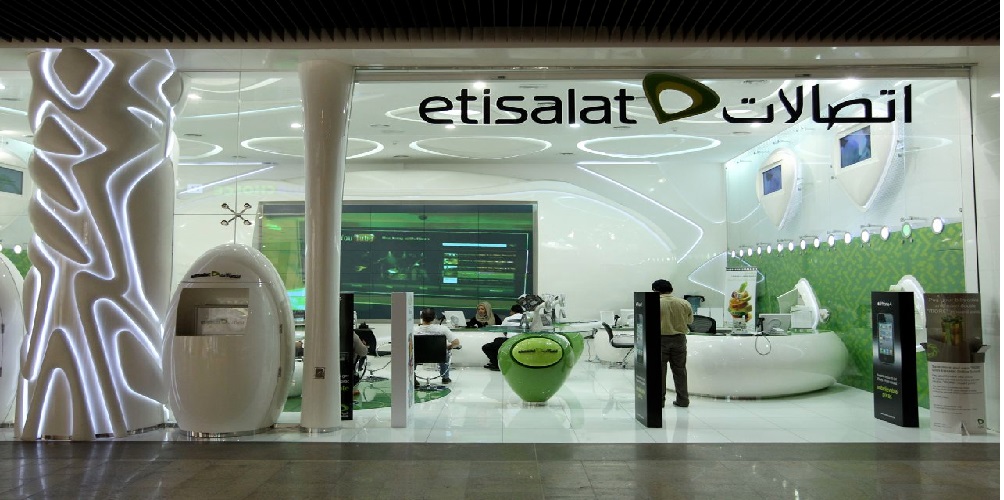
image credit: Dubai business directory
Nigeria In The Post-Petroleum Era

1

Over the past few decades, Nigeria has emerged as one of the key political leaders in Africa. Despite a long history of under-performance, driven primarily by leadership and visioning problems, it remains a key global strategic partner. It has petroleum with the capacity to partly influence the dynamics of global commerce and industry.  Whether the […]

This post is only available to members.

Zenvus Boundary Unveils Franchise Opportunities Across Africa

0
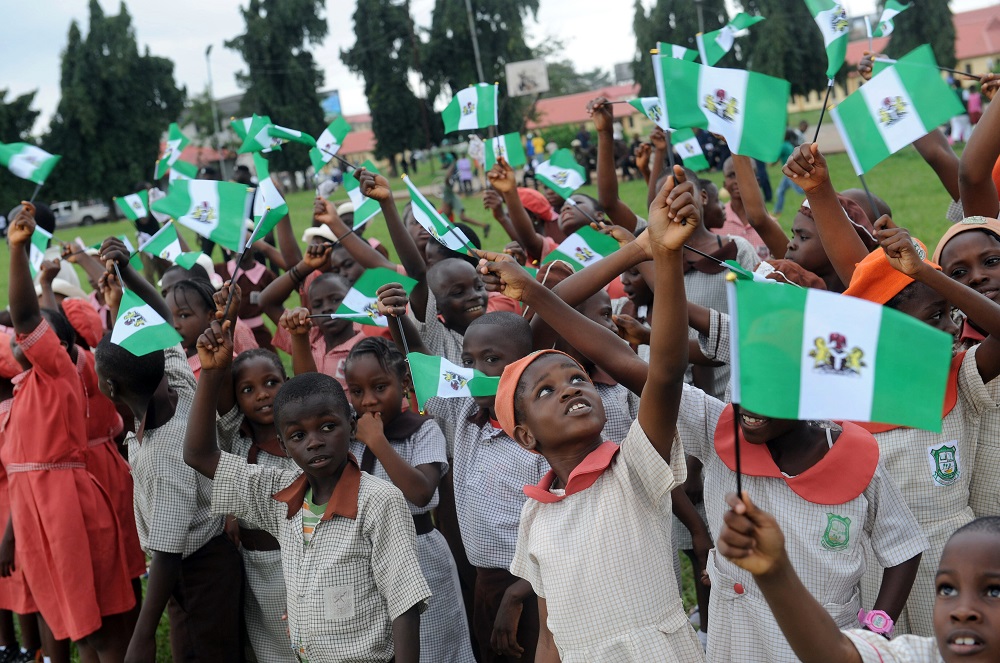
Nigerian children attend independence day celebrations in Lagos in October 1, 2013. Nigeria's president Goodluck Jonathan said he had formed a panel tasked with laying the ground for a national dialogue to tackle contentious issues such as religious tensions and the sharing of oil wealth during an address marking the 53rd anniversary of Nigeria's independence. AFP PHOTO/ PIUS UTOMI EKPEI (Photo credit should read PIUS UTOMI EKPEI/AFP/Getty Images)

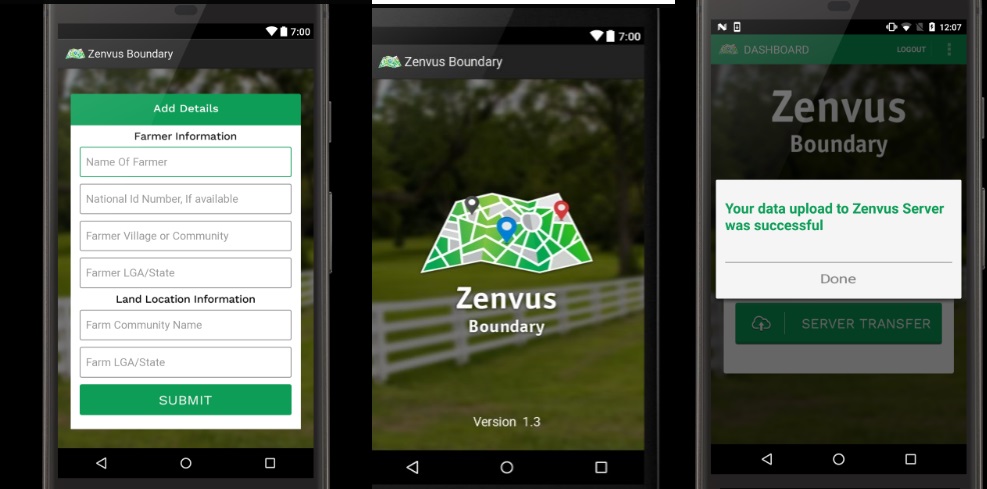
Zenvus is an intelligent solution for farms that uses proprietary electronics sensors to collect soil data like moisture, nutrients, pH etc and send them to a cloud server via GSM, satellite or Wifi. Algorithms in the server analyze the data and advice farmers on farming. As the crops grow, the system deploys special cameras to build vegetative health for drought stress, pest and diseases. Our system has the capability to tell a farm what, how, and when to farm. It has in-built GPS, compass and XL making it possible for a farmer to map the boundaries of his/her farm which could be useful during loan and insurance applications. One of the solutions available in Zenvus is Zenvus Boundary.

Zenvus Boundary

Zenvus Boundary maps farm (land, home, office or any landed property) boundaries and populates them via GIS on Google Map where the survey maps can be printed in our portal. And when done, register with their cooperatives which help them ratify the boundaries with governments. We use this to formalize farmlands and enable financial inclusion. Below is a sample result which the farmer can take to a bank as collateral for loans, after ratification by the local government..

We are looking for partners across Africa. You will use our technology to support farmers in the digitization of their farmlands. We will take a very small commission from the charges to farmers. Also, you will be required to pay membership fee in the franchise.

Contact zenvus@fasmicro.com if interested.


Email info@zenvus.com


Searching For A Leader, For Nigeria

5
Nigerian children attend independence day celebrations in Lagos in October 1, 2013. Nigeria's president Goodluck Jonathan said he had formed a panel tasked with laying the ground for a national dialogue to tackle contentious issues such as religious tensions and the sharing of oil wealth during an address marking the 53rd anniversary of Nigeria's independence. AFP PHOTO/ PIUS UTOMI EKPEI (Photo credit should read PIUS UTOMI EKPEI/AFP/Getty Images)

Men (and women) build nations and across human histories, God has raised so few to save the destinies of people. These special people have the visions to lead their fellow citizens into a more hopeful and prosperous future even in the midst of challenges. For decades, Nigeria has sought for a leader that can mobilize its people and inspire them to rise above their perceived terrestrial boundaries.  Someone with capacity that can bring change that is sustainable and transformational. As a nation of optimists, can-do people, icons in trade and industry, a special people in the community of nations, our expectations from our leaders have always been gigantic.

Over the last few years, the world has undergone tremendous redesign. The advent of information and communication technology continues to engineer new economic models, transforming nations into knowledge-based economic units with networks of citizens, firms and states that are linked together in interdependent global relationships. From private sector to public enterprises, we are seeing amalgam of new class of workers that are reshaping the traditional model of competition. Globally, these knowledge workers are building new institutions, positioning countries to manage impacts arising from globalization, terrorism and exchange rate turbulence, by establishing modern infrastructures on education, industry, health and energy. It is a new world where nations that fail to develop or learn, acquire and adapt technologies will remain poor. The emergence of China and the continuous threats to traditional industries by startups, enabled primarily by brainpower, are showing that we are in a time of global redesign and transformation driven by knowledge, an important factor of production.

Knowledge will rule modern man and this knowledge is new, fresh and combative. Since Adam Smith’s ‘Wealth of Nations’, there has never been a more urgent time in the history of man where innovative economic and political leadership is required of leaders. The reason is simple; globalization makes it difficult to control factors like trade and labor, which hitherto, could be easily controlled to the advantages of nations.  Because of the “new continent”, Internet, only nations with dynamic and insightful leadership can prosper.

From American Wall Street to Nigerian Broad Street, leaders have come to realize that new ideas are needed because many old economics are falling. Old economic models are no more efficient in controlling development plans and new tools are required.  Yes, new ideas that accommodate emerging variants that technology has enabled in both the political and economic national models. Models based on the theme that every nation has a limit to national wealth without science and technology. It is an understanding that the era where natural resources dominate international trade is giving way to that of knowledge resources. Natural resources are still important, but unfortunately, the most stable and prosperous nations are those that create ideas with army of knowledge workers.

Nigerian children attend independence day celebrations in Lagos. You cannot take way the optimism of our young people (Source: Epoch Times/Getty Images)


Nigeria as the largest economy in Africa is not isolated in these events. Over the last few decades, Presidents have come. Presidents have gone. But none has demonstrated the intellectual sagacity required to anchor a virtuoso moment for the beautiful country. They look timid and seem incapable to pilot the economic affairs of our nation excellently. They stumble on minor local and international challenges because they lead operationally, instead of strategically. You watch them approach highly important moments without analytical rigor, pursuing effects, instead of the root causes. Daily, you see simpletons leading a country with legends in Physics, Mathematics, Business, Literature and any field conceivable.

The education system is stale. And across the nation, communities of farmers are hungry. The health sector has been blacklisted by the same government that runs it. It is a total shame.

Nigeria is looking for a leader, from the local to the highest. Our moments of glory are daily passing, because men are shadowing the sun from shining upon one of the most favored people on earth. We have oil, but we enjoy darkness. We have engineers, but they have no bitumen to fix roads. We have accountants, but they have no sales records to reconcile. We have doctors, but those that pay them are never their customers. We have teachers, but they are locked out of labs and libraries with no funding. Yet, government is busy. Busy for what?

For the undeniable spirit of optimistic exuberance, by a people legendary for it, and by men and women believing in churches and mosques that Nigeria will be great, we will not have a nation. Out of them are entrepreneurs and businesspeople doggedly pushing for a future while their leaders gaze. Despite the bravados of the private sector that transcend the shores of Niger, Mississippi, Zambezi and Thames, the leaders have seen them as enemies, with no support. Aba is a waterside when it rains. Maiduguri, once a center of commerce, is now a lab for misinformation. The legendary Ibadan cannot have one of our finest universities to dialogue with its students. And in Yenagoa, universities teachers could stay home for weeks, while it is all normal to close primary schools in Makurdi while simpletons pile up their bank accounts.

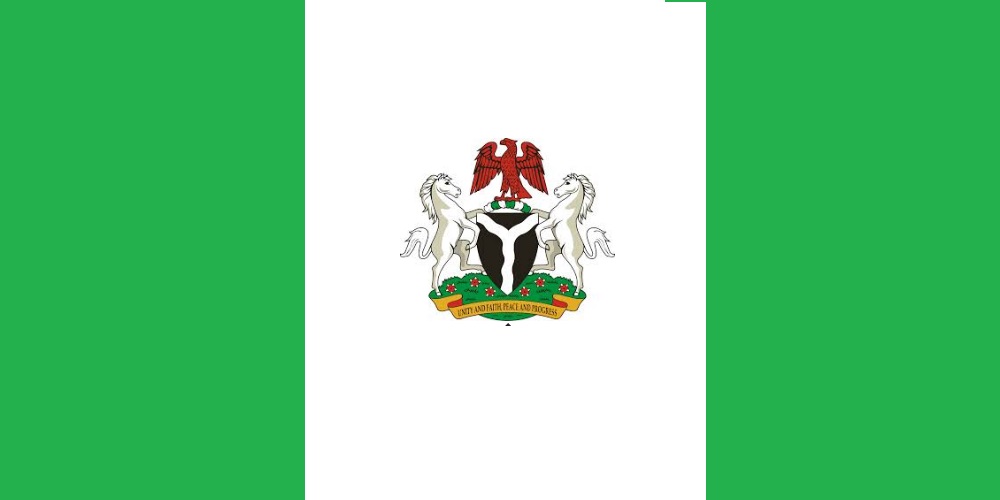
The Nigeria flag – will like to fly higher, on the shoulders of great leaders


Yet, the advancement of any modern superpower has been fuelled by its educational infrastructures. And the collapse of any great nation has always been preceded by the decay in its education. The old Greece was known for its fine philosophers, the Babylon known for its wisdom and the old Egypt, where civilization began was known for its knowledge. In its age, Egypt was admired for knowledge as the land of pharaoh had some of the best thinkers. During the British industrial revolution, their education was the best, as few schools could be compared to Oxford and Cambridge. Today’s dominance of the United States is attributed to its education, which remains its best industry, at least at the university level. The schools drive the researches that translate to new technologies, which subsequently diffuse into the economy. No modern Nigerian leader has understood that the nation will be on perceptual stasis if education is not strengthened, from primary to university levels. We are still striking in the 21st century.

Nigeria enters the knowledge century unprepared despite all the efforts from its youth and entrepreneurs. Leadership has failed to galvanize a visioning process that delivers fundamental changes in trade and industry to make us the destination of quality capital. From electricity to road networks, Nigeria is a nation resembling a young lady left at the altar, alone, on her wedding day.  As the youth runs towards the mountain-top with the blissful energy of happy stars around the world, they always remember that from the creeks of Yenagoa to the lagoons of Lagos, from the mangrove of Calabar to the grassland of Sokoto, their nation is not helping them compete, at the global arena. While their peers talk of artificial intelligence, they are concerned with artificial darkness perfected by man.

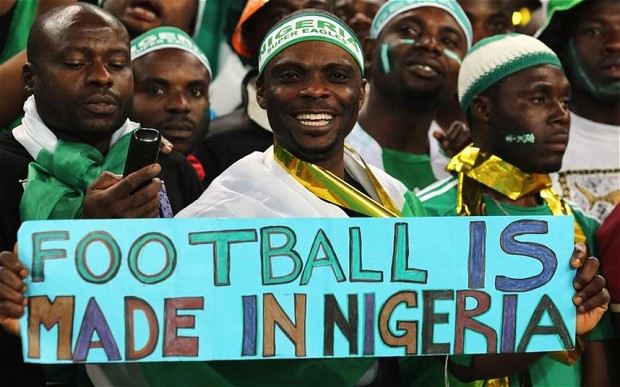
Nigerians are optimists, despite the challenges, they always have fun (Source: Travelstart Nigeria)


But we are Nigerians. We are of the same blood as Achebe, Soyinka, Azikiwe, King Jaja, Ahmadu, Bayero and other heroes current and past. We are Nigerians      smart, ingenious and optimists. We want a leader who has demonstrated the capacity to rally the nation in honesty, hard work and raise our imaginations beyond where we are for a better future. A leader that can engineer a transformation for our nation with bigger and larger dreams that generations of Nigerians will unite for. He is born a Nigerian and belongs to Nigerians but to none.

A leader that can create a society to engage our brightest minds in government by evolving a new political system designed to seriously solve problems. A person who can engineer Nigeria into rebirth and restoration to offer a prosperous nation that is colorful, fluidic, vibrant and open for change. Yes, a person of immense intelligence, competence, pragmatism, and unimpeachable. A person of integrity, broad knowledge, enormous vision and solid experience; one that can stimulate more vibrancy in the private sector and move the public sector out of its stasis. With that leadership, Nigeria will witness changes in trade, education, and commerce as battalion of knowledge workers emerges to give us the needed clout in the global arena.

I am looking for that leader. And I know in this great nation and even greater people, they abound. I am searching for a leader, for Nigeria.