
DD
MM
YYYY

PAGES

DD
MM
YYYY

spot_img

PAGES

Home Blog Page 734

Dogwifhat Hat $799k Sale Exemplifies How NFTs Democratize Access By Enabling Creators to Monetize Viral Content

0

The original pink knitted hat worn by Achi, the Shiba Inu behind the Dogwifhat meme, sold for approximately $799,000 (6.8 BTC) at an auction on the Bitcoin Ordinals platform Ordcity. The buyer, Finn, founder of the meme coin launchpad Bags, aimed to “return the hat to the community.”

The hat’s authenticity was verified via Bitcoin Ordinals, with a photo of Achi and his owners inscribed on the blockchain. This sale follows the $4.3 million NFT auction of the Dogwifhat meme photo in March 2024, highlighting the cultural and financial value of meme-related artifacts in crypto communities.

The sale demonstrates how internet memes, often ephemeral and community-driven, can be transformed into high-value digital and physical assets. The Dogwifhat hat, a simple knitted item, gained immense value due to its meme-driven cultural significance, showing how niche internet phenomena can translate into financial opportunities.

The buyer, Finn, aimed to “return the hat to the community,” suggesting a cultural ethos in crypto and meme communities where assets are seen as collective symbols rather than just personal possessions. This reinforces the idea that value in NFTs often stems from community engagement and shared narratives.

The use of Bitcoin Ordinals for authentication further ties this to decentralized, community-verified systems, bypassing traditional gatekeepers like auction houses. The inscription of the hat’s photo and authenticity on the Bitcoin blockchain ensures a permanent, tamper-proof record of its cultural significance. This creates a digital archive for meme culture, elevating it to a form of digital art or historical artifact.

Such preservation amplifies the cultural footprint of memes, making them accessible to future generations as part of a decentralized cultural ledger. The high sale price reflects speculative enthusiasm in the crypto and NFT markets, where scarcity drives value. However, this also raises concerns about bubbles, as prices may not always align with intrinsic value.

How NFTs Are Democratizing Access

NFTs enable anyone—pet owners, artists, or meme creators—to tokenize and sell digital or physical assets without needing traditional intermediaries like galleries or auction houses. Achi’s owners, for instance, leveraged the meme’s popularity to access a global market via Ordcity.

Platforms like OpenSea, Rarible, or Ordcity provide open marketplaces where creators from diverse backgrounds can participate, leveling the playing field compared to elite-driven art markets. NFTs allow fractional ownership or bidding on assets from anywhere in the world, as seen with the Dogwifhat auction on Ordcity.

This global reach democratizes participation, letting collectors, fans, or investors from varied economic backgrounds engage in high-value transactions. Blockchain transparency ensures trust, as buyers can verify authenticity and provenance, reducing reliance on centralized authorities.

NFT projects often involve community governance or shared ownership models (e.g., DAOs). In the Dogwifhat case, the buyer’s intent to “return the hat to the community” suggests a communal approach to cultural assets, fostering collective stewardship. Communities can rally around memes or cultural symbols, using NFTs to fund projects or reward contributors, as seen with meme coins like $WIF, which often distribute value back to holders.

NFTs amplify the cultural significance of internet subcultures, like meme communities, by giving them tangible representation on blockchains. Dogwifhat, a Solana-based meme coin mascot, became a cultural icon, with its hat and image immortalized as collectibles. This creates a lasting digital legacy for ephemeral trends, bridging niche online communities with mainstream recognition.

NFTs challenge traditional notions of value by equating a dog’s knitted hat or a viral image with high art. This democratizes what is considered culturally significant, allowing grassroots creations to compete with established art forms. The $4.3M Dogwifhat NFT photo sale in March 2024 underscores how memes can rival fine art in perceived value, reshaping cultural hierarchies.

Owning an NFT like the Dogwifhat photo or hat signals membership in a cultural movement (e.g., the crypto or meme coin community). This strengthens digital identities and fosters a sense of belonging, as fans and collectors align with shared symbols. The cultural footprint extends through social media platforms like X, where NFT sales spark discussions.

While NFTs lower some barriers, high-profile sales like Dogwifhat’s $799K hat highlight how speculative pricing can exclude smaller players. Gas fees on blockchains like Ethereum or high entry costs for popular NFTs can limit access for average users. Democratization is uneven, favoring those with crypto wealth or early access to trends.

NFTs empower communities to define value and amplify subcultures, creating a broader cultural footprint for internet phenomena. However, challenges like high costs, speculative bubbles, and environmental concerns highlight the need for more inclusive and sustainable NFT ecosystems.

Corgi is the world’s first AI-insurance company

0

At Tekedia Capital, we’re investing in some of the world’s category-shaping companies. Corgi is the world’s first AI-insurance company with full stacks of AI, insurance and reinsurance licenses, and is arguably the fastest growing insurer in the world today.

Learn about Corgi here corgi.insure and how to become part of Tekedia Capital community here capital.tekedia.com . We fund the players which will drive the future of entrepreneurial capitalism.

Trump’s Executive Order on Crypto Debanking Creates a Favorable Environment for Blockchain Technology By Promoting Regulatory Clarity

0

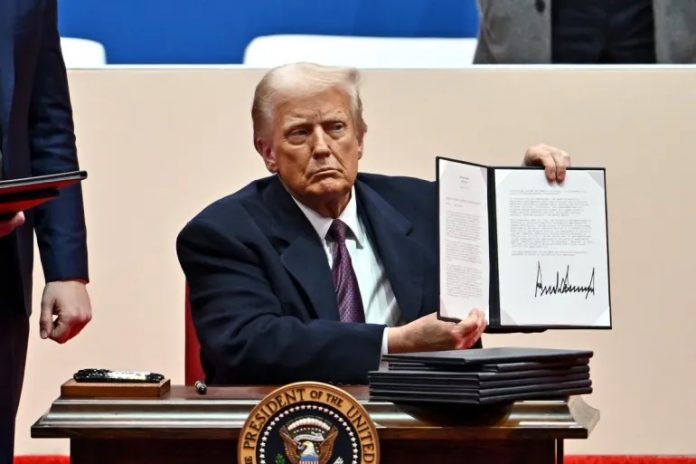
President Donald Trump signed an executive order aimed at preventing banks from discriminating against the cryptocurrency industry and other groups, addressing what his administration described as “debanking” practices.

The order prohibits federal regulators from using “reputational risk” as a justification for influencing banks to deny services to legal businesses, particularly targeting perceived bias against crypto firms and conservative-affiliated clients. It mandates investigations into whether banks have violated laws like the Equal Credit Opportunity Act, antitrust laws, or consumer protection statutes, with potential penalties including fines or consent decrees for violators.

The directive also addresses claims of “Operation Chokepoint 2.0,” an alleged coordinated effort under the Biden administration to pressure banks to sever ties with digital asset firms. This action builds on Trump’s earlier pro-crypto policies, such as a January 2025 executive order promoting digital asset innovation and banning Central Bank Digital Currencies (CBDCs) in the U.S.

Implications for Blockchain Technology

The August 7 order, combined with the January 23 order, emphasizes regulatory clarity for digital assets and blockchain technology. By establishing a President’s Working Group on Digital Asset Markets to propose a federal regulatory framework within 180 days, the administration aims to provide a stable environment for blockchain innovation.

The orders explicitly protect fundamental blockchain activities such as self-custody, mining, and permissionless transactions. This fosters an environment where developers and companies can innovate without fear of regulatory overreach, potentially accelerating advancements in decentralized finance (DeFi), tokenized assets, and Web3 projects.

The policy aims to position the U.S. as a hub for blockchain innovation, countering restrictive regulations in places like China. This could attract global investment and talent to the U.S., enhancing blockchain research and development. The creation of a Strategic Bitcoin Reserve and a U.S. Digital Asset Stockpile, as outlined in a subsequent March 7, 2025, executive order, signals government recognition of cryptocurrencies like Bitcoin as strategic assets.

This move, capitalized with seized cryptocurrencies, could legitimize blockchain-based assets and encourage broader adoption of blockchain technology for secure, decentralized record-keeping. By treating Bitcoin as “digital gold” due to its scarcity and security, the government’s strategy may spur blockchain use in financial systems, reinforcing its role in global transactions.

The prohibition of CBDCs, citing risks to financial stability and individual privacy, prioritizes decentralized blockchain networks over centralized digital currencies. This could drive investment toward permissionless blockchains, as the policy encourages private-sector-led innovation over government-controlled alternatives.

While the orders promote innovation, experts caution that blockchain’s privacy benefits are not absolute, and misuse for illicit activities remains a concern. The administration’s focus on anti-money laundering (AML) measures and blockchain analytics tools may impose compliance requirements that could complicate development for smaller blockchain projects.

How Banks Are Likely to View Cryptocurrencies

Bank of America CEO Brian Moynihan’s statement, “If the rules come in and make it a real thing that you can actually do business with, you’ll find that the banking system will come in hard on the transactional side of it,” suggests banks are ready to engage with crypto as a legitimate payment form if regulatory clarity is provided. This indicates a shift toward viewing cryptocurrencies as viable financial instruments.

The rescission of the SEC’s Staff Accounting Bulletin 121 (SAB 121) on January 23, 2025, removes accounting burdens that deterred banks from offering crypto custody services. Previously, SAB 121 required banks to record customer-held crypto as liabilities, inflating balance sheets and complicating financial reporting. Its withdrawal signals banks can now more easily custody digital assets, potentially leading to broader crypto integration in banking services.

Banks are likely to explore crypto-related services like custody, trading, and payment processing, especially as stablecoin regulations solidify with the GENIUS Act (signed July 18, 2025), which mandates 100% USD or Treasury backing for stablecoins. This could normalize cryptocurrencies in traditional banking operations.

Large banks like JPMorgan Chase and Bank of America, which previously cited AML and financial risk concerns for debanking, may adopt a more open stance but will likely prioritize compliance to avoid penalties. The creation of a national digital asset stockpile and Strategic Bitcoin Reserve lends credibility to cryptocurrencies, potentially attracting institutional investors, including banks.

For banks, the order removes barriers to engaging with crypto, encouraging participation in custody, trading, and payment services, though compliance with AML regulations remains critical. While the policy shift is broadly positive for blockchain and crypto adoption.

SoftBank Acquires Foxconn’s Former GM Factory in Lordstown, Signals Preparation for the AI Revolution

0

SoftBank has quietly purchased Foxconn’s former General Motors factory in Lordstown, Ohio. Once earmarked for electric vehicle production, the shuttered plant is now expected to serve as an assembly hub for AI servers — a critical component of the vast “Stargate” project, a trillion-dollar-plus plan unveiled earlier this year by SoftBank together with OpenAI and Oracle.

Over the past decade, SoftBank has evolved from a high-risk investor to a key architect of AI’s global infrastructure. The unstable era of Silicon Valley startups like WeWork and Uber left the company reeling, prompting a fresh approach built around AI-centric investments and infrastructure ownership. Today, its Vision Fund boasts stakes in giants like NVIDIA and OpenAI and has pivoted toward tangible assets like data centers and chipmaking pipelines.

The Lordstown facility acquisition seems to crystallize this shift: it provides a physical base in the U.S. for server manufacturing or co-located data center development, enabling SoftBank to accelerate Stargate’s early deployment where it needs infrastructure the fastest.

The Stargate Vision Runs Deep — and Long

Announced at the White House early this year by Donald Trump, the Stargate initiative is SoftBank’s boldest bet yet — a $500 billion plan to build AI infrastructure across the United States, including ten data centers starting in Texas and potentially expanding globally.

SoftBank plays the role of financial anchor in the venture while OpenAI holds operational leadership. Oracle and MGX, among others, join as co-investors, while OpenAI has committed $30 billion a year in computing contracts with Oracle, one of the largest cloud deals ever signed in AI infrastructure. That agreement alone powers the center in Abilene, Texas, eventually scaling to multiple gigawatts of GPU-wattage and hosting millions of AI chips.

The Lordstown site may well become the first domino to fall toward delivering tangible assets from this speculative, high-conviction project.

SoftBank’s renewed financial health makes this play possible. After suffering massive losses during its speculative heyday, its Vision Fund rebounded strongly in 2025, reporting quarterly profits of $2.9 billion, bolstered by AI-favored holdings like NVIDIA and Coupang.

These gains are fueling not only Wall Street’s renewed enthusiasm for SoftBank’s story but also its ability to invest directly, building and owning the physical infrastructure that enables AI to scale.

Risks Remain as Execution Lags

SoftBank has publicly acknowledged Stargate’s challenges, including delays in funding, alignment with partners, and site selection. Industry insiders note that six months after the project was launched, not a single operational data center has launched, giving rise to skepticism about what scale SoftBank can actually deliver.

On top of that, the broader geopolitical landscape — from export controls on semiconductors to rising U.S. scrutiny of foreign capital — casts a long shadow over any plans reliant on rapid hardware deployment.

The Strategic Play—and What to Watch Next

SoftBank’s Ohio buy is a tangible sign it’s anchoring AI infrastructure with real-world assets. Analysts now see Lordstown not just as a factory, but as a foothold in the U.S. AI backbone. Some believe that its success will depend on SoftBank’s ability to follow through, unlocking partner financing, clearing regulatory hurdles, and delivering usable data center or compute capacity, fast.

If it does, the Lordstown plant will stand not as a failed EV dream, but as the launchpad for the next industrial age: one powered not by horsepower but by exaflops and artificial intelligence.

EV Sales Surge as Americans Race to Beat September 30 Tax Credit Deadline

0

Electric vehicle sales in the United States are experiencing a sharp spike as consumers rush to take advantage of tax credits worth up to $7,500 before they expire at the end of September.

The looming deadline, set under legislation backed by Republicans in Congress and signed by President Donald Trump in July, marks a dramatic policy shift that will effectively eliminate federal incentives for new, used, and leased EVs after September 30 — a full seven years earlier than originally planned under the Biden administration’s Inflation Reduction Act.

Under Biden’s plan, the credits would have remained in place until 2032, part of a broader strategy to cut greenhouse gas emissions from the transportation sector, which is the single largest contributor to U.S. emissions. The change now leaves a narrow window for buyers to lock in significant savings, pushing the EV market into a frenzy.

Auto analysts say the surge is unprecedented. Stephanie Valdez Streaty, senior analyst at Cox Automotive, predicts the third quarter could set an all-time record for EV sales.

“People are rushing out to buy because they know the incentives are going away,” she said.

In July alone, Americans purchased nearly 130,100 new EVs — the second-highest monthly sales total on record, just behind December’s 136,000. That’s a 26.4% jump from June and almost 20% higher than a year earlier. EVs made up 9.1% of all passenger vehicle sales for the month, the largest share ever recorded.

Used EVs are also seeing record demand, with nearly 36,700 sold in July, according to Cox data. Certain models have emerged as clear winners, including the Chevy Equinox EV, Honda Prologue, and Hyundai IONIQ 5. The Equinox EV alone sold 8,500 units in July — the highest single-month total for any non-Tesla EV in the U.S. Tesla, still the market leader, has seen its own sales slip for two straight quarters, down 12% year-over-year in Q2 and 9% in Q1.

The appeal of the tax credits is simple economics. A new EV costs an average of $55,689, compared to $48,078 for a new gasoline-powered car. With the federal credit, the price gap all but disappears, bringing an EV’s cost to around $48,189 — near parity with conventional vehicles. Without that subsidy, the affordability advantage vanishes overnight.

Tom Libby, analyst at S&P Global, warns that the end of the credits will “jeopardize” EV price competitiveness, even as state governments and utility companies continue to offer smaller, localized incentives.

Dealers are making the most of the ticking clock. Tesla’s homepage now blares “$7,500 Federal Tax Credit Ending” alongside “Limited Inventory — Take Delivery Now,” urging customers to finalize purchases before the cutoff. To sweeten the deal, automakers are stacking additional discounts on top of the federal credit. In July, new EV buyers received an average of $9,800 in extra incentives from dealers, worth 17.5% of the average transaction price, the highest level since before EVs began to gain mainstream traction in late 2017.

But the rush may be short-lived. Analysts warn of a steep drop in sales once the tax credit disappears.

“EV sales are likely to collapse in the fourth quarter of 2025,” Streaty said, predicting that the market will have to recalibrate to a new financial reality.

One possible bright spot could be the used EV market, which has already been growing without much help from incentives. Only about one-third of used EVs sold qualified for the $4,000 federal credit even before the policy change, suggesting demand won’t crater as dramatically. With more used EVs entering the market and fewer subsidies for new ones, analysts expect pre-owned models to attract more buyers in the months ahead.

However, the looming expiration of federal incentives has created a paradox of an artificial boom in sales today, shadowed by the threat of a sharp contraction tomorrow.