DD
MM
YYYY

PAGES

DD
MM
YYYY

spot_img

PAGES

Home Blog Page 7344

How Tier II Nigerian Banks Can Accelerate Revenue Growth

4

The Nigerian banking sector is going through a redesign, resulting to two distinguishable classes which are Tier I and Tier II banks. GTBank leads the Tier I banks with its massive balance sheet and innovation capabilities supported by industry-leading market valuation. Diamond Bank, Wema Bank, and FCMB are some of the members of the Tier II banks. Unity Bank, SunTrust Bank and Jaiz Bank are in their own class but we will keep them as part of the Tier II class also.

In terms of innovation, the Tier I banks like Zenith Bank, UBA, Access Bank, GTBank  and First Bank are using their stronger positions to put more pressures on the Tier II banks. As banks pursue technology investments which will not just run their operations, but also transform them, the disproportionate asset positions are evident and worrisome. As typical with technology, if the Tier II banks cannot build good ones, they will fall behind and may struggle to ever catch up.

GTBank can buy most of the banks except, may be, the two following it, using the prevailing market capitalization. This widening position will continue because GTBank has since ceased to be just a bank, transmuting itself into a financial ecosystem where e-commerce, lending, and other activities co-exist, at scale. Right inside GTBank, there are many fintech entities, being run with efficiency, delivering sector leading cost-to-income ratio that even top U.S. banks like Bank of America, Citibank and PNC Bank will aspire for. GTBank is a premier Nigerian institution and one that symbolizes the best of the Nigerian business management.

The Tier II Banks

These are banks with challenging balance sheets. They continue to lose market share with decimated market capitalization. Some suffered multi-pronged crises of poorly performing loans with exposures to the oil and gas industry, which contracted,  when the global oil prices dropped, triggering loan defaults. Also, some took loans in foreign currency before the Naira deteriorated in value. Some will need to raise capital through bonds or new shares to improve their balance sheets and meet required regulatory financial ratios on capital adequacy and other metrics. They are under immense stress with the competitive pressures from the Tier I banks; most are facing existential threats. For the ones that cannot succeed in bond markets, the option may be mergers and acquisitions. It is not really well with most Tier II banks in Nigeria.

With the specter of GTBank and other Tier 1 banks  looming in the sector, I want to discuss how these Tier II banks can find value and accelerate revenue growth. Yes, deposit base has to increase, in these banks.

But first, we note the following key points:

Nigerian Banking is Competitive

The industry is ferociously competitive because the economy is largely small. We have the population but we do not have many with the pockets. Nigeria economy is smaller than the economy of Michigan State in U.S.; Michigan has a population of 10 million people while Nigeria is in excess of 180 million. The implication is that we have very few people that banks can make money from. So everyone pursues those select few, making the sector increasingly competitive.

For the realignment of this observation, innovation is very critical.  In the early 1990s, Diamond Bank was one of the most innovative banks in Nigeria. Its pioneering Diamond Integrated Banking System (DIBS) which made it possible for a bank customer to put money in one branch and access it from any other Diamond Bank branch, gave it market share, from the old generation banks . That was a golden era in Nigerian banking with so many innovations, including in pricing. The invention of COT (commission on turnover) provided capital that funded growth and transformed the sector as they made good profits, and they invested in modern technology. But ever since, disruption has been muted and innovation is largely incremental. Tier II banks must come up with ideas beyond the needs, expectations to perception of customers just as DIBS provided to Diamond Bank the tools to take market share from the older banks.(Other new generation banks like Zenith, GTBank, STB (now UBA) , etc had their own incarnations of innovations that improved customer experiences)

All Digital Is An Illusion

The world is going digital and that means everyone has to go digital, the saying goes. But in Nigeria, making money is still in the meatspace (i.e the physical world). Cyberspace  is an illusion if you want to survive in the short term banking sector in Nigeria; you cannot abandon the physical world. While the apps can get you college students and likes, the people that have the money are not yet online. This is the perspective that must drive Tier II banks as they work on strategy. The apps will not grow revenue despite making you look trendy. Nevertheless, investing in digital channels is strategic but that does not mean that the meatspace should be forgotten.

Digital Transaction

The increasing level of digital transactions in the industry has exacerbated the confusion with everyone pursuing digital strategy with the risk of neglecting where the money is (the physical world of Nigeria). Digital transaction is nothing but having “digital cheques”; it changes nothing in your balance sheet except that customers are interacting via new channels. Sure, it saves you money from hiring tellers, opening new branches and paying salaries as operations move digital, but that will not solve any systemic problem if the root cause is not addressed. Most times, the root cause is not digital. That your customers are using lighter cheque books to move their money around does not mean lighter cheque is where the solution is. The digital channels are important, but in Nigeria today, they are not  where the vehicles the Tier II banks need to compete against the Tier I banks are located. With most of the industry fees curtailed, how much moved, while important in many ways, is not as critical as when COT (commission on turnover) was the order of the day. The key is deposit base and finding and discovering new class of customers, not already over-marketed.

Source of Customer Acquisition

If Tier II banks check carefully, despite the increasing digital transactions, customer acquisition has not moved heavily into the digital space.Though BVN can provide the vehicle for people to open accounts online, the reality is that the segments that will do this are not the people with the big cheques. If the meatspace is where the customers originate, you have to deepen efforts in that space. Apps are great but they cannot bring deposits that matter. The business of banking is deposit base and interest making. Finding quality customers in today’s Nigeria will not come from those signing via apps, for the first time, but those you engage through the meatspace.  Bringing new deposits and not how the money is moved around must be paramount in the minds of the bank CEOs.

Solution for Meatspace is Key

To make money in Nigeria, you have to operate in the physical space. While investments in the digital will continue, finding how technology can help to improve customer conversion and acquisition in the physical must drive strategy. In our practice where we have worked with banks, I have tried to correct the fixation that getting digital right will solve all problems. Nigeria is still about 5 years away from the digital era and for some of the Tier II banks, that is an eternity. They need to survive right now because most are facing existential threats.

The Fintech Problem

Fintech is a problem but they will not eat the banks in Nigeria. As noted above, those doing digital are not the ones with the money. These are college students and largely lower spectrum of the middle class. (I do not consider using a bank app or website to move money or check balances as fintech. Most of the things called fintech will become typical product features of any modern Nigerian bank.) Yet, banks can make these institutions irrelevant by introducing better products, at scale. They have the data and records and can build better products that any of the fintechs cannot do. The key thing is making sure you are aware of the risks coming from fintechs. I do expect the banks to introduce a special connect fee thereby putting the fintechs at disadvantage, if things go really out of hand. I do not understand why a firm will collect 3-5% on a customer transaction and expect me to process the transaction for free. Once connection fees are put in place, customers will begin to avoid the fintechs, understanding that banks offer free alternatives. Banks have the capacities to make many fintechs irrelevant in the Nigerian banking sector just as Internet Explorer made Netscape Navigator. How to build a product like this can be inspired by Visa’s Verified by Visa where the customer in the process of confirming payment sees the extra fees the bank will charge it. They will likely abort the ongoing transaction and switch to the bank’s channel. Where banks fail in this area, they will risk becoming the centers of Smiling Curves with the fintechs at the edges enjoying most of the values.

Blockchain – Remittance is a Dead Sector

Within a decade, moving money around the world will be free. It is already done. Circle which Goldman Sachs invested allows Americans and Europeans to move money at zero fee across the Atlantic. Do not waste your efforts on remittance technology because you cannot compete with free. And that reminds me, if you have a technical team, put efforts to see how blockchain can improve your business process and save you so much money.

The Growth Model for Tier II Banks

Tier II banks must accelerate agency banking with more investments to bring more customers into their systems. Those customers are not in the digital or even in the financial system. BVN has provided insights that many Nigerians are not banked, yet. This is an opportunity for Tier II banks.

The roadmap is to develop a technology that will help make citizens/shops extension of bank branches so that banks are closer to the people that need them, at better cost model. We do not need full scale branches to reach villages and communities. Technology provides the capabilities to scale this and also make it cost-competitive.

The herdsmen who move tens of cows have more values to a bank than college students who barely have enough for three square meals. But the college students are accessible while the herdsmen are not. Find a way to reach them and provide banking services and boost your revenue.

Agency banking with proprietary technology supported with tokens, BVN and mobile kiosks will deliver the magic. The transactions will be capped to avoid fraud and risk-management tools embedded. As these agency banking systems mature, banks can close and sell off expensive branches which may not be necessary in 5 years as the immersive digital economy evolves.

A technology that provides innovation, at scale, delivering good cost-to-income ratio, even when improving deposit base,  is what the Tier II banks need. They need to pursue this strategy, building specialization and competence, in the niche markets. They need to know what farmers, herdsmen, artisans etc need on the overall constructs of banking in order to deliver value to them.  In the past, some banks started branches in markets developing capabilities in meeting the needs of traders. Now is the time to go to carpenters, artisans, herdsmen and farmers, because they are latent opportunities which are waiting to be unlocked.

Nigeria, Africa Needs Amazon More Than Google, Apple And Facebook

5

Since Adam Smith wrote his classic, in 1776, the Wealth of Nations, to upend the mercantilist system and setting forward the basic foundations for modern classical economics, we have seen corporations come and go. The core pillars of productivity and division of labour have been the tenets in the organization of firms which thrived. The free market system provided the cement mortars for states.

Andrew Carnegie lived. John D. Rockefeller lived. Aliko Dangote is living. Bill Gates is living. Jeff Bezos is living.

These men are icons of their generations, pursuing the noble cause of entrepreneurial capitalism – aligning assets and knowledge to provide services where fictions exist between those that want and those selling. Corporations exist to simplify that interplay of demand and supply and these legends and others thrived in providing solutions that eliminate most of the frictions. They pursued different levels of innovations for scale using productivity, specialization and uncommon vision.

In our contemporary time where the Wealth of Nations is largely the Technology of Nations as technology has become the enablers and pillars that underpin most of the elemental constructs postulated by Mr. Smith more than two centuries ago. Technology enables productivity and has become critical in eliminating the information asymmetry, making markets freer for both buyers and sellers. It has also fascinated the capacities of states to enable market forces to drive competition and the realignment of capital.

Technology has increasingly dismantled the notion of core competency because the world has become increasingly integrated, morphing into a society of people, firms and nations with exceedingly high level of connectivity. This means that hitherto unrelated areas can be linked together, at scale, previously impossible, because the cost of doing so is low.

An e-commerce giant can move into grocery; Amazon. A search empire can become a car company; Google. A digital village square can inspire to become an internet service provider; Facebook. These companies are increasingly showing that the world is nothing but a sector and classification into sectors like banking, insurance, and transportation is simply to help tax purposes.

Amazon bought Whole Foods – an American supermarket chain that sells foods without artificial preservatives, colors, flavors, sweeteners, and hydrogenated fats. Amazon itself is the world’s largest e-commerce empire in revenue and other metrics.

Amazon today is a bank, lending to small companies that sell on its platform. It is also a transformation company with expertise in logistics in the air, sea, and road. With its networks of empires, anyone can live in the Amazon America, eating food from Whole Foods, watching moves from Amazon, reading on the Kindle, buying most things from Amazon. The list goes on. Its impact permeates industrial sectors and anyone it touches, it secures it as Napoleon Bonaparte did when it conquered nations in the 18th century.

This Amazon with this deep experience in marrying the digital world and the meatspace is what Africa needs.

In 2015, Amazon surpassed Walmart as the most valuable retailer in the United States by market capitalization. Amazon is the fourth most valuable public company in the world, the largest Internet company by revenue in the world and the eighth largest employer in the United States. In 2017, Amazon announced their plans to acquire Whole Foods Market for $13.4 billion by the end of the year, vastly increasing Amazon’s presence as a physical retailer.The acquisition was interpreted as a direct attempt to challenge Walmart as a physical store

Africa Needs Amazon

Today, we have Google, Facebook, Microsoft and other great American brands across Africa. These are iconic companies with demonstrated results of innovations for decades.

However, they are marginal in our current African needs. They are digital companies and are good in that space. Facebook connects the world, digitally, provided you can be in the digital space. Google gives you information, digitally, provided you can get there. Microsoft sells products, mainly digital in nature. They feed on the incremental progress in Africa. But they will not redesign the architecture of the continent linking the meatspace and the cyberspace. They are digital companies and they live therein.

But Amazon is different.

Amazon, if it comes to Africa, will invest in logistics which small businesses can use to improve e-commerce. Amazon will become the modern postal systems in Africa. In Nigeria, where none practically exists, Amazon will build one, for itself as first customer, and then open it up to enterprises to use in order to support its business. Most of the Amazon fulfillment centers in America are used by Amazon sellers. Africa needs that.

Amazon, if its makes it into Africa, will bring efficiency in the food delivery system. It will invest in preservation and storage of food, making sure that waste is reduced. Amazon is vertically and horizontally integrated and understands the meatspace more than any of the present operating peers in Africa. It will find a way to source local food items in local farms and will touch the lives of farmers. The vision of Whole Foods will be the one for Africa.

A content creator, unlike Facebook, Google and others that aggregate and feed on others, Amazon will invest in local contents for Amazon. You will see it build up Amazon Prime Africa with local contents that will give jobs to artistes and others. Instead of asking you to do it, Amazon will do it with you, providing the money.

Amazon will massively put money in local carpenters, apparel makers, etc to make sure they can produce enough to meet the demand in its ecosystem. It will lend money as it does in U.S. to those doing well.

Above all, Amazon will make sure that Africa intra-trade works. We rarely trade among ourselves because our trade routes are still linked to the colonial masters that built them. Amazon will provide a digital trade route that will decouple us from those colonial routes and offer a true emancipation.

The question is this – who can get Amazon, an evolving important company in the 21st century with increasing deflationary power in the U.S. economy to think Africa. It is the real deal because of its mantra of big and bold vision. Amazon may even build new airports across African cities to make sure its businesses work. Sure, you may say Amazon will dominate but the good news is that with its ecosystem business, it can only succeed when the locals are succeeding. That is why it is different.

I see a future, if Amazon makes it into Africa, for Amazon Africa virtual  wallet to become the singe African currency, because if everyone trades on Amazon, we can simply use its wallet to settle obligations across borders. This will work because Amazon is both a meatspace and cyberspace business, unlike any other.

Amazon. Come here – the load to Africa is business and investment. We want you. (Of course, Google, Facebook, Microsoft etc, please stay; love y’all.)

TLcom Capital Raises $40M for Its New $100M TIDE Africa Fund

0

London and Nairobi-based venture firm TLcom Capital has raised $40 million for its new Africa fund. The target is $100 million. TIDE Africa Fund will focus on tech startups in Sub-Saharan Africa. The investors include African Development Bank, the European Investment Bank and FBN Capital. The fund will make investments between $500,000 and $10 million per company.

PRESS RELEASE

June 22, 2017, Nairobi, Lagos, London: TLcom Capital, the VC fund started in London two decades ago with over $300m under management and tech investments spanning Europe, Israel and the US, today announced that commitments to the TIDE Africa Fund have hit US$40 million.

TIDE Africa is the first international venture capital fund focused exclusively on technology enabled solutions and innovation serving Sub Saharan Africa (SSA). The Fund will provide capital and business building support to world class African entrepreneurs developing tech-nology driven solutions to the Continent’s biggest problems.

TIDE Africa will make equity investments from early to growth stage in the US$500,000 to US$10 million range, focusing on fast growing scalable companies leveraging the high pene-tration of mobile (now well over 70% across the Continent) to serve the SSA market in large underserved consumer and corporate verticals such as financial services, commerce, ener-gy, health and education, often only available to 20% or 30% of the population. Due diligence is under way on the first round of investments.

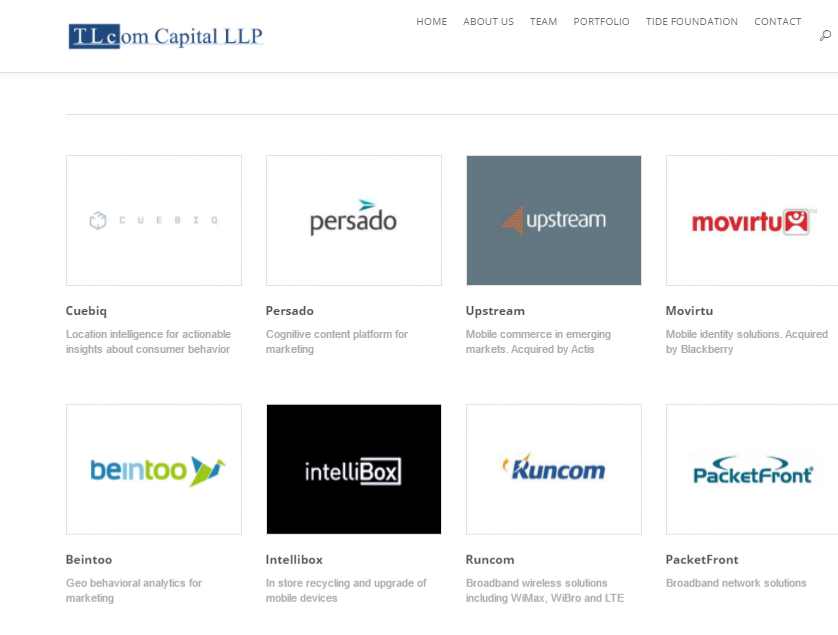
“In recent years the TLcom team has invested heavily in the Africa VC opportunity. We have opened offices in Nairobi and Lagos, looked at hundreds of tech entrepreneurs in Africa, and successfully invested and exited the best among the first generation of African mobile start-ups, such as Upstream (acquired by private equity group Actis) and Movirtu (acquired by BlackBerry). While the Africa tech ecosystem is still maturing, we don’t see why Africa is any different from other tech investment opportunities across the globe in terms of the magnitude of the investment upside”, says Maurizio Caio, Nairobi based Founder and Managing Part-ner of TLcom.

“From the high quality of entrepreneurs to the opportunity of building companies serving large markets that are highly valued by global acquirers and capital markets, all the ingredi-ents are now in place for Africa to become the world’s next attractive tech investing destina-tion” adds Ido Sum, London based Partner of TLcom and a former tech entrepreneur in Afri-ca himself.

“TLcom believes that African scalable tech enterprises represent not only a massive value generation opportunity, but also a unique development tool that can result in job creation and much wider inclusion. Low income segments that still represent the vast majority of local demand can access many basic services only when technology enables affordable solutions for consumers and SMEs”, says Andreata Muforo, Nairobi based Partner of TLcom, previ-ously with African Development Bank.

The Fund has now reached its first close of US$40 million – of the US$100 million target – with the African Development Bank (AfDB) and the European Investment Bank (EIB) committing US$10 million each, alongside other African, American and European corporate investors and family offices such as FBN Capital, and Silicon Valley based Bob King, founder of the Stanford SEED institute. Other investors are currently working with a view to join the final close of the Fund scheduled in June 2018.

“TIDE Africa offers a great opportunity to our investor partners and to global private capital to achieve significant returns and support world class technology entrepreneurs who are working in Africa to create solutions for local and global markets. We look forward to finalizing our first deals and working closely with African entrepreneurs to help them reach their full poten-tial,” concludes Omobola Johnson, Lagos based Senior Partner of TLcom, and former Minister of Communication Technology in the Nigerian government.

The unique combination of African and London presence of the four partners of TLcom, al-lows the team to work closely with their portfolio companies, actively participate in the Africa tech ecosystem, and access their global network of co-investors, advisors and technology expertise.