DD
MM
YYYY

PAGES

DD
MM
YYYY

spot_img

PAGES

Home Blog Page 7348

How You Can Establish A Cybersecurity Consulting And Advisory Business In Nigeria And Africa

2

In this piece, I explain how any entrepreneur with basic knowledge of ICT and with some supporting professionals can establish a cybersecurity consulting business in Nigeria and indeed Africa.

VALUE PROPOSITION

As internet penetration continues to advance in Africa, so are the perils that come with the increased degree of digital connectivity – cyber crime. However, most organizations lack both proper security plans and trained in-house staff to counter or quickly recover from any cyber attacks. Nigeria, for example, is increasingly moving its business processes into the digital ecosystem, exacerbating the risk of hacking. This trajectory is global and no nation can be relevant without this transition. There is an opportunity to create businesses in the areas of   “Capacity Building” and “Incident Response” in Nigeria.

CAPACITY BUILDING

The goal will to provide specialized cyber security and investigative training courses to digital forensics examiners, cyber investigators and selected information technology security professionals, to ensure the information systems of their sponsoring organizations are secure from unauthorized use, criminal and fraudulent activities, and exploitation.

INCIDENT RESPONSE

The goals and services in this phase are as follows:

  • Investigate and respond to cyber intrusions/breaches into public and private sector networks in Africa at the behest of the organization or law enforcement agencies.
  • Develop a virtual cyber crime lab to conduct digital and multimedia forensics to acquire comprehensive evidentiary analysis in support of the following mission areas: Cyber crime investigations, Cyber fraud investigations, Countering threats to critical infrastructure.

POTENTIAL SCOPE OF SERVICES

The company can offer services in these areas:

  • Computer forensics: The forensic preservation and analysis of computing systems
  • Live memory forensics: The forensic preservation and analysis of live memory on systems to identify suspicious or malicious actively running programs
  • Malware forensics: The forensic collection and analysis of malicious software (malware) to understand its purpose and capabilities, a process that often speeds up an investigative effort
  • Network forensics: The collection and analysis of live and historical network traffic, as well as network monitoring logs to identify suspicious or malicious network-based activity
  • Expert Witness Testimony: Coordinate with both domestic and international law enforcement as appropriate and provide expert personnel to provide expert witness testimony as required.
  • Up-to-Date Threat intelligence: Serve as the operational focal point for up-to-date threat information sharing through a Virtual Collaborative Information Sharing Environment for eligible subscribers.
  • Cybersecurity Policy, Cybersecurity Management


REQUIRED INFRASTRUCTURE

Virtual Lab Environment: A virtual lab environment employs the concept of virtualization and allows one to use a single physical computer for hosting multiple virtual systems, each running a potentially different operating system.

Note: Running multiple virtual systems simultaneously on a single physical computer is useful for analyzing malware that seeks to interact with other systems, perhaps for leaking data, obtaining instructions from the attacker, or upgrading itself. Virtualization makes it easy to set up and use such systems without procuring numerous physical boxes.

  • Tool Name: VMware
  • Price: $5,750 (Enterprise Edition)

Required Hardware for Virtual Lab

  • Server
  • Laptops
  • 50 Blank Hard Drives
  • 50 flash USB Drives
  • Budget Estimate: $17,000

Computer Forensics Tools: Computer forensic tools are used for digital image acquisition, analysis, reporting, recovery and investigation of material found in digital devices.

  • Tool Name: EnCase Forensic
  • Price: $2,995 for 1 License

Malware Analysis Tools: Malware analysis tools are used to disassemble, debug and analyze compiled malicious executables. This is a key tool in reverse engineering and facilitates malware analysis. While analysis relies primarily on the expertise of skilled and trained personnel, these tools enable the process to be accomplished much easier.  

  • Tool Name: IDA Professional Edition
  • Price $1,059 for 1 License

Live Memory Forensics Tools: Memory forensics tools are used to acquire and/or analyze a computer’s volatile memory (RAM). They are often used in incident response situations to preserve evidence in memory that would be lost when a system is shutdown, and to quickly detect stealthy malware by directly examining the operating system and other running software in memory.

  • Tool Name: HBGary Responder Pro
  • Price: $9000 for 1 License

Network Forensics Tools: Network forensic tools provide real-time network forensics and automated threat analysis solutions. It can also aggregate the best advanced threat intelligence and multi-source content of the global security community, and fuses it in real-time information to enable prompt and proactive intervention.

  • Tool Name: Netwitness – There are four applications in the suite
  • Spectrum applies information sourced from threat intelligence and reputation services to identify and prioritize malware.
  • Informer delivers threat reporting and alerting, presented in dashboards and charts. Informer’s primary audience tends to be upper management.
  • Investigator is used to determine the root cause of security event.
  • Visualize enables rapid review and triage of content leaving a network by extracting and presenting entire artifacts carried by recorded traffic.
  • Price: $57,000 for License

Note: This tool can also be used to provide Threat intelligence

Optional Tool:  This tool, although not required would be nice to have because it provides automated threat forensics and dynamic malware protection against advanced cyber threats, such as advanced persistent threats and spear phishing. Malware Protection System for web security, email security, file security, and malware analysis.

  • Tool Name: FireEye
  • Price: $54,950 for system. Approx $12.00 for each license seat.

Expert Witness Testimony: To provide expert witness testimony, one must be able to provide a visual presentation of associations and linkages that may exist for any person, location or thing under investigation. This is perhaps one of the most daunting challenges faced by those investigating cyber crimes as they seek to coherently understanding the linkages between events. To simplify this process, the following tool is proposed.

  • Tools: Analyst Notebook
  • Price: $4,560 per user.


SOFTWARE ACQUISITION STRATEGY

In deciding the software acquisition strategy, you need to conduct a price comparison between a “Floating License” and individual licenses based on “3 -5” users.

It must also be noted that there are a number of open source software tools which can be used to conduct rudimentary forensic analysis. However to meet the requirement of authenticity and reliability for the admissibility of digital evidence in a court, it is recommended that the tools identified above be considered.


TEAM COMPOSITION

We recommend at least 4 people with two in technology, one legal expert and one business development professional. The team must have capabilities in policy, technology, management and forensics. First Atlantic Cybersecurity Institute (which I own) offers training in these areas. The Institute can prepare anyone interested in moving into this area.


photo credit: CSIS.
Profiles Of MTN SA New Leadership – Nico Jacobs, Marco Gagiano, Nico Eskes, Philip Besimiire, Mapula Bodibe

0

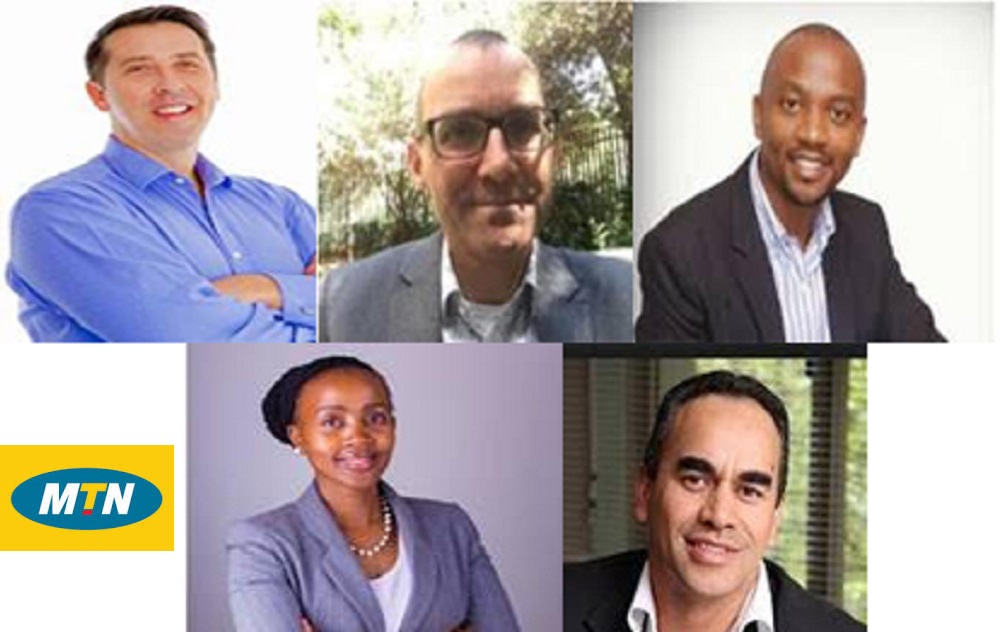
African telecom giant, MTN, has added new members in its executive team in South Africa. Their profiles are as follows:

Marco Gagiano: Executive for Customer Value Management

Effective immediately, Marco Gagiano will assume the role of Executive for Customer Value Management. Gagiano joins MTN SA from MTN Group where he was General Manager of Business Services and Operations in the SEA (Southern and East Africa) region’s Vice President’s office. In that role, he was responsible for commercial and operational support to all the SEA markets.

Before he joined MTN Group, Gagiano served as Director of Customer Value Management at Business Logic Systems (UK) where he was responsible for management of customer value management infrastructure and consulting teams of various international mobile operator groups. Prior to Business Logic Systems, he held management roles in Business Intelligence, Customer Value Management and Commercial Operations in various Vodacom and Vodafone Group operations over the past 17 years. He holds a PhD from Stellenbosch University and a Master of Business Administration from Henley Business School in the UK.

Says Gagiano: “I am excited to be part of a company that has blazed a trail across the continent and beyond, and I am looking forward to using the experience I have obtained over the years to achieve our strategic objectives. Customer-centricity has been identified as the key differentiators that will set MTN apart. I am delighted to be part of a team that will overhaul and transform customer experience.”

Nico Eskes: Head of Business Process Transformation

MTN SA also announced the appointment of Nico Eskes as the Head of Business Process Transformation position. The appointment is effective immediately. In his new role, Eskes will be responsible for managing the transformation of MTN SA’s business processes and associated technology implementation and billing capabilities. A chartered accountant with over 20 years experience in the telecommunications industry, Eskes brings to his new role extensive experience in programme and product implementations, commercial and financial management, including pricing and distribution management.

Prior to joining MTN, Eskes was the Head of Products & Services for Vodafone Netherlands. He also served in other leadership positions at Vodafone Netherlands including Head of Finance Operations, Head of Planning & Control and Head of Commercial Management Consumer Business.

“The importance of having the right systems cannot be over-estimated. The attractive propositions we offer to our customers should be supported by robust CRM and Billing capabilities, creating a 360 degree view of our customers. I am looking forward to working with my team to strengthen the demand-& delivery process and addressing process performance gaps,” says Eskes.

Philip Besimiire: Executive for Regional Operations

Philip Besimiire, a former CEO of MTN Sudan, has been appointed as Executive for Regional Operations, effective 1 June 2017. In this role, Besimiire will be responsible for regional operations and looking after MTN’s commercial business and support services in the regions.

Prior to assuming his new role, Besimiire served as CEO of MTN Sudan since February 2013. He joined MTN Sudan from MTN Zambia, where he was the Chief Marketing Officer. He joined MTN Group as a Public Relations Officer in 2001, before he was deployed to MTN Swaziland where he was responsible for implementing the marketing strategy. He has over 16 years experience in the telecoms industry. Besimiire holds a Bachelor’s Degree in Social Sciences from the Makerere University in Uganda and a Master’s in Business Administration from the Business School of Netherlands.

Mapula Bodibe: Executive for Consumer Business Unit

Mapula Bodibe will assume the position of Executive for Consumer Business Unit, effective 1 June 2017.   Bodibe is no stranger to MTN SA as she previously served in a number of roles at MTN SA over a period of 10 years, most notably General Manager for Consumer Marketing where she was responsible for managing the Consumer Strategy. She re-joins MTN SA from MTN Uganda where she served as the Chief Marketing Officer responsible for driving top line growth for the business through the implementation of effective and innovative marketing strategies.

She holds a Bachelor of Commerce degree in Economics, a Postgraduate Diploma in Marketing and a Master’s in Business Administration from the University of South Africa.

“For me this is not a homecoming but symbolises my professional life at MTN coming full circle. Having cut my teeth in Consumer Segment, where I was responsible for the end to end Consumer Value proposition. I have also had the privilege to work on numerous areas of the business including Products and Services, Pricing, Customer Analytics as well as driving the Go to Market strategy. I am excited about taking up this role and putting our customers at the heart of everything that we do,” says Bodibe.

Nico Jacobs: Executive for Sales and Distribution

Nico Jacobs has been appointed to the role of Executive for Sales and Distribution, effective 1 July 2017. This appointment is in line with the defined operation model at MTN SA that separates Marketing and Sales and Distribution.

Currently the Chief Operations Officer of McDonald’s South Africa, Jacobs has also served in senior executive positions at ABSA, EDCON, Standard Bank and The Foschini Group. He holds a Bachelor of Commerce from the University of Cape Town.

Says Enzo Scarcella, Chief Operations Officer: MTN SA: “We are pleased and emboldened by the calibre of people we are bringing on board to bolster our management team. These appointments give credence to the veracity of our succession planning. Our new operations management line-up will ensure that MTN has the operations executive team in place to deliver on profitable growth expected in accordance with our five key strategic themes. The strengthened management team will enhance our competitive position and bode well for our ability to achieve our strategic objectives.”

Voting Rights – What African Entrepreneurs Must Learn From Uber’s Travis Kalanick Ouster

0

The CEO of Uber, Travis Kalanick, has permanently left the company he co-founded. He is gone. (Hey, he could still make it back. Think of Steve Jobs of Apple, Jack Dorsey of Twitter.)

But there is a huge lesson I want to share for African entrepreneurs on the circumstances of his departure. I am not going to dwell on the toxicity of Uber’s working environment. Largely, he could have survived that as no one directly pointed to him as harassing any woman. Travis could have made it through the storm.

Today, my focus is on voting rights and why it matters. A group of Uber investors – Benchmark, First Round Capital, Lowercase Capital, Menlo Ventures, and Fidelity Investments – consolidated their power with a voting rights of combined 40%, and and demanded Kalanick resignation, according to a Fortune newsletter.

The former CEO was not happy, based on an email he sent to Uber staff – “I have accepted a group of investors’ request to step aside”, he wrote.

Lessons for Entrepreneurs

Travis remains on the Board of Uber and he owns the largest voting shares  but that is less than 50% plus 1. This means that when investors bang together, he becomes a minority despite having the sole majority of voting rights. Travis did not secure his board control, at early rounds, leaving himself very vulnerable. That was disruption he left on the table.

Smart founders do all possible to stay ahead of that 50%+1 as Facebook and other companies have done.

Facebook CEO Mark Zuckerberg controls 60 percent of the voting power at the social giant, for example, and the company has even tweaked its stock structure to ensure that power doesn’t diminish over time.

At Alphabet, Google co-founders Sergey Brin and Larry Page control more than 52 percent of the vote combined.

As you raise capital, it is very important you do not lose focus on voting rights. Investors will use that to re-align the business and make you extremely powerless, even in your firm. They can kick you out, just as they did to Uber CEO.

Sure, you need the capital but you must be smart to ensure you have control in your company. There are cases of founders who received capital only to regret that because investors kicked them out. Movirtu case is a good example.

Stories of company founders who have ended up unhappy with their deals with VCs are rife in Africa, where the initials VC are sometimes disparagingly referred to as “vulture capital.”

Entrepreneurs can get themselves into trouble if they don’t understand the venture capital process, Ben White, the founder of VC4Africa, an online initiative formed to bring together investors and startups.

“The trick is to understand that any time the company requires cash, and you are not able to provide the capital yourself, you are most likely going to lose position in the company,” White said in email. “Experienced investors know this and will be thinking past their initial investment and into the second and third rounds. They will want to prevent the dilution of their position (say initially 20 percent) given new money is put into the business.”

You may wonder if the same thing happened in Jumia Nigeria as both founders left unceremoniously in a company they co-founded.

As Fortune noted, Travis built Uber – the largest, most valuable, most global, most disruptive, most quintessential Silicon Valley success story of this era. What happens to this company affects the entire tech industry – the companies, the investors, the culture, the regulations, the employees. He will be fine. We just have to learn from his present bump, nevertheless.


Access Bank, Others Ask EFCC To Investigate Etisalat Nigeria Management On $1.2 Billion Loan Spending – NAN

0

Strong indications emerged on Wednesday that a consortium of 13 banks, involved in Etisalat Nigeria’s 1.2 billion dollars loan is seeking the Federal Government’s intervention to investigate the management.

A management source close to the banks told the News Agency of Nigeria, NAN, in Lagos that the banks want the government, through the EFCC, to wade into the matter, by investigating what the company did with the loan.

The source alleged that the loans were siphoned and needed to be investigated by the EFCC, noting, there was no proof of what the company did with the loan.

He said that the affected banks had rolled out a lot of viable options to Etisalat for the loan to be restructured, but was rejected by the company.

The source said that the banks were not into telecommunications and had no intention of running Etisalat.

“All we want is to recover the loans; we cannot write off the loans as being demanded by Etisalat, because the company is viable,” the source stated.

The source said that Etisalat wanted the banks to write off the loan as non-performing, which was rejected because the company was doing well.

According to the source, the company wants injection of new capital, and this has been suggested to the majority shareholder.

The source said the government should investigate the matter with all seriousness, to dig out the truth.

NAN reports that UAE’s Etisalat on June 20 said that it had been instructed to transfer its 45 per cent stake in Etisalat Nigeria to a loan trustee.

Etisalat said it had been notified to transfer its stake by June 23. It said the stake had a carrying value of zero on its books.

NAN reports that in the last three months, Etisalat Nigeria had been in talks with the consortium of banks, to restructure a $1.2 billion loan, after missing repayments.

The loan is a seven-year facility, agreed with 13 banks in 2013, to refinance a 650 million dollar-loan, and fund expansion of the telecommunications network.

Although the Nigerian Communications Commission (NCC), and the Central Bank of Nigeria (CBN), stepped into the fray to prevent a takeover by the banks, those discussions failed to produce an agreement on restructuring the debt.

(NAN)

Nigeria Needs To Adopt Integration Of Satellite Data In Its Next Census

0

Nigeria is Africa’s most populous country, a designation every Nigerian wants to remind the world. It had more than 182m citizens in 2015, according to the World Bank, and is poised to have the world’s third-largest population, behind India and China, by 2050.

But really, the 182m moves from 160m to 200m depending on who is writing. How can a country be run like that?

Until there is an accurate, impartial census it will be impossible to know just how many Nigerians there really are. That means government policy will not be fully anchored in reality and it will not be possible to send resources where they are most needed.

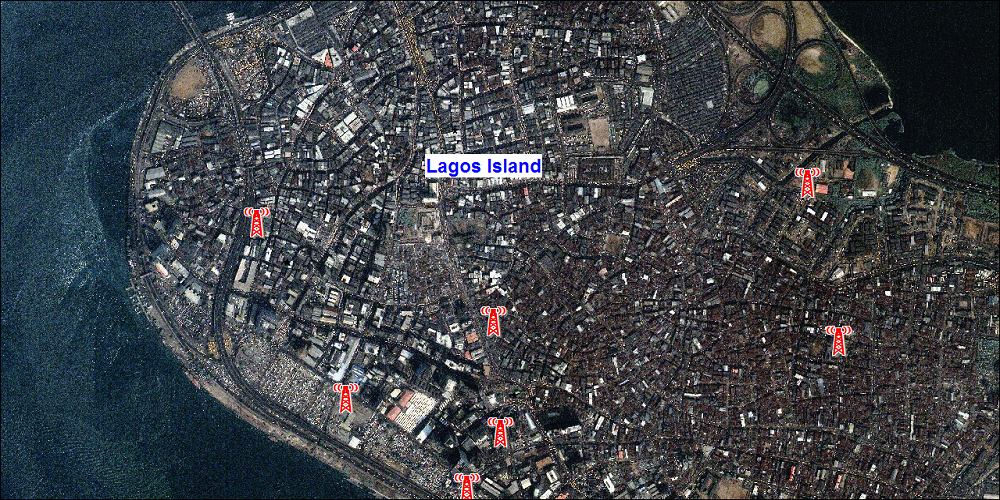
Even local and foreign investors need accurate numbers to help drive the allocation of capital. We suggest one solution – satellite data integration into census. This will help in the area of validation. Companies like Planet Lab can provide such for the country. Nigeria may need research that mimics this and then refine same at scale to make this work. The satellite data is just for integrity purposes and validation.

India conducts its census every ten years. Census data is collected manually in India with enumerators visiting every household in the country. Being such a vast country (in terms of area) and with a population of more than 1 billion, manual data collection is a laborious and expensive process.

NIGCOMSAT and NARSDA can lead this project. With this, Nigeria can quote its population number with lesser ambiguity.