DD
MM
YYYY

PAGES

DD
MM
YYYY

spot_img

PAGES

Home Blog Page 7368

Etisalat Brand Will Continue To Be Operational In Nigeria, Past 3 Weeks [Updated]

1

Editor’s Note (July 13 2017): Etisalat Nigeria has re-branded to 9Mobile. Read here


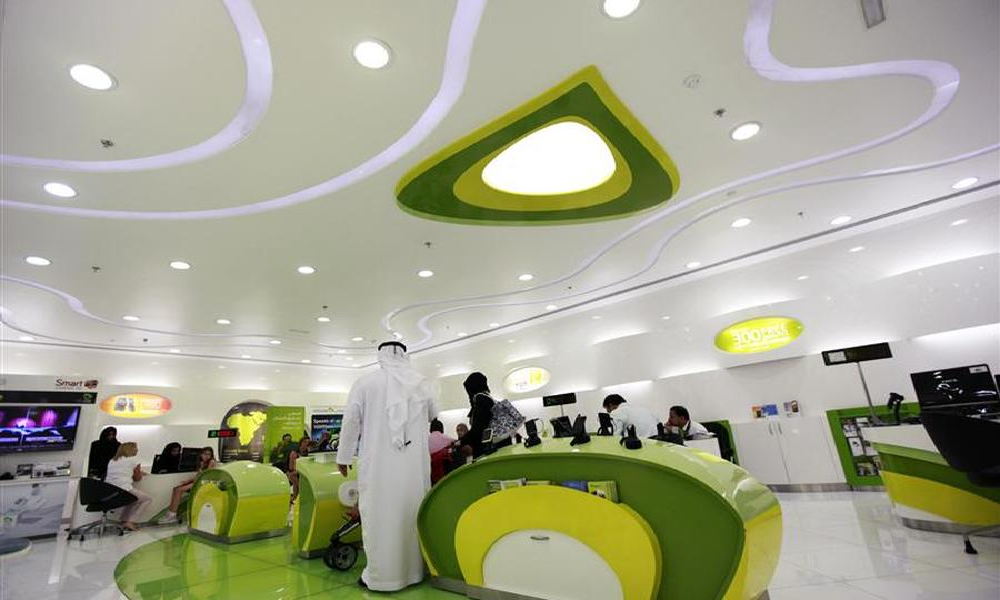
Etisalat brand will cease to be operational in Nigeria, within three weeks, reports Premium Times

Etisalat is set to phase out the telecom group’s brand in Nigeria, Hatem Dowidar, the chief executive of Etisalat International, said on Monday.

On Monday, Mr. Dowidar said all UAE shareholders of Etisalat Nigeria, including state-owned investment fund Mubadala, had exited the company and left the board and management.

This is the moment for Airtel or Glo to take action. MTN Nigeria cannot do that owing to its pending debts with the Nigerian government and also the fact that it is #1. Looking at  new statements from the company, Etisalat is extremely diluted. This is captured by the statement credited by its parent company.

Mr. Dowidar said parent Etisalat had written down the value of the Nigerian business on its books and that transferring its 45 percent stake to the lenders after loan renegotiation talks collapsed had no impact on the group.

Etisalat Nigeria has a pending $680 million in this loan; it had repaid a big portion of it. Does it mean that its parent wants to abandon it for just $680 million? This does imply that Etisalat Nigeria will have to work harder to find a buyer that will give it much higher value. If the parent writes off 45% of the company for it owing $680 million, it means it thinks the 45% of the company is not worth the trouble saving, by pumping extra $680 million.

Update: Etisalat Reacts – Emerging Markets Telecommunication Services Ltd. EMTS, on Monday said it would consolidate on its Nigerian identity in spite of Etisalat Group’s withdrawal from the Nigerian market.

“Indeed, discussions are ongoing between EMTS and Etisalat Group pertaining to the continued use of the brand, and EMTS will issue a formal statement once discussions are concluded …The final outcome on the use of the brand in no way affects the operations of the business as our full range of services remain available to our customers,” 

The implication is thus: Anyone that brings $680M could in theory take 45%. That is the opportunity cost the parent parted by abandoning the firm. This implies, currently, Etisalat Nigeria, is worth less than $1.5 billion.

Glo, this is your moment.
 

Profile of Patience Oniha, New DG of Debt Management Office, Nigeria

0

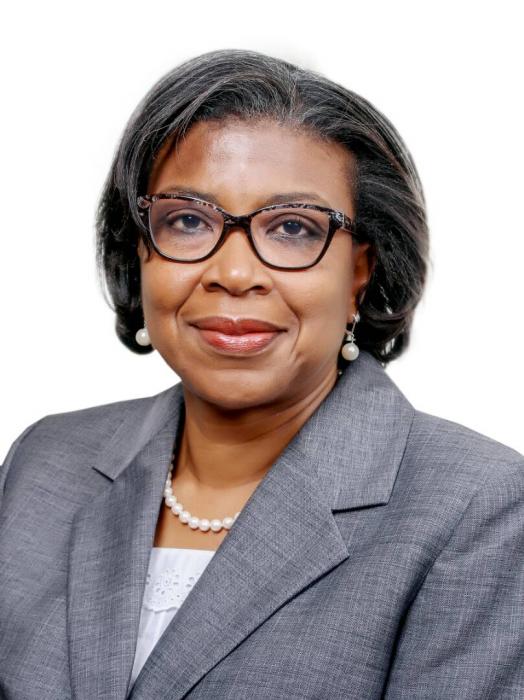
The Federal Government has appointed a director general for the Debt Management Office, DMO. She is Patience Oniha.

Ms.  Oniha, whose appointment took effect from July 1, succeeds Abraham Nwankwo who retired from service last week.

The DMO is the government agency responsible for coordinating government strategy for the management of public debts.

Ms. Oniha began her career at Icon Limited Merchant Bankers in 1986, during which time she rose to the position of a Manager, before joining First Securities Discount House Limited (now FSDH Merchant Bank Ltd.) as a pioneer staff in 1992. She rose to the position of General Manager/Director before joining Ecobank Nigeria Limited in 2000. Between 2004 – 2008, Ms. Oniha was in Standard Chartered Bank Nigeria Ltd. as a General Manager.

After a fulfilling career in the banking sector spanning over 22 years, she left after acquiring skills in Credit, Marketing, Treasury and Investment Banking. Ms. Oniha made a career move to the public sectors when she joined the DMO in 2008 as Director, Market Development Department. In this capacity, Ms. Oniha brought her banking experience to bear on various aspects of the DMO’s activities.

Amongst her achievements during her eight years at the DMO was the introduction of Benchmark Bonds to develop the domestic bond market in order to improve liquidity and to create a sovereign yield curve which created opportunities for State Governments, Multilaterals and corporates to raise long term funds. The purpose behind this drive was to create a debt capital market where the public and private sectors can access long term funds to finance Nigeria’s growth and development.

For sustainable development of the debt capital market, she actively engaged with local and foreign investors, regulators and other stakeholders to develop a large and diversified investor base for FGN Securities and Bonds issued by other borrowers.

Oniha recorded quite a number of “firsts” during her time in DMO as she managed the successful issuance of Nigeria’s debut USD500 million Eurobond in January 2011. The debut Eurobond opened a new source of funding for the Federal Government and Corporates. Thus, it was not a surprise when in 2013, she also managed the issuance of the dual-tranche USD1 billion Eurobond which was subscribed to the tune of about 400%.

A number of Nigerian banks also tapped into this funding window by issuing Eurobonds. She was also responsible for the inclusion of FGN Bonds in the J.P. Morgan Government Bond Index – Emerging Markets (GBI – EM) in October 2012 which made Nigeria the second country in Africa, after South Africa to have its local currency sovereign bond included in the Index. The inclusion of FGN bonds in this Index attracted foreign investors to the domestic bond market as a whole. This was followed by the inclusion of FGN Bonds in the Barclays Capital Emerging Markets – Local Currency Government Bond Index (EM – LCBI) in March 2013.

While still at the DMO, Ms. Oniha was appointed as pioneer Head of the Efficiency Unit at the Federal Ministry of Finance. To execute the mandate of the Unit which was to moderate government’s Overhead Expenditure and generate savings from the procurement process, Ms. Oniha leveraged on her experience and global best practice to introduce a number of initiatives. Amongst them were the issuance of 7 Circulars to control expenditure on specific Overhead items and the negotiation of discounts with airlines. These delivered savings estimated at N17 billion to the Government. She was working on the introduction of new processes for payment and procurements when she was appointed Director-General of DMO with effect from July 1, 2017.

This lady of distinction bagged a B.Sc. Economics, First Class Honours from the University of Benin in 1983 and went on to earn an M.Sc. Finance from the University of Lagos in 1985. She widened her scope and horizon by becoming a member of the Institute of Chartered Accountants of Nigeria in 1990 and a Fellow in 2008. Ms. Oniha is also an Associate Member of the Chartered Institute of Taxation of Nigeria.

How Facebook Became Nigeria’s Operating System

0

In the modern computing era, the following products/systems have been recognized as operating systems: Windows, Android and iOS.  These products are operating systems because they largely abstract away the hardware, which power them, making it possible that the focus is on the software, upon which end-user applications, made by outside developers, are built. They also have network effects which means that the more people that use them, the more valuable they become. Besides, they provide a way for users to access applications running on them. This creates a virtuoso circle since as they become popular, more people like to adopt them. (iOS, being a closed system, may not have the hardware abstraction since it is only Apple that makes the hardware. Nevertheless, it is an operating system, as it brings users and application creators together).

But besides these operating systems, we can include companies/products like Google (for search where all websites are users to Google algorithm), Alexa (Amazon voice assistant), and Facebook (where it has its own “continent” with excess of 2 billion people). In each of these entities, the four attributes are met.

Facebook is an operating system which abstracts away the hardware we use to access it. Also, Facebook has the network effect. More applications are built upon it and users have access to those applications. As it expands and integrates more features, Facebook could become so dominant that few will have to venture out of Facebook operating systems (including Instagram or Messenger which has payment, booking etc integration). What Google enjoys through search would be diminished if companies move more information into Facebook Pages and Messenger bots. It is also possible that Facebook can build a search engine for a  section of its site to aggregate outside websites.

In Nigeria, we predict in five years, as it expands its services, it will become the digital operating system for the country. From publishing, payment, booking, etc, Facebook will increasingly gain over Google. Microsoft has since lost the consumer touch and is largely an enterprise facing firm in Nigeria. Facebook understands how to connect young Nigerians and is doing a better job than either Microsoft or Google. Africa is Facebook Nation and Nigeria is the capital. It has the best team that understands how to engage and bring people into its platform. It is becoming that firm through which young Nigerians getting to the web understand first. They do Facebook first before they have to search with Google. Facebook has since reduced the appetite to Youtube with its video product. Microsoft is totally off the radar, as many of them can stay weeks, without touching any of its products.

In this videocast, I explain how Facebook has become Nigeria’s operating system. And why the firm is strategically positioned to lock young Nigerians in its platform, just getting into the web.


How To Beat Dangote Group: How Indomie Noodle Did It

9

A Commenter on a previous videocast noted: “ndubuisi ekekwe, I know that Aliko Dangote is a great businessman, but why was he unable to break into the pasta/noodles sector? If he can really pick any sector and dominate it.” I did promise to explain via a video, besides my comment on LinkedIn. (Note: Dangote is still on pasta business; it exited the noodles’)

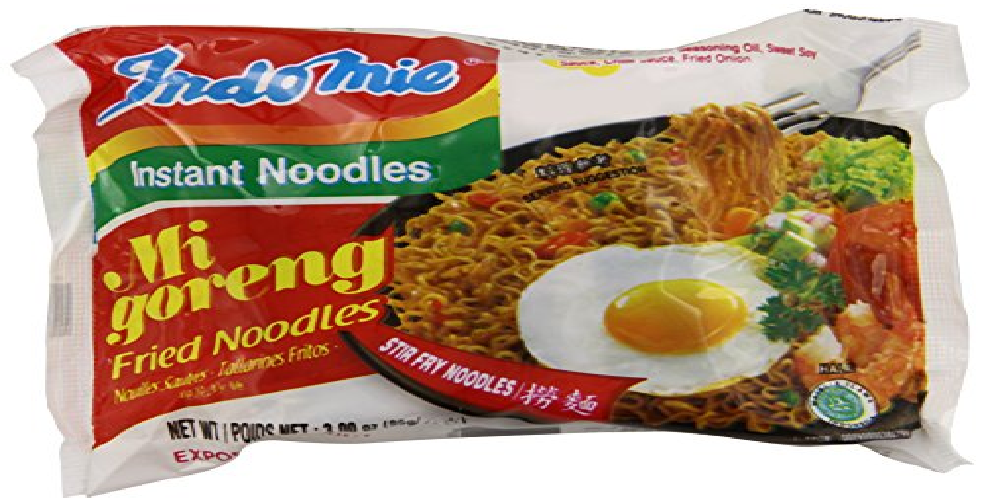
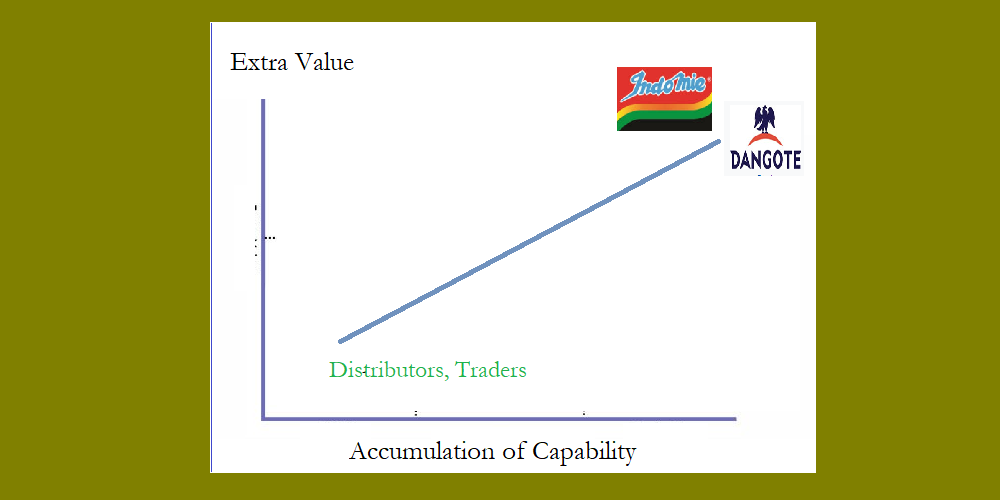
In this videocast, I explain how the makers of Indomie noodles used the same strategy Dangote Group had deployed across industrial sectors to defeat Dangote Noodles. The  accumulation of capability which Dangote Group uses to crush competitors did not work because Dufil Prima Foods (makers of Indomie) did the same thing from electricity generation to production, for its noodles business.

With their vertically integrated business, there was no left efficiency which Dangote could exploit to improve quality and reduce price. At the end, an established brand won and Dangote Noodles could not dislodge them. Dangote Group later sold its noodle business to Dufil Prima Foods. This shows a practical model anyone that wants to compete against Dangote Group can deploy. Beware: you need to be very solid!

Please read this brilliant comment on LinkedIn from a Commenter. It strengthens this conversation.

[Dufil] Prima foods mastered cost value and experience value through mainly the discipline of operational excellence to achieve and exploit leadership advantage by

1. leveraging is assets maximally to boost revenue and financial returns. Ndomie was operating more hours a day, producing more output a day, at less cost than Dangote.

2 Finding different markets to penetrate with their existing assets and boosting the utilisation of the existing assets. Hungryman pack, family pack, breakfast pack etc.

3. It shrank the idle time of its production assets and even used up dormant capacities. That is the formula of [Dufil] Prima foods. Mainly the discipline of operational excellence to deliver cost value and experience value. Just an analyst’s opinion.


How You Can Become Rich By Following This Dangote Strategy

2

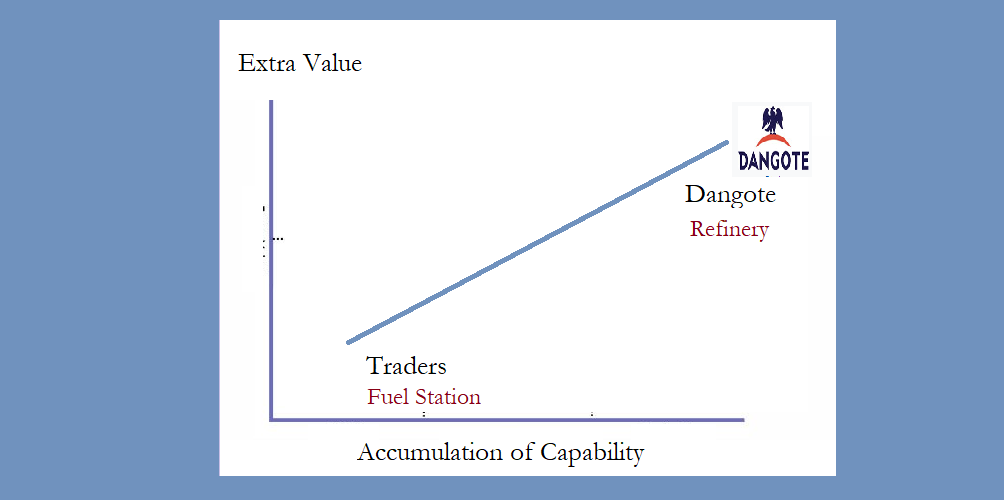
Aliko Dangote, Africa’s richest citizen, is a genius in mastering what it takes to move from a sectoral downtime to the upstream. He enters a sector, he begins the Accumulation of Capability, and systematically moves away from everyone. As soon as he does that, he takes industry leadership, making entry barriers harder, with economies of scale. Over time, he perfects that system, delivering higher productivity and economies of speed. His margin skyrockets, every other person struggles – most exit. He has won. In this videocast, I explain the Dangote strategy and what you can learn from it. A former trader, he now controls the largest conglomerate in West Africa, generating excess of $3 billion and employing about 30,000 people; he shows how wealth is built.

On this link, we present a case study of a company that actually defeated Dangote Group in its noodles business, to illustrate how to do it, and make that wealth.