DD
MM
YYYY

PAGES

DD
MM
YYYY

spot_img

PAGES

Home Blog Page 739

Daily Mining Boost: BlockDAG’s X1 and X10 Demo Reveals Path to 200 BDAG Rewards

0

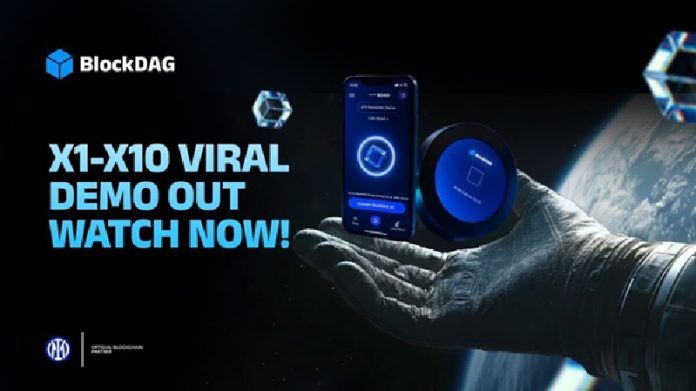
With more than $373 million raised in its presale, BlockDAG is showing it is more than just plans on paper. On July 23, the team shared the long-awaited X1 and X10 Live Demo, giving a real look at its mining setup in action. The session showed how the mobile-based X1 miner connects seamlessly with the powerful X10 hardware, giving viewers a clear idea of how the two work as a system.

The event also showed that BlockDAG (BDAG) can deliver working technology well before its official launch, something not often seen at this stage. Here is a closer look at what the live demo revealed, how it keeps mining simple, and why it supports the project’s image as ready for real-world use with strong earning potential.

A Closer Look at the X1 and X10 in Action

The X1 and X10 Live Demo walked through how the mining system works from setup to operation. The X10 hardware unit connects to the X1 mobile app through Bluetooth, Wi-Fi, or Ethernet, so people with different setups can join without problems. The app acts like a control panel, letting users check mining stats, change settings, and watch their BDAG production in real time.

In the demo, the X10 was shown producing up to 200 BDAG per day under the best conditions. This is far more than the 20 BDAG a day possible through the X1 app alone. That difference makes the X10 a strong choice for those looking to increase their daily output, especially once BDAG is trading on exchanges.

One of the biggest takeaways from the demo was how easy it was to get started. No advanced coding or special technical skills were needed. The hardware was ready within minutes, and the X1 app made managing mining tasks straightforward. This ease of use means both experienced miners and complete beginners can take part without difficulty.

By showing the hardware and app running together in real time, BlockDAG proved it can deliver on its plans. That kind of demonstration gives the crypto community a clear sign that the system will be ready for active mining once the network goes live.

Making Mining Easy and Flexible

A standout feature of the BlockDAG mining setup is how easy it is to join. The X1 app works on any smartphone, opening the door for people who might not have the money or know-how to run expensive mining rigs. Even without extra equipment, they can mine up to 20 BDAG a day, making sure the process is not limited to those with large budgets.

For those who want to grow their mining power, the X10 offers a quick plug-and-play upgrade. The network also supports larger models like the X30 and X100, which are built for higher daily output. This step-by-step system means people can begin small and gradually increase their setup, instead of committing to a big purchase all at once.

The live demo showed this growth model in action. By running both the X1 and X10 together, BlockDAG demonstrated how mobile-based Proof-of-Engagement mining can work alongside hardware-driven Proof-of-Work to boost results. This makes it possible to start with just the X1 app, add an X10 later, and build daily BDAG earnings while waiting for launch.

This approach widens the number of people who can join and also strengthens the network. The mix of consensus methods improves security, while a large base of mobile users supports decentralization. If adoption continues to rise, this blended mining setup could give BlockDAG a strong edge in the Layer 1 space.

Presale Gains Driving Network Readiness

The strong response to the X1 and X10 Live Demo comes at a time when the presale is breaking records. With more than $373 million raised in Batch 29 at $0.0276 per coin, BlockDAG has the resources it needs to complete its network setup, produce more miners, and prepare for its confirmed exchange listings.

This funding is essential for making sure the hardware and software shown in July can be delivered on a large scale at launch. It also shows that many people believe the project can follow through on its plans, a belief strengthened by the fact that they are already seeing working technology instead of only hearing about it.

Why the Demo Matters Going Forward

The X1 and X10 Live Demo have taken technical plans off the page and turned them into real, working tools. By blending a mobile mining app with easy-to-use hardware, BlockDAG is lowering barriers while offering clear ways to expand output.

Alongside a crypto presale that has already passed $373 million in Batch 29 at $0.0276, the demo adds weight to the idea that BlockDAG is more than a crypto launch. It is a growing network with a working system. As launch day draws closer, the mix of accessibility, scalability, and proven performance could help the mining model play a big role in the project’s long-term success.


Presale: https://purchase.blockdag.network

Website: https://blockdag.network

Telegram: https://t.me/blockDAGnetworkOfficial

Discord: https://discord.gg/Q7BxghMVyu
ALT5 Sigma Raises $1.5B Raise with Eric Trump Board Seat as AlphaBot launches Pulse

0

ALT5 Sigma Corporation (NASDAQ: ALTS) has announced a $1.5 billion capital raise through a registered direct offering and a concurrent private placement, both priced at $7.50 per share, totaling 200 million shares.

The proceeds will fund the acquisition of approximately 7.5% of the World Liberty Financial (WLFI) token supply to establish a cryptocurrency treasury, alongside settling litigation, repaying debt, and supporting general operations. The private placement is funded entirely by WLFI tokens from World Liberty Financial, with the registered offering involving institutional and crypto-focused investors.

The deal is expected to close on or about August 12, 2025, subject to customary conditions. Additionally, ALT5 Sigma is undergoing a leadership restructuring. Zach Witkoff, co-founder and CEO of World Liberty Financial, will become chairman of the board.

Eric Trump will join as a director, Zak Folkman, WLFI’s co-founder and COO, will serve as a board observer, and Matt Morgan will take on the role of chief investment officer. These changes align with ALT5’s strategic shift toward integrating blockchain-based assets into its treasury operations.

The announcement led to a volatile market response, with ALTS shares surging 9.66% on August 11, closing at $8.97, though some reports noted a subsequent 9.8% drop, reflecting investor caution over dilution risks and the volatile nature of cryptocurrency markets.

ALT5 Sigma’s acquisition of 7.5% of WLFI’s token supply positions it as a pioneer in holding non-Bitcoin cryptocurrencies as a core treasury asset. This mirrors a growing trend where companies like MicroStrategy (holding over 628,000 BTC worth $71 billion) and Metaplanet (Bitcoin holdings nearing $1.78 billion) diversify their balance sheets with digital assets.

By choosing WLFI, a token not yet publicly tradable, ALT5 is betting on its future value and adoption, potentially signaling confidence in DeFi (decentralized finance) projects. The move is risky due to WLFI’s untested market performance and the volatile nature of altcoins. Conversely, success could make ALT5 a model for other firms.

The $1.5 billion raise, split evenly between a registered direct offering and a private placement funded by WLFI tokens, allows ALT5 to settle litigation, repay debt, and fund operations while building a crypto treasury. This blended financing structure (fiat and tokens) reduces immediate cash outflows but ties ALT5’s financial health to WLFI’s performance.

The leadership changes and token acquisition deepen ties between ALT5 and WLFI, a Trump-backed DeFi project aiming to democratize finance through user-friendly tools. This partnership could enhance ALT5’s role in the DeFi ecosystem, leveraging WLFI’s USD1 stablecoin and governance token to expand its blockchain-based payment and trading platforms (ALT5 Pay and ALT5 Prime).

WLFI’s token, with $550 million raised in sales and a recent community vote (99.94% approval) to enable trading, gains legitimacy through ALT5’s investment. This could drive demand for WLFI tokens once publicly tradable, potentially boosting its ecosystem and user engagement. The involvement of Eric Trump and the Trump-backed WLFI project ties ALT5 to a politically charged narrative.

By structuring the private placement with WLFI tokens under exemptions from public registration, ALT5 navigates U.S. securities laws creatively. This could invite closer SEC scrutiny, particularly as WLFI tokens transition to tradability, potentially setting a test case for how DeFi tokens are treated under U.S. regulations.

The dual structure of ALT5’s $1.5 billion raise—combining a registered direct offering (cash-based) with a private placement (WLFI token-based)—sets a precedent for hybrid financing models. This approach allows companies to tap crypto markets while maintaining compliance with traditional securities laws.

The WLFI token’s transition to tradability, coupled with ALT5’s treasury strategy, sets a precedent for how DeFi tokens navigate regulatory frameworks. The community vote to unlock WLFI tokens (99.94% approval) and ALT5’s use of unregistered securities for the private placement could influence how regulators view token-based corporate treasuries.

Pulse’s Launch Underscores InfoFi’s Potential to Redefine How Information is Valued and Monetized

AlphaBot launched Pulse, an InfoFi protocol, in July 2025, aiming to set a new standard in the Web3 information finance space. Built by AlphaBot and powered by $BOOST, Pulse is designed to transform data, attention, and user behavior into tokenized assets.

The beta launch featured two projects with a 0.5% + $90K reward pool for participants, known as “Pulsooors.” Pulse operates as a platform on top of InfoFi, focusing on real-time insights and community-driven project discovery. It’s integrated with AlphaBot’s ecosystem, which boasts 2.4M monthly users and 180M+ raffle entries, emphasizing project efficiency and security.

Pulse’s model, built on AlphaBot’s ecosystem with 2.4M monthly users, emphasizes tokenizing attention through its $BOOST-powered reward system. This reinforces the InfoFi trend of converting user engagement into quantifiable, tradable assets, as seen in platforms like Kaito and Cookie.fun.

By rewarding “Pulsooors” for participation, Pulse validates the concept that attention is a valuable commodity, potentially setting a precedent for broader adoption across Web3. Pulse’s focus on real-time insights and community-driven project discovery aligns with InfoFi’s goal of decentralizing information access.

By leveraging AlphaBot’s infrastructure, Pulse enables users to contribute to and benefit from a transparent ecosystem, reducing reliance on centralized platforms. This could inspire other InfoFi projects to prioritize community governance and decentralized data aggregation. Pulse’s use of blockchain for transparency and AI for data processing mirrors the technological backbone of leading InfoFi platforms like Kaito and Bubblemaps.

This integration enhances the ability to analyze and monetize unstructured data, such as social sentiment and on-chain activity, further solidifying InfoFi’s role as a bridge between AI, blockchain, and financial incentives. Pulse’s launch highlights ongoing InfoFi challenges, such as skewed reward distribution and lack of long-term sustainability, as noted in X posts.

These issues could prompt the industry to refine incentive mechanisms to ensure equitable value distribution and prevent engagement farming, which risks diluting high-quality contributions. With AlphaBot’s established user base and Pulse’s $90K+ reward pool, the project amplifies InfoFi’s visibility in the Web3 space.

This could attract more retail and institutional participants, boosting the global blockchain analytics market, projected to reach $14.31 billion by 2030. Pulse’s beta launch with two projects and a novel reward system pushes InfoFi projects to innovate beyond traditional leaderboards.

As noted on X, competition among InfoFi campaigns requires new layers of rewards to attract influential voices, potentially leading to more sophisticated incentive models across the sector. By rewarding participants for contributing to project attention, Pulse aligns with InfoFi’s ethos of empowering creators and users.

This approach, similar to Kaito’s Yaps or Cookie.fun’s Snaps, democratizes value distribution, encouraging more users to engage in content creation and community building, thus expanding the InfoFi ecosystem. Pulse’s integration with AlphaBot’s ecosystem suggests potential synergies with DeFi and SocialFi, as InfoFi platforms increasingly intersect with other Web3 sectors.

For instance, reputation scoring systems like those in Ethos Network could complement Pulse’s attention-based rewards, creating new use cases for DeFi lending or community governance. Pulse’s launch underscores InfoFi’s potential to redefine how information is valued and monetized in Web3. However, its success depends on addressing scalability, liquidity, and product-market fit, as highlighted by industry analyses.

As Pulse and similar projects evolve, they could drive InfoFi toward becoming a cornerstone of the decentralized economy, fostering a more transparent, equitable, and data-driven financial landscape.

Altman Says Young Workers Will Thrive in the AI Era — Older Employees May Struggle

0

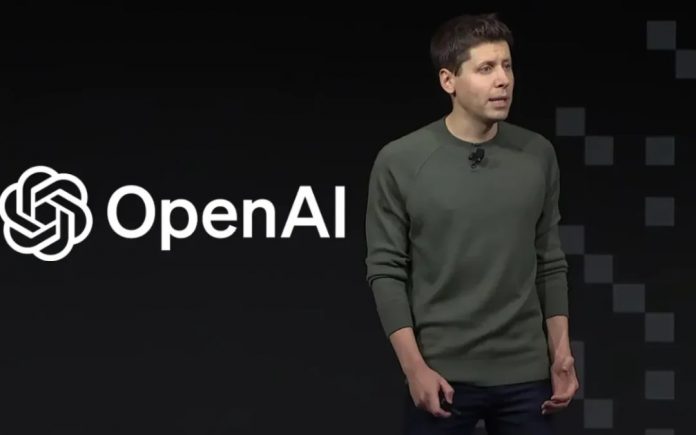
OpenAI CEO Sam Altman believes that the workforce disruption caused by artificial intelligence will hit older employees far harder than fresh graduates. This view stands in sharp contrast to the warnings voiced by many other tech leaders.

Speaking on Cleo Abram’s Huge Conversations YouTube show, Altman said he is “more worried about what it means not for the 22-year-old, but for the 62-year-old that doesn’t want to go retrain or rescale or whatever the politicians call it that no one actually wants.”

He acknowledged that AI will inevitably eliminate some jobs, but argued that younger people entering the workforce are far better positioned to adapt and take advantage of the technology.

“If I were 22 right now and graduating college, I would feel like the luckiest kid in all of history,” Altman said. “There’s never been a more amazing time to go create something totally new, to go invent something, to start a company… It is probably possible now to start a one-person company that will go on to be worth more than a billion dollars and deliver an amazing product and service to the world.”

Altman’s optimism is rooted in his belief that the breadth of AI capabilities has opened unprecedented opportunities for innovation, entrepreneurship, and productivity. In his view, the AI era could produce entirely new industries and professions, potentially enabling even solo founders to rival major corporations in scale.

However, not all of his peers share that sentiment. Anthropic CEO Dario Amodei recently warned that AI could wipe out up to half of entry-level white-collar jobs within the next five years — a scenario he called a “potential catastrophe” given the lack of robust societal and policy frameworks to manage the displacement.

Amodei and other industry leaders stress that without deliberate retraining programs and social safety nets, the job losses could hit younger and less experienced workers hard, regardless of their adaptability.

Altman acknowledged that beyond a five-year horizon, predicting the labor market becomes more difficult due to the accelerating pace of AI development. He painted a futuristic — almost science-fiction — picture of what work might look like in 2035, imagining graduates taking on roles as space explorers or operating in entirely new industries that do not exist today.

The divide between Altman’s hopeful outlook and the caution voiced by other AI leaders underscores a key tension in the public AI debate: whether the technology will be a great economic equalizer or a force that deepens inequality. While younger workers may indeed have more flexibility to adapt, older employees in sectors susceptible to automation could face steep challenges — particularly if governments and corporations fail to invest in meaningful retraining and transition strategies.

This generational disparity in AI readiness is expected to shape labor policy discussions in the coming years, especially as AI adoption accelerates across industries from law and finance to healthcare and logistics. The question may no longer be whether AI will replace jobs, but who will be best prepared to seize the opportunities it creates — and who risks being left behind.

Global Cyber Attacks Surge 21% in Q2 2025, Education Sector Hit Hardest – Report

0

Global cyberattacks surged in the second quarter (Q2) 2025, climbing by 21% year-over-year, according to new data from Check Point Research.

Driven by increasingly sophisticated tactics, AI-powered threats, and a widening digital attack surface, the spike underscores the growing pressure on organizations to bolster their cyber defenses in an era where no sector is off-limits.

Findings from the research revealed that in Q2 2025, the average organization faced 1,984 weekly cyber attacks, marking a 21% year-on-year increase and a 58% rise compared to two years ago. In July, the average number of cyber attacks per organization per week reached 2,011. That’s a 3% increase from the previous month and a 10% rise compared to July 2024. The steady climb highlights how persistent and adaptable threat actors continue to be.

While the long-term upward trend continues, industry and region-specific data revealed notable developments, including sustained targeting of the education sector and significant growth in attacks across Europe.

Education Remains the Prime Target

The education sector once again topped the list, enduring 4,388 weekly cyber attacks per organization, a 31% increase compared to Q2 2024. Government organizations followed with 2,632 weekly attacks (+26% YoY), while telecommunications saw a sharp surge to 2,612 weekly attacks (+38% YoY).

The report notes that the education sector’s vulnerability lies in its often underfunded security infrastructure and the abundance of exploitable credentials. Government agencies remain attractive for their sensitive data and geopolitical value, while telecommunications providers are being targeted for their critical infrastructure and access to vast customer datasets.

Europe Leads in Growth

Regionally, Africa experienced the highest average volume at 3,365 weekly attacks per organization (+14% YoY), followed by APAC at 2,874 (+15%) and Latin America at 2,803 (+5%).

However, Europe stood out with a 22% year-on-year growth, the largest regional increase, driven by geopolitical tensions, regulatory fragmentation, and the region’s dense concentration of high-value data.

Ransomware Remains a Major Threat

Public data from double-extortion “shame sites” revealed around 1,600 ransomware incidents globally in Q2 2025. North America accounted for 53% of these disclosures, while Europe contributed 25%.

Business services (10.7% of reported victims), industrial manufacturing (9.8% of reported victims), and construction & engineering (9.5% of reported victims) were the top three industries affected by ransomware.  Other impacted sectors ranged from healthcare to government and transportation, underscoring ransomware’s broad reach.

To better combat the surging threat of cyberattacks, organizations are advised to do the following;

Invest in threat prevention: Use advanced security technologies such as intrusion prevention systems (IPS), anti-ransomware tools, and threat intelligence to block attacks before they cause damage.

Strengthen endpoint and network defenses: Implement robust firewalls, email security, and endpoint protection platforms to reduce attack surfaces.

Promote user awareness: Run regular training and simulated phishing exercises to help employees recognize and report suspicious activity.

Ensure backup and recovery readiness: Maintain up-to-date, segmented backups and test recovery processes regularly to limit downtime in the event of ransomware or other disruptions.

Adopt zero trust principles: Continuously verify access permissions and segment networks to minimize lateral movement.

Stay informed: Monitor threat intelligence feeds and industry alerts to anticipate emerging threats.

However, while no single solution can completely eliminate cyber risk, organizations can significantly enhance their resilience by implementing multiple coordinated layers of protection. This approach helps to reduce both the likelihood and impact of a successful attack.

OpenSea’s $10K AI Creator Contest is a Bold Step in Showcasing AI Potential to Redefine the NFT Landscape

0

OpenSea announced an AI Creator Contest with $10,000 in cash prizes, XP, and an opportunity to collaborate with their team. Participants are required to submit original AI-generated work featuring themes related to OpenSea, NFTs, memes, or crypto culture.

The contest encourages creators to showcase their skills in AI-driven content creation. Submissions were open from August 4, 2025, through August 22, 2025.

AI tools like DALL·E, Midjourney, and GPT-based models enable creators to generate unique digital assets, such as art, avatars, or music, with minimal technical expertise. This lowers barriers to entry, allowing a broader range of creators to participate in the NFT space, as seen in OpenSea’s contest encouraging original AI-driven content.

AI can create NFTs that evolve over time based on user interactions, real-world data, or emotional inputs. For example, a gaming NFT might level up or a music NFT could remix itself daily, enhancing engagement and long-term value. AI tailors NFTs to individual collector preferences, fostering emotional connections and driving adoption.

This hyper-personalization could make NFTs more appealing, as collectors receive assets aligned with their tastes. AI algorithms analyze user behavior, preferences, and past interactions to suggest relevant NFTs, as exemplified by platforms like SuperRare. This enhances discovery, reduces search friction, and boosts sales.

OpenSea’s contest could leverage such AI-driven curation to spotlight winning entries. Multimodal AI, combining text, image, and metadata analysis, delivers precise search results. For instance, searching “cyberpunk art” yields visually relevant NFTs, not just keyword matches, improving user satisfaction.

AI can introduce gamified elements like challenges or rewards, as seen in OpenSea’s contest offering XP and collaboration opportunities. This fosters community loyalty and sustained engagement. AI-driven tools analyze market trends, historical data, and artist reputation to suggest fair NFT valuations, preventing over- or undervaluation.

AI streamlines royalty distribution through smart contracts, ensuring creators are fairly compensated on secondary sales. This transparency builds trust, a key factor in contests like OpenSea’s where creators expect equitable rewards. AI forecasts market trends and user behaviors, enabling creators and collectors to make informed decisions.

AI verifies NFT authenticity by scanning metadata, digital signatures, and blockchain records, reducing counterfeits. This is critical for platforms like OpenSea, where trust is paramount for contest participants and buyers. Advanced AI systems enable real-time authentication, protecting creators from property misuse and buyers from scams, enhancing marketplace integrity.

AI-powered tools filter spam, scams, or inappropriate content in marketplace communities, ensuring a safe environment for contests and user interactions. AI enables businesses to launch customized NFT platforms quickly using pre-built solutions, as seen with white-label providers. This scalability could inspire smaller marketplaces to host AI-driven contests similar to OpenSea’s.

AI links NFTs to personalized metaverse experiences or in-game assets, expanding their utility. OpenSea’s focus on crypto culture in its contest hints at potential ties to virtual worlds. AI analyzes market sentiment and trends, as seen in platforms like NonFungible.com, helping investors identify valuable NFTs.

AI-generated NFTs raise questions about authorship and intellectual property. For instance, who owns an NFT created by AI trained on existing artworks? OpenSea’s contest may need clear guidelines to address this. AI models can inherit biases from training data, potentially skewing recommendations or valuations.

AI’s ease of content creation could flood marketplaces with low-quality NFTs, diluting value and overwhelming collectors. OpenSea’s contest, while encouraging creativity, must balance quantity with quality to maintain market appeal. AI-NFTs face challenges in standardizing formats across platforms.

OpenSea’s initiative, with $10,000 in prizes and collaboration opportunities, incentivizes creators to experiment with AI, potentially setting trends for the broader NFT ecosystem. By fostering AI-driven creativity, OpenSea positions itself as a leader in this evolving space, encouraging a new wave of collectors and artists to join the adventure.

AI’s integration into NFT marketplaces like OpenSea is revolutionizing how digital assets are created, discovered, and traded. It enhances creativity, user engagement, and market efficiency while addressing security and trust. However, ethical, technical, and environmental challenges must be navigated to ensure sustainable growth.