DD
MM
YYYY

PAGES

DD
MM
YYYY

spot_img

PAGES

Home Blog Page 7394

Components of Agriculture 4.0

0

In the quest for better yields and greater environmental protection in agriculture, arguably the most important transformation these days is the increasing use of digital technologies in what has been dubbed smart farming or Farming 4.0. Farming 4.0 is a highly dynamic and rapidly evolving concept – in terms of its full potential, the current state-of-the-art might really be only the tip of the iceberg.

The following are the major components of Agriculture 4.0:

  • IoT Sensors: From soil fertility to connectivity, IoT sensors are critical parts of modern agriculture
  • LED’s: The rise in indoor farming is being driven by advances in LED technology. Indoor farming is particularly demanding of LED precision because of the requirements to provide optimal growth and yields.
  • Robotics: Some robots are doing what farmers used to do in farms. This robotics also includes analytics which are software systems that assist in analysing and making sense of trends in farms.
  • Solar Cells: Most devices in farms are powered by solar and solar panels are important.
  • Drones and satellites: drones and satellites are used for data collection of farm vegetation.
  • Indoor Farming/Aquaponics/Hydroponics: Making use of a wealth of experience and resources in LED lighting, some OEM companies have sprung up offering full solutions for indoor farming/aquaponics and hydroponics.
  • Farm Fintech: increasingly, new financial solutions are designed for farms and agriculture. These solutions are captured as farm financial technology (farm fintech) and they include payment, lending, insurance etc which are done digitally for farming

Data for Agriculture 4.0

As information systems grow in utility, data have come to represent different things for different industries, overlapping many scientific disciplines. Along the way, the scope of information that industries want to capture and measure expands, and the data become yet more useful.

In agriculture, data have played the role of an oracle providing insight on seasonal activities. In varying degrees, data have been informing insurance policies, finance facilities, and commodity exchanges.

More recently, precision agriculture and agtech have inspired start-ups offering farmers equipment, software, and other innovative tools that capture, monitor and process field- and crop-specific data. The mind-blowing pace of technology development in this space has left farmers bewildered by the options. In 2015, agtech investment hit a record $4.6 billion. Such a level of investment interest comes from those within the industry who see the value of data as a commodity in and of itself.

Like cash, data aren’t one-use, disposable items. Data can also have a multiplier effect of their own that is more accurately described as a “network effect.”

This data and the associated network effect will be the heart that will drive Agriculture 4.0.

Note: Note that some have called this era of agriculture production – Agriculture 2.0. But we do think it is 4.0 in the advanced world but possibly 2.0 in Africa as we are just starting in the area of mechanization and automation.

5 Actions That Reduce Your Chances of Raising Venture Capital

0

12–18 months after raising some money from friends & family or a seed round, many of the founders I talk to shift from product/market fit questions to fundraising concerns. After trying to dissuade them from going this route (and failing most of the time) I point out the self-sabotaging actions that reduce their chances of raising venture capital. Why do I try to dissuade these founders? Because they lack the understanding that a venture backed firm serves several masters and the growth expectations (that help the VC determine return multiples) can distort the founders priorities to just build a great company. In other words, venture is a marriage that can often end in buyer’s remorse. Nevertheless, once they’ve decided it’s the path for them, I share the five lessons below:

  1. Ramping up sales when your startup is still in the customer development phase: This one is the trickiest mistakes I see from startups. The typical scenario is that the startup has a few clients, a couple are paying and probably using the product at a deceptively encouraging frequency. The founder starts to mistake customer development?—?the process of gaining customer insights to generate, test, and optimize ideas for products and services through interviews and structured experiment– for product/market fit. Product/Market fit means being in a good market with a product that can satisfy that market and at this point. While you’re constantly experimenting after product/market fit, the experiments are not to find a business model but to refine the one you’ve clearly identified after your customer development period. To ramp up sales, typically by hiring salespeople, during the customer development phase is to set yourself up for failure thinking that you can show VCs traction. The good VCs know the difference between your customer development phase results and when you’ve found product/market fit. You should too..
  2. Handing out titles to team members to fake ‘structure’: There is this fallacy that founders hold to be true when they are trying to raise their first round of VC funding (before they’re ready); it’s that, for the startup to be taken seriously, it requires a certain structure for it to look VC-investable. The founder believes the startup should have a COO, VP of Sales, CEO etc. I say fallacy because, while the team is supremely important, what is more important is what the team has managed to achieve. The titles don’t matter! You can all be titled Thing 1, Thing 2, Thing 3 etc and, if you’ve found product/market fit and selling at an impressive clip, you’ll raise your round with ‘relative’ ease.
  3. Using the hottest startup (e.g. Snap) in your space as the example: This one is also quite tricky. The problem with a founder showing a VC that there is a hot & fast growing startup in the opportunity space is that the VC sees a party that’s about to end. VCs believe in the Power Law and 2nd or 3rd or 4th place, which is the best you can possibly be at this point, is never good enough . If Snap is a similar company to yours, it won’t look good on your pitch deck if you have little to no differentiation from their product. You require at least 10X improvement over the current the hot startup’s product (in your space) to truly be VC fundable. If you have a me-too product, you’ll get a me-too VC. This might be OK for you and your VC but it’s unlikely to be a winning strategy in the VC space. You can run a lifestyle business and be fine (and there is nothing wrong with that), just don’t go looking for investors looking for game-changing power-law-adhering startups to invest in.
  4. Pivoting right before the beginning of the fundraise: VCs like to look at metrics. Charts that are trending up and to the right are (um) right. The problem with a pivot right before you start your fundraise is that now you have no metrics to show. You’re trying to convince VCs to invest in a new opportunity from the one you spent the last 18 months toiling at. You shouldn’t be surprised the VCs aren’t giving you money at this stage; VCs are not risk takers, they are risk mitigators. Their LPs did not give them money for them to turn around and lose it. Being unable to assess your startup risk profile is a definite ‘No’ for most VCs.
  5. Spending way too much time developing the pitch deck: Time and time again I remind founders that the most basic element of a pitch deck (10–15 slides) is all you need in the first version. The slides should show pain, solution, traction, team, product, go-to-market, TAM/Market Size, Financials, Competition, Why You Will Win and the Ask. And maybe a summary slide. Any modifications that you make to your slides, after the first version, should be based on the feedback you receive from targeted investors that you’ve engaged with. To spend 3 months working on a deck (yes, I’ve seen this) is a surefire way to waste time on fundraising. Time not spent building your business.

Note to first time founders: if you find a VC that gives you Series A funding in the customer development phase know that i) it’s probably a janky VC and ii) this VC will be on your case so much, due to mismatched expectations, you’ll wish you were building a lifestyle business.

Another piece of advice I share with these founders is that the VC path is not for everyone. Building a product is fairly cheap nowadays. The real work is in customer acquisition. And if you haven’t figured out customer acquisition, no amount of funding will save your startup. Whether it be a lifestyle or VC fundable startup…

originally published here.

Meet Ada: an App that can diagnose health issues via smartphone

0

The name sounds really awesome for Nigerians from Southeastern part of the country. Ada is the name of a woman, usually the first female born in a family. But here, Ada is an app.

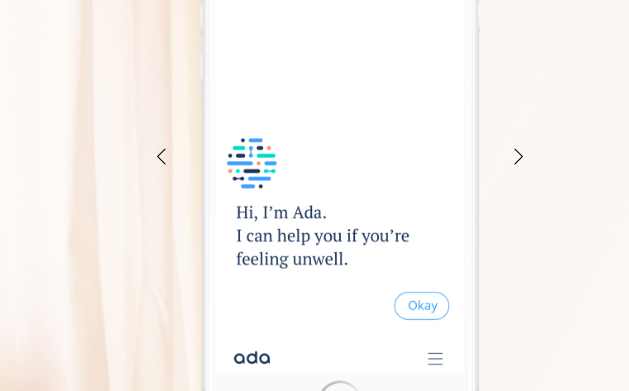
Meet the Ada Personal Health Companion, an AI-powered app that listens to your symptoms and then tries to diagnose your possible health problem. And no, it’s not replacing doctors anytime soon, but the app is a step in the right direction; letting people ease that nagging worry without feeling embarrassed about going to the doctor for what may be “nothing at all”.

We tried it out, and the app is certainly simple, if a little bare-bones. All you have to do is download it for Android or iOS and then sign up with your email. The app only requires you put in your name and birthday, and claims to be “100 percent private”. If you’re still worried about your privacy, you can give in a fake name like we did, and there’s no problem.

While the app asks you for your birth date on setup, you’ll need to manually input your height and weight from the settings menu. However, we’re still not sure if this plays a part in the diagnosis, as we didn’t see any change in the report received.

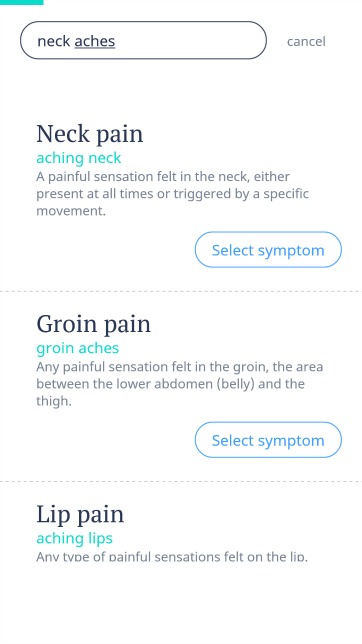
When you start a diagnosis, Ada asks you for a symptom you are(or someone else is) experiencing, and then quizzes you on it. The app has a library of very specific symptoms for you to draw on, complete with an auto suggest feature to help you out. Specify how long you’ve had the symptoms, any other problems, and answer questions like whether activity makes it better or worse, and you’re done.

 Ada Is An AI-Powered App That Can Diagnose Your Health Problems From Your Smartphone Ada Is An AI-Powered App That Can Diagnose Your Health Problems From Your Smartphone

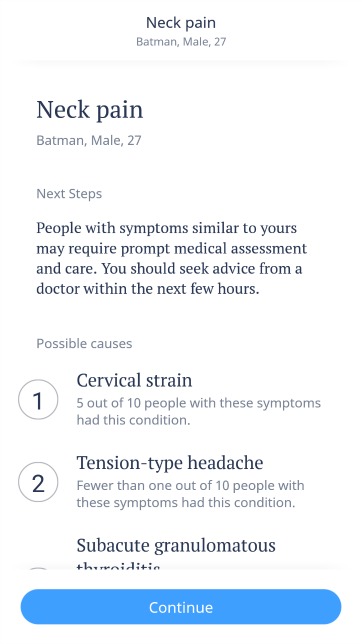
Ada generates a report with possible diagnoses based on your description, and accordingly recommends you to see a doctor, as well as providing possible home remedies for milder cases. It also offers you the option to track your symptoms over time, if you choose.

The Ada Personal Health Companion is available to download for free from both the iTunes App Store and Google Play.

Ghana to Host the 6th Innovation Prize for Africa Event in July 2017

0

he African Innovation Foundation (AIF) in collaboration with the Government of Ghana, represented by the Ministry of Environment, Science, Technology and Innovation (MESTI), Ghana Investment Promotion Centre (GIPC), and Ghana 60 Years On Planning Committee wish to announce that Ghana will host the most celebrated innovation event in Africa, the Innovation Prize for Africa (IPA) in Accra in July 2017 (dates to be confirmed soon). The decision to host IPA in Ghana has received the highest endorsement from H.E. President Nana Addo Dankwa Akufo-Addo, the President of Ghana, who will deliver the keynote address during the Awards ceremony.

Ghana’s selection as host country for IPA 2017 comes as a result of its commitment towards consolidating a thriving national innovation ecosystem. In its 60 years of independence, Ghana has been an example of progressive successes that have made the country and its advancements marketable and well respected globally.

With the presence of world class accelerators and incubators, Ghana in recent years has become a noted sub regional hub for excellence in innovation. The Ghanaian technology and innovation ecosystem, led by a new generation of change-makers has received much international and local acclaim, making Ghana the ideal host country for IPA 2017.

IPA is a landmark initiative of the AIF and its goal is to strengthen African innovation ecosystems through supporting a culture of innovation and competitiveness, whilst spurring growth of innovative, market-driven African solutions to African challenges.

IPA has been successfully celebrated in African major capitals representing African regions: Addis Ababa, Ethiopia (2012), Cape Town, South Africa (2013), Abuja, Nigeria (2014), Skhirat, Morocco (2015) and more recently in Gaborone, Botswana (2016)

Besides a host of exciting side events and brand new initiatives for Africa by Africans, IPA 2017 will offer the following prizes and incentives to winners and nominees:
? Grand prize of US$100 000
? Second Prize of US$25 000
? Special Prize for Social Impact US$25 000
? A voucher for each of the seven IPA nominees of US$5 000
? Additional incentives include investment opportunities, training and access to our vibrant network of innovation enablers, ongoing PR support and media coverage

Top three malware in Nigeria and Kenya revealed by security experts

0

According to experts in Checkpoint, a cybersecurity firm, the following are the Top 3 Malware in Kenya and Nigeria:

Kenya

1. Sality – Family of file infectors spread by infecting .exe and .scr files and via removable drives and network shares. Systems infected with Sality can communicate over a peer-to-peer (P2P) network for spamming purposes, proxying of communications, and to compromise web servers, exfiltrate sensitive data and coordinate distributed computing tasks to process intensive tasks.

2. Necurs – Botnet used to distribute many malware variants, mostly banking trojans and ransomware. It usually spreads malware based on massive spam campaigns, with zip attachments containing malicious JavaScript code.

3. Hiddad – Android malware which repackages legitimate apps and then releases them to a third-party store. Its main function is displaying ads, however it is also able to gain access to key security details built into the OS, allowing an attacker to obtain sensitive user data.

Nigeria

1. Virut – Botnet and malware distributor used in DDoS attacks, spam distribution, data theft and fraud. The malware is spread through infected devices such as USB sticks as well as compromised websites and files.

2. Sality – Family of file infectors spread by infecting .exe and .scr files and via removable drives and network shares. Systems infected with Sality can communicate over a peer-to-peer (P2P) network for spamming purposes, proxying of communications, and to compromise web servers, exfiltrate sensitive data and coordinate distributed computing tasks to process intensive tasks.

3. Gamarue – Modular bot with a loader which downloads additional modules from its C&C server. The loader has both anti-VM and anti-debug features. It injects into trusted processes to hide itself and then deletes the original bot. Infected machines can be harvested for financial credentials and also become part of a large botnet. Gamarue spreads by infecting removable drives such as USB drives or portable hard disks.

The data is from Check Point which maintains a ThreatCloud Map which is powered by Check Point’s ThreatCloud intelligence, a collaborative network to fight cybercrime which delivers threat data and attack trends from a global network of threat sensors. The ThreatCloud database holds over 250 million addresses analysed for bot discovery, more than 11 million malware signatures and over 5.5 million infected websites, and identifies millions of malware types daily.