DD
MM
YYYY

PAGES

DD
MM
YYYY

spot_img

PAGES

Home Blog Page 7395

$7 million energy prize competition for African renewable energy projects still open

0

Access Power, a developer, owner and operator of power projects in emerging markets, and its strategic partner EREN RE today announced an extension to the deadline for applications to the ACF 2017, the third edition of the Company’s funding and support platform for renewable energy projects in Africa.

Renewable energy developers have just over one week left to submit their applications for a chance to win US$7million in ACF prize funding. The deadline for applications is the 12th May 2017.

Now in its third year, the ACF is an innovative US$7 million financial support mechanism designed to provide local power project developers and originators with project development support, technical experience, expertise and funding required to bring their renewable energy projects to life.

The winners of ACF 2017 will be announced during a live final evaluation panel on June 7th 2017 during the Africa Energy Forum in Copenhagen. This year’s finalists will once again be evaluated and scored by an independent panel of industry experts comprised of senior representatives from Power Africa, InfraCo Africa, Proparco, the Dutch Development Bank (FMO) and Access Power who will provide Access Power with recommendations on the commercial, technical, social and environmental viability of each project based on a host of market, regulatory, environmental and economic factors.

The top three finalists will subsequently enter into direct Joint Development Agreement (JDA) discussions with Access Power. Once these are successfully concluded, Access Power will take an equity stake in those projects and commence independently funding their third-party development costs such as feasibility studies, grid studies, environmental and social impact assessments and due diligence fees.

The ACF 2017 application form and guidelines are available on the Access Power website www.Access-Power.com.

Notables

The ACF 2017 is a financial support mechanism designed to provide local developers and entrepreneurs with the technical expertise and funding required to bring their renewable energy projects to life.
•    Applications for the ACF 2017 opened in March 2017.
•    The submission period runs from March to May, 2017.
•    An independent judging panel will include industry and legal experts as well as representatives from multilateral development banks.
•    Following a pre-selection process, a shortlist of applicants will be chosen to present their projects to a panel of judges at the Africa Energy Forum in Copenhagen, June 2017 (http://Africa-Energy-Forum.com).
•    Applicants must present their projects to the judging panel during the Forum within a given time and take questions from panel members.
•    Panel members will score each project based on the evaluation criteria, using weighted percentages.
•    The winners will enter a Joint Development Agreement with Access Power, which will take an equity stake in the winning projects and fund third-party development costs such as feasibility studies, grid studies, environmental and social impact assessments and due diligence fees. Access Power will also provide technical support, financial structuring and development process management.

Germany selects Nigeria as first country to pilot “Make-IT in Africa” startup program

0

The Germany’s Federal Ministry for Economic Cooperation and Development has a new initiate  to strengthen tech entrepreneurship in developing countries under the BMZ’s Make-IT initiative. The Deutsche Gesellschaft für Internationale Zusammenarbeit GmbH, will implement the programme on behalf of BMZ.

Make-IT starts in Africa in two pilot countries, i.e. Nigeria and Kenya. “We seek to foster IT startups because they have a great potential to create jobs, generate revenue and find creative and innovative solutions to pressing issues faced by citizens and their societies,” says Dr. Jan Schwaab, Head of the GIZ Programme “Make-IT in Africa”. “We strongly believe that start-ups can contribute to sustainable and inclusive economic growth if they manage to overcome the many hurdles they face – in particular getting access to markets and key partners from industry. We are proud to partner with SAP and other major German and European IT companies to support tech start-ups and their ecosystems, with greater market access and exposure.”

SAP SE and GIZ will jointly run the first Make-IT project worldwide in Nigeria. This project will combine the skills and experience of local and international GIZ experts with SAP’s successful Startup Focus-Program. This will ensure that tailored input meets the specific needs of each startup, including but not limited to design thinking experts, access to financing partners, access to leading edge technology, deeper collaboration with local accelerators, mentors etc. to maximize the probability of commercial success for each startup.

China now owns the fastest Quantum Computer, 24000X faster than compeitors

0

China is a leader and it is showing why it is a global superpower right now. For all the complains that China is copying, the world is not giving the dragon a lot of credit. China leads in many technology areas and continues to advance to new ones.

China has managed to build the world’s first ever quantum computer, which clocks in at a whopping 24,000 times faster than its international counterparts.

Created by researchers at the University of Science and Technology at Hefei in the Anhui province, the quantum computer is a highly advanced machine, capable of performing multiple complex calculations simultaneously, like predicting the movement and behaviour of subatomic particles.

The basic idea behind quantum computers is that they perform calculations by keeping the system’s memory in a quantum state. So what exactly does that mean? Traditional computers store data in bits, which are represented by a 1 or 0, the foundation of binary. Quantum computer however, seek to apply the phenomenon of superposition and entanglement from quantum physics to the equation. In this case, each quantum bit (or qubit) can store a 1, 0 or any superposition of the two.

The short of it is that traditional computers process one operation at a time, whereas quantum computers can look at multiple states of data and calculate their outcomes simultaneously.

While the theory behind quantum computing has been around for decades, actually building the architecture required has proven to be a challenge. So far, researchers have only been able to replicate the technology with very small amounts of memory, less than what’s in your smartphone.

That’s why China’s development is so important; it marks the first single photon-based quantum computing machine that goes beyond the early classical computer.

Apple tearing the soul of Imagination Technologies as the UK firm begins a dispute resolution

0

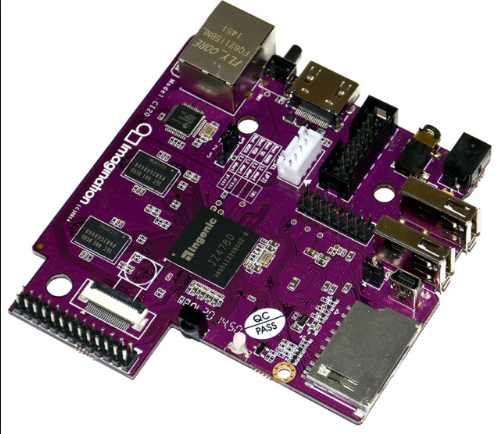
Imagination Technologies Group disclosed Thursday  that it has started a “dispute resolution procedure” with Apple, as their negotiations have stalled. With the potential loss of Apple — which accounts for about half of the U.K.-based company’s revenue — looming large, Imagination is fighting for its survival.

Not coincidentally, the company revealed plans to sell two businesses. Going on the block are MIPS, whose CPU business is focused on embedded processor market, and Ensigma, which offers IP licensing for connectivity in mobile computing.

These moves mark the end of Imagination’s ambitious dream to compete with its rival ARM as an IP licensing powerhouse with GPU, CPU and connectivity technologies.

Imagination today says it now hopes to “concentrate its resources on PowerVR and strengthen Imagination’s balance sheet.

The Challenge

Imagination said last month that Apple had notified the firm it was developing its own graphics chips, Apple would no longer use Imagination’s processing designs in 15 months to two years’ time.

Imagination’s discussions with Apple thus far apparently yielded very little progress. In a statement issued Thursday, the company said, “Imagination has been unable to make satisfactory progress with Apple to date regarding alternative commercial arrangements for the current licence and royalty agreement.” Imagination “has therefore commenced the dispute resolution procedure under the licence agreement with a view to reaching an agreement through a more structured process,” the company added.

It’s widely understood that Imagination would face major challenges proving that Apple is infringing Imagination’s graphics engine IP. This is largely because Apple’s own new graphics chips — which Apple claimed do not use Imagination’s processing designs — won’t reach the market for more than a year. While Apple has every incentive to stall negotiations, it’s hard to imagine how Imagination could possibly make any breakthrough in discussions with Apple.

Maritime University coming to Delta State Nigeria

0

The Senate has passed the bill for the establishment of Nigerian Maritime University in Delta State, thereby bringing the proposed school close to gaining statutory status, three years after its foundation was laid.

The groundbreaking of the proposed school at Okerenkoko in Warri south-West local government area was done by former President Goodluck Jonathan in 2014 and, according to the Minister of State for Petroleum Resources, Ibe Kachikwu, physical assets were on site.

However, there was no law backing the establishment of the university.

The bill for its establishment was passed by the Senate on Thursday, following the report of the committee on tertiary education and TETFUND chaired by Barau Jibrin, APC-Kano.

The bill will now be transmitted to the House of Representatives for concurrence and the later for President Muhammadu Buhari’s assent, before it becomes law, which woul allow the school access to funding from the annual budget.